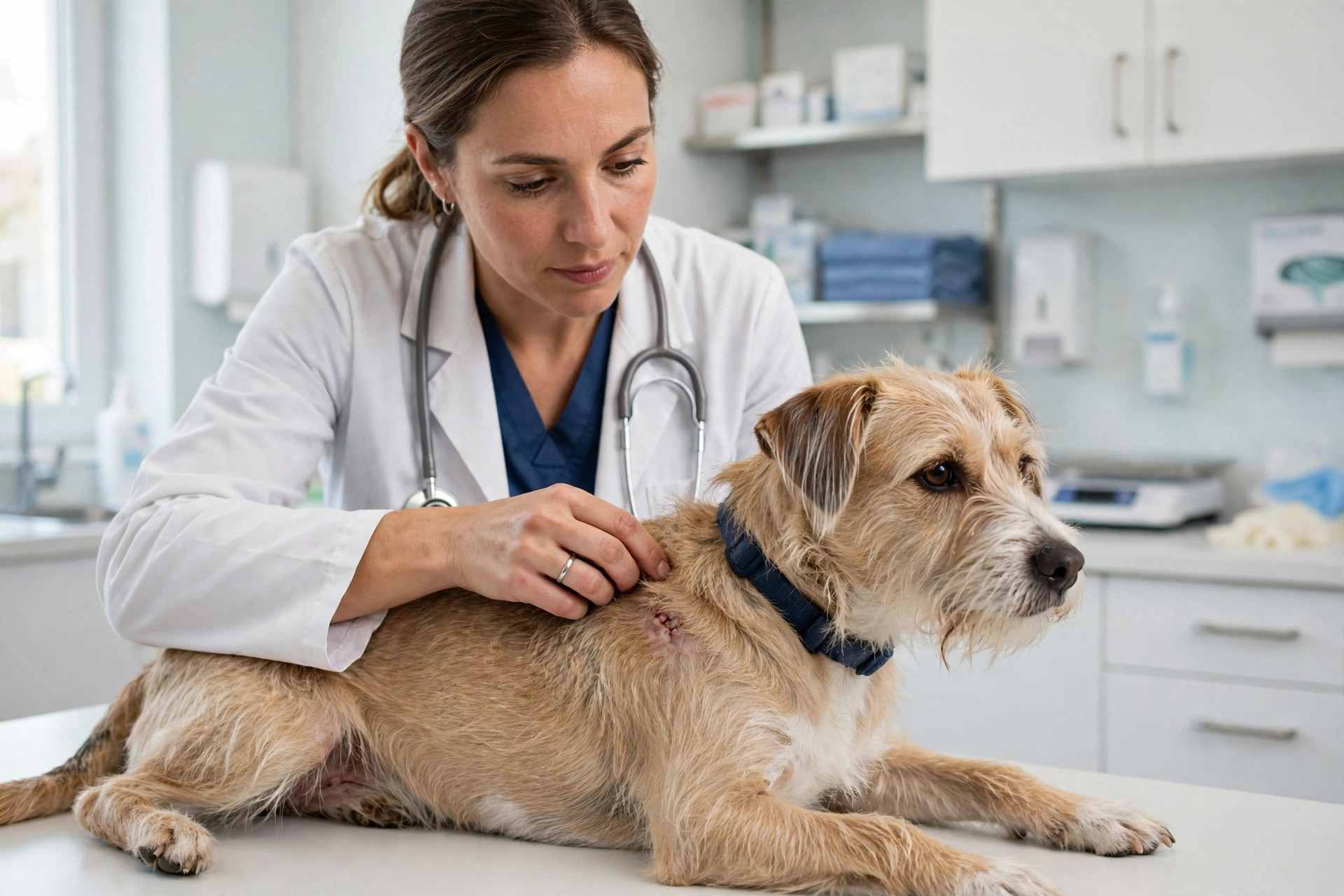
A wound that won’t heal. A smell that doesn’t belong. And, if you look closely, movement in the wound that shouldn’t be there. That’s how most owners first meet New World screwworm — a parasitic fly infestation that American veterinarians spent decades treating as a foreign problem, until this fall. As of mid-November 2026, detections are confirmed in the United States, including in dogs, and on November 3 the FDA issued an Emergency Use Authorization for Bravecto (fluralaner) chews to treat the condition in dogs and puppies. The numbers are changing daily, and most American dogs are still at low risk — but owners in the southern border states need this on their radar now, not later.
This article explains what screwworm myiasis actually is, the wound signs that should send you to a vet the same day, where cases stand as of mid-November 2026, and what the Bravecto authorization means — including the parts it doesn’t cover. The figures below are a snapshot, and both the FDA’s Center for Veterinary Medicine updates and the AVMA’s screwworm resources are where to confirm the current picture.

Key Takeaways
- The parasite: New World screwworm larvae feed on living tissue in wounds — unlike ordinary maggots, which feed on dead tissue. Untreated infestations can be fatal.
- The telltale sign: a foul-smelling, non-healing wound with visible larvae. Any wound behaving that way is a same-day vet visit.
- The map, mid-November 2026: 127 US detections reported by the AVMA as of November 10 (64 active); a dog case in Presidio County, Texas, and 7 Arizona cases including 2 dogs.
- The treatment news: the FDA’s November 3 Emergency Use Authorization lets vets use Bravecto (fluralaner) chews to treat screwworm myiasis in dogs and puppies — an emergency authorization, not full approval.
- Risk level: the FDA says most US dogs are at low risk right now. Dogs in Texas, Arizona, and New Mexico border zones warrant daily wound checks and a vet conversation.
What New World Screwworm Is — and Why It’s Different From Regular Maggots
Screwworm myiasis is an infestation of a wound by the larvae of the New World screwworm fly. The female fly lays eggs at the edge of an open wound — and “wound” can mean something as small as a tick bite, a thorn scratch, a surgical incision, or the navel of a newborn animal. The eggs hatch, and the larvae burrow into the wound head-down, feeding in a spiral pattern that gives the screwworm its name.
Here’s the distinction that makes this parasite dangerous: common fly maggots feed on dead and decaying tissue, and while they’re unpleasant, they aren’t eating the animal. Screwworm larvae feed on living flesh. The wound enlarges, deepens, and produces more odor and discharge, which attracts more flies to lay more eggs. An untreated infestation can kill, and it does so through tissue destruction, secondary infection, and sheer escalation. This is a pest the United States spent enormous effort eradicating decades ago and has worked to keep south of the border ever since — which is why confirmed domestic detections, especially in companion animals, are national animal-health news.
The Signs: What a Screwworm Wound Looks Like
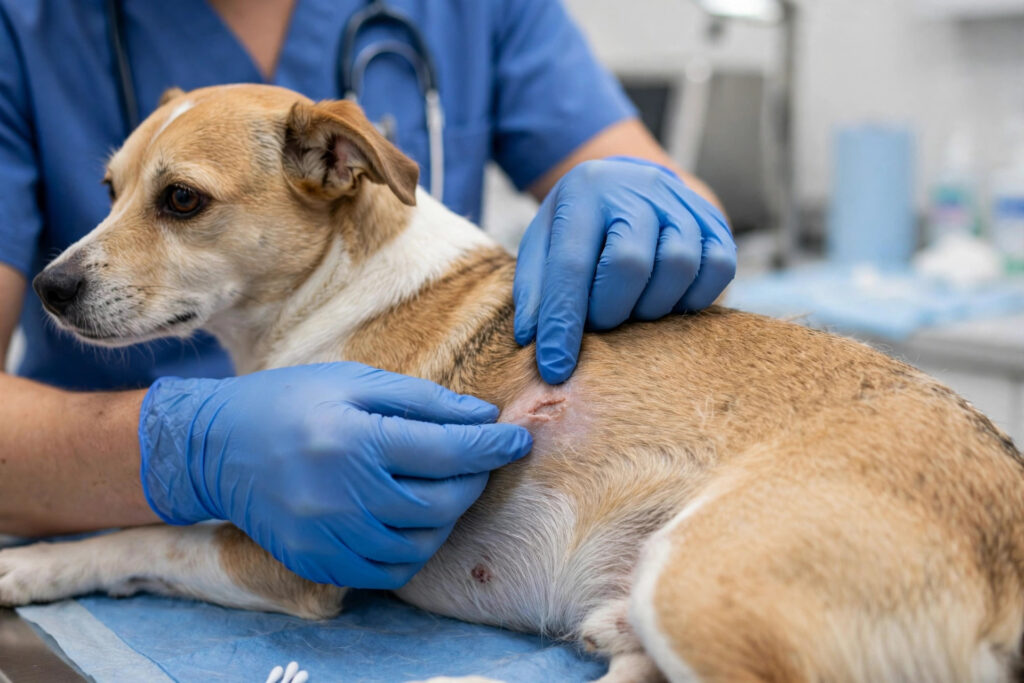
The classic presentation, and the one to memorize, is a wound that is getting worse instead of better, smells foul, and contains visible larvae. Owners may notice:
- A wound that won’t heal or that enlarges over a day or two despite cleaning and care.
- A strong, foul odor from the wound, noticeably worse than a normal healing cut.
- Visible larvae in the wound — small, pale, segmented maggots, often packed together with their bodies oriented into the tissue.
- Bleeding, discharge, or swelling around the wound, sometimes with the dog licking, biting, or guarding the area.
- Behavior changes: restlessness, pain, loss of appetite, or hiding — some dogs seem distressed before the wound itself looks dramatic.
If you see larvae in a wound, or a wound with that smell and trajectory, treat it as a same-day veterinary emergency. Do not try to pick the larvae out yourself: larvae left behind keep feeding, home extraction usually leaves fragments and drives the rest deeper, and your vet needs to see the infestation as found — both to treat it properly and because suspected screwworm cases need to be reported to animal health authorities. Keep the dog from licking the wound, cover it loosely with a clean cloth if your dog tolerates it, and go in.
Where Cases Stand, as of Mid-November 2026
These counts move daily, so read them as a mid-November 2026 snapshot, not a final tally. The AVMA reported 127 detections in the United States as of November 10, 2026, of which 64 were active cases. Detections span livestock, wildlife, and companion animals, concentrated in the southern border region.
Texas confirmed a case in a dog in Presidio County on November 19, and state authorities established Infested Zone 41 around the affected area — a designated zone where animal movement and surveillance rules tighten to contain spread. Arizona reported 7 cases by November 20, including 2 in dogs. New Mexico has not been the center of confirmed companion-animal cases in this snapshot, but its border with both states and with Mexico is why federal guidance treats the TX–AZ–NM border corridor as the zone of concern.
Two honest caveats. First, the count will be different by the time you read this — screwworm surveillance is active, and new detections are announced as they’re confirmed. Second, detection is not the same as establishment: finding cases, including in animals that recently traveled, is what the surveillance system is for, and zones like Texas’s Infested Zone 41 exist to keep found cases from becoming a foothold. Check the AVMA and your state veterinarian’s office for the current map before drawing conclusions about your own county.
The Bravecto Emergency Authorization: What It Is and Isn’t
On November 3, 2026, the FDA issued an Emergency Use Authorization (EUA) for Bravecto (fluralaner) chews for the treatment of New World screwworm myiasis in dogs and puppies. Fluralaner is the same active ingredient long used in Bravecto’s familiar flea and tick products, and it’s a prescription product — your vet is the gatekeeper, and that’s by design.
Three clarifications matter:
An EUA is not full approval. An emergency authorization lets a product be used for a serious condition during an emergency, based on the evidence available at the time, while the full approval process continues separately. It means regulators judged that the known and potential benefits outweigh the known and potential risks for this use, right now — not that the product has completed the standard approval pathway for this indication.
It’s a treatment authorization, not a prevention claim. The EUA covers treating dogs that have screwworm myiasis. It is not a license to assume any flea-and-tick product prevents screwworm, and it doesn’t replace the basics: wound care, wound monitoring, and fly management around healing injuries.
The class warning still applies. Bravecto belongs to the isoxazoline class of parasiticides, and products in this class carry an FDA warning about neurologic adverse events — including muscle tremors, ataxia, and seizures — in a small number of treated animals, including animals with no prior history. That doesn’t make the product off-limits; it makes the vet conversation real. Tell your vet about any seizure history before treatment, for this or any isoxazoline product.
What Owners Should Do Now, by Risk Zone
The FDA’s current position is that most dogs in the United States are at low risk right now. If you’re in Ohio, this article is background knowledge, not a change to your week.
If you’re in the Texas, Arizona, or New Mexico border zones — or your dog travels there, or recently arrived from an affected area — the advice firms up:
- Check wounds daily. Every cut, scrape, hot spot, surgical incision, and tick bite gets a look and a sniff, every day, until it’s fully healed. Screwworm starts in wounds; a healed dog has no doorway.
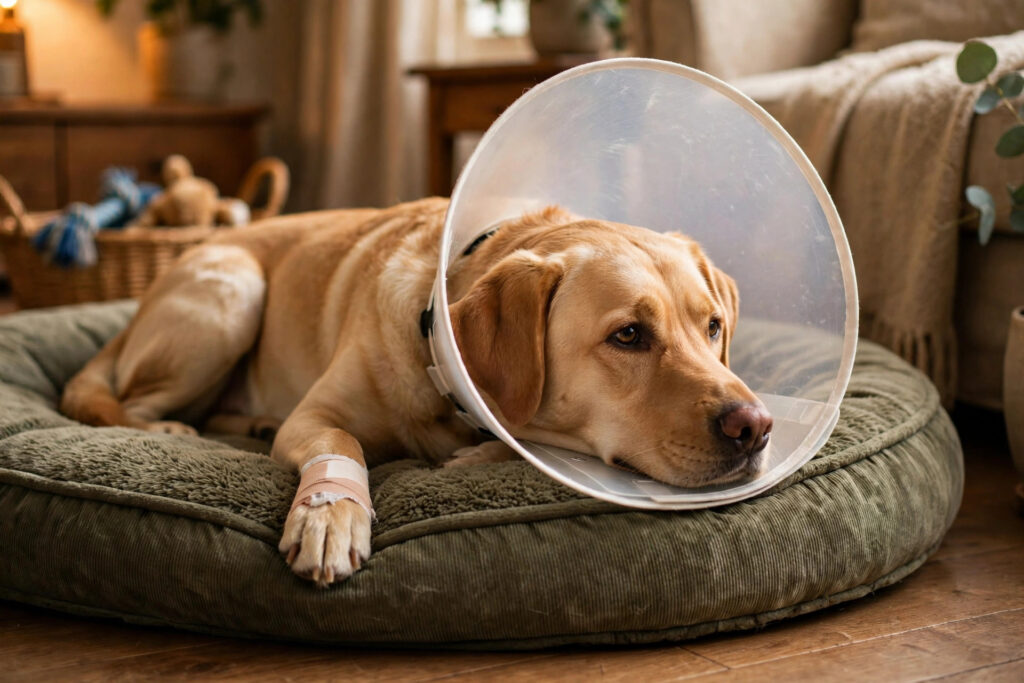
- Keep wounds clean and covered as your vet directs, and use an e-collar if your dog is worrying at an injury — licking keeps wounds open and attractive to flies.
- Talk to your vet now, before any problem: about wound protocols, about whether treatment options like the authorized Bravecto use make sense for your dog’s situation, and about what your clinic wants you to do if you find a suspicious wound after hours.
- Watch travel and new arrivals. Dogs moving from affected areas deserve an especially careful once-over, including ears, paws, and under collars, where small wounds hide.
Frequently Asked Questions
How can I tell screwworm larvae from regular maggots in a wound?
Honestly, you often can’t make that call reliably at home — and you don’t need to. The working rule: any wound with visible larvae, a foul smell, or a pattern of getting worse instead of healing is a same-day vet visit, full stop. Your vet can identify the larvae, and suspected screwworm needs professional identification and reporting anyway.
My dog has a small cut and we live in Texas. Should I panic?
No — but do the daily-check routine seriously. Clean the wound as your vet would advise, keep it covered or keep your dog from licking it, and look at it every day until it closes. Most wounds in Texas dogs are still just wounds. The ones that change character — enlarging, smelling foul, oozing, or showing larvae — get seen the same day.
Does the Bravecto authorization mean I should stock up on it?
No. The Emergency Use Authorization covers veterinary treatment of confirmed screwworm myiasis in dogs and puppies, and Bravecto is prescription-only. There’s no owner stockpile step here. The useful move is a conversation with your vet about your dog’s risk and plan, especially in border zones.
Is an Emergency Use Authorization the same as FDA approval?
No. An EUA is a temporary emergency pathway: it permits use of a product for a serious condition during a declared emergency based on the evidence available now, under specific conditions. Full approval is a separate, longer process. The FDA can also revise or revoke an EUA as evidence and circumstances change.
Can people get New World screwworm?
Human cases are possible but rare, and they follow the same rule — larvae infest open wounds. The practical guidance for people is the same wound hygiene: keep cuts clean and covered, especially when traveling in affected regions, and seek medical care for any wound that worsens, smells foul, or shows larvae. Your dog cannot give you screwworm directly; the fly is the vector.
Which states are affected?
As of mid-November 2026, confirmed companion-animal cases include a dog in Presidio County, Texas (with Infested Zone 41 established), and Arizona reported 7 cases including 2 dogs. The AVMA counted 127 US detections overall as of November 10, 64 of them active. Counts change daily — check the AVMA or your state veterinarian for the current list before relying on any summary, including this one.
The Bottom Line
New World screwworm is serious, genuinely — a wound parasite that eats living tissue and escalates fast. It’s also, right now, a geographically concentrated problem with an active surveillance system, a same-day answer at any vet clinic, and a newly authorized treatment. Most American dogs are at low risk. Border-zone owners should add one habit: eyes and nose on every wound, every day, until it’s healed. If a wound ever smells foul, worsens, or shows larvae, skip the home remedies and go straight to your vet. With this parasite, a day of waiting is the one mistake that matters.