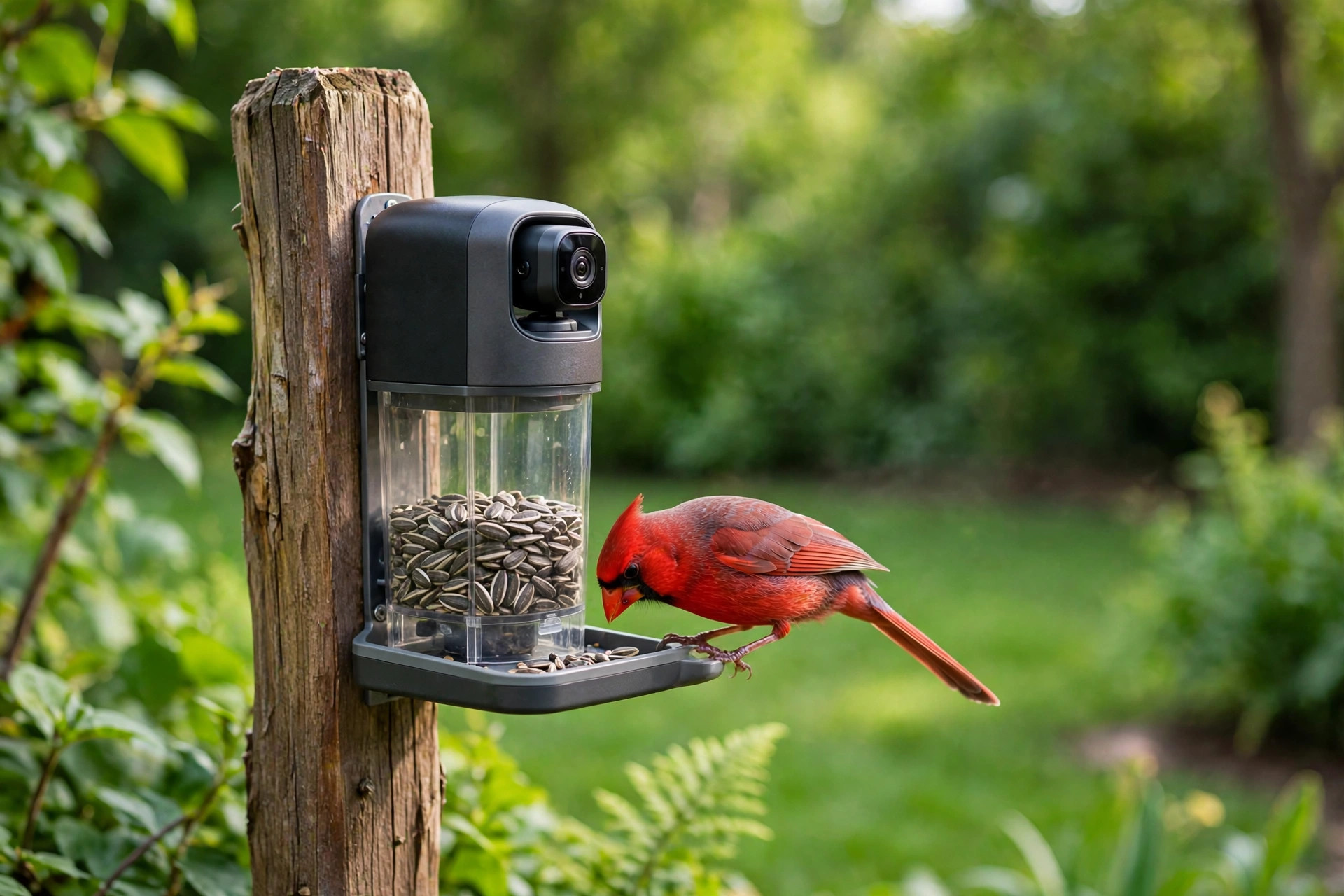
Here’s a sentence nobody expected to say about bird feeders: they’re a tech gift now. The camera bird feeder — a feeder with a small camera, a phone app, and AI that names the species at your seed — has gone from Kickstarter curiosity to the present bird lovers actually ask for. Searches for camera bird feeders are up about 94% year over year, running around 18,100 searches a month, and the category that Bird Buddy and Birdfy built keeps widening. If you keep pet birds indoors, this trend lands in an interesting place: the same device that brings wild birds closer on your screen also brings them closer to your home, and that second part needs a plan. This guide covers both halves — the gadget, honestly reviewed as a category, and the safety rules that make it a good idea for a pet-bird household.
Key Takeaways
- The trend is real: Camera bird feeder searches are up roughly 94% year over year at about 18,100 a month — it’s the biggest riser in backyard birding.
- What you’re buying is the app: Bird Buddy and Birdfy popularized AI species ID; the feeder is hardware, but the identification, clips, and sharing live in the app — sometimes behind a subscription.
- Camera vs. window feeder is the renter question: Window feeders are cheap and close-up; camera feeders win on identification, sharing, and watching from anywhere.
- There’s a bonus for cat owners: A window or camera feeder is genuine “bird TV” for indoor cats.
- The pet-bird rule: During bird-flu season, clean feeders regularly, keep pet birds indoors away from wild birds and droppings, and wash hands between the feeder and your parrot.
Why This Gift Took Off
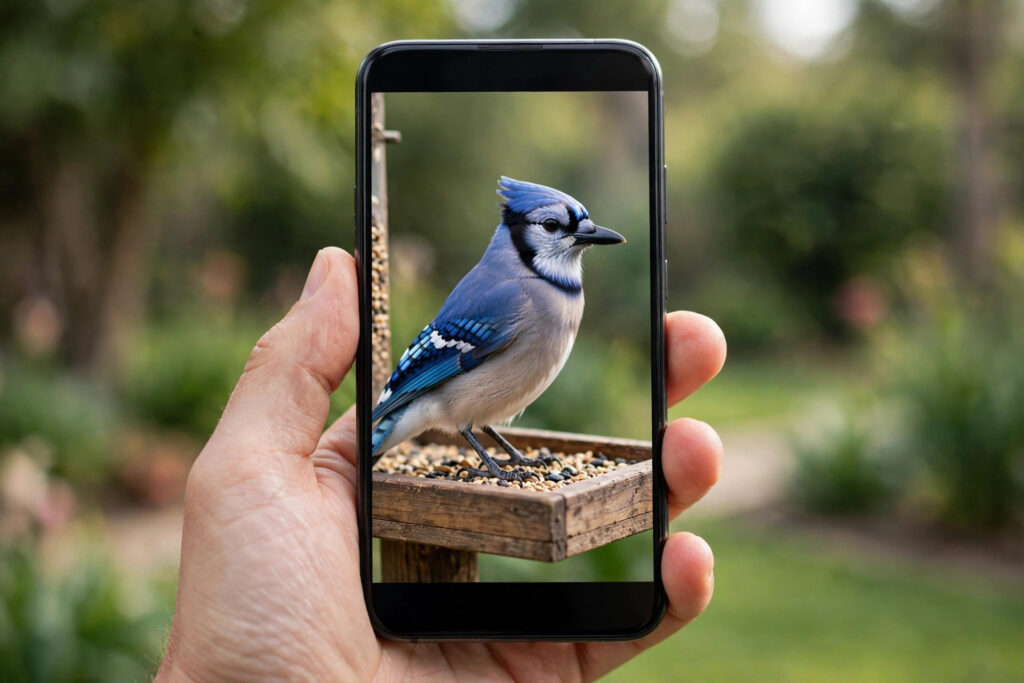
The appeal isn’t really the feeder. It’s the moment your phone buzzes with a short clip — a cardinal, mid-hop, looking straight into the lens — and a label telling you exactly who that is. Bird Buddy built its name on that postcard-from-the-feeder experience, and Birdfy pushed the category wider with more models at more price points. Together they turned casual backyard watching into something closer to a nature feed you subscribe to, starring your own yard.
For gift-givers, the math is easy: it’s a present that keeps producing small surprises for years, it works for someone who “doesn’t want more stuff,” and it suits houses, apartments with a balcony, and grandparents who can’t get out to a trail as easily as they used to. For pet-bird people specifically, there’s an extra layer — we already watch birds for fun. A camera feeder is the wild flock, on demand, without a single wild bird ever touching our pets. That last clause is the important one, and it gets its own section below.
How Camera Feeders Work (and What to Check Before Buying)
The AI identification
The camera watches the feeding port. When a bird lands, it records a short clip or photo set, and the app identifies the species. Realistically: the AI is very good on common, well-lit birds — cardinals, chickadees, goldfinches, jays — and shakier on the hard cases every birder struggles with, like sparrow species, female finches, and juveniles in bad light. Expect occasional confident wrong answers. Treat the ID as a strong suggestion with photo evidence you can judge yourself, which is honestly how birding has always worked. Over weeks, the app builds a collection of your visitors, and that collection — your yard list, with pictures — is what owners end up loving most.
Subscriptions and running costs
Read the app terms before you buy, because models differ. Core identification is typically included; premium tiers may add expanded ID features, longer video storage, or guest sharing. Factor in seed (a camera feeder that works will go through seed faster than you expect — word gets around the neighborhood), and a possible memory card or cloud plan depending on the model. None of this is a deal-breaker, but the gift version of this product should come with the first bag of good seed and the honest heads-up about the app.
Power and placement
Most camera feeders run on a rechargeable battery, often paired with a small solar panel that keeps it topped up in decent light. Wi-Fi range is the constraint people underestimate: the feeder needs a solid connection to your home network, and a metal-sided house or a feeder at the far end of a big yard can break that. Mount it where your phone still shows strong Wi-Fi, five or so feet up, near shrubs birds can stage in — but not so close to a branch that squirrels get a launch pad. You’ll know your placement is right when the first clips arrive within a day or two; birds find a new feeder fast, and a camera feeder in a good spot is busy.
Camera Feeder vs. Window Feeder: The Apartment Question
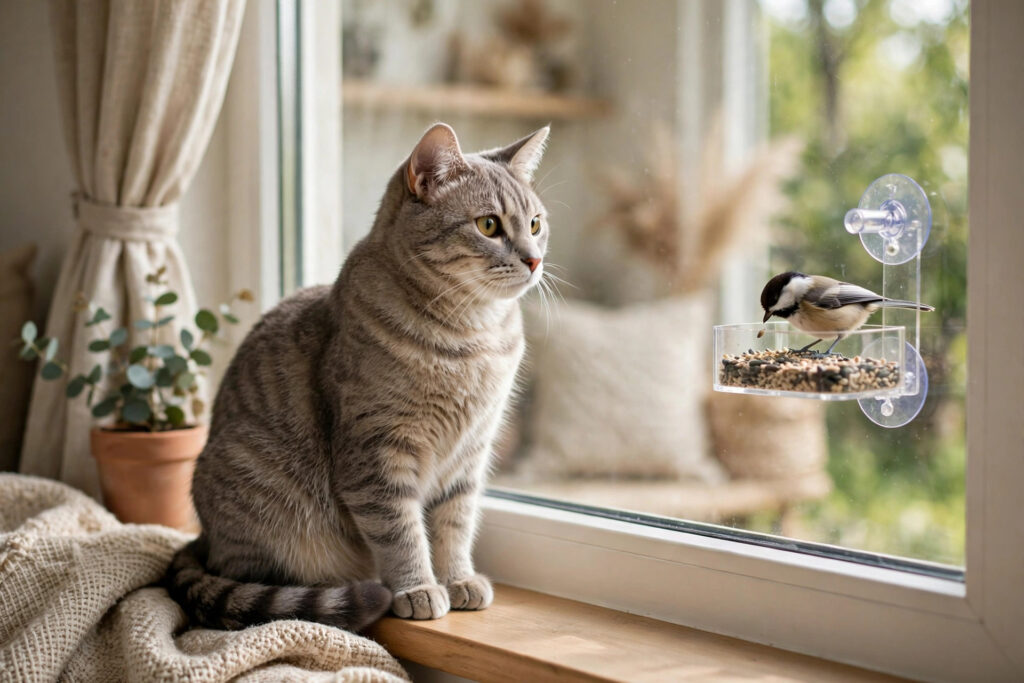
Renters and apartment dwellers have a different decision. A suction-cup window feeder costs very little, installs in two minutes, and puts birds eighteen inches from your face — an experience no camera fully matches. It needs no Wi-Fi, no charging, and no landlord conversation. What it can’t do is identify species for you, record anything, or show you the feeder while you’re at work.
The camera feeder wins on identification, sharing, and remote watching, and many mount on a balcony railing or a pole in a small patio. But check your lease and your building’s rules about exterior mounts and feeding wildlife — some properties restrict feeders because of mess and pests. A practical middle path for renters: start with the window feeder, enjoy the close-ups, and let the camera feeder be the upgrade once you know your window gets traffic. Either way, the “bird TV” effect is real — indoor cats are mesmerized by a window feeder, and a cat parked happily at the glass is a cat not climbing your curtains. If your home includes both a cat and a pet bird, the feeder also earns its keep as a decoy attraction pointed away from the bird’s room.
Making It a Gift That Lands Well
If you’re giving one, set the recipient up for a good first week. Pair the feeder with a bag of quality seed so it can go up the same day, and — if you’re close — offer to help with the mounting and the app setup, because the gap between “unboxed” and “first cardinal clip” is where these gifts stall. Mention the subscription question honestly rather than letting it surprise them in the app. And if the recipient keeps pet birds, the safety rules in the next section aren’t fine print; they’re part of the gift. A feeder run carelessly is a disease risk parked in the yard. A feeder run well is years of wild birds on a screen and a pet flock that never shares air with any of them.
The Part That’s Ours: Keeping Wild Birds Away From Your Pet Bird
Now the section a pure gadget review would skip, and the one that matters most in a pet-bird home. A feeder concentrates wild birds — their droppings, feathers, and saliva — in one spot in your yard. Wild birds can carry diseases that pet birds are vulnerable to, and avian influenza (“bird flu”) has made this a standing seasonal concern rather than a theoretical one. The ASPCA’s pet care guidance and avian vets land on the same practical rules; Lafeber Pet Birds covers bird health topics from the veterinary side if you want to read deeper. None of the rules ask you to give up the feeder. They ask you to run it like a careful bird keeper.
- Keep pet birds indoors, away from wild birds and their droppings. No shared airspace, no outdoor cage time beneath a feeder, and no “visits” between your parrot and the yard flock — ever. If your bird gets supervised outdoor time in a travel cage, place it far from feeders and feeding areas, and never on ground where wild birds congregate.
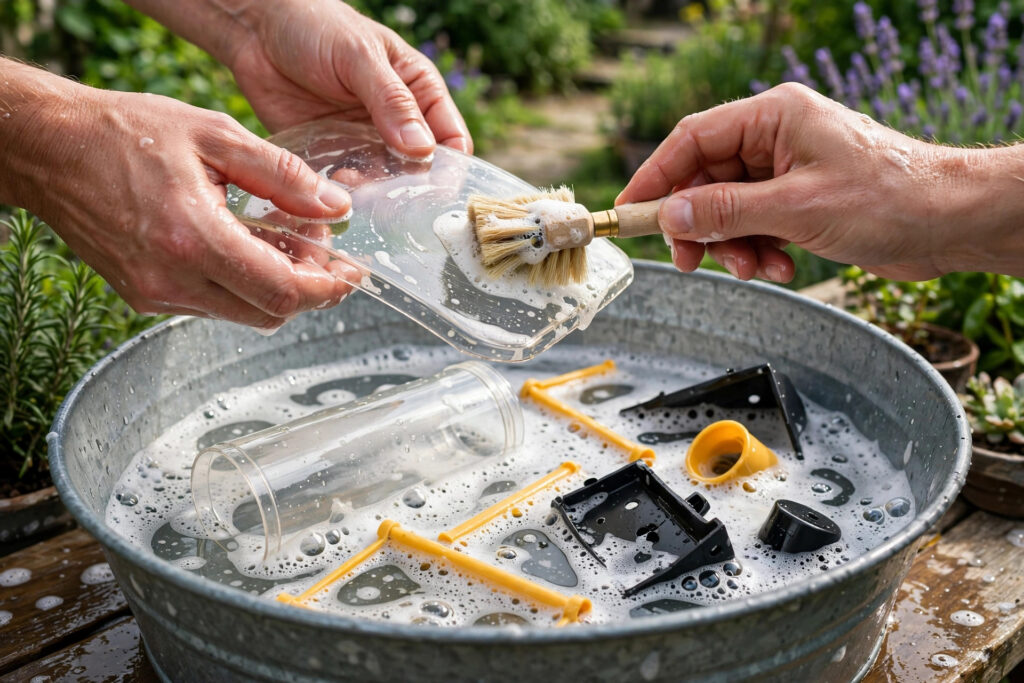
- Clean feeders regularly, especially during bird-flu season. Take feeders down on a regular rotation, scrub them with hot soapy water or a diluted disinfectant, rinse well, and let them dry completely before refilling. Dump spilled seed and hulls from the ground beneath — that’s where droppings concentrate. If you find a sick or dead wild bird at your feeder, stop feeding for a couple of weeks, clean everything, and let the flock disperse.
- Wash hands between the garden and your bird. Handling feeders, seed bags, and garden gear, then handling your pet bird, is the crossover path you’re actually in control of. Soap and water between the two worlds, every time. Keep a dedicated pair of yard shoes by the door during flu season, and don’t bring feeder parts to the kitchen sink your bird’s dishes use — or clean and disinfect the sink afterward if you must.
- Quarantine logic applies to everything wild. No wild feathers as toys, no found branches as perches without proper cleaning and baking, no letting your bird walk on surfaces where wild birds have been. The feeder is a screen between you and the wild flock. Keep it that way and it’s a safe pleasure.
Frequently Asked Questions
Do camera bird feeders really identify species accurately?
Mostly, for common birds in decent light. The AI in apps like Bird Buddy’s and Birdfy’s is reliable on distinctive species and noticeably less certain on sparrows, female finches, and juveniles — and it will occasionally be confidently wrong. The saved photos and clips let you double-check, and for most owners the running collection of identified visitors is the real joy of the device.
Do I need a subscription for a camera bird feeder?
It depends on the brand and model. Basic identification and notifications are usually included, while premium tiers may cover extended video storage, advanced ID features, or sharing with family. Check the app’s current terms for the specific model before buying, and budget for seed either way — a popular feeder eats.
Is a camera feeder a good gift for someone in an apartment?
It can be, if there’s a balcony or patio and the building allows feeders — check the lease first. If mounts or outdoor feeding are restricted, a suction-cup window feeder is the apartment-safe alternative: no Wi-Fi, no charging, birds at arm’s length, and excellent entertainment for indoor cats.
Can a bird feeder make my pet bird sick?
Not through the screen — through contact. The risks are droppings and debris under the feeder, shared surfaces, and your own hands and shoes moving between the yard and your bird. Keep pet birds indoors and away from wild birds and droppings, clean feeders regularly (especially during bird-flu season), and wash hands between handling feeders and handling your pet, and the hobby stays safely separate from your flock.
What seed should I put in a camera feeder?
Black-oil sunflower seed is the crowd-pleaser that draws the widest variety of species to most yards, and it photographs well, which is half the fun. Buy seed in quantities you’ll use while it’s fresh, store it sealed away from your pet bird’s food, and skip cheap mixes heavy in filler seed that birds kick out onto the ground — that waste layer is also where droppings collect.
The Bottom Line
The camera feeder earned its trend: it’s a gift that turns a yard into a slow, delightful channel of identified visitors, and the 94% surge in searches says plenty of people have figured that out. Buy it for the app experience, place it where the Wi-Fi is strong, and expect the AI to be a good-but-not-perfect birding partner. And if your home has a pet bird — run the feeder like a keeper. Clean gear, indoor pets, washed hands. Wild birds on the screen, pet birds safe inside: that’s the whole arrangement, and it’s a good one.