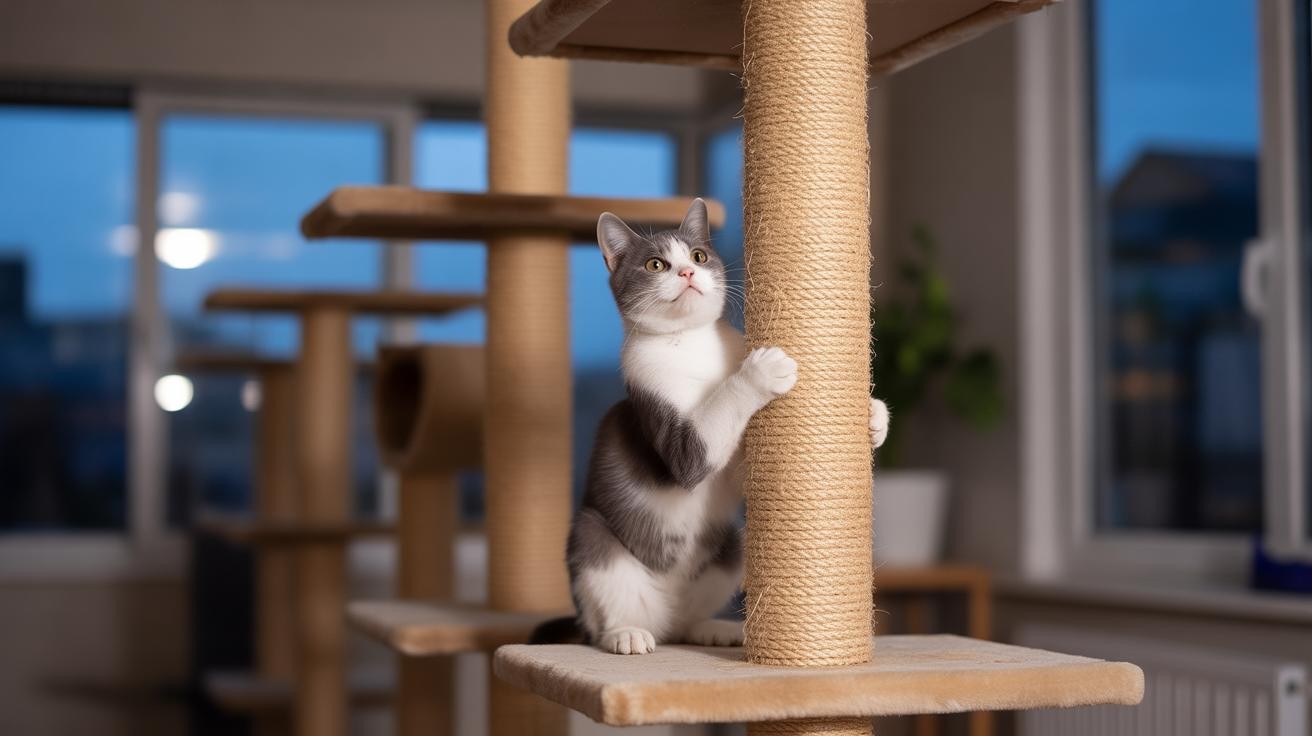
Here’s the short answer in the cat tree vs. scratching post debate: every cat needs something to scratch, but not every cat needs a full cat tree. If your cat mainly scratches furniture and isn’t a big climber, a tall, sturdy scratching post is enough. If your cat climbs curtains, naps on top of the refrigerator, or shares a home with other cats or a dog, a cat tree earns its space — and its price.
Maybe you’re standing in a pet store aisle, or scrolling at midnight with a shredded couch arm in the next room, wondering if that big carpeted tower is overkill. You’re not alone. Most of us buy the wrong thing first, watch our cat ignore it for a week, and then blame the cat. Usually, the cat was right all along. The trick is matching the furniture to how your cat actually lives.
The right choice depends on how your cat scratches, climbs, and sleeps. This guide breaks it down honestly, including the cases where a simple post beats a tree, what to do if you’ve already bought the wrong one, and the mistakes that make even a great scratcher go unused.
Key Takeaways
- Every cat needs a satisfying place to scratch — a post covers that basic need, a tree adds climbing, perching, and napping on top of it.
- Height, stability, and location matter more than price. A wobbly post in a spare room will lose to your couch every time.
- Match the scratcher to your cat’s style: vertical stretchers need tall posts, carpet scratchers often prefer flat or angled scratchers.
- Start with one excellent post by the furniture your cat already scratches. Add a tree when your cat shows you she wants height.
What Each One Actually Does
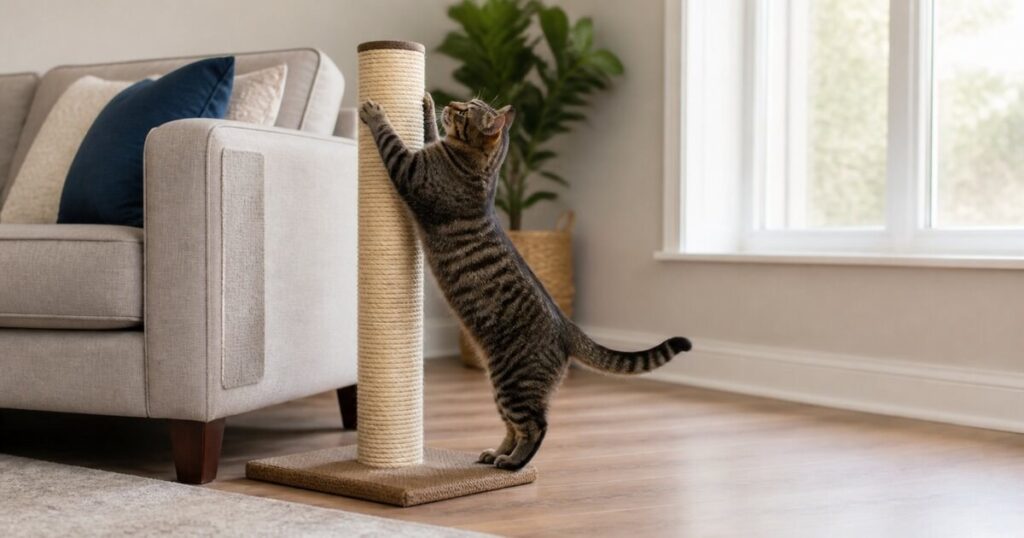
A scratching post has one job: scratching. It’s a vertical — or sometimes angled — surface, usually wrapped in sisal rope or carpet, on a stable base. Scratching keeps claws healthy, stretches the shoulders and back, and lets cats mark territory with scent glands in their paws.
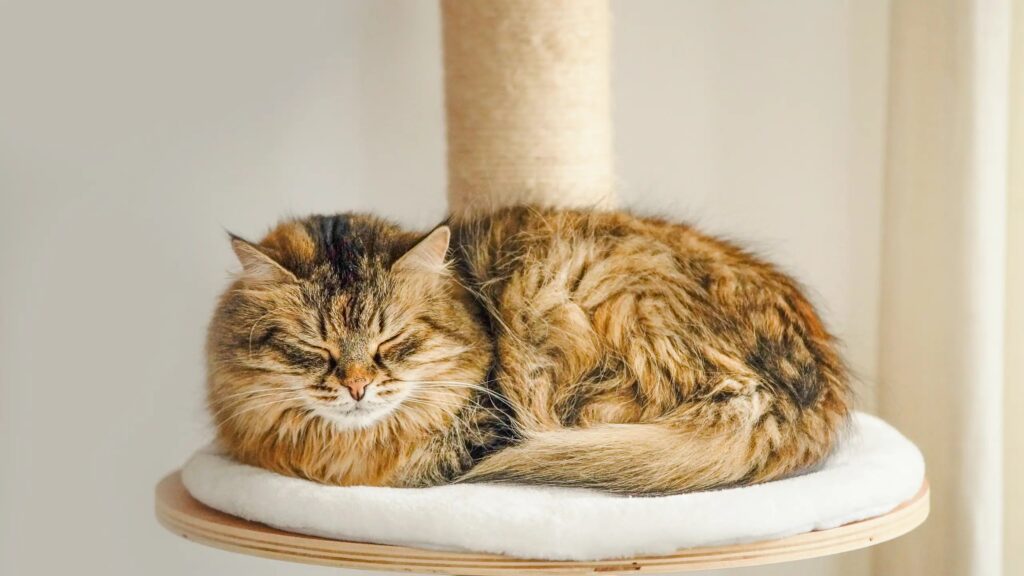
A cat tree is furniture: a scratching surface plus perches, platforms, and often a hideaway, stacked at different heights. It serves scratching, climbing, napping, and lookout duties in one footprint. Think of a post as a tool and a tree as a room your cat owns.
That difference matters on a typical evening. A post gives your cat a place to stretch after a nap, dig in, leave her scent, and walk away. A tree gives her somewhere to be — up high, watching the kitchen, dozing in the sun, getting out of the dog’s way when the doorbell rings. If your cat keeps inventing high spots out of bookshelves and curtain rods, she’s asking for the tree.
Why Cats Scratch in the First Place
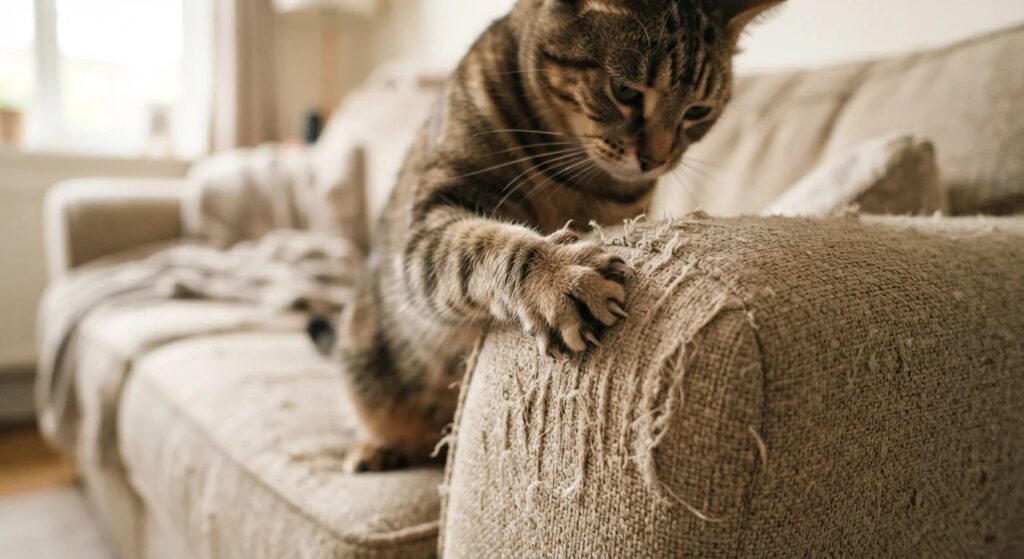
It helps to know scratching isn’t bad behavior you’re trying to eliminate. It’s maintenance, exercise, and communication rolled into one. As the ASPCA explains in its guide to scratching behavior in cats, cats scratch to remove worn outer claw sheaths, to stretch, and to mark territory. You can’t train that need away — and you wouldn’t want to. What you can do is give it a better target than your sofa.
The Cornell Feline Health Center makes the same point from the marking angle: scratching deposits scent from glands in the paws and leaves visible marks behind. In other words, when your cat scratches the corner of the couch where you always sit, she’s not being spiteful. She’s saying, in cat, “I live here, and so does my favorite person.” You can read more in Cornell’s overview of feline destructive behavior and scratching. Once you see scratching as a message, the fix makes more sense: put an approved marking post right next to the spot she’s already chosen.
That also explains why cats scratch after naps, when you come home, and when they’re excited about dinner. It’s a feel-good stretch and a little announcement all at once. A good post or tree, placed where life actually happens, taps right into those moments.
How They Compare
- Scratching: Equal, if the post is tall and stable enough and the tree’s posts are wrapped in sisal. Height and sturdiness matter more than category.
- Climbing and exercise: Tree wins. Multiple levels invite jumping and climbing that a post can’t offer.
- Napping: Tree wins. Elevated perches are prime sleeping spots. A post offers no nap space at all.
- Space: Post wins. A post fits a corner or beside a couch in an apartment. Trees need a real footprint and visual space.
- Cost: Post wins. A quality post costs far less than a quality tree, and cheap, wobbly versions of either are a waste of money.
- Multi-cat homes: Tree wins. Several levels let cats share territory vertically instead of competing for one spot.
- Safety and confidence: Tree wins for shy cats in busy homes, because a high perch is an escape route from dogs, kids, and visitors.
One comparison people forget is lifespan. A well-made post can last years, especially with replaceable parts. A big tree is more of a commitment — and a two-person job to move. Still, a solid tree your cats use for hours a day is cheap entertainment compared with replacing a couch.
Start With How Your Cat Scratches
Watch before you buy. Cats that scratch vertically — stretching up the side of a couch or a door frame — need a tall vertical post or tree. Cats that scratch horizontally — working the carpet or a rug — often prefer a flat or low-angled scratcher, and may ignore a tall post entirely. Buying for the cat you have, not the cat in the product photo, is the difference between a purchase that gets used daily and one that gathers dust.
Spend two days just noticing. Does your cat head for the arm of the loveseat right after waking up? Does she rake at the entry rug when you walk in? Does your kitten go for the laundry basket and the cardboard box instead? Write it down if you have to. Those little habits tell you the material, the angle, and the room where your new scratcher needs to live.
Whichever style you choose, stability is non-negotiable. If a post rocks or tips when your cat leans into it, your cat will stop using it and go back to the couch, which never wobbles. For vertical scratching, the post should be tall enough for a full stretch — around 28 to 32 inches at minimum for most adult cats — with a heavy, wide base. The ASPCA gives similar advice in its guide to destructive scratching: offer different surfaces and angles, and make sure upright scratchers don’t wobble or tip, or cats will avoid them.
When a Scratching Post Is Enough
- Your cat scratches furniture but rarely climbs.
- You live in a small apartment and floor space is tight.
- Your cat already has high spots she loves, like a wide windowsill.
- You have one cat and a limited budget.
- Your cat is older or less mobile and no longer jumps to high places.
In these cases, spend your money on one excellent post placed right beside the furniture your cat currently scratches, rather than a mediocre tree. Location does half the work: a scratcher across the room won’t compete with the couch arm your cat already loves.
Here’s a real-world example. A senior cat who spends most of the day rotating between a sunny bed, the back of an armchair, and your lap probably doesn’t need a five-foot tower she’ll never climb. She needs a rock-solid post near her nap spot for that big post-sleep stretch, plus maybe a flat cardboard scratcher she can use without standing tall. Put the money you saved toward a better post, regular nail trims, and a bed she’ll actually use — our guide to how to get a cat to use a cat bed can help with that last one.
When a Cat Tree Is Worth It
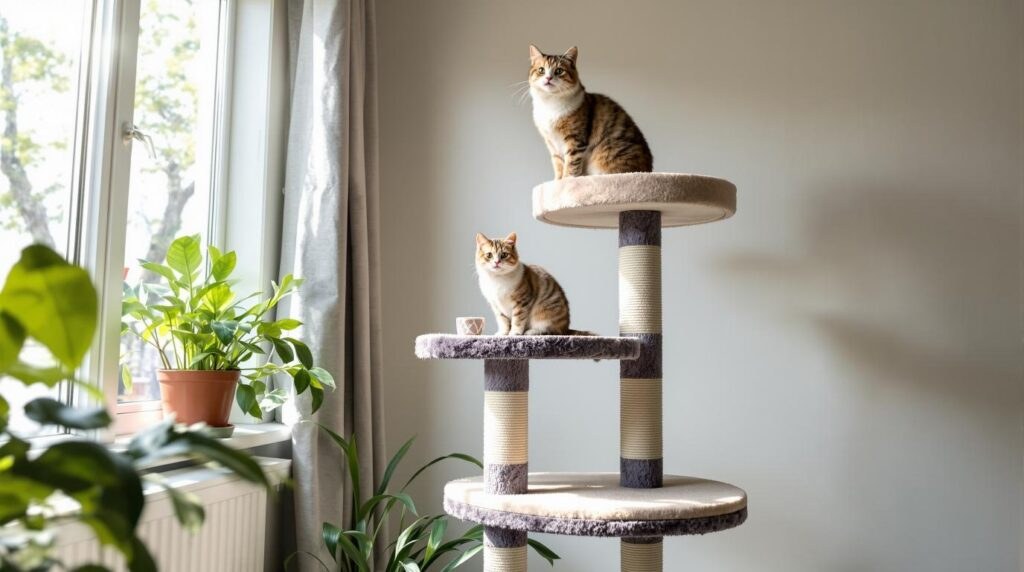
- Your cat climbs curtains, shelves, or the top of the fridge.
- You have two or more cats who need separate hangout levels.
- Your cat needs a safe retreat from a dog, children, or a busy household.
- Your indoor cat needs more daily movement and stimulation.
- Your cat loves napping in high, sunny lookout spots.
Place the tree by a window if you can. A perch with an outdoor view becomes entertainment, a sunbathing spot, and often your cat’s favorite bed in the house — which is why many owners find a tree replaces several other purchases at once.
In a multi-cat home, height can lower the temperature fast. Instead of two cats negotiating over the one good spot on the couch, a tree gives them levels: one up top like royalty, one in the hideaway, one on the middle perch pretending not to care. Add a dog or a toddler into the mix and that top perch isn’t a luxury anymore. It’s your cat’s quiet exit route, and cats who have an exit route tend to be calmer cats overall. Browse more options in our Scratchers & Trees category if you’re comparing styles for a busy household.
What to Look For in Either One
- Sisal over carpet: Sisal rope or fabric gives satisfying resistance and lasts longer. Carpet can loop and snag claws, and it feels similar to your household carpet, which blurs the lesson about what’s OK to scratch.
- Solid construction: Press on it. It shouldn’t wobble, creak alarmingly, or tip. Wall straps add safety for tall trees.
- Replaceable parts: Some posts and trees let you swap a worn scratching section instead of replacing the whole piece.
- Perch size: On a tree, platforms should fit your whole cat, curled up, with room to spare — especially for large breeds like Maine Coons.
- Easy cleaning: Removable, washable perch covers help with hair and the occasional hairball.
Pro tip: In the store, grab the top of the post and pull toward you like a cat would. If the base lifts, put it back. Online, check the base dimensions and the weight, not just the height in the headline photo. And measure your cat mid-stretch if you can — a big cat needs more than the minimum. It’s a funny two minutes with a tape measure, but it saves a return.
Common Mistakes to Avoid
- Buying the cutest one, not the sturdiest one. Pastel carpet and dangling pom-poms don’t matter if it sways the first time your cat leans in.
- Hiding it in a spare room. Cats scratch where they live, sleep, and greet you — not where it’s convenient for your decor.
- Forcing your cat onto it. Picking her up and pressing her paws into the post teaches her to avoid it, not use it.
- Tossing a beloved, shredded post too soon. That ragged look means it’s working. Cats often prefer a surface they can really get their claws into.
- Offering only one option in a big home. A cat who scratches in the bedroom and the living room probably needs a scratcher in both places, at least at first.
- Considering declawing to save furniture. Declawing is an amputation of the last bone of each toe, not a nail trim, and major veterinary groups oppose it for scratching problems. Nail trims, nail caps, training, and better scratchers are the humane place to start.
Getting Your Cat to Actually Use It
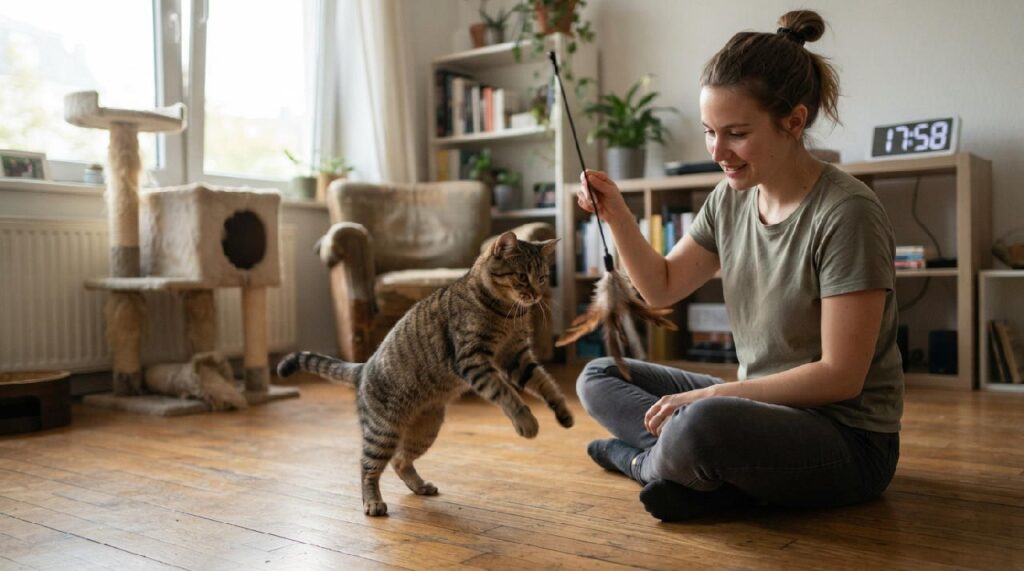
Put the new post or tree next to the spot your cat already scratches or naps, not in an empty spare room. Rub a little catnip or silver vine on it, play with a wand toy around it, and reward your cat for using it. Never lift your cat onto it and press her paws against the post — most cats resent the lesson and avoid the item. If your cat keeps scratching the couch, cover that spot temporarily with double-sided tape or a throw, and make sure the alternative is closer, taller, and more stable.
Give it time, too. Some cats march over and claim a new tree in ten minutes. Others circle it for three days like it owes them money, then suddenly nap on the top perch as if it was their idea all along — which, in their mind, it was. Sprinkle treats on the levels, feed a meal nearby, and let curiosity do the work. Once she’s using it reliably in the prime spot, you can inch it a foot or two at a time toward where you’d rather keep it.
Pair the new setup with regular play, too. A cat whose hunting energy has somewhere to go is less likely to shred out of boredom. If you’re not sure how much play is enough, our guide on how much playtime an indoor cat needs lays out a simple daily routine.
The Verdict
If you can only buy one thing today, buy a tall, heavy, sisal scratching post and place it well. It covers the need every cat has. Add a cat tree when your cat shows you she wants height — climbing, perching, escaping, or competing with housemates — or when you want one piece of furniture that handles scratching, exercise, and napping together. Many happy homes eventually have both: a tree by the window and a post beside the couch.
And if your cat ignores your first pick? Don’t take it personally. Move it, try a different material, add a flat scratcher beside it. Once you get it right, your couch gets to retire from active duty.
Frequently Asked Questions
Can a cat tree replace a scratching post completely?
Yes, as long as the tree has at least one tall, sisal-wrapped post that lets your cat stretch fully and doesn’t wobble. Check that section for wear, since it’ll get the most use, and choose a tree with replaceable scratching parts if possible.
Why does my cat ignore the scratching post and use the couch?
Usually the post is too short, unstable, covered in carpet, or placed too far from the couch. Move it directly beside the favorite scratching spot, confirm it doesn’t rock, and reward every use. Cats choose the most satisfying surface available — make the post win that contest.
How tall should a scratching post be?
Tall enough for your cat to stretch to full length while scratching, which for most adult cats means at least about 28 to 32 inches, with a wide, heavy base. Large breeds may need taller. A post your cat has to crouch to use will usually be ignored.
Should I get a scratcher for a kitten?
Yes, and start early. Kittens who learn where to scratch in the first months tend to keep the habit. Pick a stable post that isn’t so tall it scares a tiny kitten, put it near her sleeping area, and praise her when she uses it. She’ll grow into a taller post later — think of the first one as training wheels.
Is declawing a good alternative if nothing works?
No. Declawing removes the last bone of each toe and can lead to pain and behavior changes, and it’s not a fix for a normal behavior like scratching. Work through the humane options first — better placement, different materials, nail trims or caps, and covering favorite furniture spots. If scratching still feels unmanageable, talk with your veterinarian or a certified behavior professional before considering anything drastic.