If you’ve watched your budgie dive into a seed bowl like it’s the best thing that ever happened, you’re not alone. Budgies — also called parakeets — love seed. The trouble is, loving a food and thriving on it aren’t the same thing.
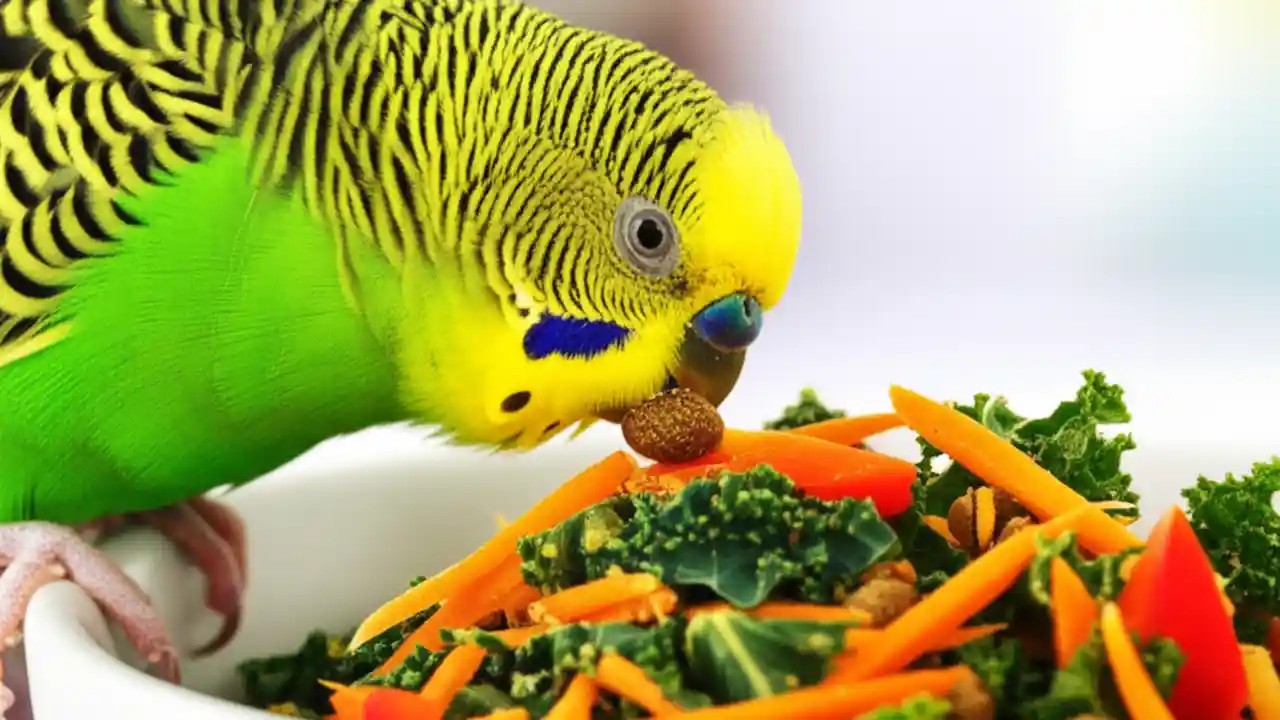
So what should a budgie eat every day? A quality pellet as the base, fresh vegetables every day, a small measured amount of seed, a little fruit now and then, and clean water that’s always available. No mystery diet, no expensive powder. Just the balance most seed-only birds aren’t getting. Think of seed as dessert. Pellets and vegetables are the actual meals.
This article is general information, not veterinary advice. An avian vet who knows your bird should guide decisions about illness, weight loss, breeding, or a major diet change.
Key Takeaways
- Make a small-parrot pellet the base — VCA Hospitals puts pellets at about 60% to 80% of a budgie’s daily diet.
- Offer fresh vegetables daily: leafy greens, broccoli, carrot, sweet potato, and bell pepper cover nutrients seed lacks.
- Keep seed small and purposeful — a measured portion or training reward, not an all-day bowl.
- Serve fruit in small pieces a few times a week, not as a daily staple.
- Convert a seed eater slowly over weeks. Watch weight and droppings, and never remove all familiar food overnight.
- Never feed avocado, chocolate, caffeine, alcohol, fruit pits, or salty processed snacks.
Why an All-Seed Diet Isn’t Enough
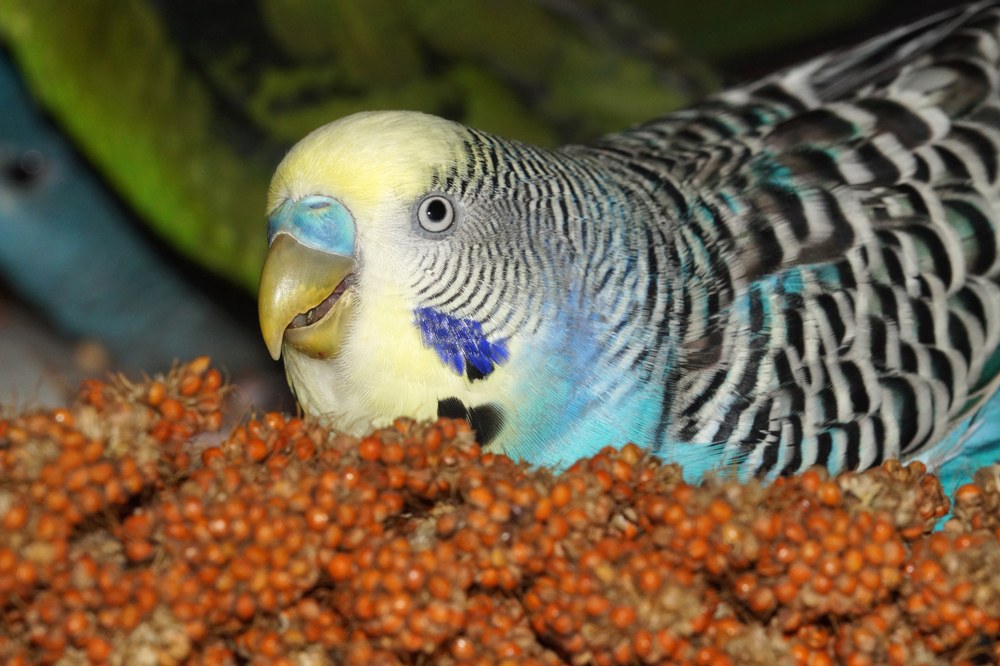
Wild budgies come from the Australian grasslands, where they forage on or near the ground for seasonal grass seeds, plus fruits, berries, and vegetation — and fly a long way to find it. As VCA Hospitals’ feeding guide for budgies explains, a pet-store seed mix is nothing like that varied life.
A typical mix holds only a few kinds of seed. It’s often high in fat and carbohydrates and low in protein, calcium, and vitamin A. And your budgie won’t even eat it evenly. He’ll pick out the millet and his one or two favorites and leave a bowl of hulls that looks eaten. It isn’t. He’s had the bird version of eating only the marshmallows out of the cereal.
Over time, that imbalance matters. VCA notes budgies are vulnerable to obesity and other nutrition-related problems, and the problem is sneaky — a bird can look bright and chatty while eating a diet short on basics. The goal isn’t to ban seed. It’s to put seed back in its proper place.
The Daily Mix at a Glance
Here’s the everyday picture. You’ll find more feeding guides in our Bird Food & Seeds category.
- Pellets: The base, available through the day in a clean bowl, sized for budgies or small parrots.
- Fresh vegetables: Offered daily, chopped small, in a separate dish.
- Seed: A small measured portion — roughly a teaspoon or so for many pet budgies, adjusted for your bird — or saved for training.
- Fruit: A few small bits, a few times a week.
- Fresh water: Changed daily, and right away if there’s a dropping or a dunked pellet in it. You know how that goes.
- Cuttlebone or mineral block: Left in the cage for calcium and beak wear. Some birds ignore it for weeks, then suddenly use it. That’s normal.
Exact amounts depend on size, activity, age, and health. A budgie with long daily flight time burns more than one who mostly sits and judges you from a perch. Don’t judge the diet by an empty bowl — hulls can fool you. Weigh your bird weekly on a gram scale, at the same time of day, if you can. A steady weight is reassuring; a sudden change is a reason to call your vet.
Pellets: Choosing a Base Your Bird Will Actually Eat
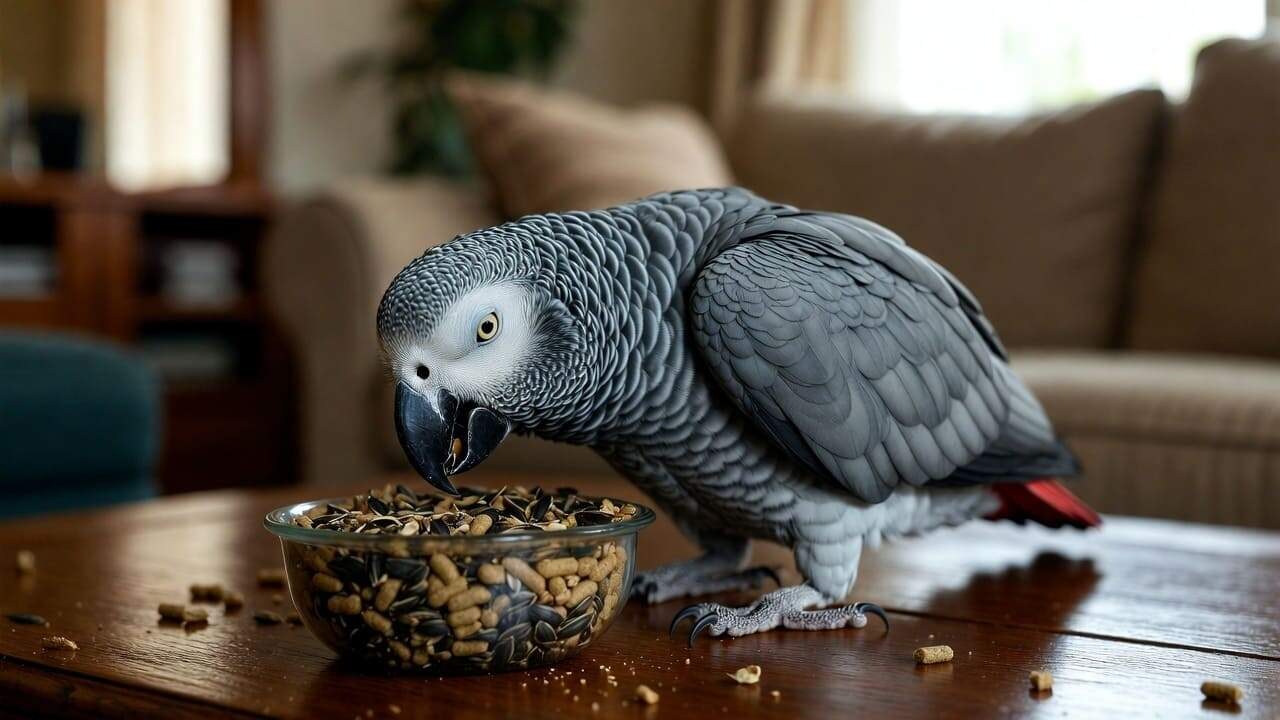
Pellets solve the pick-and-choose problem. Ingredients are ground together into uniform pieces, so every bite carries roughly the same nutrition. Your bird can’t sort his way out of it.
Choose a pellet for parakeets, budgies, or small parrots, with a clear ingredient list. Lafeber’s parakeet diet guidance likewise recommends a nutritionally balanced formulated diet rather than loose seed, with leafy greens and chopped vegetables around it. Size matters more than you’d think — a fine crumble a tiny beak can crack will get a fairer trial than a chunky piece made for a bigger parrot.
- Buy a bag you’ll finish while it’s fresh. Store it sealed, cool, and dry — not on top of the fridge.
- Check the date. Stale pellets are an uphill battle with an already suspicious bird.
- If your bird picks around brightly colored pieces, try a natural-colored pellet.
- Start with one brand and give the conversion a real chance before switching.
Pellets aren’t the only thing in your bird’s life, either. Fresh food adds moisture, texture, and something to shred.
How to Convert a Seed Eater to Pellets, Step by Step
Please don’t do the cold-turkey version. Some budgies don’t recognize pellets as food at first, and a bird who won’t eat can lose weight fast. “He’ll eat when he’s hungry” is risky advice for an animal this small.
- Week 1 — Introduce, don’t replace. Sprinkle pellets into the usual seed. Let your bird step on them, toss them, maybe taste one by accident. That’s progress.
- Weeks 2–3 — Shift the mix a little. Gradually raise the pellet share and trim the seed. If droppings shrink, your bird goes quiet, or the scale drops, back up a step.
- Use the morning appetite. Offer pellets first thing, when your bird is hungriest — a method VCA suggests — then bring familiar seed in later. Hungry helps; empty isn’t the goal.
- Make pellets taste familiar. Crumble them over chopped vegetables, moisten them slightly, or grind them to a powder and dust it over a favorite moist food.
- Eat healthy food nearby. Budgies are flock animals. A bird who watches you eat broccoli, and gets his own portion, is often braver about trying his.
- Watch for real eating. Pellet crumbs in the bowl, normal droppings, normal energy, stable weight. A full-looking bowl at night tells you nothing.
How long does it take? Sometimes two weeks, sometimes two months. Plenty of owners report a bird who ignored pellets for six weeks, then one Tuesday ate them like he’d invented the idea. Stay boringly consistent, and talk to an avian vet if weight drops.
Vegetables to Offer Every Day
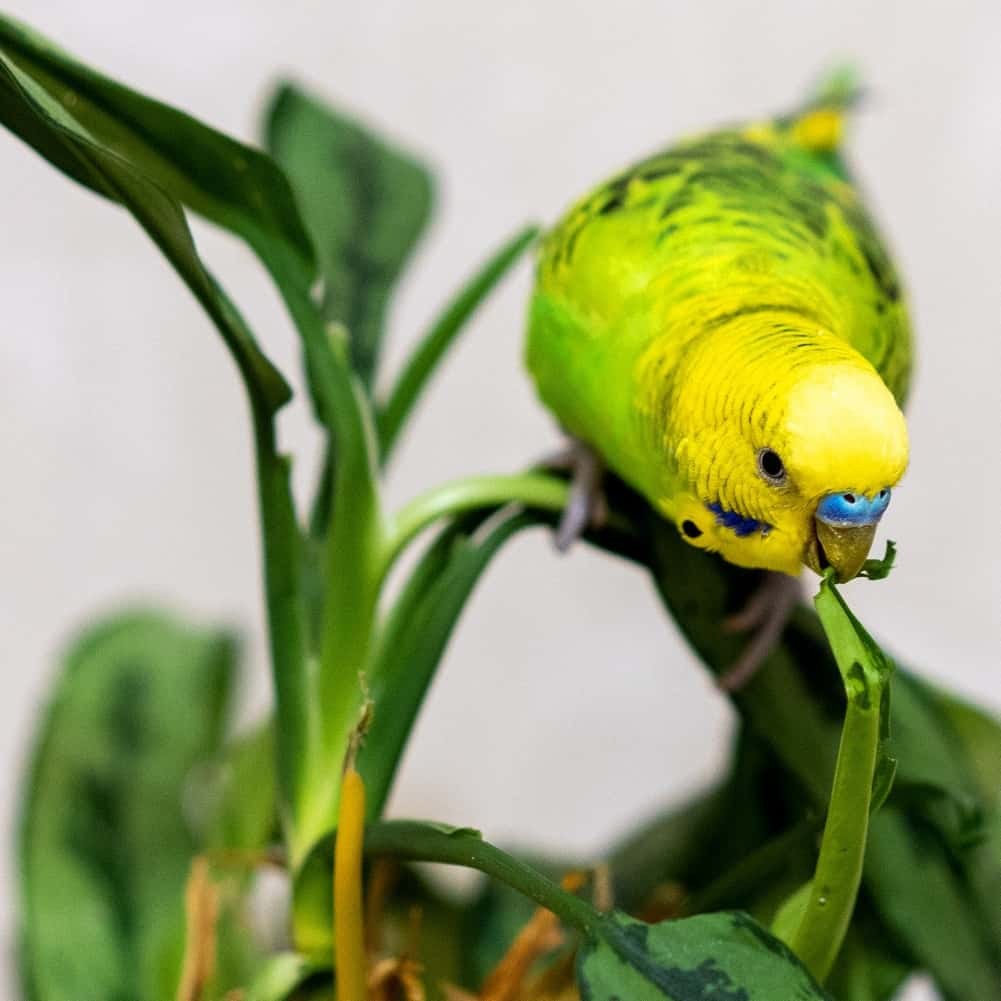
Vegetables are the daily habit that does the most good around the pellet base. Go for color — dark greens and orange vegetables bring nutrients seed diets run short on.
- Leafy greens: kale, romaine, bok choy, broccoli leaves, with spinach or Swiss chard in rotation
- Broccoli florets, finely chopped — many budgies love picking at the tiny buds
- Carrot and sweet potato, grated or lightly cooked and cooled
- Bell pepper in any color, including the seedy core many birds enjoy
- Zucchini, cucumber, green beans, peas, and corn in small amounts
- Herbs like cilantro and parsley, as small sprigs to shred
Wash everything, cut it to budgie size, and serve it in a separate dish or clipped to the bars. Pale, watery vegetables like iceberg lettuce and celery aren’t harmful as an occasional shredding toy, but they bring little nutrition — a point PetMD’s parakeet care sheet and VCA both support. Don’t let them crowd out the good stuff.
Expect rejection at first. Really — expect it. Keep offering small amounts: chopped one day, grated the next, clipped up as a leaf the day after. Presentation changes everything for some birds. Remove uneaten fresh food after a few hours, sooner in a warm room.
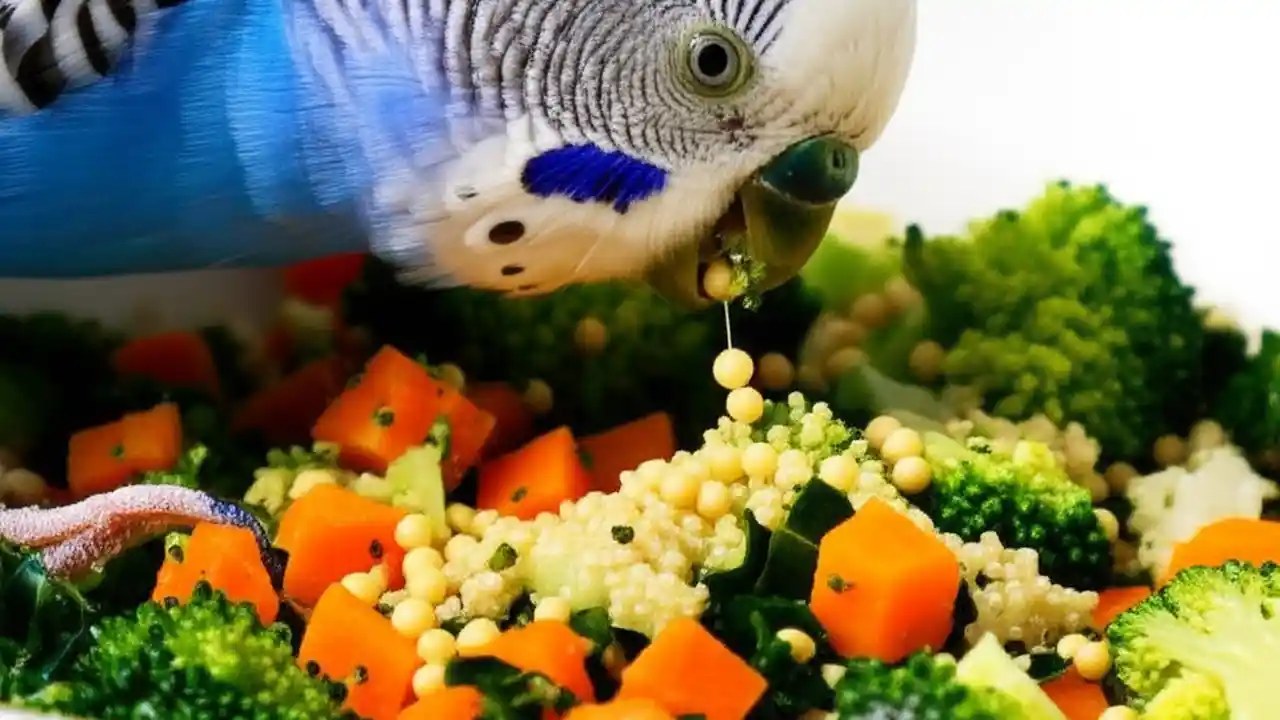
A Simple Chop Recipe to Start With
“Chop” is a finely cut mix, made so a small beak gets several ingredients in every bite and can’t pick out just one. Here’s a starter batch:
- 1 small broccoli floret, finely chopped
- 1 tablespoon grated carrot
- 1 tablespoon finely chopped kale or bok choy
- 1 tablespoon diced bell pepper
- 1 teaspoon peas or corn, thawed if frozen
- 1 teaspoon cooked, cooled sweet potato, diced small
Serve about a tablespoon per budgie in the morning. Refrigerate the rest, covered, and use it within a couple of days. New to chop? Sprinkle a pinch of familiar seed or pellet crumbles on top at first. That’s not cheating — it’s a bridge. Rotate what you have each week: carrot and kale, then zucchini and bok choy. You don’t need a farmers’ market haul for a tiny bird. You need small amounts, offered often.
Fruit, Seed, and Treats: The Smaller Share
Fruit is where owners overdo it with the best intentions. It’s nutritious, but sugary, and a thumb-sized chunk of banana is a feast to a budgie. Small pieces of apple (no seeds), berries, melon, mango, or banana a few times a week are plenty. Wash fruit, remove pits and seeds, and pull leftovers out promptly.
Seed, used well, is genuinely valuable — so spend that millet motivation. Save favorite seeds and a short piece of millet spray for step-up practice, recall, and foraging toys. A pinch tucked into a paper cup keeps a smart bird busy. But a full spray clipped in the cage all day isn’t a treat anymore. It’s lunch, and it just replaced the balanced one.
Honey sticks and sugary seed bars? Skip them, or keep them as a rare novelty. They’re basically more seed glued together with sugar. Your bird will tell you they’re wonderful. He’d also vote for millet at every meal. You’re the grown-up here.
Watch: Feeding a Budgie in Real Life
Sometimes it helps to see the routine — portions, bowls, and all:
A Daily Feeding Schedule You Can Actually Keep
You don’t need a spreadsheet. You need a rhythm you can repeat on a tired weekday:
- Morning: Scrub and refill the water dish. Add the day’s pellets to a clean bowl, and serve about a tablespoon of chop in a separate dish.
- Mid-morning: Peek at the water — budgies love dunking in it. Swap it if it’s cloudy.
- Early afternoon: Remove the morning vegetables, after about two to four hours. Offer a romaine leaf or cilantro sprig clipped to the bars, plus a foraging toy with a few seeds hidden inside.
- Late afternoon: Training time. Use the measured seed portion or a short piece of millet as rewards for ten minutes of step-up practice. On a fruit day, swap in a few small fruit pieces instead.
- Evening: Remove any fresh food left. Top up pellets only if genuinely low — check for hulls first. Refresh soiled water, and glance at the droppings on the cage paper. Normal today?
- Weekly: Deep-wash the bowls, check the cuttlebone, weigh your bird, and honestly review whether the seed portion has been creeping up. It creeps. For everyone.
A routine’s hidden benefit is that change stands out. A bird who always races you to the chop dish and one day doesn’t touch it is telling you something. Knowing the signs your pet bird is sick helps you act early instead of waiting and hoping.
Foods a Budgie Should Never Eat
Put this list on your fridge, and share it with anyone who feeds your bird while you’re away:
- Avocado: Potentially toxic to birds. Never feed it.
- Chocolate and cocoa: Toxic, even in small amounts.
- Caffeine and alcohol: No coffee, tea, soda, or alcoholic drinks — not even a sip from your cup.
- Onion and garlic, especially powdered or concentrated: can damage red blood cells.
- Apple seeds, fruit pits, and rhubarb leaves: Remove pits and seeds before serving fruit.
- Salty, fried, processed food: Chips, crackers, pretzels, and fast food aren’t bird food.
- Sugar-free candy and gum: Xylitol-sweetened products are dangerous for pets. Keep them away.
- Raw dried beans and moldy food: Uncooked beans can be toxic, and moldy seed or pellets go in the trash, not the bowl.
Unsure about a new food? Don’t crowdsource it from a comment thread — check a trusted avian source or ask your vet. If you think your budgie ate something unsafe, call an avian or emergency vet right away. With a bird this small, time matters.
What About Grit, Cuttlebone, and Supplements?
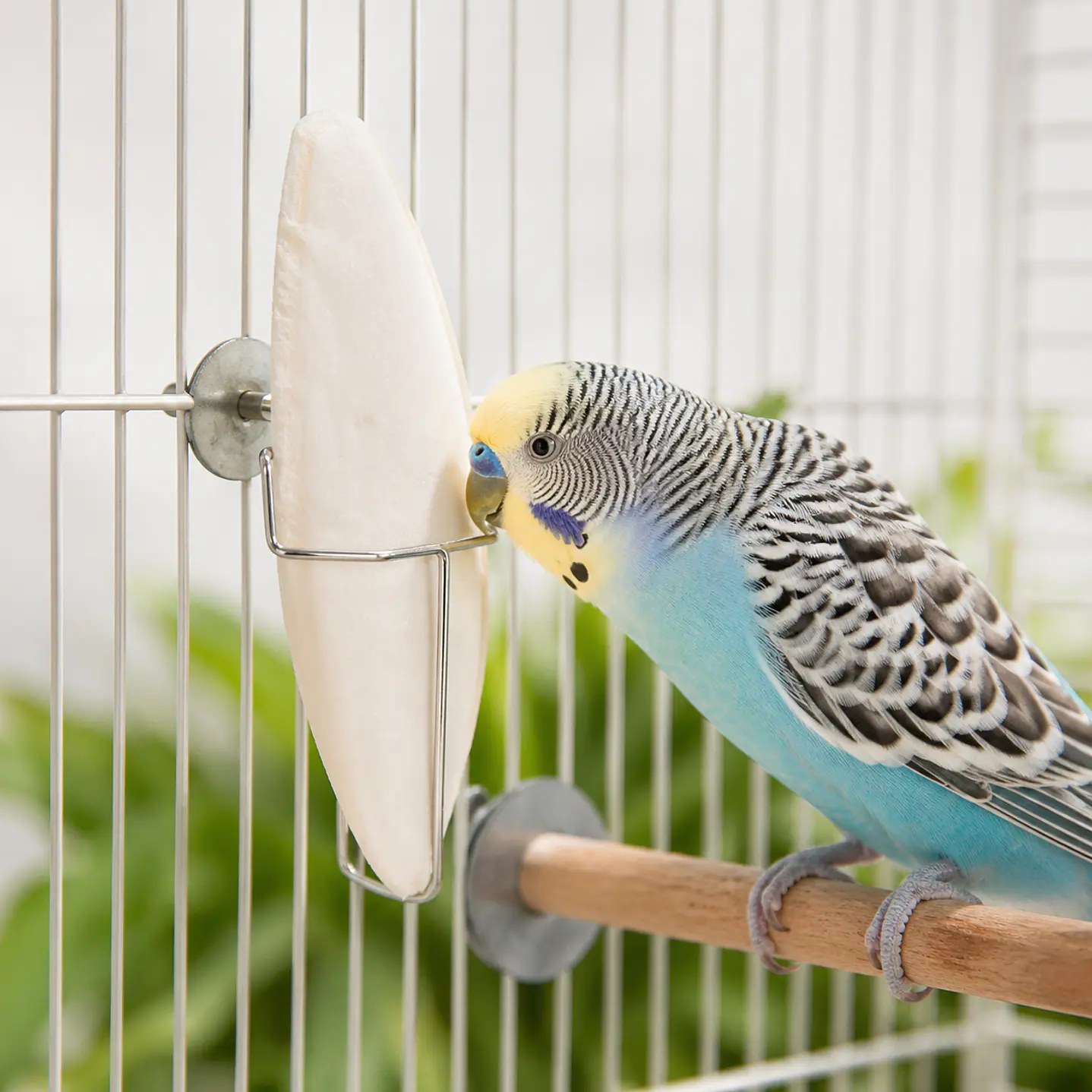
Budgies hull seed before swallowing the kernel, so they don’t need insoluble grit to grind food — and some birds overeat grit, which can cause problems. You can skip it.
A cuttlebone or mineral block is different: a simple in-cage calcium source your bird uses as needed, which also gives the beak something to work on. Replace it when it’s soiled or worn down.
Vitamin drops in the water are usually a poor fix. They can change the taste so your bird drinks less, the dose is anyone’s guess, and the water gets gunky faster. A solid pellet base plus daily vegetables is a better foundation. Ill, breeding, or recovering birds are a different conversation — that’s vet territory, not a pet-store purchase.
Common Feeding Mistakes to Avoid
- The overnight switch. Only pellets tomorrow morning risks a bird who eats nothing. Go gradual.
- The bottomless seed bowl. Topping it up without checking for hulls, so your bird lives on favorites.
- Fresh food left in all day. Chop served at 8 a.m. and removed at bedtime has spent hours spoiling.
- Fruit every day, in big pieces. Vegetables daily; fruit as the accent.
- Giving up on a vegetable after two tries. Two tries is nothing to a budgie. Ten calm offers is a fair test.
- Sharing from your plate. Your dinner may carry salt, oil, onion, or avocado. Give your bird his own safe portion.
- Forgetting the water. A slimy dish undoes good feeding. Wash it daily, don’t just refill it.
These mistakes come from caring and guessing — and a simple routine fixes most of them.
Frequently Asked Questions
Can a budgie live on seed alone if he looks healthy?
He might look fine for a while, and that’s the trap. An all-seed diet is typically high in fat and low in key nutrients, so problems build quietly. A pellet base with daily vegetables is a much stronger foundation.
How much should my budgie eat in a day?
Think in structure, not one magic number: pellets as the base, about a tablespoon of chopped vegetables daily, a small measured seed portion, and fruit a few times a week. A stable weekly weight tells you the total is roughly right.
How do I know if my budgie is actually eating the pellets?
Look for pellet crumbs in the bowl, normal droppings, steady weight, and normal energy. If pellets sit untouched and droppings shrink, he may not be eating them yet. Slow down and check with an avian vet if you’re worried.
My budgie refuses every vegetable. What should I try?
Change the presentation before the vegetable: finely chopped, grated, lightly steamed and cooled, clipped up as leaves, or in chop with a pinch of seed on top. Offer it in the morning, eat your own vegetables nearby, and keep at it for weeks.
Should I leave food in the cage all day?
Pellets and water can stay available during the day. Fresh vegetables and fruit shouldn’t — remove them after a few hours. Seed is better measured than unlimited.
Sources
Feed the base, offer the vegetables, spend the seed wisely, and keep the water clean. Do that most days, and your budgie gets a real shot at a long, loud, healthy life.