


You bought a cozy cat bed, set it in what looked like the perfect corner, and your cat took one sniff and chose the cardboard box, the laundry pile, or your pillow instead. If that sounds familiar, you’re in good company. Just about every cat owner in America has a photo of a cat sleeping right next to — not in — the expensive bed bought specially for them.
Here’s the reassuring part: most cats will use a cat bed. You usually don’t need a fancier bed. You need the right spot, a familiar smell, and a little patience while your cat decides the bed was their idea all along. Cats don’t reject beds out of spite. They reject beds that feel exposed, smell like a warehouse, or sit somewhere they’d never choose to nap.
Below is how to get a cat to use a cat bed, step by step, without picking them up and plopping them in it — and without buying bed after bed hoping the next one magically works.
Key Takeaways
- Put the bed where your cat already naps — don’t ask your cat to move, bring the bed to them.
- Scent sells it: a cheek-rubbed cloth or a blanket your cat already sleeps on beats any new-bed smell.
- Never force your cat into the bed. Voluntary, treat-rewarded visits are what turn into real naps.
- Give it two to three weeks, and change only one thing at a time so you know what actually worked.
Why Cats Ignore a New Cat Bed

Before you try to fix the problem, it helps to think like a cat for a minute. Your cat isn’t grading the bed on softness or how well it matches the couch. They’re asking three instinctive questions: Am I safe here? Am I warm here? Does it smell like home?
- Safety: Cats are both hunters and prey, so sleep is a vulnerable business. They like a spot where they can see what’s coming and still slip away fast. A bed wedged in a dead-end corner, or plopped in the middle of a busy hallway, can feel like a trap. International Cat Care notes that cats need safe resting places, preferably raised, warm, and free from interference — a point worth remembering when you pick a spot. Read their guide to making your home cat friendly for the bigger picture.
- Warmth: Cats run warmer than we do and hunt out heat like it’s their job. A bed on cold tile in a drafty hallway will lose to a sunny windowsill, a warm dryer, or your freshly folded laundry every single time.
- Scent: A brand-new bed smells like plastic packaging, a store shelf, and a delivery truck. Your cat’s favorite spots — the arm of the couch, your side of the bed — smell like them and like you. To a cat, that familiar smell is basically a five-star review.
Work with those three instincts instead of against them, and most cats come around in a few days to two weeks. Shy cats, seniors, and cats in a brand-new home may take a bit longer, and that’s normal too.
If you’ve ever wondered why cats sleep on you instead of anywhere else, scent and warmth are a big part of that story too — you are, from your cat’s point of view, a warm, familiar, perfectly safe bed that also feeds them.
9 Tricks to Get Your Cat to Use a Cat Bed
1. Put the Bed Where Your Cat Already Sleeps

This is the single most effective trick, and it’s the one people skip because the cat’s chosen spot isn’t where they wanted the bed to go. Forget the Pinterest corner for now. Watch where your cat actually naps for two or three days — the end of the couch, the guest-room pillow, that one patch of afternoon sun on the rug — and put the bed right there, or as close as you can get it.
You’re not asking your cat to build a new habit. You’re just upgrading a habit they already have. Once they’re using the bed daily, you can inch it toward your preferred spot, a few inches a day. Rush that move and many cats will simply go back to the original spot, bed or no bed.
2. Make It Smell Familiar
Scent is the fastest way to turn a strange object into family property. Gently rub a soft cloth on your cat’s cheeks while they’re relaxed and purring, then rub that cloth all over the bed. Cheek rubbing is how cats mark safe territory, so you’re basically forging a very loving signature.
You can also tuck in a worn T-shirt of yours — the one you slept in, not a fresh one from the drawer — or a small blanket your cat already naps on. If the bed has a removable cover, try sleeping with the cover near your pillow for a night before putting it back on. It sounds a little odd. It works anyway.
The ASPCA makes a similar point about bedding in general: your cat should have their own clean, dry place to sleep and rest, lined with a soft, warm blanket. Their general cat care guidance is a solid refresher on those basics.
3. Never Place Your Cat in the Bed
Picking your cat up and setting them in the bed feels logical. To your cat, it can feel like being cornered in a strange place that smells wrong. Plenty of cats will avoid anything they were forced into, sometimes for good.
Let curiosity do the heavy lifting instead. Set the bed down, walk away, and let your cat investigate on their own schedule — sniffing, circling, maybe one cautious paw, then a retreat. That slow dance is progress. A bed your cat chooses is a bed your cat will come back to.
Pro tip: if your kids are excited about the new bed, give them the job of treat fairy instead of cat delivery service. Dropping a treat in the bed helps. Carrying a squirming cat to it doesn’t.
4. Use Treats and Play Around the Bed

Drop a favorite treat in the bed once or twice a day, casually, like it’s no big deal. You can also drag a wand toy over and around the bed during playtime so your cat pounces in and out of it, or finish a play session next to the bed and let them wind down there.
The goal is a simple association: good things happen in this spot. Keep it low-key. If your cat grabs the treat and leaves, that still counts. Most cats go from treat visits, to sitting visits, to real naps — in that order.
5. Try a Little Catnip or Silver Vine
Sprinkle a small pinch of catnip inside the bed, or tuck in a silver vine stick. Not every cat responds to catnip — it’s partly genetic — but many cats who shrug at catnip perk right up for silver vine, so it’s worth a try if the first attempt flops.
Use it for the first few sessions only. You want the bed itself to become the attraction, not the sprinkle on top. Think of catnip as the grand-opening banner, not the whole store.
6. Match the Bed Style to How Your Cat Sleeps
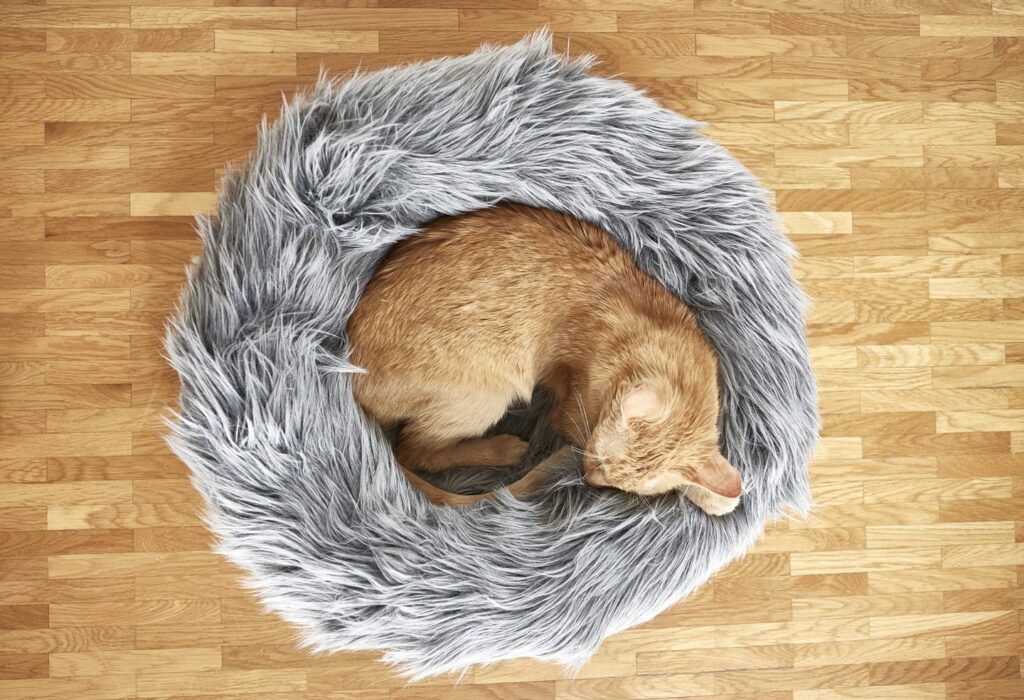
Watch how your cat actually sleeps, because body language tells you what to buy. Cats who curl into a tight donut usually love round beds with raised edges they can lean against and tuck into. Cats who stretch out like they pay rent — full length, legs everywhere — usually prefer a flat mat or a bigger rectangular bed. Cats who disappear under blankets or into closets often love a covered cave-style bed, while confident cats who nap in the middle of everything usually want an open bed with a view.
International Cat Care makes the same point in its advice on preparing for a new cat or kitten: it’s often the position of the bed, not just its shape or fabric, that decides whether a cat uses it, and cats tend to feel safer with a bed placed up high. So if your cat has ignored two open floor beds, the style or the height — not your cat’s attitude — may be the real problem. Browse our cat beds and carriers guides if you’re shopping for a better match.
7. Make the Bed the Warmest Spot in the Room
Move the bed into a sunbeam and out of drafts, away from exterior doors and air-conditioning vents. In winter, setting it near — but not directly against — a radiator or heat vent makes it far more appealing. A self-warming mat, the kind that reflects your cat’s own body heat back at them, is a safe, plug-free way to sweeten the deal.
Be careful with anything electric. Use heated products made for pets, follow the manufacturer’s instructions, and never use a human heating pad, which can get hot enough to burn a sleeping cat. If the bed feels hot to your hand, it’s too hot, period.
8. Keep It Clean, but Not Too Clean
If the bed arrives smelling strongly of packaging or store chemicals, wash it first with an unscented detergent and let it air out completely. Strong fragrances that smell lovely to us can be a deal-breaker for a cat’s sensitive nose.
After that, resist the urge to wash it every week. Every wash strips out the scent your cat worked hard to leave there, and you reset your progress to day one. Spot-clean the messes, shake out the fur, and wash the cover when it’s genuinely dirty. Rotating two covers helps: one can be in the wash while the familiar-smelling one stays on the bed.
9. Be Patient and Keep the Bed Available
Some cats test a new bed for sixty seconds a day for a week before committing to a full nap. That’s not failure — that’s a cat doing due diligence. Leave the bed in one place and don’t keep dragging it around the house, because every move restarts the investigation.
If after two to three weeks your cat still won’t touch it, change one thing at a time: location first, then scent help, then style. One change at a time tells you what actually worked, so you’re not guessing the next time you bring home a bed, a carrier, or a new piece of cat furniture.
Common Mistakes to Avoid
- Buying for your eyes, not your cat. The cutest bed in the store loses to a plain one in the right spot, every time.
- Putting the bed next to the litter box or food bowls. Cats don’t love sleeping beside the bathroom or the kitchen trash. Keep beds in quiet living spaces, away from both.
- Giving up after three days. Three days is a sniff test, not a verdict. Most turnarounds happen in week two.
- Buying a second bed before fixing the first one’s location. A new bed in the same wrong spot gets the same cold shoulder.
- Making the bed a big event. Hovering, filming, and calling the whole family to watch the first approach is a great way to make a cat walk the other way.
A Short Video on Helping a Cat Feel Safe at Home
Safety is the thread running through all of this. In this Jackson Galaxy video, a cat who hides under the bed all day gets help feeling secure — and the same ideas about safe spaces, patience, and not forcing contact apply directly to getting a cat comfortable with a new bed.
What If Your Cat Still Prefers Your Bed?

Some cats will always pick sleeping near their people, and that’s normal social behavior, not a training failure. A lot of cats who “hate their bed” turn out to love it just fine once it’s in the room where the humans are.
Try a compromise: put the cat bed on your bed or right beside it, on a chair pulled up next to the couch, or in your home office where you spend your workday. In a studio apartment in Brooklyn or a busy house with three kids in Ohio, the pattern is the same — cats follow their people, then settle.
One caution worth keeping: if your cat’s sleep habits change suddenly — say, a cat who always slept with you starts hiding to sleep, or sleeps far more and skips meals — mention it at your next vet visit, and sooner if anything else seems off. A sudden change can sometimes be an early sign of pain or illness, and it’s much easier to check early.
Quick Checklist
- Place the bed where your cat already naps.
- Add familiar scent with a blanket or a cheek-rubbed cloth.
- Let your cat enter the bed voluntarily — never force it.
- Reward visits with treats and play.
- Choose a style that matches how your cat sleeps.
- Keep the spot warm, quiet, and draft-free.
- Give it at least two weeks before changing the plan.
Frequently Asked Questions
How long does it take for a cat to use a new bed?
Many cats start using a new bed within a few days once it’s in a favorite spot and smells familiar. Shy, senior, or newly adopted cats can take two to three weeks. Short, voluntary visits are a good sign that a real nap is coming.
Should I put my cat’s bed on the floor or up high?
It depends on your cat. Cats who like to survey the room often prefer a bed on a wide windowsill, a low shelf, or a sturdy chair. Anxious cats often prefer a quiet floor spot with cover nearby, and older cats need a spot they can reach without a big jump. Start where your cat already sleeps and adjust from there.
Why does my cat sleep in the box the bed came in?
Boxes feel enclosed and safe, hold warmth well, and pick up familiar scent fast. It’s not a rejection of you or the bed. Try a covered, cave-style bed, and let your cat keep the box nearby during the transition — plenty of cats use both.
How many beds does a cat actually need?
One well-placed bed is enough to start. In a larger home, or a multi-cat home, two beds in different favorite spots help a lot, because cats rotate nap spots during the day and don’t always want to share. Add a second bed only after the first one is a hit.
Should I wash a new cat bed before using it?
Yes, if it smells like packaging, plastic, or store chemicals. Wash it with unscented detergent and let it dry and air out fully. After that, wash sparingly — your cat’s own scent on the bed is a feature, not a flaw.
Sources
- ASPCA — General Cat Care
- International Cat Care — Making Your Home Cat Friendly
- International Cat Care — Preparing for Your New Cat or Kitten



Pingback: Cat Scratching Post vs Cat Tree: Which Is Better?
Pingback: Indoor Cat Playtime: How Much Does Your Cat Need?