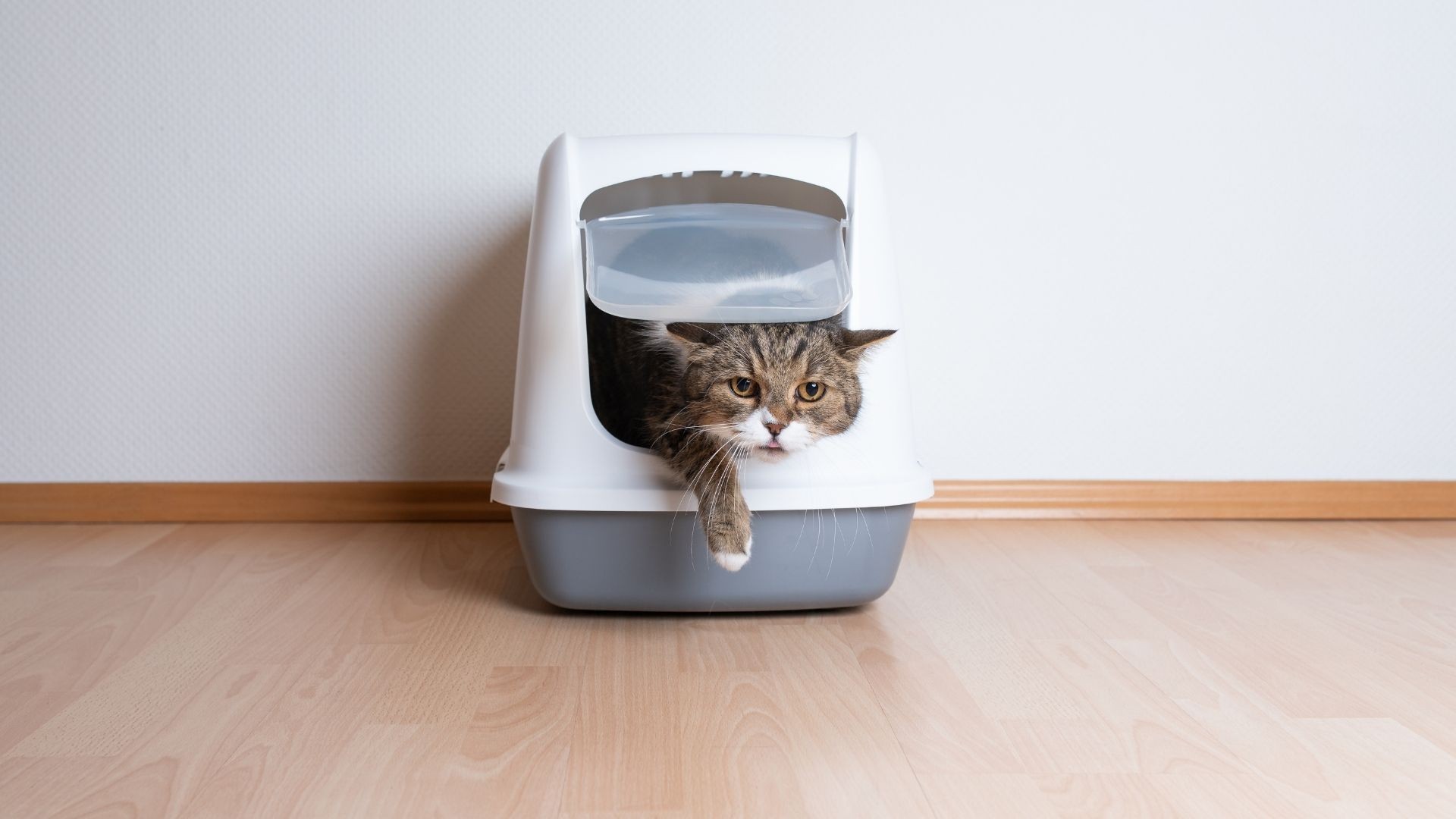
If you’ve ever walked barefoot across your bathroom floor at 2 a.m. and stepped on a scatter of litter, you already know this problem in your bones. Your cat kicks litter everywhere because digging and burying waste is hardwired cat behavior — and because most litter boxes are too small, too shallow, or filled with the wrong amount of litter. Some scattering is normal, and honestly, no fix will eliminate it completely. But the right box, the right depth, and a good mat can turn a daily trail of grit through your whole apartment into a two-minute cleanup in one spot.
Here’s why it happens, and seven fixes ranked from easiest to most effective.
Key Takeaways
- Cats kick litter because burying waste is instinct — but a too-small, too-shallow, or overfilled box turns normal digging into a litter explosion.
- The biggest wins are a box about 1.5 times your cat’s length, litter kept around 2–3 inches deep, and a mat big enough for two or three full steps.
- Scoop daily. Cats who have to hunt for a clean spot dig longer and harder, and they fling more litter doing it.
- A sudden change in digging or box habits — straining, crying, frequent trips — isn’t a mess problem. It’s a reason to call your vet.
Why Cats Dig and Kick Litter
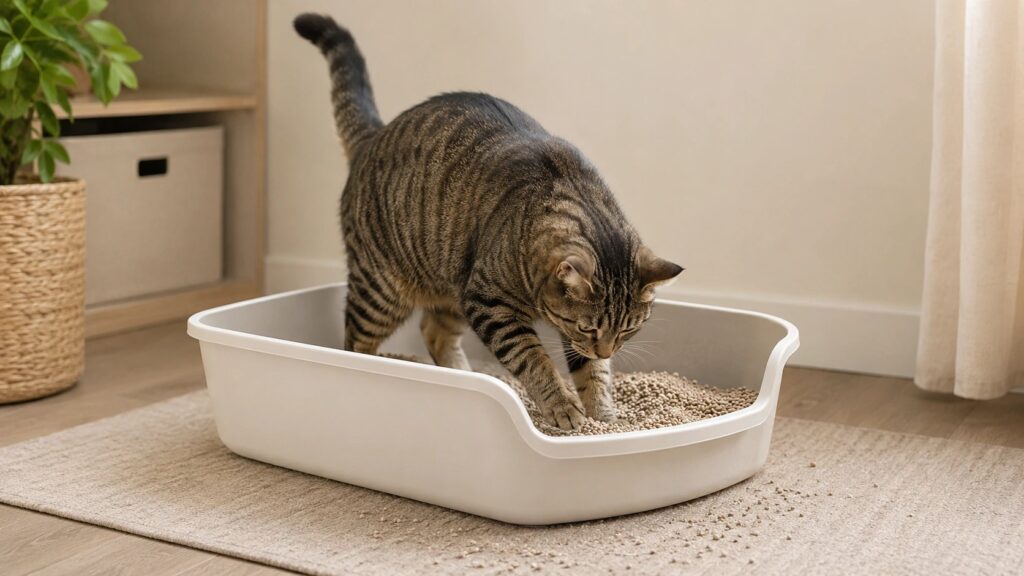
In the wild, cats bury their waste to hide their scent from predators and from rivals who might take it as a challenge. Your indoor cat doesn’t know your home is safe from predators — the instinct comes built in, no instruction manual required. Kittens learn the routine by watching their mother, and some cats simply dig with more enthusiasm than others. Young cats especially may dig for the sheer fun of it. If you’ve got a one-year-old who treats the litter box like a sandbox at the beach, that’s not spite. That’s a teenager with a new toy.
Digging also gets more dramatic when something about the box bothers your cat. A box that feels cramped forces awkward, forceful scratching — picture trying to get comfortable in an airplane middle seat, and you get the idea. Litter that’s too deep invites full-on excavation. Litter that’s too shallow frustrates a cat trying to bury properly, so she digs longer and harder, searching for material that isn’t there. And a cat who dislikes the texture or scent of a litter may kick more while trying to avoid actually touching it, doing a sort of frantic tiptoe-dig that sends granules everywhere.
There’s a confidence angle, too. The litter box is a scent post — one of the ways your cat marks her home as hers. A secure, content cat usually does her business, covers it with a few efficient scrapes, and leaves. A cat who’s feeling unsure about her territory — new roommate, new baby, the neighbor’s cat glaring through the patio door — may dig longer and cover more thoroughly, as if she’s filing her claim in triplicate. More digging almost always means more litter on the floor.
7 Fixes That Actually Work
1. Get a Bigger Box
This is the fix most owners skip, and it solves the most scattering. A good rule of thumb — the same one the ASPCA uses — is a box about one and a half times your cat’s length, nose to base of tail. Many standard store boxes are too small for an average adult cat, let alone a big Maine Coon mix squeezed into a box sized for a kitten. In a roomy box, your cat can turn around, dig in the middle, and bury without launching litter over the side. Large, high-sided storage-style boxes made for cats give big diggers room to work, and plenty of owners swear by a plain, large plastic storage tote with an entry cut into one side as the best budget box they ever bought.
2. Choose Higher Sides — or a Top Entry
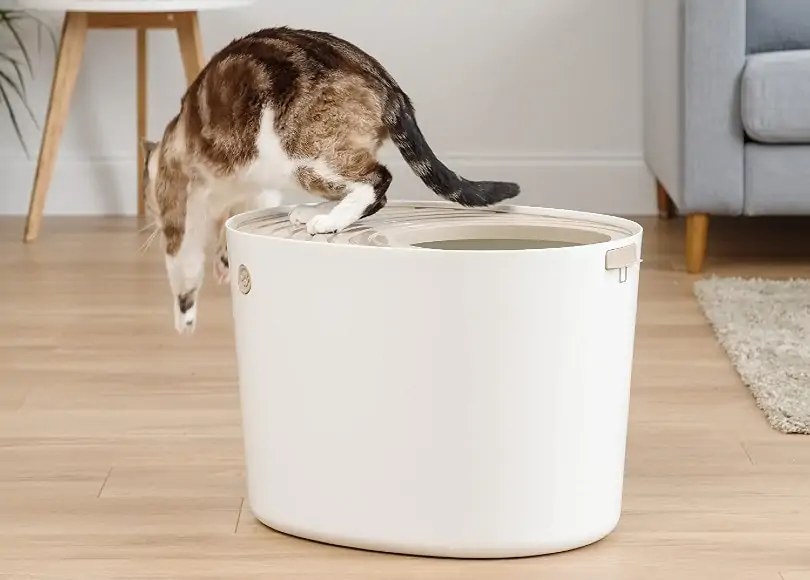
If your cat kicks backward with enthusiasm, high sides contain most of it. Look for a box with sides high enough to block the spray but an entry low enough for your cat to step in comfortably — especially if she’s older or has stiff joints. Top-entry boxes contain scattering best of all, because litter falls off paws onto the lid’s textured surface as the cat climbs out. They’re not ideal for kittens, elderly cats, or cats with mobility problems, though, who need an easy ground-level entrance. Match the box to the cat you have, not the floor you want.
3. Fix the Litter Depth
Most cats prefer about two to three inches of litter. Too much gives an enthusiastic digger more material to throw, and deep litter can feel unstable underfoot, which some cats genuinely dislike — imagine trying to stand on a pile of loose gravel. Too little leaves waste uncovered and triggers longer digging sessions. Fill to the middle of that range, keep the level consistent when you top up, and notice whether the scattering improves. A simple trick: mark the fill line on the inside of the box with a permanent marker, so everyone in the house tops up to the same depth instead of eyeballing it.
4. Put a Real Litter Mat Outside the Exit
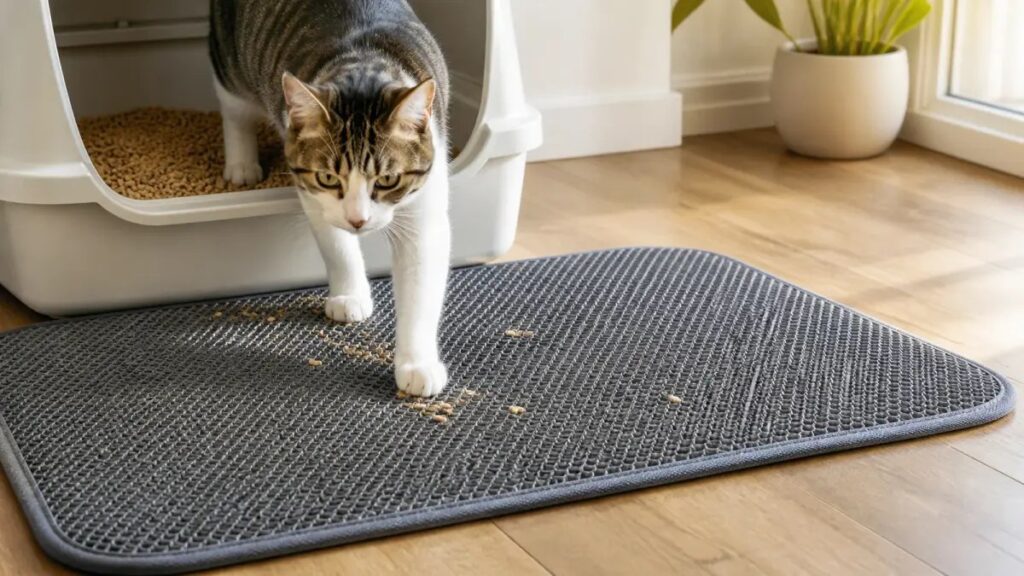
A large mat with a textured or honeycomb surface catches litter from paws before it reaches your floor. Size matters more than brand here: a small mat covers only the first step, while cats often leap or stride out of the box like they’re leaving a crime scene. Choose a mat big enough for your cat to take two or three full steps on it. Shake the trapped litter back into the box daily and wash the mat regularly so it doesn’t hold odor. In a small apartment, a mat that covers the whole traffic path from box to door is worth every inch it takes up.
5. Reconsider the Litter Itself
Heavy litters scatter less than very light ones, and larger granules tend to track less than fine, sandy textures — though every cat has preferences, and a litter your cat dislikes will cause bigger problems than tracking. The ASPCA notes that most cats prefer unscented, clumping litter with a soft, sandy feel, and strongly scented litters that smell great to us can be overpowering to a cat whose nose is doing the close-up work. If you switch, mix the new litter in gradually over a week rather than swapping it overnight. Cats hate abrupt change, and a cat who rejects the new litter entirely will teach you that lesson on your bath mat.
6. Place the Box Smartly
Put the box on a hard, easy-to-sweep surface rather than carpet, with the entrance facing a wall or corner when possible, so kicked litter lands in one contained area instead of spraying across the room. Keep a small handheld vacuum or a broom and dustpan nearby — a thirty-second daily sweep stops the gritty spread through the house that happens when litter gets stepped on and carried room to room on socks and bare feet. And keep the box somewhere quiet. A box next to a rumbling washing machine that lurches into its spin cycle mid-visit will startle a cat right out of the box, mid-dig, litter flying. For more setup ideas, browse our litter and odor control guides.
7. Keep the Box Clean Enough to Prevent Frantic Digging
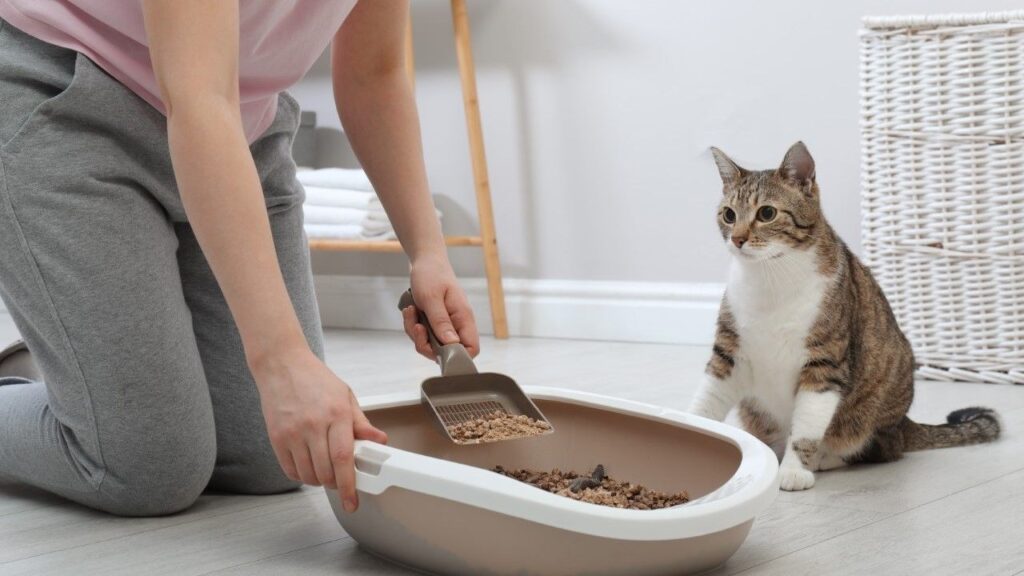
Scoop at least once a day, and twice if you can. Cats dislike stepping into a dirty box, and some dig frantically searching for a clean spot, scattering litter the whole time. Replace litter and wash the box with mild, unscented soap on a regular schedule — skip harsh or strongly scented cleaners, which can leave smells cats want to avoid. If you have multiple cats, the usual guideline is one box per cat, plus one extra, in separate locations. Two boxes side by side in the laundry room count as one location in your cats’ minds, so spread them out if you can.
Jackson Galaxy has strong opinions on litter box setup — and after decades of house calls, he’s earned them. His breakdown of what most of us get wrong is worth a watch:
Mistakes That Make the Mess Worse
- Changing everything at once. New box, new litter, new location, all in one weekend. If your cat revolts, you’ll have no idea which change caused it — and cats who hate the new setup may stop using the box altogether. Change one thing, wait a week, then judge.
- Overfilling “so I can scoop less.” Deep litter doesn’t save you work. It gives your cat more ammunition and makes the box feel unstable. You end up sweeping more, not less.
- Putting the only box in a dead end. Cats like an escape route while they’re vulnerable. A box trapped in a corner where the dog can block the exit is a box a nervous cat will avoid — or bolt out of, mid-dig.
- Punishing the mess. Rubbing a cat’s nose in scattered litter or scolding her by the box just links the box with stress. Stressed cats dig more and avoid more. It’s a mess multiplier.
- Ignoring the senior cat’s knees. The high-sided box that fixed your scattering problem when your cat was five may be a genuine obstacle at fourteen. If an older cat starts leaving litter — or waste — outside the box, lower the entry before you blame her attitude.
Pro Tips for a (Mostly) Litter-Free Floor
Watch which direction the kicking goes. Most cats kick in one predictable direction — usually backward. Rotate the box so the kicking side faces a wall, and half your cleanup disappears without buying a thing.
Try the two-box test before you commit. If you suspect the litter itself is the issue, put a second box next to the first with the new litter in it and let your cat vote with her feet for a week. The box she uses is the answer. This is far better data than guessing.
Keep a “litter station,” not a litter box. Box, mat, small broom, and a covered trash can with a liner, all in one spot. When cleanup takes ninety seconds and everything’s within arm’s reach, you’ll actually do it daily — and daily is what keeps litter from migrating through your home. If litter mess is just one part of your cat-setup puzzle, our comparison of a cat tree vs. scratching post can help you think through the rest of her territory, and our scratchers and trees guides cover placement, too.
When Kicking Is a Sign of Something Else

Most litter kicking is normal behavior plus a fixable setup problem. Pay closer attention if the change is sudden: a cat who starts digging frantically, visiting the box often, straining, crying, or leaving waste uncovered after years of neat habits may be telling you something is wrong. The Cornell Feline Health Center explains that medical problems — urinary tract inflammation, kidney or thyroid disease, diabetes, digestive trouble, even arthritis that makes getting into the box painful — are a leading cause of changes in litter box behavior. A cat who associates the box with painful urination may dig oddly, rush out without covering, or start avoiding the box entirely.
Stress counts, too. A move, a new pet, a new baby, or even a changed work schedule can show up first at the litter box. The ASPCA’s guide to addressing litter box problems makes the same point: act quickly, because the longer a cat practices a new habit outside the box, the harder it is to reverse. And one warning deserves bold print in your memory: straining with little or no urine coming out, especially in a male cat, is an emergency. Don’t wait until morning — call a vet or an emergency clinic right away.
A Realistic Expectation
You’ll probably never reach zero litter on the floor, and chasing that goal can lead to covered boxes, heavily scented litters, or setups your cat hates — which creates real problems, like avoiding the box entirely, that are far worse than a little grit. Aim instead for containment: a big, high-sided box, the right depth, a generous mat, and a quick daily sweep. For most households, that combination solves about nine-tenths of the mess. The other tenth? That’s just the cover charge for living with a tiny, wonderful animal who thinks she’s burying her tracks in the wild.
Frequently Asked Questions
Why does my cat dig in the litter box for so long?
Long digging sessions usually mean your cat is trying to bury thoroughly, can’t find a clean spot, or finds the litter depth or texture unsatisfying. Try a bigger box, two to three inches of litter, and more frequent scooping. If the behavior is new and intense, mention it to your veterinarian — pain and urinary trouble can both show up as marathon digging.
Do covered litter boxes stop litter from scattering?
They contain kicking well, but many cats dislike covered boxes because odors build up inside and the entrance feels confining — the ASPCA notes most cats prefer an uncovered box where they can see around them. If you try one, scoop it diligently and make sure your cat uses it willingly. A high-sided open box is a good middle ground for most homes.
Why does my cat kick litter out but not use the box?
Some cats, especially young ones, dig and play in litter without eliminating — it’s fun, and it feels like the real thing. Others are objecting to the litter, the location, or the cleanliness. Provide a second box in a quiet spot, test a different unscented litter, and watch for straining or discomfort, which needs a vet visit.
Why does my cat scatter litter all over the house, not just near the box?
That’s usually tracking, not kicking. Fine, lightweight litter sticks to paws and fur and rides along to the couch, the bed, and everywhere else. A bigger mat, a heavier or larger-granule litter, and a quick daily sweep along your cat’s usual path from the box usually cut it down dramatically.
How many litter boxes do I actually need?
The standard guideline is one per cat, plus one extra, in separate locations — so two cats means three boxes, ideally not all in the same room. Extra boxes also reduce frantic digging, because there’s almost always a clean option available.