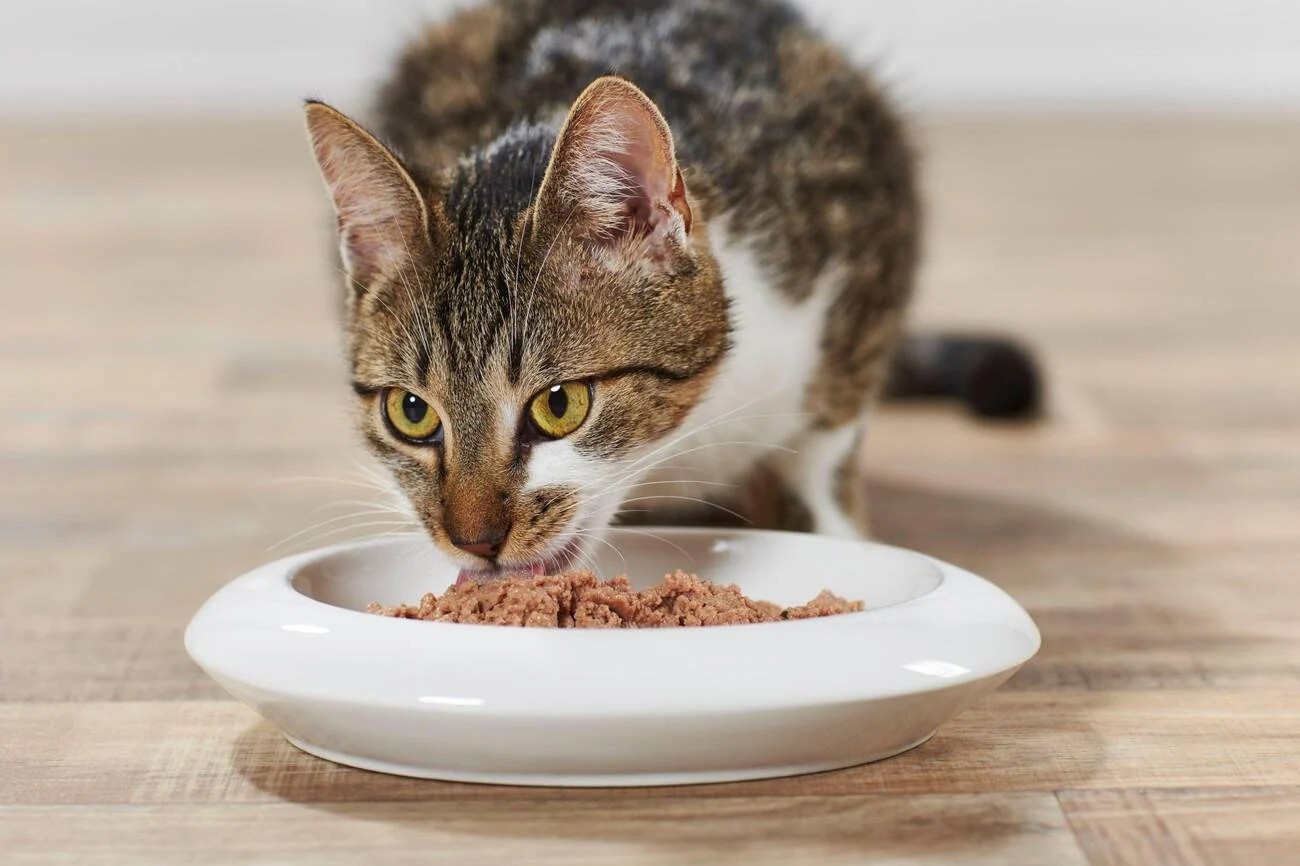
If you’re standing in the pet food aisle wondering about wet food vs. dry food for cats, here’s the short version: for hydration and healthy weight, wet food usually has the edge. It’s mostly water and tends to be lower in calories per bite, so cats feel full on fewer calories. Dry food is more convenient, keeps longer in the bowl, and costs less per serving. For a lot of cats, though, the best answer isn’t one or the other — it’s a thoughtful mix based on your cat’s health, habits, and what your daily routine can actually handle.
Below is an honest comparison, the places where the marketing gets ahead of the facts, and a simple way to decide what belongs in your cat’s bowl.
Key Takeaways
- Wet food is about 70–80% water; dry food is about 10%. That gap is the whole ballgame for hydration and urinary health.
- Portions matter more than format for weight — free-fed kibble is where extra pounds quietly come from.
- Regular kibble doesn’t really clean teeth, and wet food doesn’t cause dental disease by itself.
- A measured mix of both is a practical, sustainable choice for most healthy indoor cats.
Wet Food vs. Dry Food at a Glance
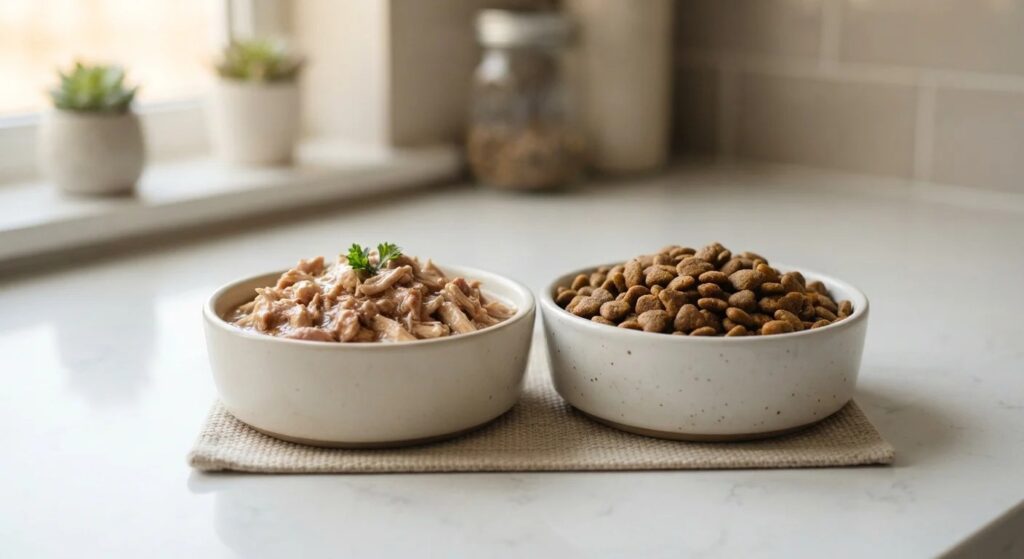
- Water content: Wet food is typically about 70–80% water. Dry food is typically about 10% water.
- Calories: Dry food is more calorie-dense, so a small scoop packs in a lot of energy.
- Texture: Wet food is softer and easier for kittens, seniors, and cats with sore mouths to eat.
- Storage: Dry food stays fresh in the bowl for hours. Opened wet food needs refrigeration and shouldn’t sit out all day.
- Cost: Dry food usually costs less per day. Wet food usually costs more, especially for a big cat or a multi-cat home.
The Cornell Feline Health Center lays out the same basics in its guide to feeding your cat: dry food contains roughly six to ten percent water, while canned food is at least 75 percent water — which is why Cornell calls canned food a good dietary source of water.
Hydration: Where Wet Food Clearly Wins
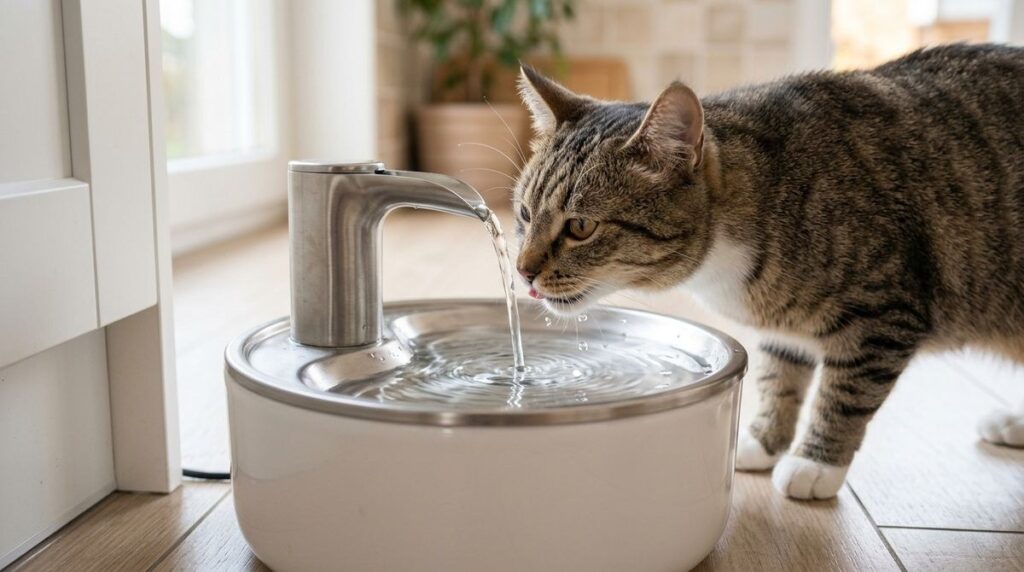
Cats evolved from desert animals, and many of them just don’t feel a strong urge to drink. A cat eating mostly wet food takes in a big share of its daily water right along with its meals, without ever visiting the water bowl. A cat eating only dry food has to drink much more to make up the difference — and plenty of cats simply don’t.
Think of it in real numbers. A cat who eats two cans of wet food a day might take in well over half a cup of water from food alone. Her kibble-only neighbor gets a couple of tablespoons from food and has to make up the rest at the bowl, lap by lap. Some cats do. Many, especially the ones who ignore a perfectly good bowl but go crazy for the bathroom faucet, don’t quite get there.
That steady hydration supports the kidneys and the urinary tract, which matters because urinary problems are common in cats — especially males and indoor cats. PetMD makes the same point in its comparison of wet vs. dry cat food: cats with conditions that call for higher water intake, including kidney disease, diabetes, and lower urinary tract disease, may benefit from the extra water in canned food.
If your cat rarely drinks, has had urinary crystals, or produces very small, concentrated amounts of urine, talk with your veterinarian about increasing the wet food in the diet. And either way, keep fresh water available at all times. A cat water fountain helps more cats than you’d expect, since many prefer moving water to a still bowl.
Weight: Portion Size Matters More Than the Label
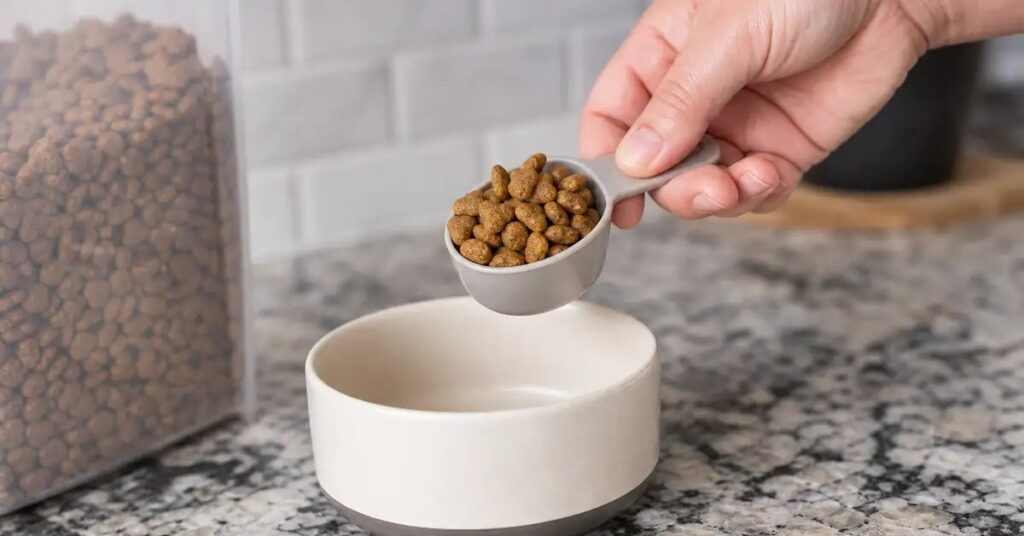
Because wet food is so much water, a cat can eat a satisfying, full-looking portion with fewer calories than the same volume of kibble. That makes wet food a genuinely helpful tool for cats who need to lose a little — or who act like they’re starving twenty minutes after breakfast.
Dry food creates a different risk: it’s just so easy to overfeed. A heaped scoop here, a topped-off bowl there, a free-fed dish that’s never empty — it adds up quietly, because kibble is calorie-dense. VCA Animal Hospitals flags exactly this pattern in its guidance on overweight and obesity in cats, noting that free-choice feeding makes it easy for cats to eat more calories than they need, and recommending measured portions and set mealtimes instead.
So if you feed dry food, measure it. A kitchen scale is best, a measuring cup is fine, and eyeballing it is how a ten-pound cat becomes a thirteen-pound cat. Count treats in the daily total, too — a useful rule many veterinarians share is to keep treats to about 10% or less of daily calories.
Whatever you choose, weigh your cat regularly, even if it’s just stepping on the bathroom scale holding your cat, then without. A slow gain you catch early is far easier to fix than a big one. Pair sensible portions with daily play — here’s a helpful guide to how much playtime an indoor cat needs — and you’re covering both sides of the weight equation.
What About Teeth?
Dry food is often marketed as cleaning teeth, but ordinary kibble usually shatters the moment a cat bites down. It doesn’t scrub much of anything. Some specially designed dental diets do help, and they’re labeled for that purpose — that’s a different product from everyday kibble.
Wet food doesn’t cause dental disease by itself, either. What actually protects your cat’s teeth is regular dental care: brushing if your cat tolerates it (start slow, use cat toothpaste, and don’t force it), dental checkups at vet visits, and paying attention to bad breath, drooling, pawing at the mouth, or dropped food, which can all signal mouth pain. If eating suddenly gets messy or one-sided, that’s a vet visit, not a food-format problem.
Protein, Carbs, and Reading the Label
Cats are obligate carnivores, which means they need nutrients found in animal tissue — it’s not a preference, it’s how they’re built. As Cornell puts it, cats evolved as hunters eating prey that’s high in protein, moderate in fat, and minimal in carbohydrates, and their diet still needs those general proportions today. Look for a food labeled complete and balanced for your cat’s life stage, with a named animal protein — chicken, turkey, salmon — as the first ingredient.
Dry foods generally need more carbohydrate to form the kibble, while many wet foods are naturally lower in carbs and higher in protein as fed. But don’t judge by the percentage on the bag alone. Because wet and dry foods contain such different amounts of water, the percentages aren’t directly comparable without converting to a dry-matter basis.
Here’s a quick example so that isn’t just homework-speak. A wet food labeled 10% protein that’s 78% water is actually about 45% protein once you remove the water from the math. A dry food labeled 30% protein that’s 10% water is about 33% on the same basis. The wet food that “looked” lower in protein is actually the higher-protein food. If comparing two specific foods still feels like algebra, your veterinarian can do it with you in a few minutes.
Feeding a Mix: The Practical Middle Ground
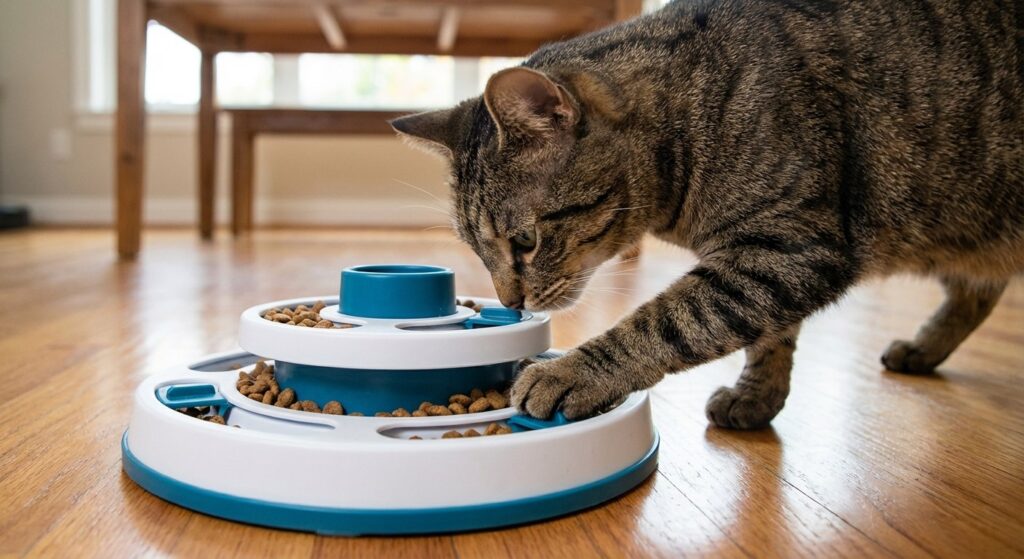
Plenty of owners feed wet food for one or two meals and a measured amount of dry food at another meal. That gives your cat the hydration benefit of wet food, keeps costs manageable, and preserves the convenience of kibble for puzzle feeders or a small late-night snack. A mix also helps with picky cats, because you have two textures and flavors to rotate when one gets a turned-up nose.
A simple starter pattern looks like this: wet food at breakfast, wet food at dinner, and a small measured portion of kibble in a puzzle feeder in between or before bed. Adjust the amounts so the day’s total calories stay the same — adding kibble on top of full wet meals is how “a mix” quietly becomes “too much.”
When you switch foods, or change the ratio, do it gradually over about a week. Mix in a little more of the new food and a little less of the old each day. A sudden switch is a common cause of vomiting, soft stool, and the classic hunger strike in front of a full bowl. For more feeding ideas and product guidance, browse our cat food and treats category.
Common Mistakes to Avoid
- Free-feeding kibble all day. An always-full bowl plus a calorie-dense food is the most common route to an overweight indoor cat.
- Comparing label percentages directly. Wet and dry percentages mean different things until you convert to dry-matter basis.
- Switching foods overnight. A fast change invites stomach upset and food refusal. A week of gradual mixing saves everyone the trouble.
- Leaving wet food out for hours. It spoils. Serve it, enjoy the happy eating sounds, refrigerate what’s left, and toss what’s been sitting out.
- Counting the meals but not the treats. Treats, toppers, and “just a little tuna” all count toward the day’s calories.
- Assuming a thirsty-looking cat is fine on kibble alone. If your cat barely drinks and eats only dry food, that combination deserves a conversation with your vet.
A Quick Video on Mixing Wet and Dry Food
Want to see the trade-offs in action? This video walks through what actually happens when a cat eats wet and dry food together every day — water intake, calorie creep, teeth, and the food-safety mistake that’s easy to make with a mixed bowl.
Which Cats Need Extra Care With This Choice?
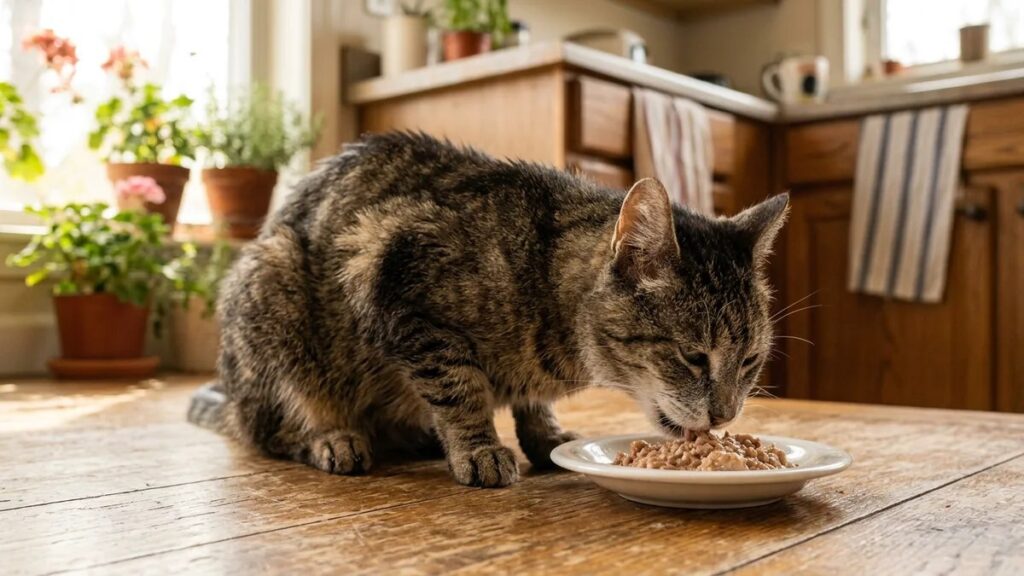
- Cats with kidney or urinary issues: Hydration is often a top priority, and your vet may recommend a therapeutic diet rather than a standard food.
- Diabetic or overweight cats: Portion control and food composition both matter; get a vet-guided plan instead of guessing.
- Kittens: They need food formulated for growth, plus more frequent meals — wet, dry, or a mix all work if the food fits the life stage.
- Seniors: Softer wet food can be easier to chew, extra water intake is often welcome, and appetite changes are worth mentioning to your vet.
- Cats with few teeth: Many eat wet food comfortably, and some still manage softened kibble just fine.
The Bottom Line
Choose wet food if hydration and weight control are your main goals and the cost and routine work for you. Choose dry food if convenience and budget lead — but measure portions carefully and actively encourage drinking. For most indoor cats, a measured mix of both is the sensible, sustainable answer most vets are comfortable with.
The best food, in the end, is a complete and balanced one your cat eats happily, in a portion that keeps them at a healthy weight, served on a routine you can stick with on a busy Tuesday — not just on a motivated Sunday.
Disclaimer: This article is for general information only and is not veterinary advice. Every cat’s needs are different, especially cats with kidney, urinary, diabetic, or weight conditions. Talk with your veterinarian before making a major diet change.
Frequently Asked Questions
Is it OK to feed a cat only dry food?
Many healthy cats do fine on a complete and balanced dry food, as long as portions are measured and they drink well. If your cat drinks very little, has a urinary history, or is gaining weight, ask your veterinarian whether adding wet food would help.
How much wet food should I feed my cat?
It depends on the product’s calories and your cat’s size, age, and activity level. Start with the feeding guide on the can, weigh your cat every few weeks, and adjust in small amounts. Your veterinarian can set a daily calorie target at a routine visit, which makes the math much easier.
Can I leave wet food out all day?
No. Wet food left at room temperature for more than a couple of hours should be discarded. Serve meals, refrigerate opened cans promptly, and wash the bowl daily. Dry food is the safer choice for puzzle feeders that stay out longer.
Does dry food really clean a cat’s teeth?
Not in any meaningful way for regular kibble — it shatters on contact instead of scrubbing. Purpose-made dental diets are the exception. Brushing and regular dental checkups do far more for your cat’s teeth than food format alone.
How do I switch my cat from dry food to wet food (or a mix)?
Go slowly, over about a week. Offer a small amount of wet food alongside the usual kibble, increase the wet share a little each day, and warm the wet food slightly to room temperature to boost its smell. Some kibble devotees take two weeks or more — patience beats a standoff.