Yes — for most dogs, puzzle toys are a genuinely good idea. A well-chosen puzzle gives your dog a job to do, slows down a dog who inhales dinner like it’s a race, and burns real mental energy on days when weather, injury, or a brutal work schedule cuts a walk short. The catch? You’ve got to match the puzzle to your dog and supervise at first. A puzzle that’s too hard frustrates a beginner, and a flimsy puzzle in the jaws of a powerful chewer stops being enrichment and becomes a safety problem.
Think of puzzle toys like exercise: helpful in the right dose, at the right level, for the right dog. This guide covers the benefits that matter, the risks owners miss, and how to start so your dog wins on day one.
Browse more ideas in our dog toys category if you’re building a little rotation at home.
Key Takeaways
- Puzzle toys are good for most dogs: they provide mental exercise, slow down fast eaters, and build confidence through small, solvable wins.
- Start embarrassingly easy, keep sessions to about 5 to 15 minutes, and always supervise until you know how your dog treats the toy.
- The main risks are broken and swallowed pieces, frustration from a puzzle that’s too hard, guarding in multi-dog homes, and sneaky extra calories.
- Count puzzle food in your dog’s daily ration, wash food toys after use, and rotate two or three puzzles to keep them interesting.
What Counts as a Puzzle Toy?
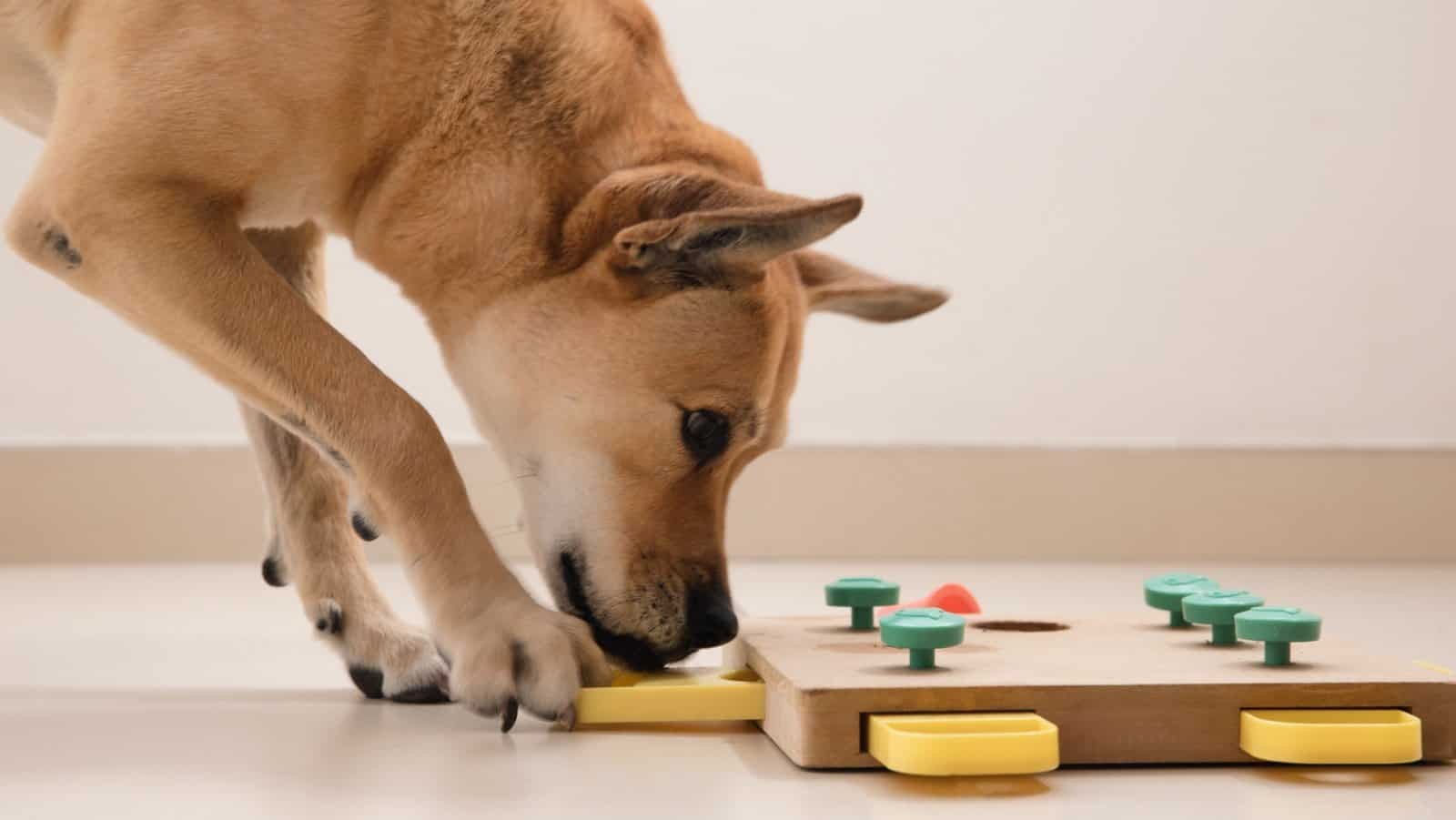
A puzzle toy asks your dog to work for food by nudging, pawing, sliding, lifting, rolling, or sniffing. That “work” is the whole point. Instead of dinner disappearing from a bowl in 40 seconds, your dog gets to hunt, poke, and figure something out — much closer to how dogs are wired to eat.
Common types include:
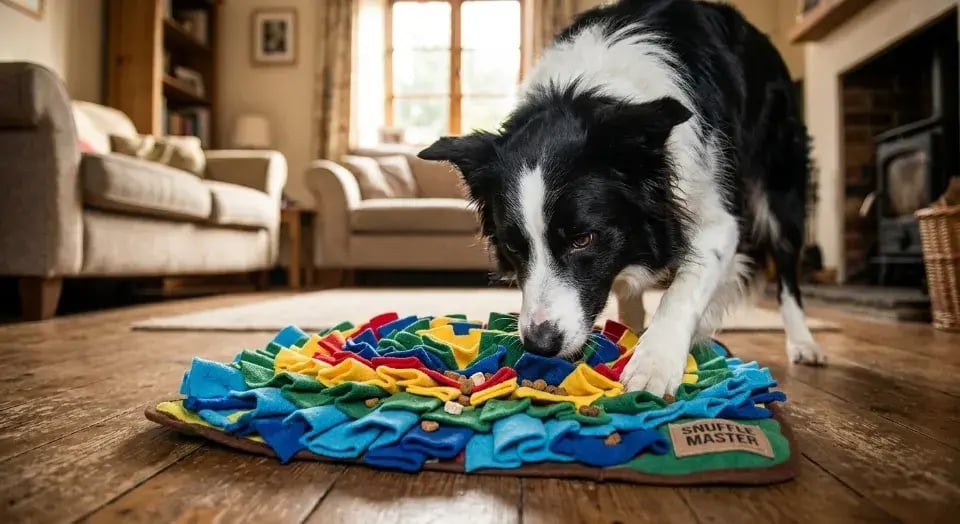
- Snuffle mats and lick mats, where food is hidden in fabric folds or spread on a textured surface. Low frustration, great for beginners and anxious dogs.
- Rolling treat balls and dispensers, which release kibble as your dog bats them around the room. Expect some noise on hardwood. You’ve been warned.
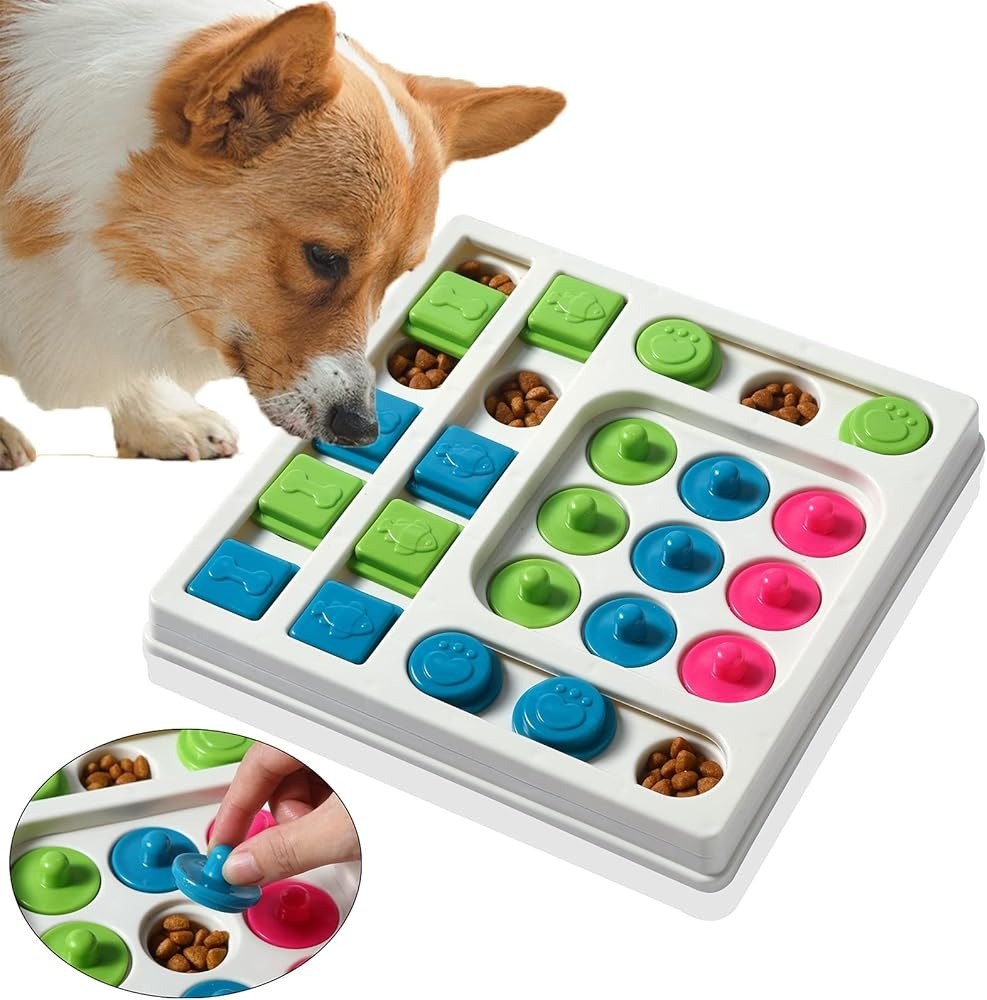
- Sliding and flipping puzzles, usually boards with compartments covered by lids, sliders, or pegs. These are the classic “level 1, 2, 3” toys.
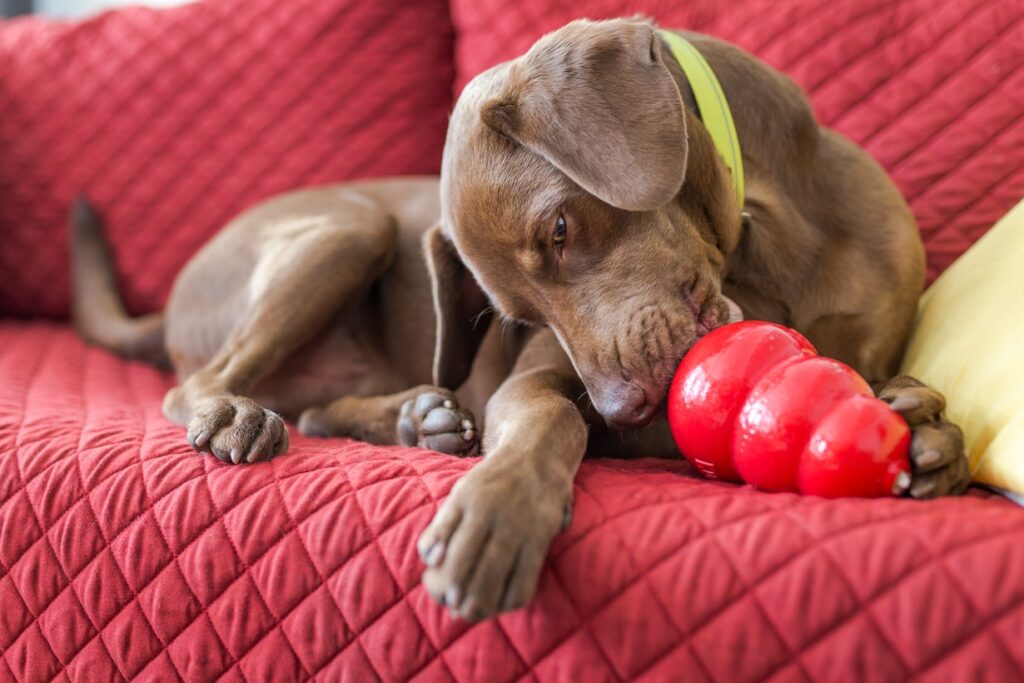
- Stuffable rubber toys, filled with food and sometimes frozen to last longer. The workhorse of most toy boxes.
- DIY puzzles, like kibble scattered in the grass, treats in a muffin tin covered with tennis balls, or food rolled up in a towel. Cheap, effective, and honestly some dogs prefer these.
You don’t need to buy the most complex board first. Really, please don’t. For a lot of dogs, a snuffle mat or a loosely filled stuffable toy teaches the whole idea — search, problem-solve, get paid — with almost no frustration.
The American Kennel Club’s overview of brain games and puzzle toys for dogs describes a puzzle toy the same way: a device that holds food or treats and gives your dog a physical and mental challenge, so they have to work for the reward. That challenge, in all its forms, is the common thread.
The Benefits That Actually Matter
Mental exercise and calmer behavior
Searching, sniffing, and figuring out how a compartment opens engages your dog’s brain in a way that a lap around the same old block just doesn’t. Owners notice it all the time: after ten or fifteen minutes of focused puzzle work, a dog who was pacing and sighing dramatically will curl up and actually settle.
That’s not magic, and it doesn’t replace physical exercise, training, or your company. It’s one useful piece of a full day. But it’s a powerful piece, especially for smart, busy breeds who will invent their own jobs — redecorating your baseboards, say — if you don’t give them a legal one.
PetMD’s guide to enrichment toys for dogs and puppies makes a similar point: enrichment toys are designed to stimulate your dog’s mind and encourage natural instincts, and dogs who get chances to engage their senses are less likely to get bored — and boredom is where a lot of destructive behavior starts.
Slower eating
Got a dog who inhales meals in under a minute and then looks at you like you forgot to feed him? Puzzle feeders and slow-feeder style puzzles can help. Eating more slowly is more comfortable, and it makes mealtime last long enough to actually feel satisfying.
One caution, though: if your dog has a history of choking, regurgitation, gulping air, or digestive problems, ask your vet which slow-feeding approach is safest before you buy anything. Slowing a dog down is good. Making eating stressful isn’t.
Confidence for shy and young dogs
Easy wins build confidence. Watch a nervous dog figure out that pawing a slider makes a treat appear: ears up, tail moving, trying it again on purpose. That’s a dog practicing curiosity where nothing bad happens — and that carries over.
Puppies benefit too, if sessions stay short and pieces are too big to swallow. Puzzle time also pairs well with how to crate train a puppy, because a puppy happily working a stuffed toy in the crate learns the crate is where good, calm things happen.
Help on restricted days
Rainy days, a heat wave, recovery from a minor procedure, or you with a sprained ankle on the couch — it all creates the same problem: a dog with energy and nowhere to put it. Puzzles, sniffing games, and lick mats are valuable stand-ins for part of that activity while walks and play get back to normal.
The AKC notes puzzle toys come in especially handy when a dog needs to be alone or confined, including during crate rest after injury or surgery, when the body needs rest but the brain absolutely does not. For dogs on strict rest, though, check with your vet before adding anything that gets them excited or scooting around the room.
Comparing Puzzle Types: Which One Fits Your Dog?
| Puzzle type | Best for | Difficulty | Watch out for |
|---|---|---|---|
| Snuffle mat | Beginners, shy dogs, seniors, puppies | Easy | Shake out and wash regularly; supervise fabric chewers |
| Lick mat | Anxious dogs, bath/grooming distraction, crate time | Easy | Some dogs chew the edges once the food is gone — pick it up |
| Stuffable rubber toy (frozen) | Most dogs, longer sessions, restricted days | Easy to hard, depending on how you fill it | Size it correctly; inspect for cracks and chunks missing |
| Rolling treat dispenser | Active, food-motivated dogs with space to play | Easy to medium | Noisy on hard floors; can roll under furniture |
| Sliding / flipping board puzzle | Clever dogs who’ve mastered the basics | Medium to hard | Removable pieces — not for determined chewers |
| DIY (muffin tin, towel, grass scatter) | Testing interest before you spend money | Easy, adjustable | Supervise closely; remove cardboard or fabric if eaten |
See how this video on stuffing wet-food enrichment toys makes a simple stuffed toy last much longer:
The Risks and How to Avoid Them
Broken pieces and swallowed parts
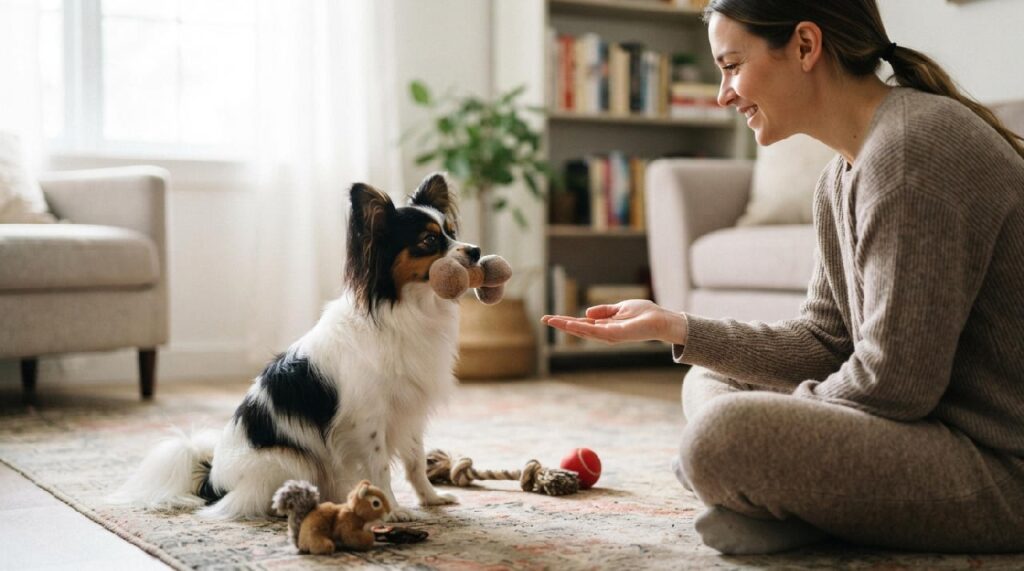
This is the main risk, full stop. Some dogs don’t solve puzzles — they dismantle them. If your dog chews hard plastic, tears fabric, or has a history of swallowing non-food items, stick to sturdy, single-piece toys or supervised fabric search games, and watch every session.
Remove the toy immediately if pieces crack, tear, or come loose. And never leave a determined chewer alone with a puzzle, even one labeled “tough.” Labels are marketing. Your dog’s jaws are reality.
Frustration and resource guarding
A puzzle that’s too difficult can make a dog bark at it, paw frantically, pick the whole thing up and shake it, or just give up and walk away. Every one of those is your dog telling you the level is wrong. Make it easier. No shame in that — backing up a step is how training works, too.
In multi-dog homes, give each dog their own puzzle in a separate space, behind a gate or in different rooms. High-value food in a toy can trigger guarding even in dogs who share normal meals perfectly peacefully. Don’t set them up to argue over a frozen stuffed toy.
Extra calories
Puzzle food still counts. It’s not free just because it was fun to get. Fill puzzles from your dog’s normal daily ration where you can, especially with kibble-based puzzles, and you’ll avoid the slow weight creep that sneaks up on a lot of enrichment-loving households.
If you use richer fillings like peanut butter, go small, and always check the label: it must not contain xylitol, also called birch sugar, which is extremely dangerous for dogs. When in doubt, plain pumpkin purée, a little plain yogurt, or some of their regular wet food does the job just fine.
Hygiene
Food toys get slimy fast. Wash stuffable toys, boards, and lick mats after use, let them dry fully, and toss toys that stay sticky or smell sour after washing. Shake out snuffle mats after every use and wash them regularly.
The ASPCA’s tips for keeping pets busy and engaged at home suggest exactly these kinds of tools — snuffle mats, stuffed puzzle toys you can freeze to make them last longer, and even scavenger hunts with treats hidden around a room — as simple ways to give a dog a mental workout at home.
How to Start, Step by Step
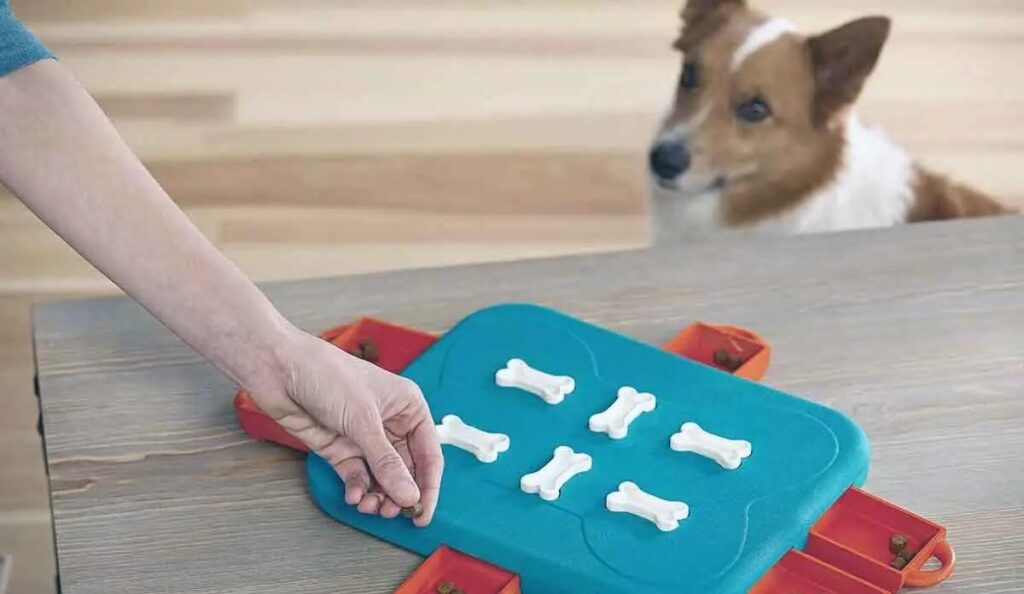
- Start embarrassingly easy. Put treats in open compartments or scatter kibble on top of a snuffle mat, not buried deep. Let your dog watch you set it up. Yes, really — watching builds anticipation and helps them connect the toy with food.
- Help the first time. Point, encourage, and if you need to, nudge a slider partway yourself. The goal is a quick first win within a minute or two. A dog who wins early will work harder next time.
- Keep sessions short. Five to ten minutes is plenty for a beginner. End while your dog is still interested, and put the toy away. Leaving puzzles out all day makes them furniture.
- Raise difficulty one step at a time. Close one lid. Freeze a stuffed toy for a short stretch. Hide food a little deeper. Change only one thing at a time, so if it suddenly gets too hard, you know exactly what to undo.
- Rotate toys. Two or three puzzles rotated through the week stay interesting far longer than the same board every single day. Novelty is half the enrichment.
- Supervise, then judge. Only even consider leaving a dog alone with a toy after you’ve watched many sessions and the toy has no removable or breakable parts — and honestly, many owners choose not to at all. Supervision is the safer default, and that’s fine.
Mistakes to Avoid (Learn From Everyone Else)
Starting at level 3 because your dog is “really smart.” Smart dogs get frustrated too — sometimes faster, because they expect things to work. Start easy anyway.
Using a puzzle to replace everything else. A puzzle is not a walk, not training, and not time with you. The AKC’s guide to recognizing and solving doggy boredom makes this point well: mental stimulation works alongside play, scent games, training, and social time — not instead of them.
Forgetting to count the food. A stuffed toy packed with peanut butter, cheese, and treats can quietly add a meal’s worth of calories to your dog’s day. Use part of their regular food, and keep rich stuff as a thin smear, not a core ingredient.
Leaving a damaged toy in rotation. That cracked dispenser or chewed board lid isn’t “still basically fine.” Once pieces start coming off, the toy is done. Retire it the same day.
Choosing the Right Puzzle for Your Dog
For gentle beginners, start with a snuffle mat, lick mat, or rolling dispenser. For clever dogs who solve level one before you’ve sat down, look for boards with multiple steps — lift a peg, then slide a door. For power chewers, skip multi-part plastic boards and choose durable stuffable toys sized for large jaws, under supervision. For seniors, keep puzzles on the floor and favor sniffing games over puzzles that demand hard pawing.
Price isn’t a reliable guide, either. A ten-dollar snuffle mat can beat a forty-dollar board for the right dog. Read how the toy works, check the size against your dog’s mouth, and be brutally honest about their chewing style. The best puzzle is the one your dog can solve safely, not the one with the highest level number on the box.
Pro tip: batch-prep on Sunday. Stuff three or four rubber toys, freeze them, and you’ve got ready-to-go enrichment for the busiest days of your week, when you have the least time to invent something.
The Bottom Line
Puzzle toys are good for most dogs when they’re easy enough to enjoy, sturdy enough for that dog’s mouth, and filled with food that fits into the day’s total. Start simple, supervise, wash the toys, and level up slowly. Done that way, a puzzle isn’t just a distraction to keep your dog out of your hair. It’s a small daily chance for your dog to sniff, think, problem-solve, and succeed — and dogs, like the rest of us, feel better on days when they get to do that.
FAQ
How long should a dog play with a puzzle toy each day?
For most dogs, one or two sessions of about 10 to 15 minutes is a good target. Puppies, seniors, and total beginners do better with shorter sessions, around 5 to 10 minutes. Stop if your dog seems frustrated, frantic, or tired, even if there’s food left. Ending on a win beats finishing every last piece.
Can puzzle toys replace walks?
No. Puzzles give your dog mental exercise and sniffing, which are genuinely valuable, but dogs still need physical activity, bathroom breaks, training, and social time suited to their age and health. Use puzzles to complement walks, and to fill the gap on days when a full walk just isn’t possible.
Are puzzle toys safe for aggressive chewers?
Many aren’t. Multi-part plastic puzzles can be cracked and swallowed by strong chewers, sometimes surprisingly fast. Choose only very durable, appropriately sized toys, supervise closely, and pull the toy at the first sign of damage. If your dog routinely destroys toys, ask your vet or a qualified trainer about safer enrichment options for that chewing style.
What should I put in a puzzle toy?
Start with part of your dog’s regular kibble or wet food — it’s balanced, it counts cleanly toward their daily food, and most dogs will happily work for it if they’re a little hungry. For higher value, add a small smear of xylitol-free peanut butter, plain pumpkin purée, or plain yogurt, then freeze a stuffed toy to make it last. Skip grapes, onions, chocolate, and anything sweetened with xylitol, always.
My dog gives up or gets frustrated. What am I doing wrong?
Almost certainly, the puzzle is just too hard for where your dog is right now — it’s the most common issue by a mile. Go back a step: leave compartments open, put food on top instead of inside, help your dog get the first few pieces, and end the session while they’re succeeding. Build difficulty over days, not minutes. Frustration isn’t stubbornness; it’s information.