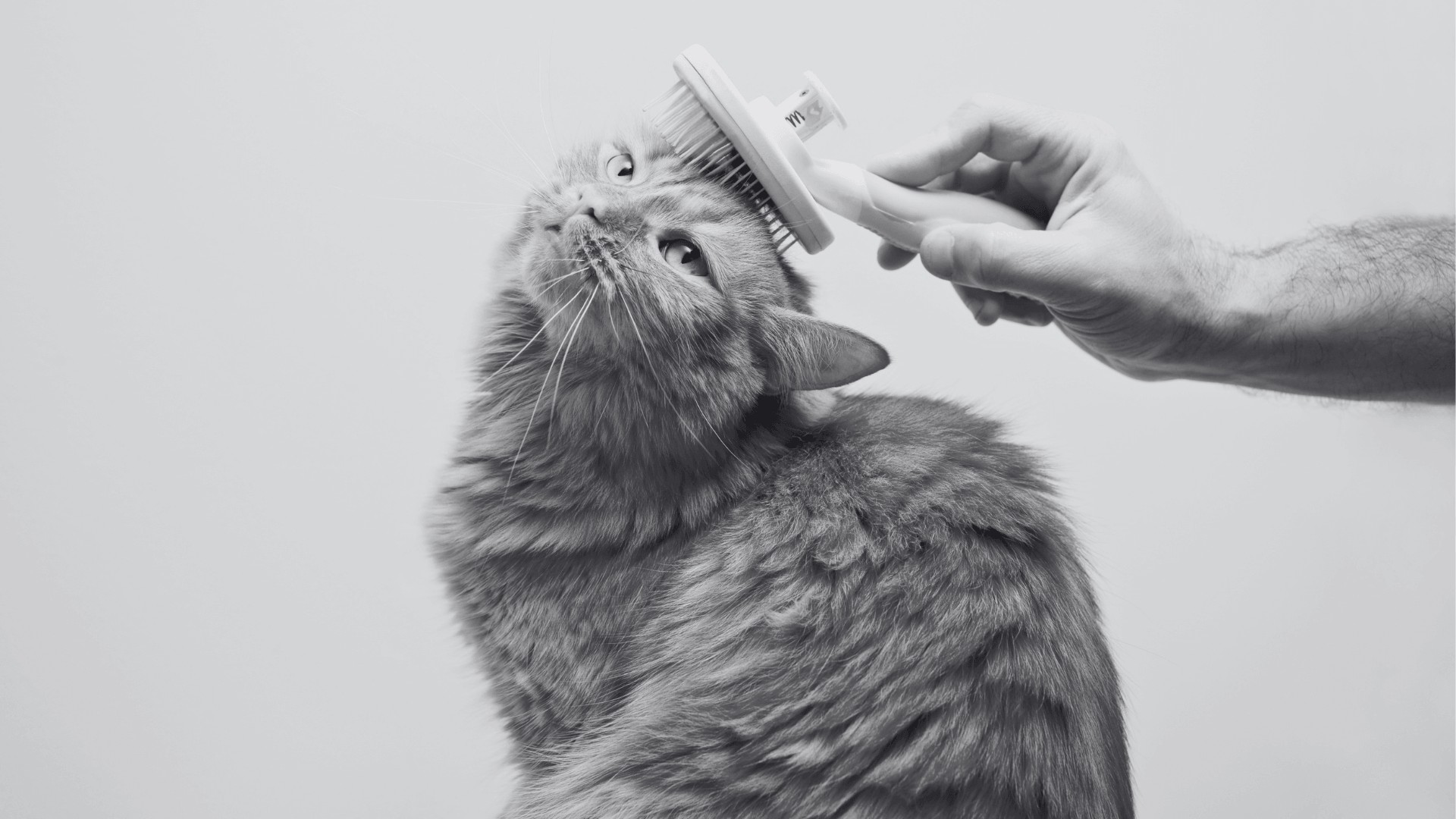
You know the scene. You pick up the brush, your cat spots it from across the couch, and suddenly she’s gone — under the bed, behind the laundry basket, anywhere but near you. Or maybe she tolerates exactly four strokes, purring the whole time, and then whips around and grabs your hand like you betrayed her. If that sounds familiar, you’re not doing anything wrong, and your cat isn’t being difficult for fun. Most brush-hating cats have a pretty good reason.
The short version? The brush might hurt, the sessions probably run too long, or your cat learned early on that brushing predicts something unpleasant — a bath, a vet trip, a mat getting yanked out. The answer is almost never a firmer hand. It’s a softer brush, much shorter sessions, and letting your cat set the pace. Most cats who hate being brushed can learn to tolerate it, and plenty end up enjoying it, when you rebuild the whole thing one calm minute at a time.
Key Takeaways
- Most cats hate brushing because it hurts, goes on too long, or reminds them of something stressful — not because they’re stubborn.
- Start with the gentlest tool you’ve got, do just two or three strokes, and stop while your cat is still happy. Ending early is the whole trick.
- Watch for tail lashing, skin rippling, and ears turning sideways — those are polite warnings, and respecting them builds trust fast.
- A cat who suddenly hates grooming after liking it before may be sore or have a skin problem, so that change deserves a vet visit.
Why Cats Hate Being Brushed
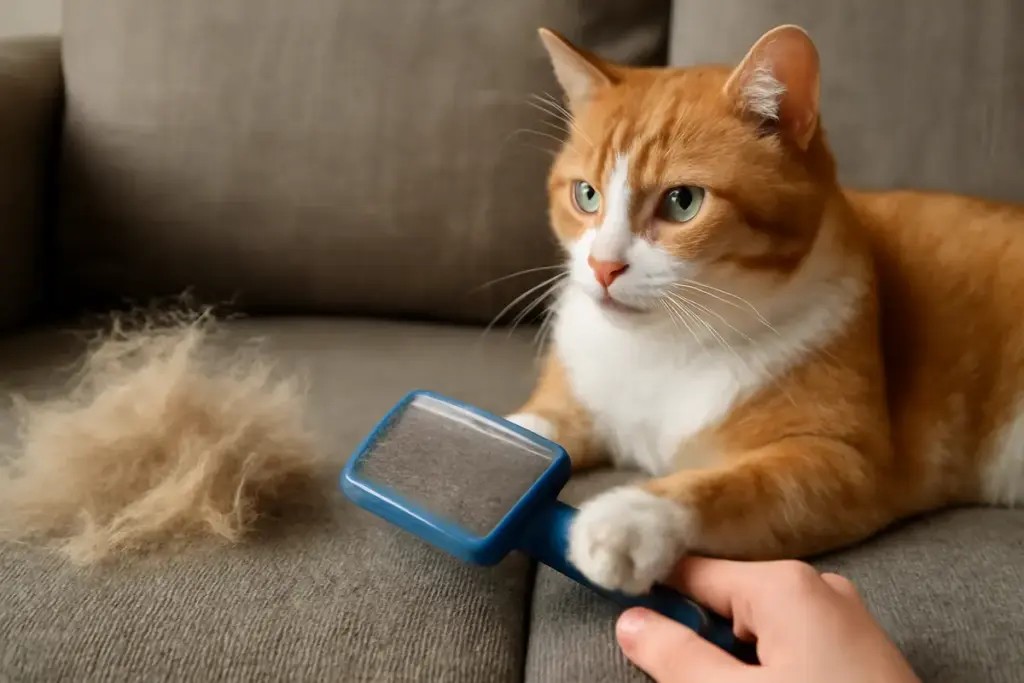
- The wrong brush: Stiff pins and aggressive de-shedding tools can scratch sensitive skin, especially on the belly, legs, and tail. What feels like a firm grooming tool to you can feel like a rake to a cat with thin skin — and cats really do have thin skin.
- Static and pulling: Dry coats build up static, especially in winter when the heat’s running and the air in your apartment is bone dry. Pulling through tangles genuinely hurts, too. One painful yank can undo weeks of trust.
- Overstimulation: Lots of cats love petting — for a while. Then the sensation builds and builds until it tips over into too much, and they react fast. Brushing extends that contact and adds friction, so the limit shows up sooner than it does with plain petting. Behaviorist Jackson Galaxy talks about this a lot: the feeling starts out good, intensifies, and the cat’s nervous system just doesn’t switch it off in time.
- Bad associations: If brushing only happens before a vet visit, a bath, or having a mat cut out, your cat learns to dread the sight of the brush itself. Cats are excellent at pattern recognition when the pattern ends badly for them.
- Pain or skin trouble: A cat who once liked grooming and now objects may be sore. Arthritis, skin irritation, allergies, or a hidden mat pulling on the skin can all be behind it.
- Being held or cornered: Restraint turns a mild dislike into a full-on fight. Cats cope way better when they know they can walk away — and, funny enough, a cat who’s free to leave often stays.
- It just never happened when they were young: Kittens who were handled and brushed gently in their first few months usually grow up thinking grooming is normal. A rescue cat who arrived as an adult may have simply never learned that a brush isn’t a threat.
Some cats are also just more touch-sensitive than others, the same way some people can’t stand the tag in their shirt. A cat like that may never love a full session, and that’s okay — your goal isn’t a spa day, it’s getting the loose fur and mat checks done in short, peaceful bursts.
Why Brushing Is Worth the Effort Anyway
It’s tempting to think, “Fine, she grooms herself, I’ll skip it.” Cats are good self-groomers — the Cornell Feline Health Center notes they spend a huge share of the day licking their coats. But that has a downside: the tiny barbs on your cat’s tongue drag loose hair down her throat, and some of it collects in the stomach as a hairball. Brushing pulls that fur off before she swallows it — fewer hairballs on your rug at 6 a.m.
Brushing also spreads natural oils through the coat, keeps long fur from matting, and gives you a chance to feel for lumps, scabs, fleas, or sore spots you’d never spot otherwise. The ASPCA points out that regular sessions are especially helpful for senior cats, who often can’t groom themselves as thoroughly as they used to. Think of it less as beauty maintenance and more as a weekly health check your cat doesn’t know she’s getting.
Signs Your Cat Has Had Enough
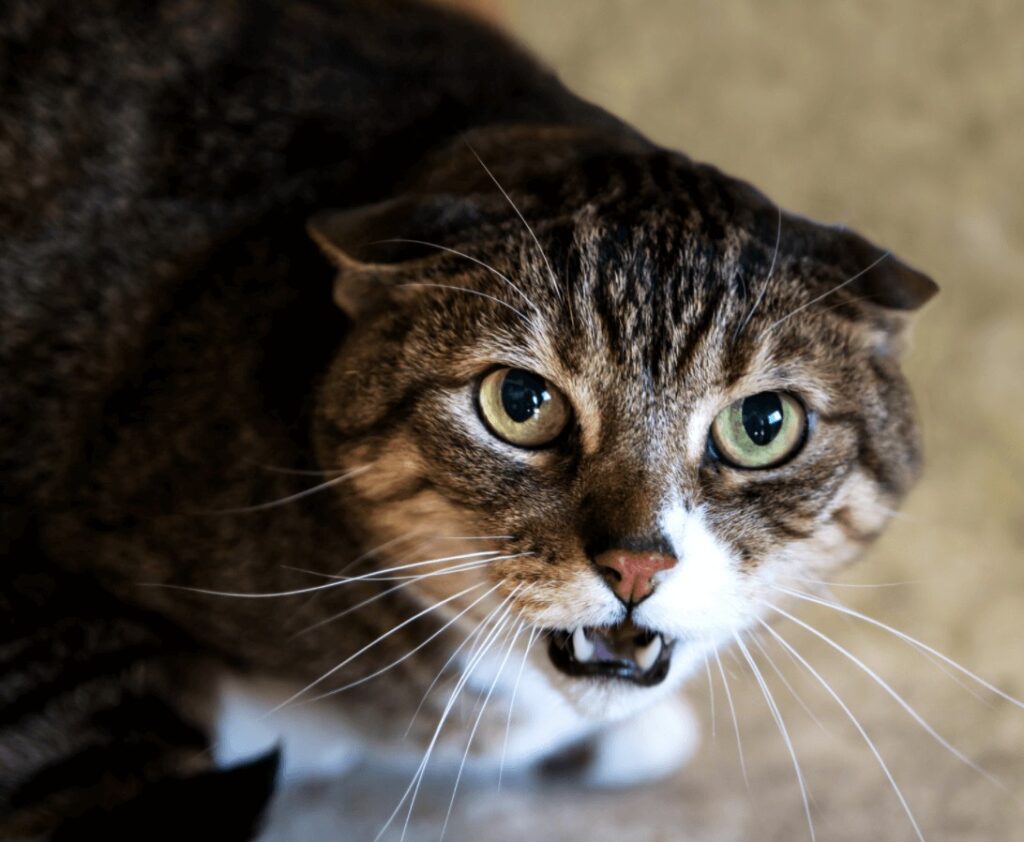
Stop before the bite, not after it. Watch for a lashing tail, skin rippling along the back, ears rotating sideways or flattening, a fixed stare at the brush, sudden head turns toward your hand, lip licking, low growling, or shifting away. International Cat Care lists these same signals — skin twitching, tail swishing, ears flicking back, freezing up — as clear signs a cat isn’t comfortable and grooming should stop for the day.
Those signals are your cat communicating politely — saying “I’m done” well before teeth get involved. Respect the early warnings and she learns grooming is safe and predictable, which is what makes longer sessions possible later. Ignore them, and she learns she has to escalate to be heard. That’s how you get a cat who seems to bite with no warning at all.
Choose a Gentler Tool
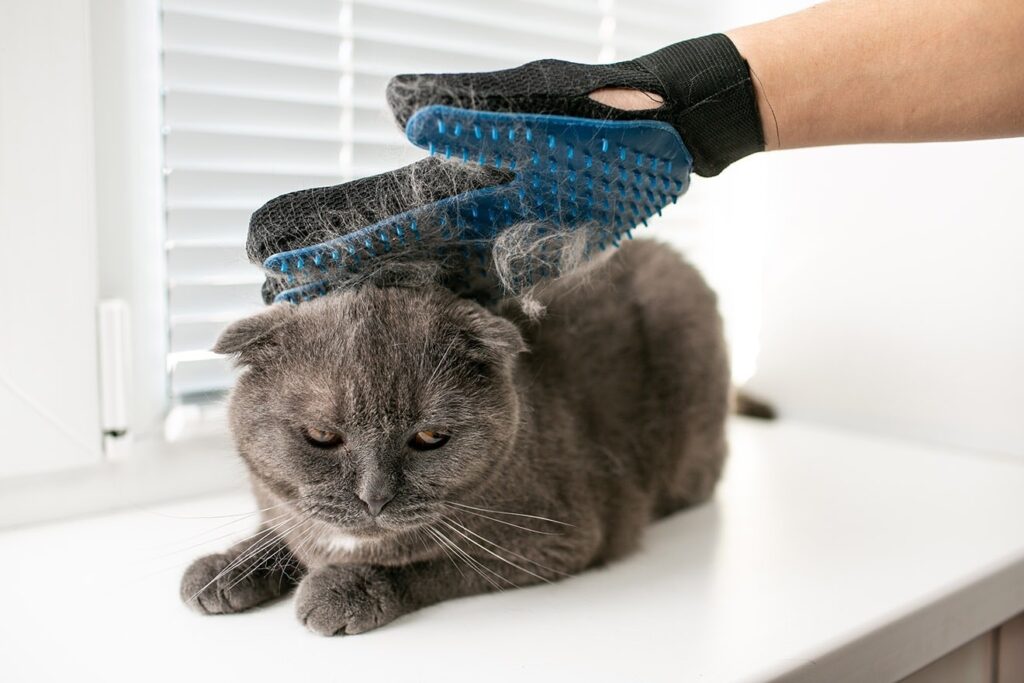
For most cats, start with a soft-bristle brush or a rubber grooming mitt. These lift loose fur with almost no risk of scratching, and a mitt feels like petting — a huge advantage with a suspicious cat. Short-haired cats rarely need more than that — a weekly once-over with a rubber brush or mitt usually does it.
Long-haired cats usually also need a stainless-steel comb, because a brush glides right over mats forming close to the skin while a comb actually finds them. Work it gently, check often whether it snags, and pay extra attention behind the ears, under the front legs, and around the back end, where mats love to start. If your cat tolerates it later, a soft slicker can help with a thick undercoat — just go easy, because slicker pins are the ones most likely to scrape.
Whatever you use, don’t press hard. Let the brush do the work, use short strokes in the direction the fur grows, and skip tender areas like the belly and inner legs until your cat is relaxed about grooming in general. If a tool makes your cat flinch even when you’re gentle, retire it. The best brush is the one your cat will actually let you use.
How to Groom Without the Fight: A Step-by-Step Plan
Step 1: Start With Petting, Not Brushing
For the first few days, don’t bring the brush out at all. Just pet your cat in a favorite spot — cheeks and chin are safe bets — for a minute or two, then end with a treat. You’re building a routine: calm contact, then a reward.
Step 2: Introduce the Brush Without Using It
Set the brush nearby during petting and let your cat sniff it. Rub it gently against her cheeks so it picks up her scent. If your cat rubs her face on the brush, that’s an excellent sign — she’s claiming it as hers, and things that smell like her are less scary.
Step 3: Do Three Brush Strokes, Then Stop
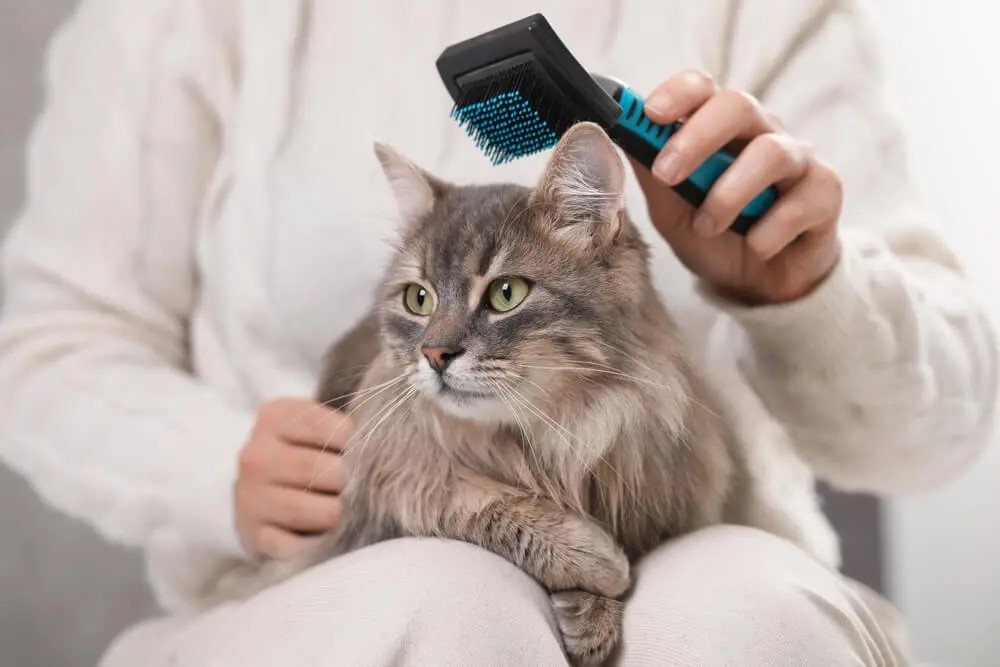
Brush the shoulders or back — the areas most cats accept — for just two or three slow strokes. Then stop while things are still going well and offer a treat or a lickable treat paste. Ending early is the secret to this whole plan. You want your cat walking away thinking the session was too short, not plotting her escape because it dragged on.
Step 4: Add a Little Time Each Day
Add a few strokes per session over days, not minutes in one sitting. Many cats do best with several one-minute sessions a week rather than one long weekly battle — and frequent short sessions prevent mats in the first place, so you win twice. If your cat just isn’t feeling it one day, skip it. One missed day costs you nothing; one forced session can cost you a week.
Step 5: Work Toward Tougher Areas Slowly
Once the back and sides are easy, briefly touch the chest, then the outer legs. Save the belly and tail for last, and accept that some cats will never enjoy those areas — that’s fine, you don’t have to win every spot. For a cat who’ll only tolerate a minute, prioritize the places where mats form: behind the ears, the armpits, and the backs of the hind legs.
Jackson Galaxy walks through brushing a reluctant cat, including how to read that tail and when to call it quits:
Dealing With Mats Without a Fight
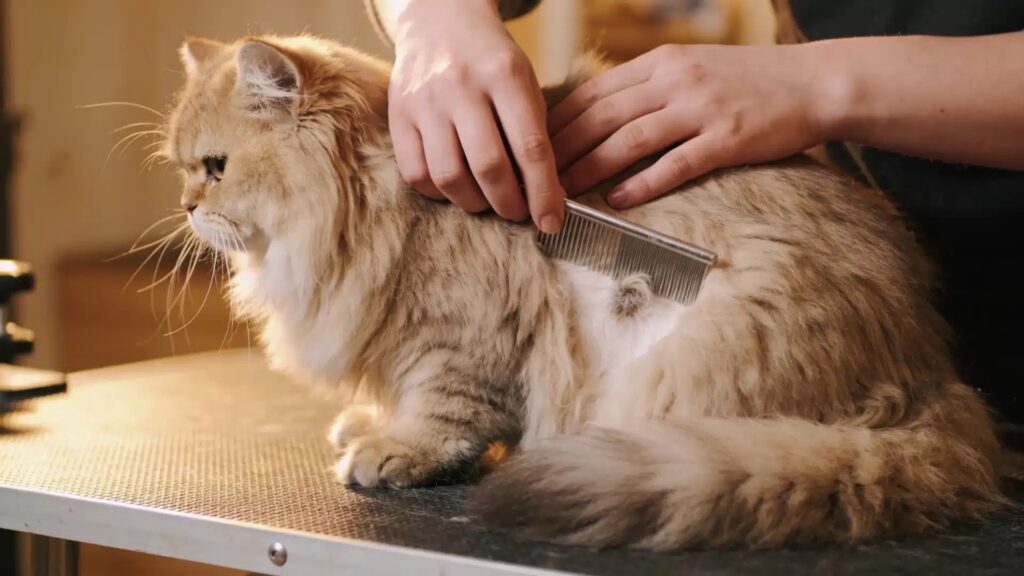
Never pull a mat out, and never cut one out with scissors. Cat skin is thin and loose, and it lifts up into the mat, so scissor cuts are shockingly common — groomers and vets see them all the time. For a small, loose tangle, hold the base of the mat between your fingers to protect the skin, and tease it apart gently with your fingers and a comb, working from the ends inward. A little cornstarch worked into the mat can help it loosen, if your veterinarian is fine with that.
For tight mats felted down close to the skin, a professional groomer or your veterinary clinic is the safer call. They can shave the mat out with clippers in seconds, with far less stress than a twenty-minute wrestling match at home. A painful mat removal at home can also set your progress back to zero, because now the brush predicts pain again. Protect the trust you’ve built — it’s worth more than one mat.
Common Mistakes That Make Cats Hate Brushing More
- Chasing the cat with the brush. If she walks away and you follow, brush in hand, grooming becomes a hunt. Let her go. Try again tomorrow.
- Starting with the belly or tail. Those are the most sensitive, most defended areas on most cats. Leading with them is like starting a negotiation with your biggest demand.
- Brushing right after playtime. A cat still buzzing from chasing a wand toy is already revved up — overstimulation will arrive in seconds. Wait until she’s drowsy.
- Only brushing when there’s a problem. If the brush only appears when there’s a mat to deal with, the brush means pain. Short, pleasant, nothing-wrong sessions change that story.
- Scruffing or pinning your cat down. You might get the session done once. You’ll pay for it for months. Pressing harder with a de-shedding tool is the same mistake — it scrapes skin and teaches your cat that brushing hurts.
Pro Tips From the Other Side of the Brush
Time it to the drowsy window. Most cats have a predictable sleepy stretch — after dinner, during your evening TV time, in that sunny afternoon spot. That’s your window. A half-asleep cat on the couch is a completely different animal from the same cat at 10 a.m. full of beans.
Keep a “brush station.” Leave the brush and a tube of lickable treat where grooming happens, like the arm of the couch. When the tools live in a calm, familiar place, there’s no scary setup ritual to warn your cat something’s coming.
Split the cat, not the difference. With a long-haired cat who tolerates only a minute, do the left side today and the right side tomorrow. Nobody said a whole cat has to happen in one session. And pair brushing with something she already loves — some cats will accept almost anything while licking treat paste off a lick mat. That’s not cheating, that’s smart training. If grooming struggles are part of a bigger picture of a touchy or stressed cat, our guide to why cats sleep on you is a good reminder of how much trust close contact involves. You’ll find more coat-care guides in our cat grooming and health section, too.
When Brushing Turns Into Overgrooming Worries
There’s a difference between a cat who hates being groomed and a cat who grooms herself too much. Cornell’s vets note that licking that causes hair loss, bald patches, or lots of extra hairballs isn’t normal — it can point to fleas, allergies, pain, or stress from a change at home, like a move or a new pet. If your cat is licking her belly bald or chewing at one spot over and over, that’s not a brushing problem. That’s a vet problem, worth booking sooner rather than later.
When to Talk to Your Veterinarian
Book a visit if your cat suddenly hates grooming after previously enjoying it, cries or flinches when one specific area is touched, has red, flaky, or smelly skin, develops bald patches, licks one spot obsessively, brings up hairballs far more often than she used to, or has mats you can’t remove gently. Sudden behavior change is information, not stubbornness — sometimes “she won’t let me brush her anymore” is the first sign of arthritis or another sore spot you’d never guess from across the room.
Disclaimer: This article is for general information only and is not veterinary advice. If your cat shows pain, skin changes, or a sudden behavior change, please consult your veterinarian.
Frequently Asked Questions
How often should I brush my cat?
Short-haired cats usually do well with one short session a week. Long-haired cats benefit from brief sessions several times a week — ideally a quick daily once-over — to prevent mats. Frequent one-minute sessions beat a single long session your cat dreads, every time.
Why does my cat bite the brush after a few minutes?
That’s usually overstimulation, or a sign that a stroke hurt or hit a sensitive spot. Watch for tail lashing, skin rippling, and ears turning. Stop at the first signals, keep sessions shorter, and end with a treat while your cat is still calm, so the last thing she remembers is the good part.
What is the best brush for a cat that hates brushing?
Start with the gentlest option: a soft-bristle brush or a rubber grooming mitt, which feels like petting. Add a steel comb later only if your cat has long fur or tangles. Skip stiff tools and heavy pressure until your cat is fully relaxed about grooming — and honestly, some cats never need more than the mitt.
My cat only hates being brushed in one spot. What does that mean?
It can be a tender area like the belly, but it can also be a mat hiding close to the skin, a sore joint underneath, or skin irritation you can’t see through the fur. Part the fur and look. Redness, a lump, or flinching every time means a vet visit.
Can I teach an older or rescue cat to accept brushing?
Yes — it just takes longer. Adult cats with no grooming history can learn the same step-by-step routine, starting with petting and treats. Aim for tolerance first; enjoyment, if it comes, is a bonus.