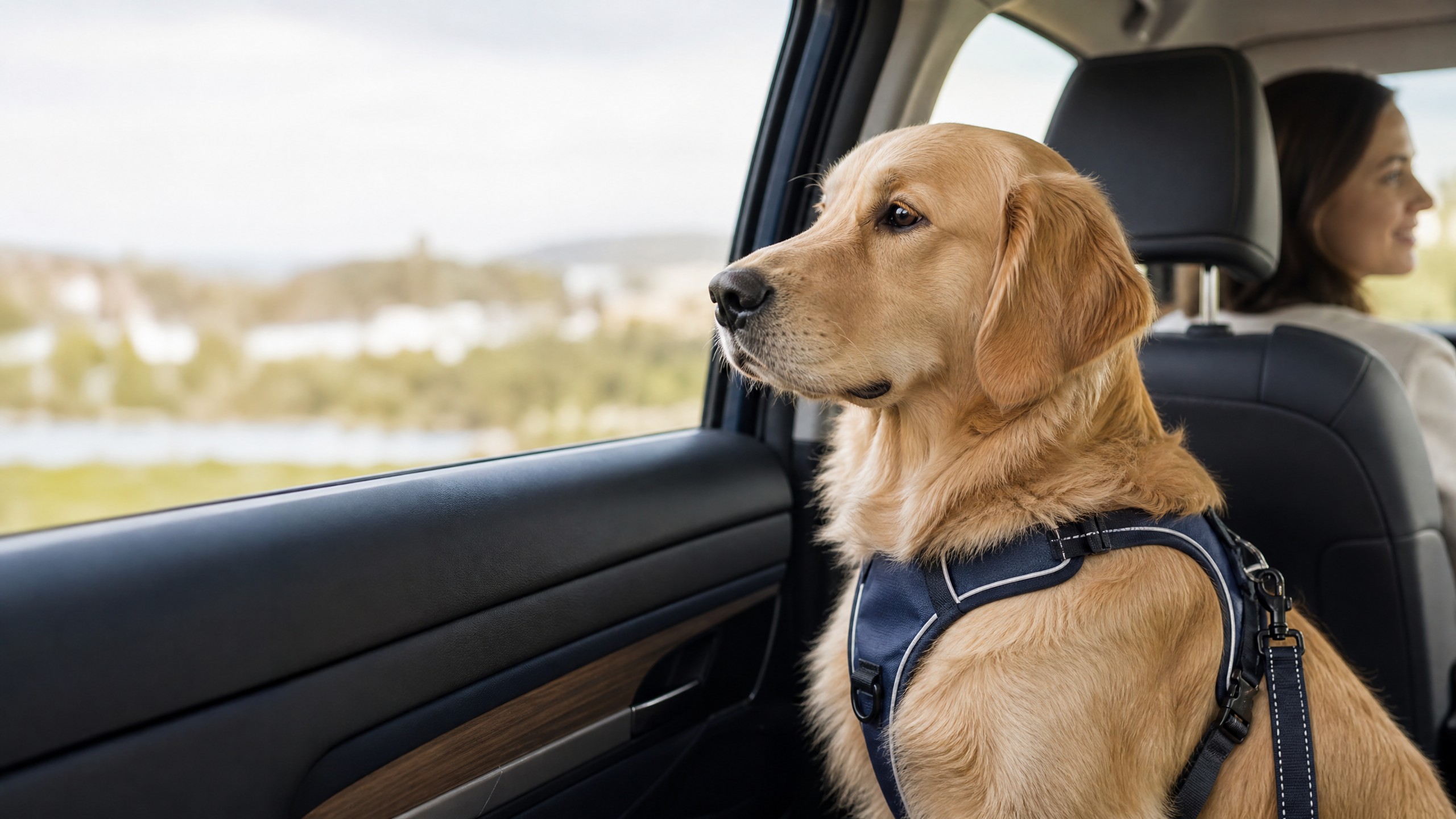
Picture this: you’re doing 35 on a quiet side street, coffee in the cup holder, your dog loose on the back seat with his chin up enjoying the breeze — and the car in front of you stops short. You brake hard. Nothing terrible happens, but your dog slides off the seat in a heap, yelping, and spends the rest of the day limping a little. No crash. No one’s “fault.” Just physics, and a dog who wasn’t secured.
That’s the part most of us miss. The safest way to travel with most dogs is in the back seat, secured on every trip — in a well-fitted harness attached to the seat belt system or in a sturdy crate that’s itself strapped down. A loose dog isn’t safe, even on a five-minute drive. In a sudden stop, an unrestrained dog can be thrown, injure people in the car, bolt into traffic after a crash, or distract you at the worst moment.
You don’t need the most expensive setup on the market. You need a restraint that fits your dog and your car, a dog who’s used to it before the big road trip, and a handful of habits that never change, no matter how short the drive is. For more ideas once you arrive, browse our dog travel and outdoors guides.
Key Takeaways
- Secure your dog on every trip, even short ones — a crash-tested style harness in the back seat or a crate that’s strapped down, never loose and never on a collar.
- Back seat or secured cargo area only. Front-seat airbags can seriously injure a dog, and a dog should never ride in an open truck bed.
- Never leave a dog alone in a parked car. Interiors heat up dangerously fast, even on mild days with the windows cracked.
- Practice the gear and short drives at home first, so the first time your dog wears the harness isn’t the morning of a six-hour trip.
Option 1: A Car Harness
How it works
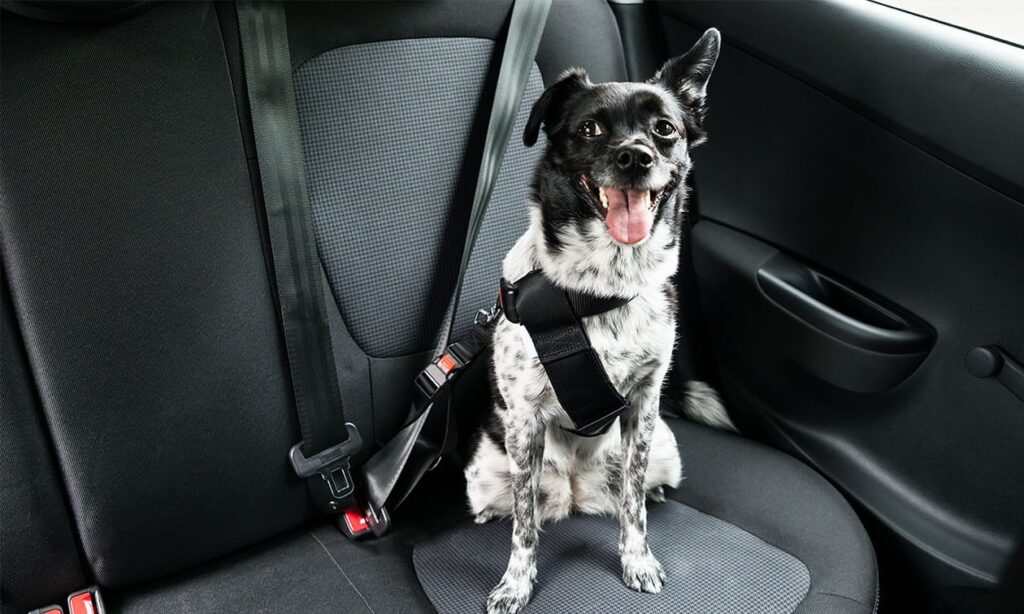
A car harness is not your everyday walking harness with a seat belt looped through it. It’s built for this job: it attaches to the seat belt or a proper tether point and is designed to spread force across your dog’s chest in a stop, instead of concentrating it on the neck. Look for wide, padded chest straps, sturdy hardware that doesn’t feel like it came off a keychain, and sizing based on an actual chest measurement — not a guess based on “medium-ish.”
Independent crash testing is a real plus where it’s available, but read the fine print on any claim. As PetMD’s veterinarian-reviewed guide to dog car safety gear explains, words like “crash-tested” can describe very different tests, so check whether the product actually passed, at what dog weight, and with what attachment method. A harness that was tested and failed is still allowed to say it was tested. Sneaky, but true.
How to fit and use it
Fit the harness at home first, with treats — not in a hot parking lot five minutes before you leave. Let your dog wear it around the house, then on short, pleasant drives, before you ask them to wear it for three hours straight.
In the car, attach it exactly the way the maker directs, usually in the back seat, and keep the tether short enough that your dog can sit, stand briefly, and lie down — but can’t reach the front seat, climb into your lap, or lunge at a window. And this one is non-negotiable: never attach a car tether to a collar. In a stop, all that force lands on your dog’s neck. Harness only, every time.
Pro tip: Do a driveway test after fitting: check you can fit two fingers under the straps and that the chest piece stays centered when your dog shifts. If it twists during a driveway wiggle, it’ll be worse at highway speed.
Option 2: A Secured Crate
How it works
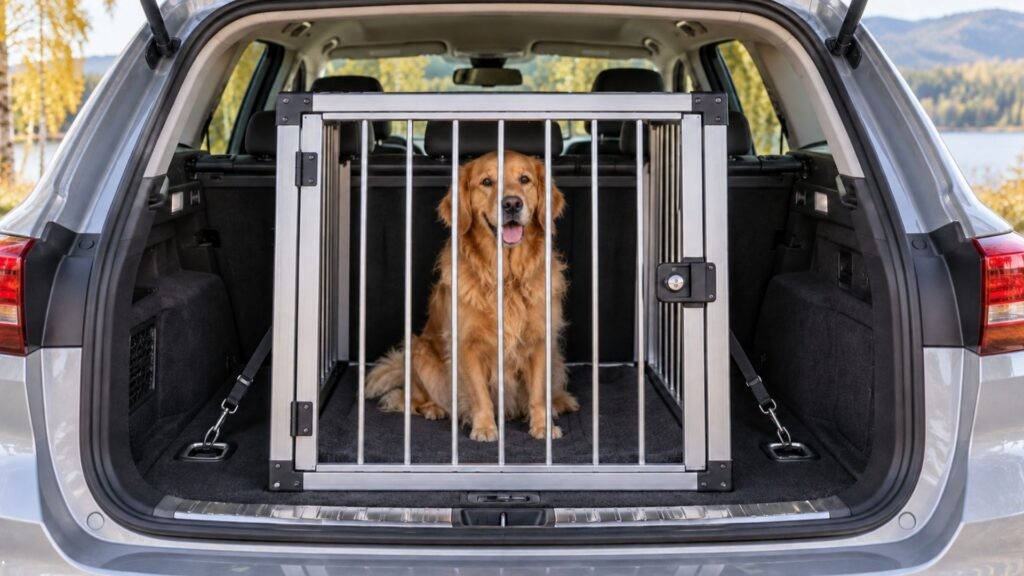
A crate protects your dog from being thrown around and gives anxious travelers a familiar little den. For car use, pick a sturdy crate sized so your dog can stand, turn, and lie down — without so much extra room that they get tossed inside it like laundry in a dryer. Wire, plastic airline-style, and heavy-duty travel crates behave differently, so think about strength and ventilation — and whether it even fits through your car’s door. Measure the car, not just the dog.
The ASPCA backs this approach, too. In the ASPCA’s expert dos and don’ts for traveling with pets, their relocation team recommends securing your pet in the vehicle — ideally in a hard-sided, ventilated carrier or crate that’s secured so it won’t slide or shift in an abrupt stop — and keeping dogs in the back seat in a harness if you don’t use a crate.
Secure the crate itself
An unsecured crate is just a heavy box sliding around your car. Place it where it fits most snugly, then strap or anchor it using your car’s tie-down points so it genuinely cannot shift. Keep bedding low and non-slip, take out hanging toys, and double-check the latch — then check the straps again after the first few miles, because they settle.
If your dog already naps happily in a crate at home, car crating is usually the easiest transition of all. If they don’t, build that comfort at home first, not on the highway. Our step-by-step guide on how to crate train a puppy walks through exactly how to do that in about a week, and the same slow steps work for adult dogs.
Option 3: Barriers and Booster Seats — With Limits
A cargo barrier can keep a dog out of the front seat and cut down on distraction. But on its own, it doesn’t restrain a dog in a crash at all. Treat it as a supplement, never a substitute.
Small-dog booster seats raise a little dog up to see out the window, which some dogs love. Only use one that attaches securely to the car and includes a harness attachment — clipped to a harness, never a collar. If it can’t be secured properly, skip it, no matter how cute the photos are.
What Vets Say About Loose Dogs
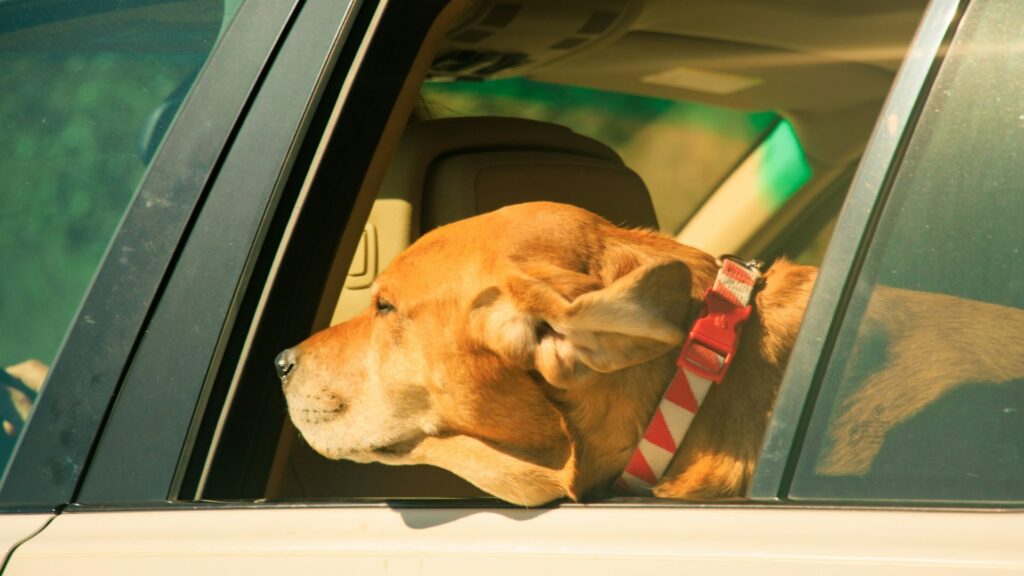
This isn’t just trainer opinion. The American Veterinary Medical Association’s policy on safe transport of pets in motor vehicles is blunt: it’s unsafe for pets to ride loose inside a vehicle, and the preferred options are a properly sized, secured enclosure or a properly designed safety harness. The AVMA also says transporting pets loose — or even tethered — in open cargo areas like truck beds isn’t safe. When the vets, the trainers, and the rescue organizations all land in the same place, it’s worth listening.
The American Kennel Club’s road-trip safety guide adds the packing side: get the safety equipment first, get your dog used to it ahead of time, and bring the boring essentials — water, a spare leash, medical records, and a first aid kit.
Set Up the Car Safely, Every Time
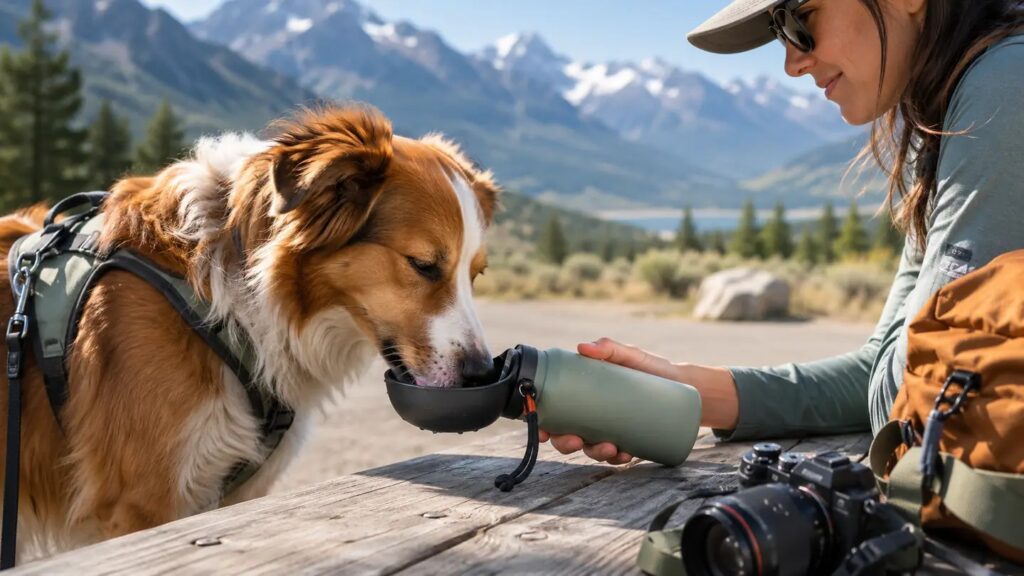
- Back seat or secured cargo area only. Front-seat airbags deploy with enough force to seriously injure a dog. And never, ever carry a dog in the open bed of a pickup truck.
- Windows mostly up. Flying debris can injure eyes and ears, grit can scratch a cornea at 40 mph, and dogs do fall — and jump — out. Crack a window for air if you like; don’t offer an exit.
- Use child locks. A paw on the wrong button can open a window or even a door.
- Plan your stops. On long drives, stop every couple of hours for water, a potty break, and a short leashed walk. Leash on before the door opens, every time, and never let your dog off leash in an unfamiliar rest area — strange smells and highway noise are a recipe for a bolt.
- Manage temperature like it matters, because it does. Cars heat up far faster than most people expect, even on mild days and even with the windows cracked. Never leave a dog alone in a parked car in warm weather, and be careful in cold weather too, when a parked car turns into a refrigerator. If a stop means leaving the car, the safest plan is simple: your dog comes with you where they’re allowed, or another adult stays in the car with them.
- Bring the basics. Water and a portable bowl, leash and harness, waste bags, any medication, a familiar blanket, and your vet’s contact details. On long trips, carry vaccination and health records too.
- Make ID a habit. Check that your dog’s microchip details and ID tag are current before a trip. A dog lost far from home is much harder to get back.
Help a Nervous or Carsick Dog
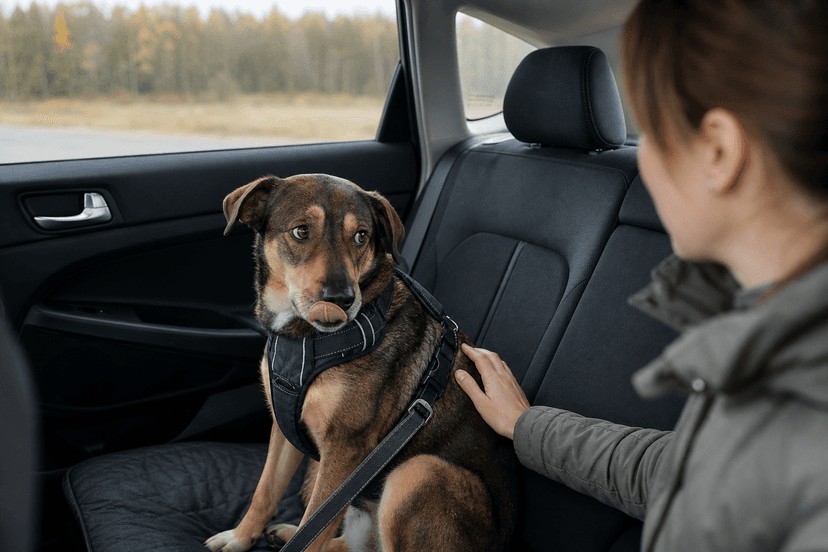
Plenty of dogs hate the car for a perfectly logical reason: so far in their life, the car has mostly taken them to the vet, the groomer, or the place where they got boarded for a week. Others aren’t anxious at all — they’re just nauseous, which is especially common in puppies whose inner ears are still developing.
Either way, you fix it in steps, not with one heroic road trip. Sit in the parked car together with treats. Start the engine and go nowhere. Then take a two-minute drive around the block that ends back home with dinner. Keep the car cool, and skip the full meal right before travel if your dog tends to get carsick — a light stomach travels better. End early trips somewhere pleasant, like a park or a drive-thru that hands out pup cups, and your dog will start doing the math in your favor.
Want to see calm car manners and safe travel habits broken down on video? This first-aid-focused walkthrough covers securing your dog, temperature, and hydration on the road:
If your dog drools heavily, vomits on most rides, pants nonstop, or panics despite gradual practice, talk to your veterinarian. There may be a medical cause, and there are real options that can help. Don’t reach for human travel medicine from your own cabinet, though — doses and safety for dogs are different, and guessing can genuinely hurt them.
Troubleshooting Common Car Problems
“My dog barks at everything we pass”
Start shorter and more boring. A dog who’s over threshold five minutes in won’t settle at minute forty. Try a covered crate or a back-seat spot where they can’t rehearse barking at every passing truck, reward quiet moments on practice drives, and tire them out before you leave. If the barking is frantic rather than excited, that’s anxiety — slow the whole program down.
“My dog tries to climb into the front seat”
That’s a restraint-fit problem. Shorten the tether, check the harness fit, or switch to a secured crate for a while. A barrier can help as backup, but the restraint has to do the real work. Don’t drive one-handed while pushing a dog back — pull over and fix the setup.
“My dog was fine as a puppy and now hates the car”
Ask what changed. One bad experience — a scary near-miss, a painful ear infection, a long trip where they got sick three times — can rewrite how a dog feels about the car. Go back to parked-car treats and tiny trips, and if the change was sudden, get a vet check. Pain and nausea are sneaky.
What Never to Do
- Never drive with a dog on your lap. It distracts you and puts your dog right between you, the steering wheel, and the airbag.
- Never let a dog roam loose, climb between seats, or ride in the front seat.
- Never attach a restraint to a collar, and never use a regular walking lead as a car restraint.
- Never leave a dog alone in a hot parked car — not “for five minutes,” not with the windows cracked, not ever.
- Never transport a dog in a trunk or in an unventilated, unsecured space.
- Never swing doors or windows wide open at a stop before your dog is leashed. Parking lots and rest areas are where a shocking number of dogs get lost.
Check the Rules Where You Travel
Laws on restraining dogs in cars vary by state and country, and some places specifically ban lap dogs, unrestrained animals, or dogs in truck beds. Rental cars and rideshares have their own rules, too. Before a long trip, check the rules along your route and follow the stricter one where they differ. Even where no law requires a restraint, physics doesn’t care.
The Bottom Line
Pick one proper restraint — a well-fitted harness or a secured crate — practice on short trips, and use it on every drive, including the boring two-minute ones. Keep your dog in the back, windows mostly up, stops planned, and never leave them in a parked car. Do those few things consistently and car travel stops being a gamble and becomes a routine your dog can actually relax into.
FAQ
Is a harness or a crate safer for a dog in the car?
Both can work well when they’re sturdy, correctly fitted, and properly secured. A crate suits dogs who already rest calmly in one, and it can shield them from loose objects flying around the cabin. A crash-tested style harness suits dogs who settle nicely on a seat. The genuinely unsafe choice is no restraint at all — or a restraint clipped to a collar.
Can my dog ride in the front seat if the airbag is off?
The back seat is still the safer place, airbag or not. Front seats expose dogs to greater crash forces, put them within paw’s reach of controls they can knock, and turn them into a distraction inches from the driver. Keep dogs in the back seat or a secured cargo area, properly restrained, every time.
How do I keep my dog calm on a long road trip?
Practice short trips first so the long one isn’t a shock, exercise your dog before you leave, keep the car cool, and stop every couple of hours for water and a potty break. A familiar blanket helps more than you’d think. If anxiety or carsickness keeps showing up despite all that, ask your veterinarian for advice before the trip — not from the road.
How hot is too hot to leave my dog in the car while I run inside?
There isn’t a safe version of this. A parked car’s interior can climb to dangerous temperatures within minutes, even when it feels mild outside and even with the windows cracked, and heatstroke can kill a dog frighteningly fast. If your dog can’t come inside with you, leave them home, or bring another adult who stays with them.
Do I really need a restraint for a five-minute drive?
Yes — honestly, this is the drive where people get hurt, because it’s the drive where nobody bothers. Most trips are short, sudden stops don’t check your schedule first, Clip in or crate up every time, and it becomes as automatic as your own seat belt.
Sources
- American Veterinary Medical Association — Safe Non-Commercial Transport of Pets in Motor Vehicles
- ASPCA — Traveling With Pets? Follow These Expert Dos and Don’ts to Keep Them Safe
- American Kennel Club — Essential Road-Trip Safety Tips for Traveling With Your Dog
- PetMD — Dog Car Safety: Do You Need a Dog Car Seat, Dog Seat Belt, Barrier or a Carrier?