This guide contains affiliate links. As an Amazon Associate, PawChirp earns from qualifying purchases — at no extra cost to you. Read our full disclosure.
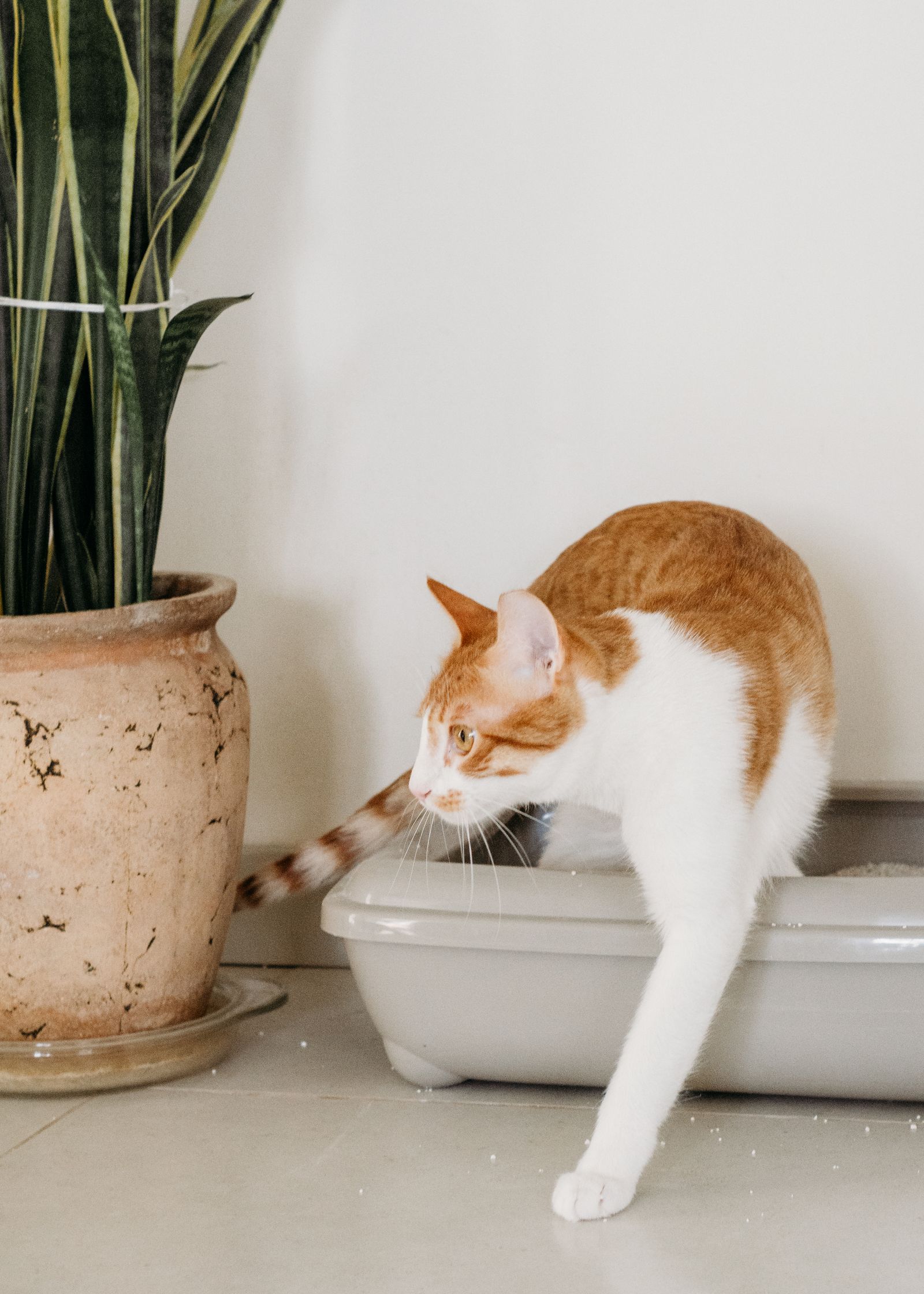
If you vacuum around the litter box more often than you vacuum the rest of your home, you already know the problem: fine, lightweight litter clings to paws, lodges between toes, and hitches a ride to every room in the house. Low tracking cat litter attacks that problem with physics instead of perfume — bigger, heavier particles are simply harder for a cat to carry or kick very far. If your cat is an enthusiastic digger, our guide to why cats kick litter everywhere covers the behavior side; this roundup covers the product side.
One honest warning before the picks: texture is a trade-off. The Cornell Feline Health Center notes that most cats prefer unscented, fine-textured litter, and that a clean box matters more than almost anything else. The coarser litters below track less, but a cat who hates the feel of pellets underfoot may vote with her feet — so switch gradually, keep one familiar box available during the transition, and never force a swap overnight.
Key Takeaways
- Particle size is the whole game: the larger and heavier the granule, pellet, or crystal, the less of it ends up on your floors.
- Dr. Elsey’s Ultra is the easiest upgrade — a heavier clay that still clumps and works in the box you already own.
- Tidy Cats Breeze pellets are the strongest anti-scatter design here, but they only work inside the Breeze system with its pads.
- PetSafe ScoopFree crystal trays eliminate pouring and scooping entirely — litter arrives sealed in a disposable tray.
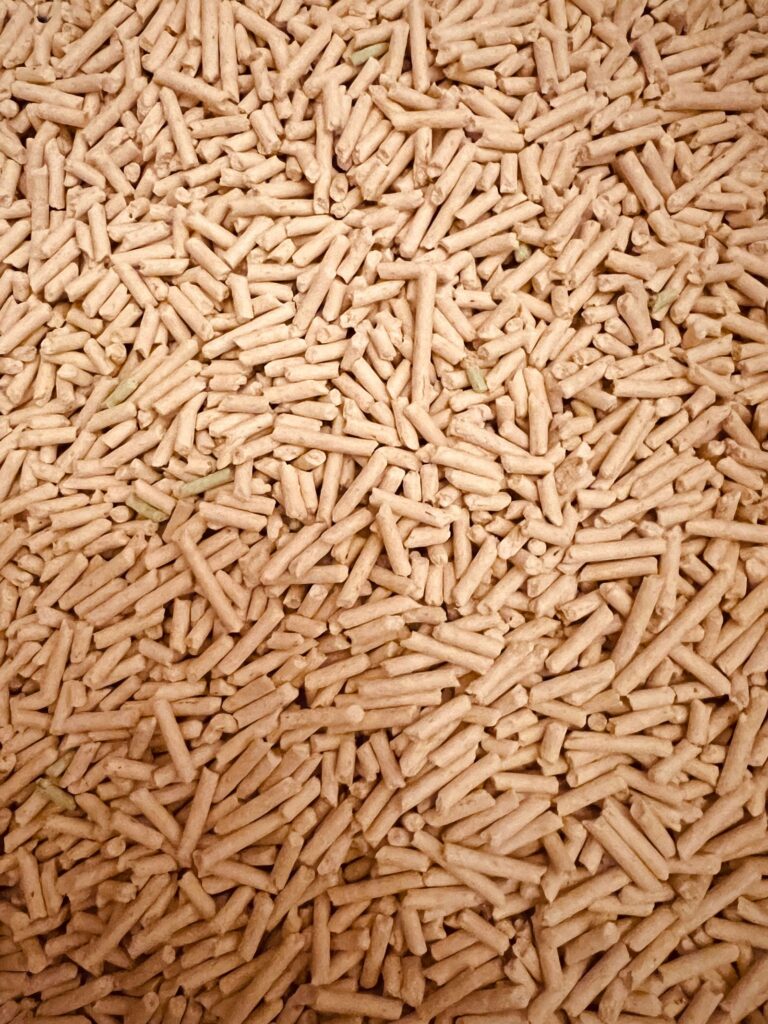
- ökocat Less Mess mini-pellets are the only pick purpose-built for low tracking that still clumps like a normal litter.
- No litter is truly zero-tracking. A good mat by the box catches what any litter misses.
Quick Picks: The 5 Litters at a Glance
| Product | Format | Material | Clumping | Box Needed |
|---|---|---|---|---|
| Dr. Elsey’s Ultra Unscented, 40 lb | Medium-grain granules with heavier particles | Clay | Yes | Any standard box |
| Purina Tidy Cats Breeze Pellets Refill, 3.5 lb | Large solid pellets | Zeolite mineral | No | Breeze system + pads |
| PetSafe ScoopFree Crystal Trays, Fresh Scent, 3-Pack | Pre-filled disposable trays | Silica gel crystals | No | ScoopFree self-cleaning box |
| Boxiecat Unscented, 28 lb | Fine-to-medium granules | Bentonite clay | Yes | Any standard box |
| ökocat Less Mess Mini-Pellets, Unscented, 14 lb | Dense mini-pellets | Wood fiber | Yes | Any standard box |
How We Chose These Litters
Every pick below was chosen on published specifications and documented owner feedback, not hands-on testing — you can read exactly how our process works on how we choose products. For this roundup we compared granule, pellet, and crystal size and weight (the real drivers of tracking), the base material, whether the litter clumps or runs as a system, what box it requires, and the exact scented or unscented variant each link points to. Where owners consistently disagreed with a manufacturer’s low-tracking claim, we say so in the cons.
1. Dr. Elsey’s Ultra Unscented — Best Heavy Clay Upgrade
Who it’s for: Anyone who wants less litter on the floor without changing boxes, routines, or litter type.
Dr. Elsey’s Ultra attacks tracking with weight. The formula blends medium-grain clay with heavier granules — the manufacturer describes it as combining the heavy, non-tracking granules of its classic formula with a medium-grain clay — so particles are less likely to ride out of the box stuck to a paw. It is a hard-clumping, fully scoopable clay that works in standard, sifting, and mechanical boxes, and it is unscented, controlling odor without added perfume. Owners rate it about 4.3 out of 5 on Chewy across roughly 19,000 ratings, which tells you it is a well-tested mainstream choice rather than a niche experiment.
Pros
- Heavier granules genuinely reduce scatter compared with fine, lightweight clays
- Hard clumps that hold together during scooping, so you dig less and fling less
- Unscented — no perfume for your cat to object to
- Works in the box you already own; no system to buy
Cons
- The 40 lb bag is genuinely heavy to lift, pour, and store
- Owner feedback on dust and tracking is mixed — better than fine litter, not scatter-proof
- Large wet clumps can occasionally stick to the bottom of the box
2. Purina Tidy Cats Breeze Pellets — Best Anti-Scatter Design
Who it’s for: Owners willing to switch to a dedicated system in exchange for the least litter on the floor.
The Breeze pellets are the most radical design in this roundup: large, solid zeolite mineral pellets, far bigger than any clay granule. A cat physically cannot carry them far on a paw or kick them across the room, and because urine passes straight through the pellets to an absorbent pad underneath, there are no soggy clumps breaking apart into trackable crumbs — solid waste simply sits on top for scooping. Retailer descriptions call the pellets 99.9% dust-free. One 3.5 lb pouch is positioned as roughly a month’s refill for one cat. Owners rate the pellets about 4.8 out of 5 on Chewy across roughly 3,100 reviews — the strongest reception in this roundup.
Pros
- Big, heavy pellets barely track at all — the best scatter control here
- No clumps to break apart; urine drains to a pad instead
- Very low dust on pouring, per retailer descriptions
- Unscented pellets, so nothing perfumed under your cat’s feet
Cons
- Only works in the Tidy Cats Breeze litter-box system (sold separately) with its disposable pads — ongoing pad refills are part of the deal
- Some cats dislike the feel of large pellets underfoot and refuse the switch
- This link is the single 3.5 lb refill pouch, not a multi-pack or a starter kit
3. PetSafe ScoopFree Crystal Trays — Best No-Scoop Option
Who it’s for: ScoopFree owners who want the litter itself to stop being a loose, pourable material altogether.
This pick sidesteps tracking at the source: there is no bag of loose litter to pour, measure, or spill. Each tray arrives pre-filled with 4.3 lb of silica gel crystals — larger, angular pieces that do not cling to paws the way fine clay does — sealed in a disposable tray with a leak-protective lining. The crystals absorb urine and dry out solid waste, so there is nothing to scoop; when a tray is spent (the maker positions one tray as lasting up to about 30 days for a single cat), you lift it out and slide in the next. Review sources describe the crystals as low-tracking and 99% dust-free. This 3-pack is the Fresh Scent version with the blue crystals.
Pros
- No pouring and no scooping means almost no loose litter escapes during maintenance
- Crystals are too large and angular to stick to paws like fine clay
- Changeover takes seconds — tray out, tray in
- Leak-protective lining keeps the box itself cleaner
Cons
- The trays fit only PetSafe ScoopFree self-cleaning boxes — owners of standard boxes cannot use them at all
- It is a closed system: the ongoing routine is full tray replacement, not topping up a bag
- This variant is scented, which some cats (and owners) prefer to avoid
4. Boxiecat Unscented — Best Familiar Clay Feel
Who it’s for: Cats (and owners) who will not accept pellets or crystals, but still want less scatter than a bargain clay.
Boxiecat is the conventional-clay control pick in this lineup: 100% bentonite clay with no fragrances or fillers, in a fine-to-medium granule. Its anti-scatter trick is in the clumping. Clumps form fast and flat on the surface instead of soaking down to the bottom of the box, so scooping lifts them out cleanly instead of digging, breaking, and flinging litter around the rim. The manufacturer and retailers position the formula as 99.9% dust-free and resistant to tracking, and it works in regular, sifting, and automatic boxes.
Pros
- Flat-top surface clumps scoop out cleanly with less digging and flinging
- Familiar fine-clay texture — the easiest switch for a picky cat
- Unscented, with no fragrances or fillers per the manufacturer
- Works in standard, sifting, and automatic boxes
Cons
- Independent hands-on reviews are mixed: at least one reported it tracked quite a bit onto the bathroom floor despite the low-tracking positioning
- A little dust on pouring, per the same testing
- It is a scatter-reducer for clay loyalists, not a scatter-eliminator like a pellet system
5. ökocat Less Mess Mini-Pellets — Best Clumping Pellet
Who it’s for: Owners who like the pellet idea but refuse to give up scooping clumps or buy into a system — especially owners of long-haired cats.
ökocat’s Less Mess litter is the only product in this roundup that is purpose-built and named for low tracking while still clumping. Its dense wood mini-pellets are larger and heavier than the brand’s fine wood litters, shaped to stay in the box instead of scattering, and marketed especially for long-haired breeds, whose fur carries fine litter the furthest. The pellets are made from sustainably sourced natural wood fiber with a plant-based clumping agent, so you keep a normal scoop-the-clumps routine in any standard box — no trays, pads, or special equipment. The manufacturer lists it as 99% dust-free, and this link is the unscented 14 lb bag.
Pros
- Dense mini-pellets stay in the box and off long fur far better than fine litter
- Clumps solidly for scooping — the pellet benefit without a system lock-in
- Natural wood fiber with no added scent
- Works in any standard litter box
Cons
- Mini-pellets can break down into smaller wood particles as clumps are scooped, so tracking performance can drift over the life of a fill
- There is no dedicated ökocat scoop — you need a scoop with the right slot size or you waste good litter
- The natural wood look and smell can take clay-accustomed cats (and owners) a gradual transition to accept

Buying Guide: What Actually Makes a Litter Low-Tracking
Granule size and weight come first
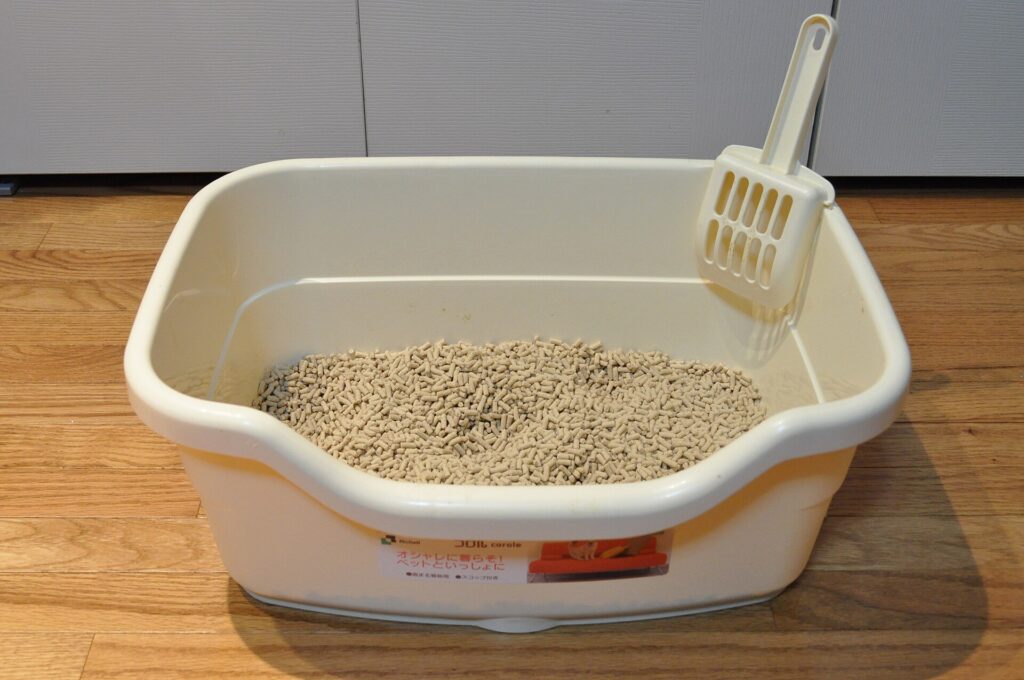
Tracking happens in two ways: litter sticks to paws and fur, and litter gets kicked or flung during digging and covering. Both get harder as particles get bigger and heavier. That is why this roundup is ordered the way it is — large pellets (Breeze, ökocat) beat crystals, crystals and heavy clay blends beat fine clay, and a fine clay like Boxiecat only makes the list because its clumping style reduces the digging-and-flinging half of the problem. Long-haired cats benefit most from pellet formats, because fine granules lodge in long belly and leg fur and travel the furthest.
System litters vs. standard-box litters
Two of these picks are systems, and that word matters. The Breeze pellets require the Breeze box and its disposable pads; the ScoopFree trays fit only ScoopFree self-cleaning boxes. Systems deliver the strongest scatter control because the litter format and the box are designed together, but they commit you to that brand’s refills. Dr. Elsey’s, Boxiecat, and ökocat pour into whatever box you already own, which makes them cheaper to try and easier to abandon if your cat objects.
Pair the litter with a mat — and mind the box itself
No litter in this roundup is honestly zero-tracking; a few granules will always escape on exit. A wide, textured mat in front of the box catches most of what leaves on paws, which is why we rounded up the best cat litter mats separately — litter plus mat together gets you closer to clean floors than either alone. High-sided or covered boxes also contain the kicked fraction before it ever reaches the floor.
Switch gradually, and watch your cat’s vote
Mix the new litter into the old over a week or so, and keep an eye on the box. A cat who perches on the rim, shakes her paws, or starts going beside the box is telling you the texture is a problem — and a litter your cat refuses tracks infinitely worse than a “worse” litter she happily uses, because none of it ends up in the box at all. If litter-box behavior changes suddenly in other ways — straining, crying, or avoiding the box entirely — that is a vet visit, not a litter problem.
Frequently Asked Questions
Does low-tracking litter really work?
It reduces tracking rather than eliminating it. Larger, heavier particles are measurably harder for a cat to carry on her paws or kick out of the box, and pellet systems come closest to zero scatter. But every format still loses a little at the box exit, which is why a mat matters.
What is the least messy cat litter format overall?
Large pellets, on design alone: they are too big to cling to paws, they do not break into crumbs, and in the Breeze system urine drains to a pad instead of creating soggy, trackable clumps. The trade-off is that pellets require either a dedicated system (Breeze) or a cat willing to accept the underfoot feel (ökocat).
Why does my cat track litter more than other cats?
Long fur, big enthusiastic digging, and a habit of leaping out of the box all increase tracking. Our post on why cats kick litter everywhere digs into the behavior; the short version is that covering waste is instinct, and some cats perform it like they are being paid by the hour.
Can I mix a low-tracking litter with my cat’s current litter?
Yes — and you should, at first. Mixing is the standard way to transition: start with mostly the old litter, shift the ratio over about a week, and let your cat adjust to the new texture gradually. This applies to clays, crystals used loose, and wood pellets. It does not apply inside closed systems like Breeze or ScoopFree trays, which are designed to run on their own format only.
Is crystal litter safe for cats?
Silica gel crystal litter is a mainstream, widely sold format, and the crystals’ size is exactly why it tracks less — they are too large to cling to paws. Keep it away from kittens young enough to mouth and swallow litter, as you would with any litter, and follow the maker’s change-out schedule so the crystals do not become saturated.
The Bottom Line
If you want the smallest change with a real payoff, start with Dr. Elsey’s Ultra: heavier clay, same box, same routine. If scatter is your single biggest frustration and you are open to a system, the Breeze pellets are the strongest design here, while ökocat Less Mess splits the difference — pellets that still clump in a normal box. Whatever you choose, add a mat, switch gradually, and let your cat’s willingness to use the box make the final call.