This guide contains affiliate links. As an Amazon Associate, PawChirp earns from qualifying purchases — at no extra cost to you. Read our full disclosure.
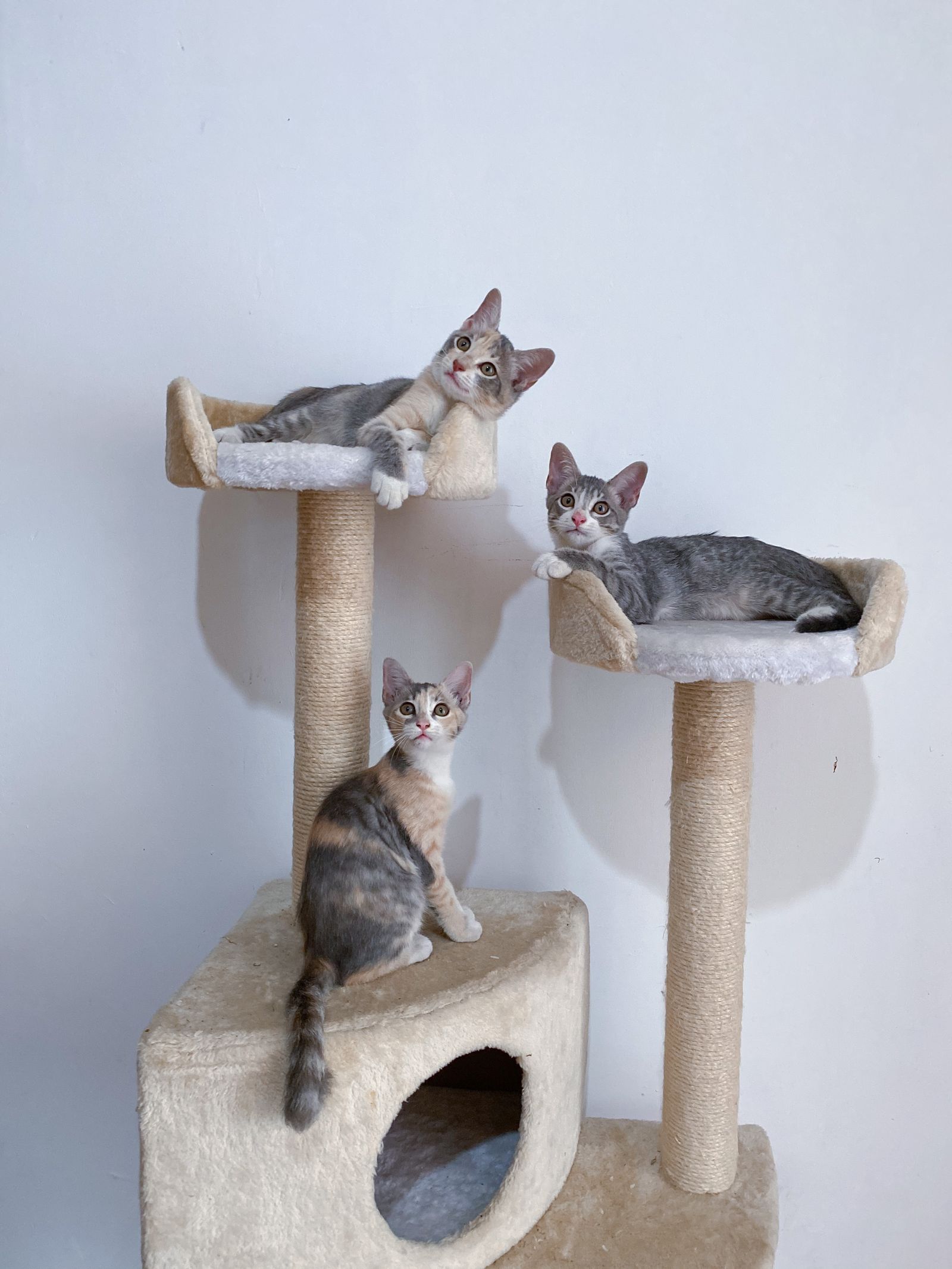
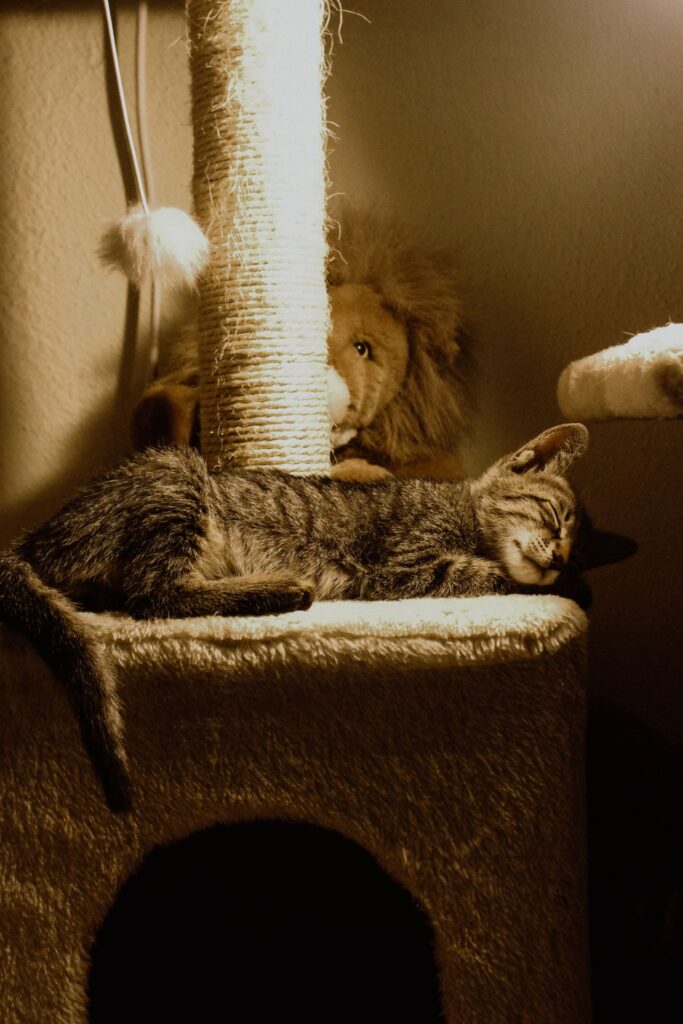
A kitten’s first cat tree has a different job than an adult cat’s tree. Adults want height and a commanding view of their territory. Kittens want to practice climbing without the consequences — and at eight to sixteen weeks old, their depth perception is still developing, their landings are more enthusiasm than accuracy, and a wobbly six-foot tower built for a twelve-pound adult is simply the wrong piece of furniture.
The Cornell Feline Health Center lists a scratching post among the basic supplies to have ready before a new cat comes home, and its behavior guidance makes the point that matters most at this age: whatever you provide has to be sturdy enough that it doesn’t topple during use. For a kitten, that means low platforms, short hops between levels, a base that won’t rock when a half-pound of fur lands on it sideways, and perches sized for a small body. Every pick below is 37.5 inches or shorter, and each one earned its spot for a different kind of kitten household — from the safest possible first perch to a furniture-grade box your cat can keep for years.
Key Takeaways
- Safest first tree: The Amazon Basics hammock tower is just 19.7 inches tall — there’s no real fall to take, which makes it ideal for kittens under four months.
- Best first “real” tree: The PETMAKER 3-Tier stands 37.5 inches with a condo and two perches on a long, tip-resistant base.
- Best grow-into-it pick: The FEANDREA 33.1-inch tree pairs a wide base and anti-tip kit with an oversized top perch that still fits a grown small cat.
- Best for travel and fostering: The TRIXIE Miguel folds flat, needs no assembly, and moves with the kitten.
- Best furniture-grade option: The Catit Vesper Box Small is a low wooden cube with replaceable scratch parts, so it can be refreshed instead of replaced.
- Height is the spec that matters most: for kittens, stay under roughly 42 inches and look for wide bases, short level-to-level hops, and perches with raised edges.
Quick Picks: The 5 Best Cat Trees for Kittens Compared
| Product | Height | Base | Key Features | Best For |
|---|---|---|---|---|
| Amazon Basics Cat Condo Tower with Hammock, Gray | 19.7 in | 15.8 × 15.8 in | Suspended hammock, 2 jute scratching posts | Very young kittens, first perch |
| TRIXIE Miguel Fold & Store Cat Tree | 25.5 in | 20.5 × 13.8 in X-frame | Folds flat, top hammock, soft-sided cave | Travel, fostering, small spaces |
| Catit Vesper Box Small, Walnut | 28.5 in | 14.6 × 14.6 in | Enclosed den, memory-foam cushions, replaceable parts | Furniture-grade looks, long-term use |
| FEANDREA Cat Tree, 33.1 in, Smoky Gray (UPCT61G) | 33.1 in | 23.6 × 15.7 in | Oversized top perch, 2 caves, anti-tip kit | Growing into — fits small adults too |
| PETMAKER 3-Tier Cat Tree Condo, 37.5 in | 37.5 in | 21 × 13.5 in | Condo, 2 perches with raised edges, 2 sisal posts | A first full tree with room to grow |
How We Chose These Kitten Trees
We research every pick the same way: specs first, marketing last. For this guide we filtered for trees no taller than about 42 inches, then compared base dimensions against height (a short tree on a narrow base can still tip), perch and condo sizing, materials, and what large numbers of owners report about stability and durability. Read the full method on our how we choose products page. We don’t claim hands-on testing we haven’t done; where an owner rating appears, it’s the approximate rating reported for that product on a retailer listing — a popularity signal, not a quality guarantee.
One transparency note: the FEANDREA below is the Smoky Gray colorway of a 33.1-inch frame that also appears, in a different color, in our general best cat trees for indoor cats guide. It’s here on kitten-specific merits — its anti-tip kit, per-cat weight rating, and oversized perch — not as a new discovery. None of that guide’s other picks appear in this roundup.
1. Amazon Basics Cat Condo Tower with Hammock — Safest First Perch
Who it’s for: Kittens under four months, first-time owners who want zero risk while a kitten learns to climb, and anyone setting up a kitten-proofed room or playpen corner.
At 19.7 inches tall, this little tower removes the main kitten-tree worry entirely: there is no meaningful fall. A plush hammock hangs low between two scratching posts wrapped in natural jute fiber, all on a 15.8-inch square base board. The whole thing weighs about 9 pounds, assembles in minutes, and includes a replaceable dangling ball toy. Owners rate it around 4.7 out of 5, which is high for such a simple piece — mostly, it seems, because it does exactly the one job it’s given.
That job is a starter perch: a place to scratch, nap, and survey the room from a modest height while coordination catches up with ambition. It’s also a sensible pick for a small adult cat who just wants a low lounge spot.
Pros
- Under 20 inches tall — the safest possible introduction to climbing
- Low hammock is easy for tiny kittens to get into and out of
- Compact footprint fits a playpen, bathroom, or kitten room
- Two jute scratching posts build good habits early
Cons
- A starter piece, not a grow-into tree — most kittens outsize the hammock within months
- Scratching and napping only; no condo or real climbing route
- Spot-clean only
2. TRIXIE Miguel Fold & Store Cat Tree — Best for Travel and Fostering
Who it’s for: Foster caregivers, frequent movers, and small-apartment owners who need kitten furniture that disappears when it’s not needed. Best for cats under roughly 10–12 pounds.
The Miguel is built on an X-frame that unfolds ready to use — no assembly, no tools — and folds flat again for storage or transport. It stands 25.5 inches tall with a soft-sided condo underneath (complete with a plush insert and a peephole), a hammock on top, a slanted sisal scratching surface on the condo’s exterior, and two dangling pom-pom toys. For a foster kitten moving between rooms or homes, that portability is genuinely useful: familiar territory travels with the cat. Owners on Chewy rate it around 4.3 out of 5.
Think of it as a hammock-and-hideout rather than a climbing tree. There’s no vertical scratching post, so pair it with a standalone post if scratching is a priority.
Pros
- Folds flat — stores in a closet, travels in a car
- No assembly at all; unfolds ready to use
- Low 25.5-inch height with a cozy enclosed cave for shy kittens
- Great second tree for a bedroom or foster setup
Cons
- No vertical post — the slanted sisal pad is the only scratching surface
- Stapled construction and hanging toys can wear quickly with rough play
- A growing kitten will still need a real tree later
3. Catit Vesper Box Small — Best Furniture-Grade Pick
Who it’s for: Owners who want kitten furniture that looks like furniture, and anyone who’d rather repair a tree than replace it.
The Vesper Box is a 28.5-inch cube of MDF with a walnut-look laminate finish — it reads as a side table, not a carpet tower. Inside the tidy 14.6-inch square footprint are three levels: an enclosed den at the bottom with two entrances (so a kitten never feels cornered), a middle platform with a sisal scratching mat, a seagrass scratching post, two memory-foam cushions, and a rattan ball toy. The den openings are about 8 inches square — kitten- and small-cat-sized. Owners rate it around 4.3 out of 5.
The detail that sets it apart is repairability: Catit sells replacement posts, cushions, and mats, so the tree your kitten starts on can be refreshed as parts wear instead of going to the curb. The trade-off is scale — the den is genuinely small, and a large adult cat will only fit the top level.
Pros
- Furniture-grade wood-look finish that blends into a living room
- Two-entrance den — kittens can always escape, which builds confidence
- Replaceable scratch parts extend its life well past kittenhood
- Compact, tip-resistant square footprint
Cons
- Den and footprint are small — large adults will only use the top
- Less climbing and scratching variety than a carpeted tree
- Catit doesn’t publish a weight limit for it
4. FEANDREA Cat Tree 33.1 in (UPCT61G) — Best Grow-Into-It Pick
Who it’s for: Owners who want one purchase to carry a kitten through to small-adult size, and multi-kitten households.
As noted above, this is the Smoky Gray version of a frame PawChirp has covered before — it’s in this guide because its kitten credentials are specific. The 33.1-inch height keeps jumps low, the 23.6 × 15.7-inch base is the widest here relative to height, and an anti-tip kit is included for wall anchoring. The top perch measures about 22 × 16 inches — genuinely oversized, enough for two kittens now or one grown small cat later. Below it sit two caves, and FEANDREA rates the tree for cats up to roughly 15–16 pounds per cat. Owners rate it around 4.6 out of 5.
For a kitten, the appeal is the landing math: short hops, wide targets, and a perch she won’t outgrow at six months. The honest limit is the ceiling — a cat who grows into a determined high climber will eventually want more height than 33 inches offers, and the caves are sized for small to medium cats.
Pros
- Oversized top perch fits two kittens or one small adult
- Widest base in this roundup, plus an included anti-tip kit
- Two caves give shy kittens a choice of hideouts
- Per-cat weight rating around 15–16 lb covers most small breeds as adults
Cons
- Won’t satisfy a grown cat who craves real height
- Caves are small/medium-cat sized — big adults get the perch only
- Heavier than the other picks here (about 18 lb)
5. PETMAKER 3-Tier Cat Tree Condo — Best First “Real” Tree
Who it’s for: Kittens past the tiny stage (roughly four months and up) who are ready for a proper tree with a condo, perches, and posts — without adult-tree height.
The PETMAKER stands 37.5 inches, the tallest pick here and still well inside kitten-safe territory. It packs in a ground-level condo, two napping perches with raised edges (a small detail that matters — the lip gives a sleeping kitten something to lean against instead of rolling off), two sisal scratching posts alongside carpeted supports, and a dangling toy. The base is a long 21 inches, which is the brand’s stability story: length resists the sideways tip that clumsy landings cause.
One placement note: the footprint is only about 13.5 inches deep, so it does its best work against a wall or in a corner rather than free-standing mid-room. Perches are kitten- and small-cat-sized — a large adult will find the top snug.
Pros
- Full tree features — condo, two perches, two sisal posts — at 37.5 inches
- Raised perch edges help sleeping kittens stay put
- Long 21-inch base resists tipping during rough landings
- Three tiers give growing kittens a real climbing route
Cons
- Narrow depth — best against a wall or in a corner
- Perches are small-cat sized; large adults will feel cramped
- No manufacturer weight limit is consistently published for this model
Buying Guide: What Makes a Cat Tree Safe for Kittens
Height: lower than you think
Kittens are born climbers with unfinished coordination. A tree between about 20 and 40 inches lets them practice jumping, turning, and landing with falls measured in inches, not feet. Save the five- and six-foot towers for adulthood — and when you do size up, our general cat tree guide covers the taller end of the market.
Stability beats everything
A tree that rocks teaches a kitten to fear it — or worse, tips onto her. Look for a base that’s wide relative to the tree’s height, check that platforms don’t wobble after assembly, and use an anti-tip wall strap if one’s included. Placing the tree against a wall or in a corner adds cheap insurance. Cornell’s behavior guidance is blunt on this point: a scratching structure should be sturdy enough not to topple during use.
Short hops and soft landings
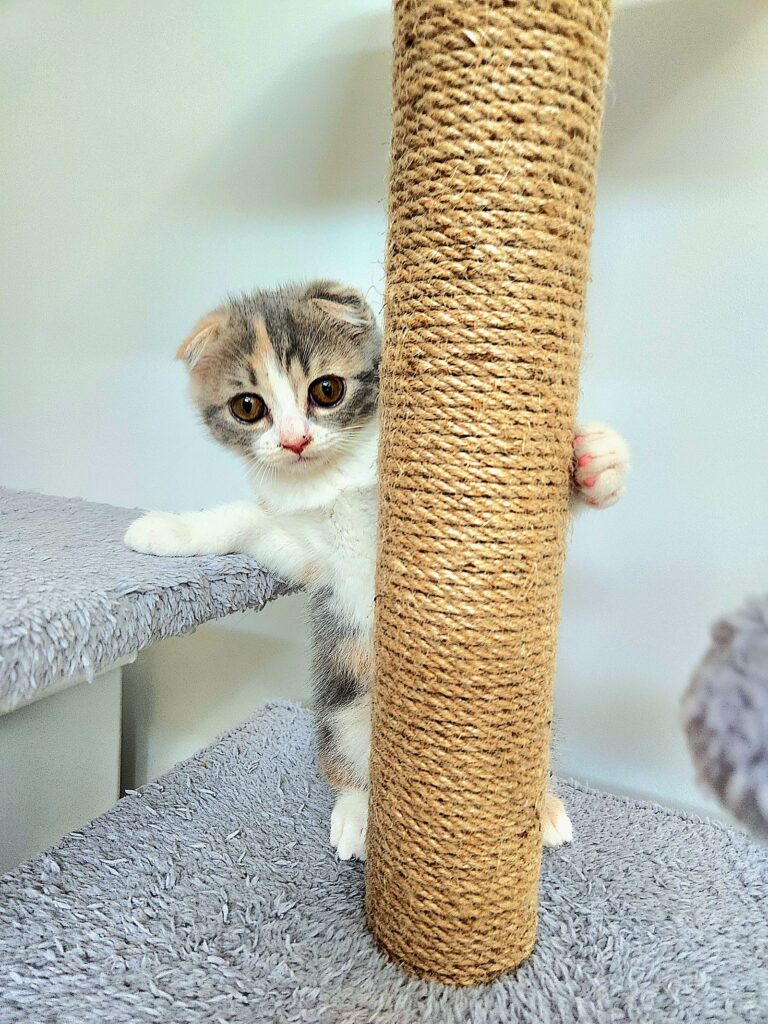
Levels spaced a kitten’s jump apart — roughly 8 to 14 inches — get used; a single tall leap to the top perch doesn’t. Raised perch edges, carpet or plush surfaces (not slick laminate) for grip, and a condo at ground level all make the tree forgiving while balance develops.
Plan for the outgrowing
Kittens reach near-adult size between six and twelve months, and small trees get small fast. Starter pieces like the Amazon Basics hammock and the TRIXIE Miguel are best bought knowing they’re a first stage — they still earn their keep later as a bedroom perch or travel setup. If you’d rather buy once, the FEANDREA’s oversized perch and the Vesper’s replaceable parts are the two designs here built to stay useful.
Frequently Asked Questions
How tall should a cat tree be for a kitten?
Between about 20 and 40 inches is the sweet spot. That’s high enough to climb, scratch, and nap above floor level, but low enough that a missed landing is a non-event. Kittens under four months do best at the lower end of that range.
When can a kitten start using a cat tree?
Once she’s walking, running, and attempting to climb — usually around six to eight weeks — a very low perch or hammock is fine under supervision. Introduce taller kitten trees gradually, and keep early sessions supervised until her landings look reliable.
Can a kitten use an adult cat tree?
She’ll try. The risks are height (falls from five-plus feet), perch spacing she can’t yet jump, and condos or perches sized so a small kitten can slip or get wedged. If an adult tree is what you have, block access to the highest levels until she’s older and keep sessions supervised.
Where should I put a kitten’s cat tree?
Against a wall or in a corner for stability, near where the kitten already spends time — ideally with a view of the room or a window. Avoid placing it beside tall furniture that invites a leap beyond the tree’s height.
How do I get my kitten to use her tree?
Make it the most interesting spot in the room: a treat or a wand-toy session on the platforms, a sprinkle of catnip once she’s old enough to respond to it (many kittens don’t until three to six months), and scratching encouragement by placing her gently at the post after naps. Never lift her onto the top perch and leave her there — let her set the pace.
The Bottom Line
For a very young kitten, start with the Amazon Basics hammock tower — at under 20 inches, there’s simply nothing to fall from. When she’s ready for a real tree, the PETMAKER 3-Tier adds a condo and perches at a still-safe 37.5 inches, while the FEANDREA 33.1-inch is the buy-once option whose big perch still fits a small adult. Foster homes and small spaces are better served by the fold-flat TRIXIE Miguel, and design-conscious owners get the longest service life from the repairable Catit Vesper Box Small. Whichever you choose, keep it low, keep it stable, and let the kitten decide how fast to climb.