
Something shifted in the supplement aisle this year. Searches for collagen sticks for dogs are up roughly 150% year over year, while searches for probiotic supplements for dogs fell about 37% over the same stretch. That’s not a small wobble — that’s dog owners changing what they reach for. The question worth asking is whether they’re changing toward something better, or just toward something newer.
The honest answer is a bit of both. Collagen sticks are a genuinely decent chew format with a sensible nutritional story behind them. They are also riding a wave of marketing that promises considerably more than any chew can deliver. Here’s what’s actually going on — the format shift, the evidence, the safety rules, and what a real joint plan for an older dog looks like when you strip the supplements out of it.
Key Takeaways
- The collagen surge is mostly a format shift: owners are moving from powders and pills toward chews and sticks their dogs actually enjoy taking.
- Sticks, powders, and chews differ in calories, how well you can control the dose, and how much supervision they need — not in magic.
- Collagen plausibly supports skin, coat, and the connective tissue in joints as a protein source. It is not a proven arthritis treatment, and no stick reverses joint damage.
- Choking safety decides whether collagen sticks belong in your house: supervise, use a chew holder, and throw the last small piece away.
- For senior joints, the highest-impact plan isn’t a supplement: healthy weight, ramps instead of jumping, and a vet pain check.
Why Collagen, Why Now?
Part of the surge is simple mechanics. Probiotics come as powders you sprinkle and capsules you hide in cheese, and a lot of owners quietly give up on both — the powder coats the bowl instead of the food, the capsule gets spat out behind the couch. A collagen stick asks nothing of the owner. It looks like a treat, it’s handed over like a treat, and the dog does the rest. Supplements dogs take willingly beat supplements with better brochures that never get finished.
Part of it is the rawhide exit. Owners have spent years hearing worries about rawhide — the blockages, the processing, the pieces that come off in slabs — and collagen sticks are positioned as the digestible alternative in the same familiar stick shape. And part of it is the word itself: collagen is the protein in skin, tendons, ligaments, and cartilage, so “collagen for joints and coat” sounds like it should work in a way that “glucosamine blend” never quite did.
All three reasons are understandable. None of them is proof. Let’s separate the format question — which is real — from the health claims, which need a cooler head.
Sticks vs Powders vs Chews: The Format Comparison
Collagen sticks
The stick is a rolled or pressed sheet of collagen, usually from the inner layer of beef hide, dried into a firm chew. Dogs work on them for a while — longer than a biscuit, shorter than the toughest chews — and the chewing itself has value: it occupies the dog, and the gnawing action scrapes at teeth. The trade-offs are calories and control. A stick is a fixed dose in a fixed size, it adds real calories to the day, and the last two inches become a choking hazard if you hand over the whole thing and walk away. More on that below, because it’s the most important section in this article.
Collagen powders
Powder stirred into food is the flexible option: you can dose a 12-pound dog and a 90-pound dog from the same tub, it adds almost no chewing risk, and it suits dogs who gulp chews dangerously fast. The downsides are the ones driving the format shift — picky dogs eat around it, it does nothing for the dog’s urge to chew, and nobody’s dog has ever been excited about powder. If your goal is purely “get collagen into the dog,” powder is the controllable choice. If your goal includes twenty quiet minutes, it isn’t.
Collagen chews and braids
Braided sticks, rings, and chips sit in the same family with different chew times and the same rules. Braids last longer for moderate chewers; thinner chips and rolls are gone fast and suit smaller dogs. Whatever the shape, read the label the same way: you want a product that’s actually mostly collagen, from a named animal source, made by a company that will tell you where it’s produced. A stick-shaped object with collagen somewhere in the ingredient list is a treat wearing a supplement’s clothes.
One more honest note on digestibility: collagen sticks are widely described as more digestible than rawhide, and the way they’re made — from the corium layer, processed to break down more readily — supports that. “More digestible than rawhide” is not the same as “risk-free.” Any chew that can be bitten into chunks can obstruct the wrong dog, which is why the safety rules below apply to every format in this section.
What Collagen Can and Can’t Do
Here’s the evidence, stated as plainly as it deserves.
What collagen plausibly does: It’s a protein source rich in amino acids like glycine and proline that the body uses to build and maintain skin, coat, tendons, ligaments, and cartilage. Feeding it gives the body raw materials for connective tissue, and for skin and coat support the logic is straightforward — the same reason it shows up in so many human supplements. As part of an overall diet with adequate protein, collagen is a reasonable, low-risk addition for most healthy dogs.
What hasn’t been shown: That a collagen stick reverses arthritis, rebuilds damaged cartilage, eliminates joint pain, or replaces anything your vet would prescribe. The jump from “collagen is a building block of cartilage” to “eating collagen rebuilds your dog’s cartilage” is a marketing jump, not a demonstrated one — digestion breaks proteins into amino acids, and the body decides where they go. If a product page promises pain relief, mobility transformation, or results in a set number of days, you’re reading advertising, not evidence.
And the disclaimer that belongs in every supplement conversation: this article isn’t veterinary advice, and no chew is a treatment. A dog who is limping, lagging on walks, struggling with stairs, or slow to rise needs a vet exam — because those signs have causes a supplement can’t touch, from arthritis that needs actual pain management to injuries that need rest or surgery. The AVMA’s senior pet guidance stresses regular checkups for older dogs precisely because pain and mobility problems are easy to miss and very treatable once they’re named. Supplements, if your vet likes the idea, come after that conversation.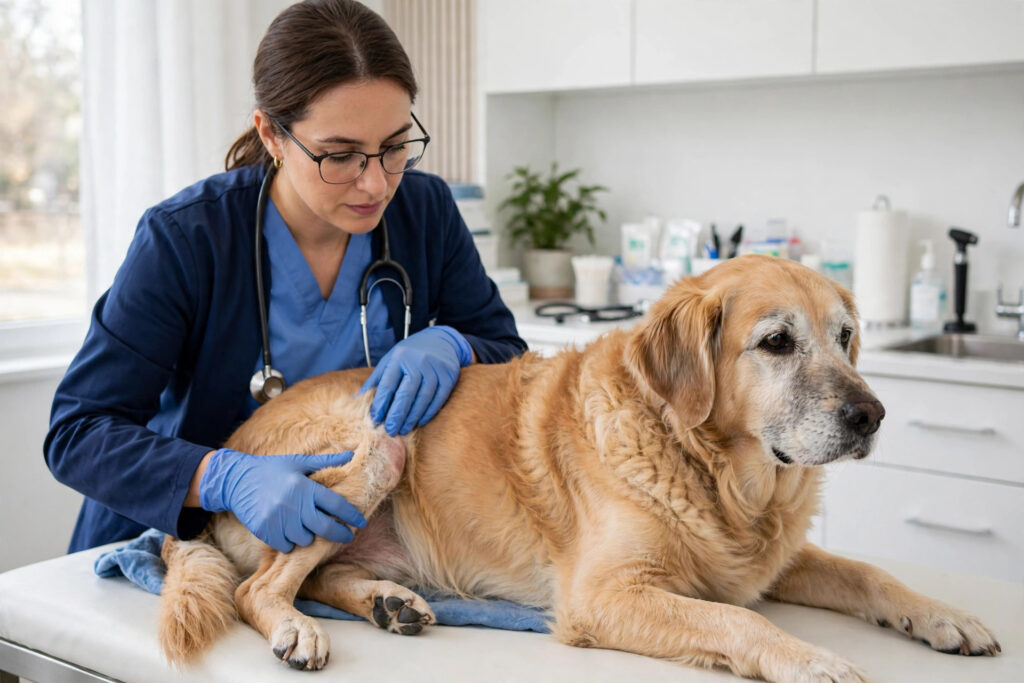
The Safety Section: Read This Before the First Stick
Collagen sticks fail dogs in one predictable way: the end piece. A dog works a stick down to the last inch or two, decides it’s now bite-sized, and tries to swallow it whole. That piece can lodge in the throat or, further down, block the gut. Every part of safe chew practice is built around preventing that moment:
- Always supervise. A collagen stick is a together activity, not a crate filler or a leaving-the-house treat.
- Use a chew holder. A holder that clamps the end of the stick means the dog can never get the last piece free. It’s the single cheapest safety upgrade in the whole chew category.
- Throw the small end away. When the remaining piece is small enough to fit entirely in your dog’s mouth, it’s done. Yes, every time. That last inch is not worth an emergency vet bill.
- Size up, not down. Choose sticks sized for a dog bigger than yours if your dog is a power chewer or a gulper. Dogs who inhale chews rather than gnawing them are poor candidates for sticks at all — powder format exists for them.
- Know the emergency signs. Gagging, pawing at the mouth, drooling, repeated attempts to vomit, or a dog who suddenly can’t settle means stop and call your vet or an emergency clinic. The ASPCA’s emergency care guidance is worth bookmarking before you need it.
The Senior Joint Plan That Isn’t a Supplement
Most people searching for collagen sticks are really searching for “help my older dog’s joints.” Fair enough. But if the budget and effort are limited, three unglamorous things outperform any chew:
1. Get the weight right. Every extra pound is load on sore joints with every step, all day. A senior dog carrying spare weight who slims down to a healthy one often moves better within weeks — it’s the closest thing to a guaranteed result in joint care. Ask your vet for a target weight and be honest about the treats, including the collagen sticks.
2. Remove the jumping. Ramps or steps for the bed, the couch, and the car replace the highest-impact thing an old dog does all day: launching off furniture and landing on aging joints. This is mechanical help that works every single time it’s used, no digestion required.
3. Get a real pain check. Dogs hide pain well, and “slowing down” is often pain wearing a disguise. Modern vet pain management — proper medication, joint injections, rehab therapy — can give a senior dog visibly better days. No supplement aisle offers that, and a vet who knows your dog can also tell you honestly whether collagen or another supplement is worth adding on top.
Notice what this plan does: it treats the joints, the weight, and the pain directly. Where does a collagen stick fit? As the enjoyable extra — a chew your senior dog loves, that contributes some connective-tissue protein, given safely with a holder while you sit together. That’s a fine role. It’s just not the lead.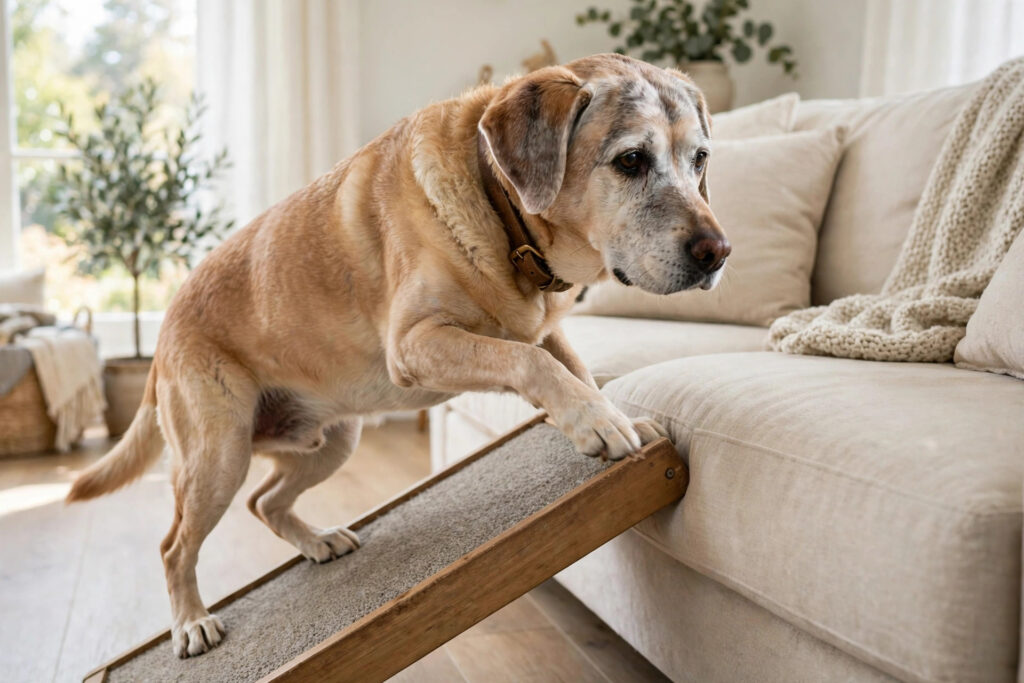
FAQ
Are collagen sticks safer than rawhide?
They’re generally considered more digestible than rawhide because of how they’re processed, and many owners switch for exactly that reason. But “safer than rawhide” still comes with rules: supervise every chew, use a holder, and discard the final piece. A swallowed chunk of any chew can cause a blockage.
How often can my dog have a collagen stick?
For most dogs, a few times a week is a sensible rhythm, counting the stick in the day’s calories. Daily sticks add up fast for small or senior dogs watching their weight. When in doubt, treat it like any rich treat: occasional, supervised, and balanced against smaller meals.
Do collagen sticks actually help joints?
Collagen provides amino acids the body uses in connective tissue, so supporting joint structures is a plausible benefit — but no stick has been shown to reverse arthritis or replace pain treatment. Think of it as nutritional support, not therapy. A limping or slowing dog needs a vet exam first.
Which is better, collagen powder or sticks?
Powder wins on dose control and safety — there’s nothing to swallow whole, and you can size it to any dog. Sticks win on enjoyment, chew time, and the fact that dogs actually look forward to them. Gulpy, powerful chewers are safer with powder; measured chewers can enjoy sticks under supervision.
Can puppies have collagen sticks?
Puppies are enthusiastic, unskilled chewers who are still learning what “chew” versus “swallow whole” means, and their teeth and stomachs are more delicate. Most owners are better off waiting until the dog is older and chewing in a settled, gnawing style — and asking their vet at a puppy visit if they want a specific recommendation.
What size collagen stick should I buy?
Size for your dog’s chewing style, not just his weight. A determined chewer or a dog who tries to gulp should get a stick marketed for a larger dog — or skip sticks for powder. And regardless of size, the chew ends when the remaining piece fits fully in the dog’s mouth.
The Bottom Line
The +150% surge makes sense once you see collagen sticks for what they are: an enjoyable, reasonably digestible chew format carrying a supplement story that’s half solid, half hopeful. Buy them as chews with a possible protein bonus, follow the safety rules like they matter — because the end piece genuinely does — and build your senior dog’s joint plan on weight, ramps, and your vet. Do that, and you’re getting everything collagen can honestly give.