If Darwin’s raw cat food arrives at your door on a subscription, this is the week to open your freezer and read the fine print. On October 26, 2026, the FDA issued an advisory telling owners not to feed two specific lots of Darwin’s Natural Selections Chicken Recipe for Cats after the food tested positive for Salmonella. The lots are 12731 and 12493. Two cats that ate the food became ill — one was hospitalized — and although both recovered, the FDA also says the company has not initiated an adequate recall, which is why this warning comes as an advisory from the agency rather than a standard company recall notice.
Because the food ships frozen in 2-lb packs and goes straight into home freezers, affected packs can sit untouched for weeks or months after the advisory date. Yours might be in there right now. Here’s how to check, what to do with a matching pack, and how to handle the cleanup — plus what this means for the people in your house, not just the cat.
Key Takeaways
- Two lots named: Darwin’s Natural Selections Chicken Recipe for Cats, lots 12731 and 12493, tested positive for Salmonella per the FDA’s October 26, 2026 advisory.
- Two cats got sick: both became ill after eating the food; one was hospitalized; both recovered.
- Find the code fast: the lot code is printed on the front of each unit, in the lower-left area. If you can’t read it, throw the food out.
- Freezing doesn’t protect you: Salmonella survives freezing. A pack being frozen solid says nothing about its safety.
- No adequate recall yet: the FDA says the firm has not initiated an adequate recall — don’t wait for a company letter before acting.
What the FDA Found
The sequence matters. Cats became ill, the food was tested, and samples of Darwin’s Natural Selections Chicken Recipe for Cats from lots 12731 and 12493 came back positive for Salmonella. Salmonella in cat food is a two-species problem: it can sicken the cat eating it, and it can sicken the people who handle the food, touch the bowl, or get licked by a cat that’s shedding the bacteria.
The two reported cases ended as well as these stories can — one cat was hospitalized, and both recovered. But an advisory like this isn’t really about the two known cases. It’s about the unknown number of identical packs distributed by subscription and stored in freezers, waiting for a Tuesday night when nobody’s thinking about lot codes. The full advisory, with the FDA’s product details, is on the agency’s site; the FDA’s animal food safety and recall pages are the place to confirm current status before you feed anything questionable.
How to Check Your Freezer
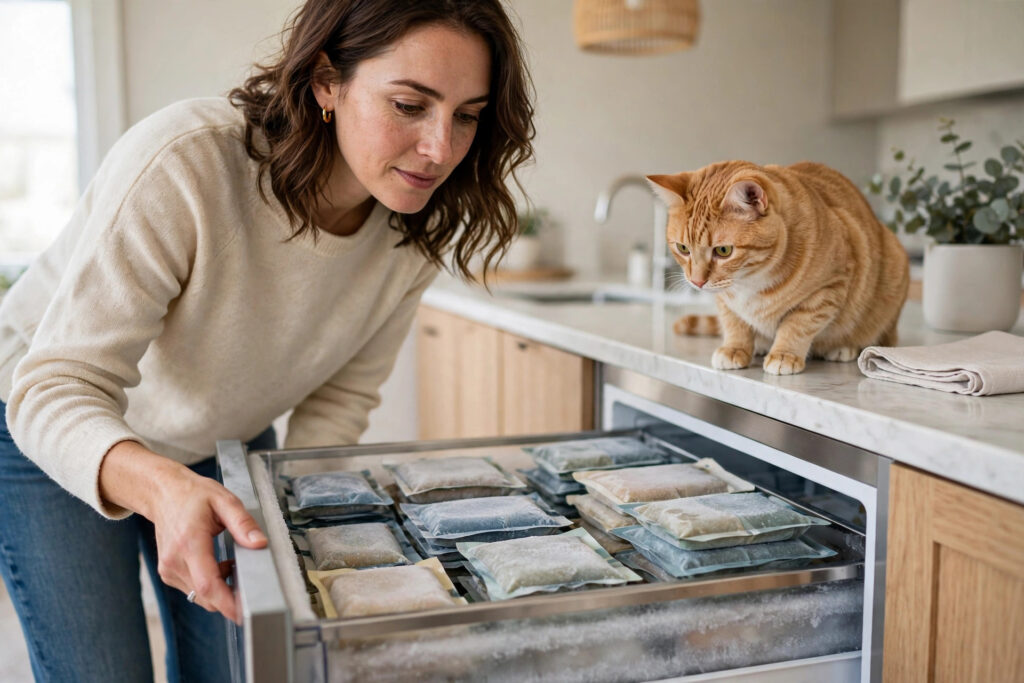
Pull out every pack of Darwin’s Natural Selections Chicken Recipe for Cats you own — not just the one in front. Subscription customers often have a rolling stock, and packs from different shipments get shuffled together.
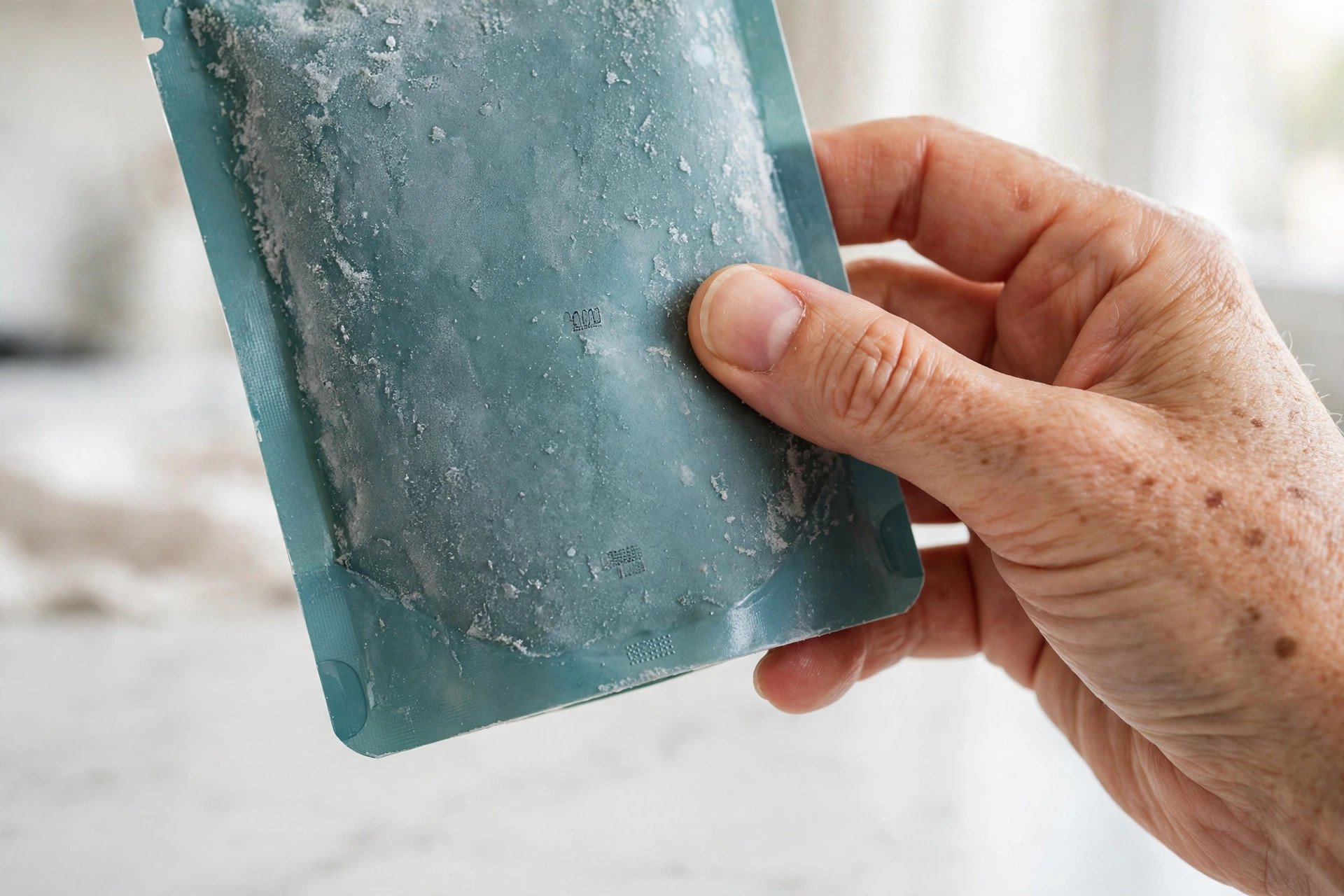
The lot code is printed on the front of each 2-lb unit, in the lower-left area. Check every pack individually; lot codes can differ between packs in the same box. You’re looking for exactly two numbers: 12731 and 12493.
Then apply the rule the FDA’s advice implies: if the code on a pack of this recipe is smudged, torn, frost-covered beyond reading, or missing entirely, throw that pack out. “Probably a different lot” is not a standard worth feeding on. Frost and freezer wear make codes genuinely hard to read sometimes — wipe the frost off with a dry cloth and use bright light before deciding, but if it stays unreadable, out it goes.
What to Do With a Matching Pack
Do not feed it. Do not open it to look at it, and do not thaw it. Seal the pack in a plastic bag and dispose of it in a secure outdoor bin where no animal — pet, stray, or wildlife — can get to it. Don’t donate it, don’t feed it to feral cats, and don’t set it aside “for later” in the back of the freezer where it can be grabbed by mistake. If Darwin’s or your subscription account offers a refund or credit route for the affected lots, use it, but don’t hold the food while you wait for paperwork.
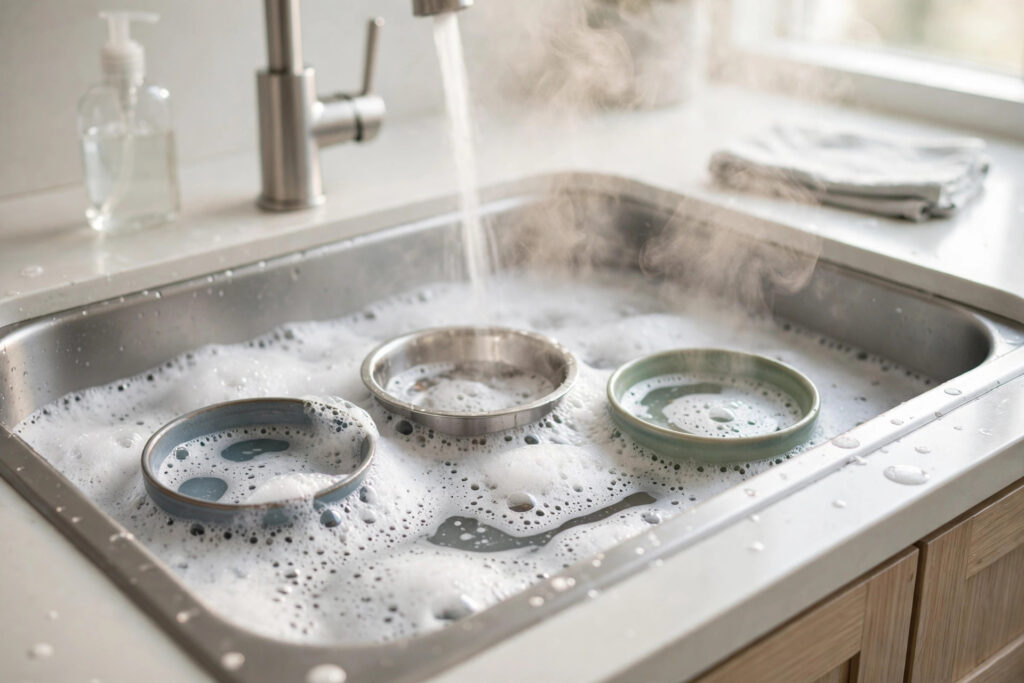
Then clean like it matters, because it does. Wash the cat’s bowls, any scoops or utensils, and the surfaces the food or its packaging touched, with hot soapy water, then disinfect. If thawed food ever sat in your fridge, wipe down that shelf too. Wash your hands thoroughly after handling the packs and after the cleanup. Salmonella moves from raw pet food to hands to fridge handles to human food with depressing ease, and the people most at risk — young children, older adults, pregnant women, and anyone immunocompromised — are often the ones least able to afford the infection.
Signs Your Cat (or You) May Have Been Exposed
Cats with Salmonella may develop diarrhea, vomiting, fever, abdominal pain, and loss of appetite, and they may go quiet and hide — though some cats shed the bacteria without obvious illness. If your cat ate food from either lot and shows any of these signs, call your veterinarian promptly and tell them about the advisory and the lot number. That information shapes testing and treatment, and clinics track these reports.
For people, Salmonella typically causes diarrhea, fever, and stomach cramps. Most healthy adults recover, but severe cases happen, and higher-risk household members should have a lower threshold for calling a doctor — and should mention the pet food exposure when they do. If your cat becomes ill after eating this food, you can also report it through the FDA Safety Reporting Portal; consumer reports are part of how advisories get sharper and recalls get wider.
Check Your Subscription, Not Just Your Freezer
Because Darwin’s ships by subscription, the freezer check is only half the job. Log into your account and look at your delivery history: which shipments of the chicken recipe arrived in the window the advisory covers, and do any packs from those deliveries remain anywhere in your home — a second freezer, a garage unit, a pet sitter’s house? Then look forward: if the chicken recipe is in your rotation, pause or swap that item in upcoming shipments until the situation resolves, so a fresh box doesn’t quietly restock the problem while you’re cleaning it out.
It’s also worth telling anyone who feeds your cat — sitters, partners, adult kids home for the holidays — about the two lot numbers. The person most likely to grab a pack isn’t always the person who read the advisory. A note on the freezer door with “Darwin’s chicken — do not feed lots 12731 / 12493” on it is low-tech and completely effective. If the company contacts you about the lots, follow its instructions for credits or disposal, but don’t let a pending refund conversation delay the basic step: affected food out of the rotation today.
A Note on Raw Cat Food and Freezers
One misunderstanding shows up in every raw food incident: the belief that freezing sterilizes food. It doesn’t. Freezing pauses bacterial growth; it does not kill Salmonella, which is exactly why a pack can test positive after weeks in a home freezer. Thawing practices matter too — thaw raw cat food in a sealed container in the refrigerator, never on the counter, serve it promptly, and discard uneaten thawed food rather than refreezing it.
None of that is an argument that every raw diet is reckless. It is an argument for treating raw pet food with the same respect you’d give raw chicken for your own dinner: sealed storage, dedicated utensils, prompt cleanup, and handwashing every time. Households that handle raw pet food casually are gambling on the supply chain being perfect, and this advisory is what it looks like when it isn’t.
Getting Your Cat Fed in the Meantime
If the Darwin’s chicken recipe is your cat’s main food, you need a bridge plan today. Cats are not small dogs about food changes: a cat that refuses food entirely for even a couple of days is at risk for hepatic lipidosis, a serious liver condition, especially if she’s overweight. So the goal is a fast but accepted switch, not a hunger strike.
Offer the replacement — another protein from a brand and lot not under advisory, a cooked fresh food, or a quality conventional wet food — alongside familiar feeding routines, and warm it slightly to room temperature to boost aroma. Most cats accept a new food within a day or two when it’s offered confidently and the old food is simply gone. If your cat eats nothing for 24 hours, call your vet for advice rather than waiting her out. And if your cat was mid-transition or on this food for a medical reason, loop your vet into the substitution choice.
Frequently Asked Questions
Which Darwin’s products does the advisory cover?
One product: Darwin’s Natural Selections Chicken Recipe for Cats, in frozen 2-lb packs, from lots 12731 and 12493. Other Darwin’s recipes and other lots are not named in the October 26, 2026 advisory. Check the FDA’s site for any updates, since advisories can expand.
Where exactly is the lot code?
On the front of each unit, in the lower-left area. Check every pack individually — packs in the same shipment can carry different codes. If a pack of this recipe has a code you cannot read, the safe move is to throw it out.
The food has been frozen the whole time. Doesn’t that kill Salmonella?
No. Freezing stops bacteria from multiplying but does not kill Salmonella. A frozen pack from an affected lot should be treated exactly like a fresh one: don’t feed it, seal it, dispose of it securely, and disinfect what it touched.
Why is this an FDA advisory instead of a recall?
Because, in the FDA’s words, the firm has not initiated an adequate recall. When a company doesn’t act sufficiently, the agency warns the public directly. Practically, it means you shouldn’t wait for a recall letter or a refund process before checking your freezer and discarding affected packs.
My cat ate from one of these lots and seems fine. What now?
Stop feeding the lot, dispose of the remaining food, and disinfect bowls and surfaces. Then watch for diarrhea, vomiting, fever, appetite loss, or hiding over the next several days, and call your vet if any appear — mentioning the lot number. Also report the exposure through the FDA Safety Reporting Portal if your cat does become ill.
Can I get Salmonella from handling the food even if my cat is fine?
Yes — cross-contamination is the main human risk with contaminated pet food. Wash your hands after handling packs and bowls, disinfect prep surfaces, and keep higher-risk family members away from handling the food and cleanup.
The Bottom Line
The whole job takes ten minutes: freezer open, every pack of Darwin’s Natural Selections Chicken Recipe for Cats checked, front lower-left, looking for 12731 and 12493. Matches — and unreadable codes — get sealed, discarded, and followed by a real cleaning of bowls and surfaces. Don’t wait for the company to catch up with the FDA. Your cat’s dinner subscription can be replaced by tonight; a Salmonella infection, feline or human, is a much bigger errand.