Somewhere between the turkey going into the oven and the first casserole landing on the counter, your dog has already taken up position. You know the spot: close enough to catch anything that falls, far enough to look innocent. Thanksgiving is the one day of the year when the floor of an American kitchen becomes a buffet, and every dog in the country knows it.
Here’s the good news. Your dog does not have to sit this meal out. A handful of classic Thanksgiving foods are genuinely fine for dogs — as long as they reach the dog bowl plain, before the butter, salt, gravy, and spices that make them taste like a holiday to us. Build a small “plain-only plate” while you’re prepping, and your dog gets to join the feast without a midnight trip to the emergency clinic. This guide covers exactly what goes on that plate, how much is reasonable, and which foods on the table are flat-out dangerous.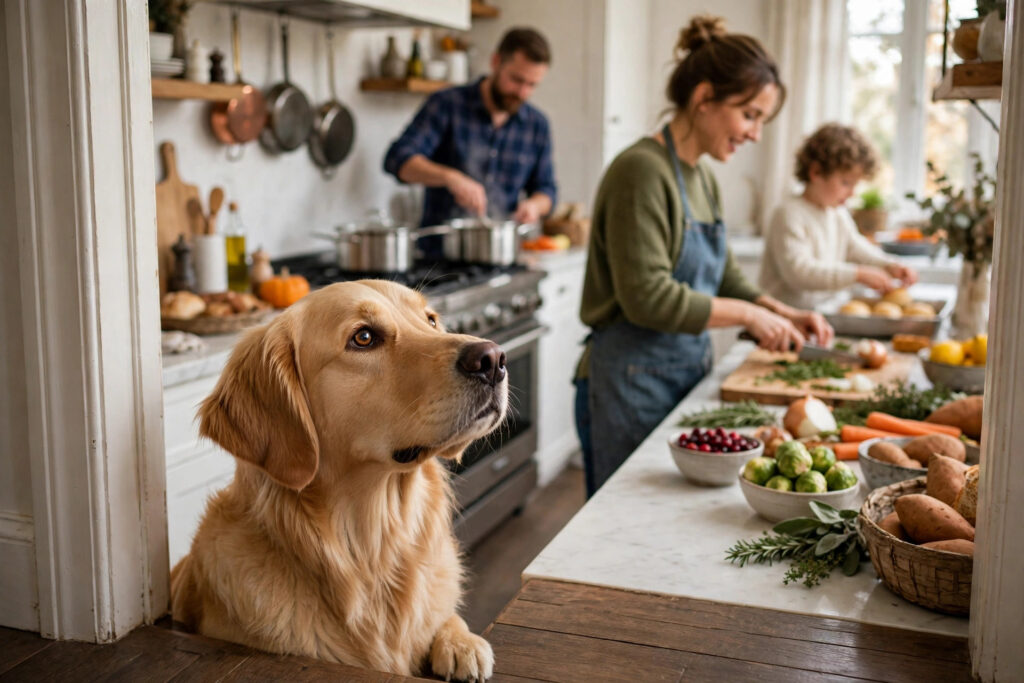
Key Takeaways
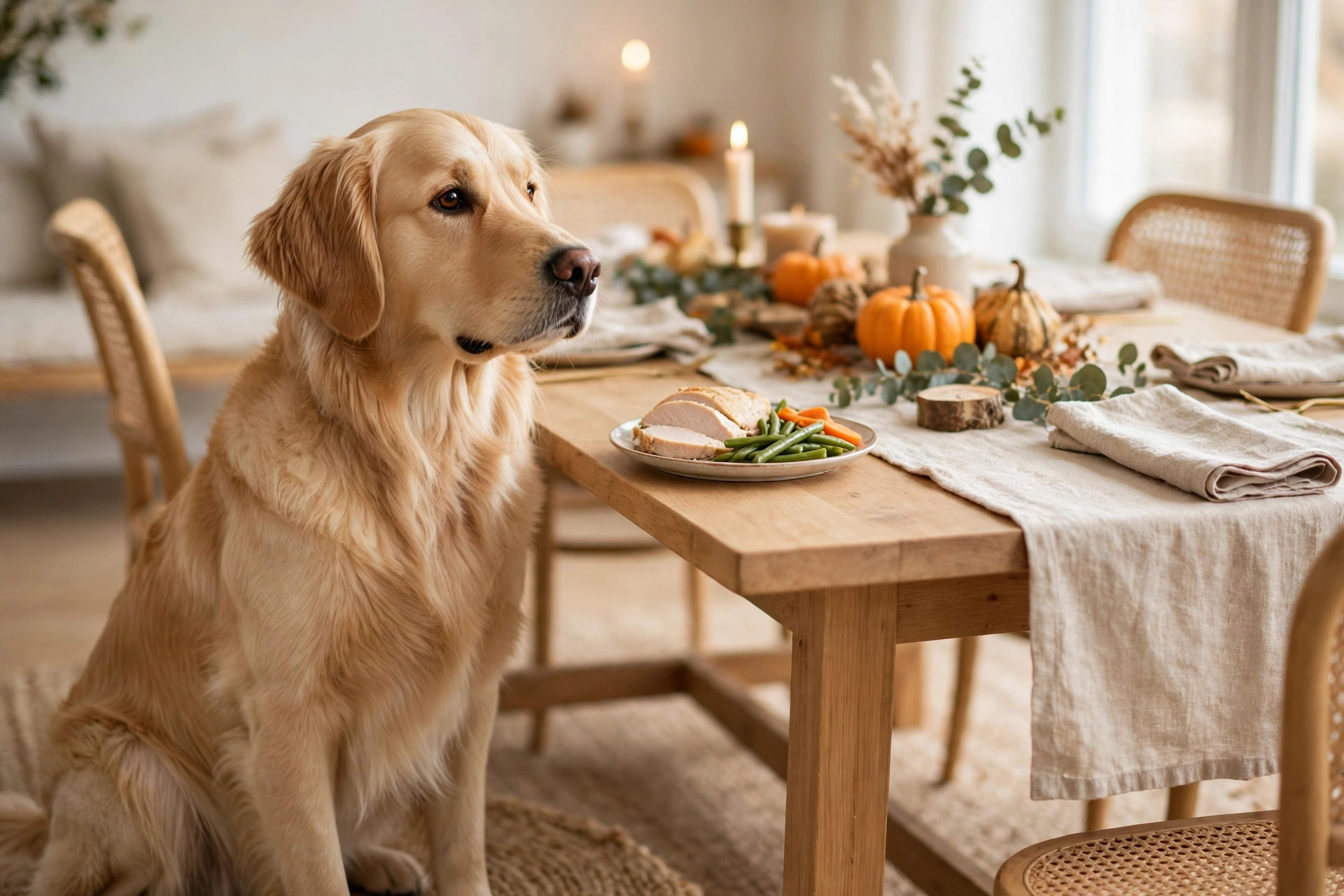
- The safe plate is plain: unseasoned turkey meat with no skin or bones, plain pumpkin, plain sweet potato, and plain green beans.
- Timing is everything: set the dog’s portion aside during prep, before butter, seasoning, and gravy touch the food.
- Follow the 90/10 rule: treats and extras — including the holiday plate — should stay under 10% of your dog’s daily calories.
- The real dangers: turkey skin, gravy, cooked bones, onions, garlic, grapes and raisins, corn cobs, and xylitol in sugar-free desserts.
- Know the ER pattern: emergency vets see a pancreatitis spike right after Thanksgiving. Repeated vomiting, a hunched belly, and lethargy mean go in, don’t wait.
The One Rule That Runs the Whole Day: Plain Only
Dogs and people season food very differently. A turkey breast that’s perfect for the table has usually been brined, buttered, salted, and rubbed with herbs. A sweet potato casserole is basically dessert wearing a vegetable costume. None of that belongs in a dog bowl.
So instead of sharing from the serving dishes, build the dog’s plate during prep. When you trim the turkey, set aside a few slices of plain meat. When you open the can of pumpkin for the pie, spoon a little into a separate dish before the sugar and spice go in. When the sweet potatoes are still just sweet potatoes, cube a few pieces. That’s the whole trick: the dog’s food comes off the cutting board, not off the table.
The ASPCA’s list of people foods to avoid feeding pets backs this approach — the hazards at Thanksgiving are rarely the base ingredients. They’re the things we add to them, plus a few items that are toxic to dogs in any form.
The Safe Plate, Item by Item
Plain turkey meat
Cooked turkey breast or thigh meat, with the skin removed and no bones, is the centerpiece of the dog’s plate. It’s lean protein, it’s the food your dog has been smelling all day, and a modest portion is a genuine treat. Keep it truly plain: no skin (that’s where the fat and seasoning concentrate), no gravy ladled over it, and absolutely no bones — cooked poultry bones splinter, and we’ll come back to why that matters below. Shred or dice the meat so your dog isn’t gulping one giant piece in a single swallow.
Plain pumpkin
Plain canned pumpkin — the kind whose only ingredient is pumpkin — is a Thanksgiving gift for dog digestion. It’s full of soluble fiber, and small amounts are commonly used to firm up loose stools. The trap is the can next to it on the shelf: pumpkin pie filling is pre-sweetened and spiced, and it does not belong in the dog bowl. Read the label. “100% pure pumpkin” is what you want. A spoonful or two stirred into the plate is plenty for most dogs.
Plain sweet potato
Cooked sweet potato, served plain, is another safe bet: soft, filling, and rich in fiber and beta-carotene. Bake or boil it, let it cool, and serve cubes or a small mashed portion. What your dog can’t have is the casserole version — marshmallows, brown sugar, butter, and pecans turn a fine vegetable into a stomach ache. Raw sweet potato is also a no; it’s tough to digest and a choking risk in chunks.
Plain green beans
Fresh or frozen green beans, cooked plain or served raw and chopped, round out the plate. They’re low in calories, satisfyingly crunchy, and most dogs treat them like a real prize. Just keep them out of the casserole: the classic green bean casserole is loaded with salt, butter, cream soup, and fried onions — and onions are genuinely toxic to dogs. A small handful of plain beans, cut to a size your dog can manage, is all you need.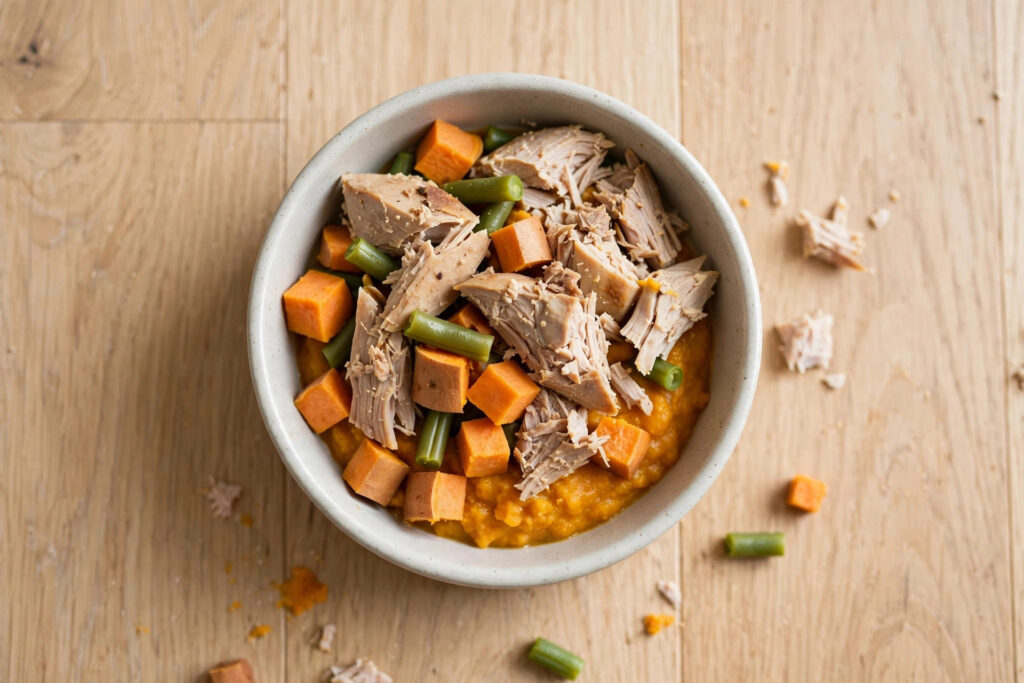
How Much Is Reasonable? The 10% Rule by Dog Size
The standard guideline vets use is the 90/10 rule: at least 90% of a dog’s daily calories should come from a complete, balanced diet, and no more than 10% from treats and extras. A Thanksgiving plate counts as extras, even though it’s real food. Here’s what that budget looks like in practice, using rough daily calorie needs:
- Small dog (around 10 lb): eats roughly 200–250 calories a day, so the holiday extras budget is about 20–25 calories. That’s roughly a tablespoon of shredded turkey, a teaspoon of pumpkin, and a couple of green beans. Tiny dog, tiny plate.
- Medium dog (around 30 lb): eats roughly 700–800 calories a day, giving you about 70–80 calories of extras. Think two to three tablespoons of turkey meat, a tablespoon or two of pumpkin, a few sweet potato cubes, and a small handful of beans.
- Large dog (around 60 lb): eats roughly 1,100–1,300 calories a day, so extras can run about 110–130 calories. A quarter cup of shredded turkey plus generous spoonfuls of the vegetables fits comfortably.
These are ceilings, not targets, and they assume the plate replaces the day’s usual treats rather than stacking on top of them. If your dog also got a dental chew and a biscuit from a soft-hearted uncle, scale the plate down. And if your dog is on a prescription diet or has a history of pancreatitis, skip the holiday plate entirely and ask your vet what — if anything — is safe to share.
The No List: Thanksgiving Foods That Hurt Dogs
Turkey skin, drippings, and gravy
Skin is where the fat lives, and fat is the Thanksgiving ingredient most likely to land a dog in the hospital. A rich, fatty meal can trigger pancreatitis — a painful inflammation of the pancreas that ranges from miserable to life-threatening. Gravy and pan drippings are concentrated fat and salt. The AKC’s holiday safety guidance makes the same point every year: the plain meat is the treat; everything that makes it juicy is the problem.
Cooked bones
Cooked turkey and chicken bones are brittle. They splinter into sharp fragments that can lodge in the throat, tear the digestive tract, or cause a blockage. Raw bones carry their own risks, but the cooked carcass is the Thanksgiving hazard: never hand it over, and get the trash out of the kitchen before your dog counter-surfs the remains. A determined dog and a turkey carcass in an open bin is a combination ER vets know well.
Onions, garlic, and everything seasoned with them
Onions, garlic, leeks, and chives — fresh, cooked, or powdered — damage a dog’s red blood cells and can cause anemia. That rules out stuffing, most gravies, seasoned mashed potatoes, and the onion topping on the green bean casserole. Powdered forms count too, so “it’s just a little seasoning” is not a safe argument.
Grapes, raisins, and currants
Grapes and raisins can cause acute kidney failure in dogs, and there’s no reliable way to predict which dog will react or to how many. They hide in fruit salads, stuffings, and desserts. Treat every grape product on the table as off-limits, and keep bowls of them off coffee tables where a dog can graze unsupervised.
Corn cobs
Corn itself isn’t the issue — the cob is. Dogs swallow cob chunks whole, and cobs are one of the classic causes of intestinal blockage requiring surgery. If corn on the cob is on the menu, cobs go straight into a secured trash bag, not the compost bowl on the counter.
Xylitol in desserts
Xylitol — also listed on labels as birch sugar — shows up in sugar-free pies, candies, gum, and some peanut butters. In dogs it can cause a rapid insulin release, dangerous drops in blood sugar, and liver failure. Chocolate and macadamia nuts are also dessert-table hazards. The simplest policy: dessert is a people-only course, full stop.
The Day After: Pancreatitis and the “Brown Friday” Pattern
Emergency veterinary clinics have a nickname for the Friday after Thanksgiving: Brown Friday. It’s one of the busiest days of their year, and a big share of the patients are dogs who feasted on Thursday — or raided the trash after everyone went to bed. Pancreatitis is the headline diagnosis, though blockages from bones and cobs and toxin exposures fill out the list.
Watch for these signs in the 24–72 hours after the meal: repeated vomiting, diarrhea, a hunched posture or obvious belly pain (some dogs stretch into a “praying position” with front legs down and rear up), refusal to eat, and unusual lethargy. Pancreatitis can escalate fast, and home treatment is not a real option for a dog in pain. If you see that cluster of signs, call your vet or an emergency clinic immediately rather than waiting to see if it passes. If you suspect your dog ate something toxic — grapes, xylitol, onions — call your vet or the ASPCA Animal Poison Control Center right away; for toxin cases, hours matter.
Prevention is mostly trash discipline. Use a bin with a latching lid, take the carcass and drippings out to an outdoor bin the same night, and do a floor sweep before bed. Most Brown Friday patients aren’t dogs who were fed at the table — they’re dogs who helped themselves at 2 a.m.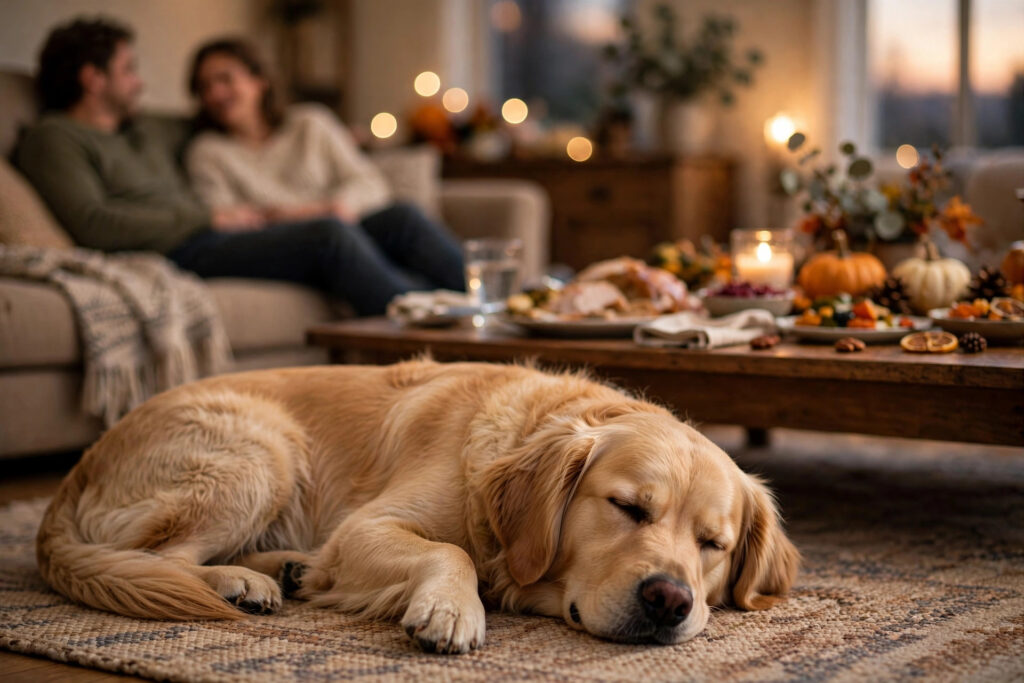
Frequently Asked Questions
Can dogs eat turkey on Thanksgiving?
Yes — plain, cooked turkey meat with the skin removed and no bones is safe for most dogs in modest portions. Skip the skin, gravy, and any meat that was seasoned, brined, or buttered for the table. Dogs with a history of pancreatitis or on prescription diets should skip it and stick to their regular food.
How much pumpkin can I give my dog?
For most dogs, one to two tablespoons of plain canned pumpkin is a sensible holiday portion — less for small dogs, around a teaspoon to a tablespoon. Only use 100% pure pumpkin, never pumpkin pie filling, which is sweetened and spiced.
Is a little gravy really that bad?
Gravy is mostly fat and salt, and fat is the trigger most associated with pancreatitis flare-ups. A lick off a finger won’t hurt a healthy dog, but ladling gravy over the dog’s plate is asking for trouble. Keep the meat plain and dry — your dog will not feel cheated.
My dog grabbed a cooked turkey bone. What do I do?
Don’t panic, and don’t induce vomiting. Watch closely for gagging, drooling, pawing at the mouth, vomiting, straining to pass stool, or a painful belly over the next 24–48 hours, and call your vet for guidance right away — they may want to see the dog or advise monitoring at home depending on what was swallowed.
Can dogs have mashed potatoes or stuffing?
Not the versions on a typical Thanksgiving table. Mashed potatoes usually carry butter, milk, salt, and sometimes garlic; stuffing almost always contains onion. A small cube of plain boiled potato is fine, but the prepared dishes are off the menu.
What should I do if my dog eats something on the no list?
Call your veterinarian, an emergency clinic, or the ASPCA Animal Poison Control Center as soon as you realize it — don’t wait for symptoms. Note what was eaten, roughly how much, and when. For grapes, xylitol, and onions especially, early treatment changes the outcome.
The Bottom Line
Thanksgiving doesn’t have to be a day of keeping your dog shut out of the kitchen and feeling guilty about it. Build the plain-only plate during prep — turkey meat without skin or bones, plain pumpkin, plain sweet potato, plain green beans — keep it inside the 10% extras budget, and lock down the trash like it matters, because it does. Your dog gets a real share of the feast, and everybody sleeps through the night. That’s a holiday worth repeating.