Every December, the same warning makes the rounds: poinsettias are deadly to cats. And every December, cats die from a plant that almost never makes the viral post — the lilies in the centerpiece. The truth about holiday plants and cats is lopsided. One common flower is a genuine, fast-moving emergency. The season’s most famous “poison” is mostly a myth with a kernel of truth. And a handful of plants sit in the middle, unpleasant but rarely catastrophic. If you decorate with a cat in the house, sorting the real dangers from the overstated ones is worth ten minutes — because the real one doesn’t give you much time to react.
Below is the honest ranking, drawn from the ASPCA’s toxic and non-toxic plant list, which is the reference veterinarians and poison-control lines actually use. Check any plant against it before it comes through your front door — including the ones that arrive inside bouquets somebody else chose.
Key Takeaways
- True lilies and daylilies are the emergency: Every part — petals, leaves, pollen, even the water in the vase — can cause kidney failure in cats.
- “Seems fine” is not reassurance: A cat that ate lily and looks normal is still an emergency, because treatment works best before symptoms appear.
- Poinsettia is overstated: Its milky sap causes mild mouth and stomach irritation — miserable, not fatal.
- The middle tier is real: Holly, mistletoe, and amaryllis can cause significant stomach upset and, in mistletoe’s case, more serious signs in larger amounts.
- The hidden danger is bouquets: Guests bring mixed arrangements, and lilies hide inside them. Inspect every arrangement that enters the house.
- Safe swaps exist: Christmas cactus, rosemary topiaries, and good artificial arrangements give you the look without the risk.
The Real Emergency: True Lilies and Daylilies
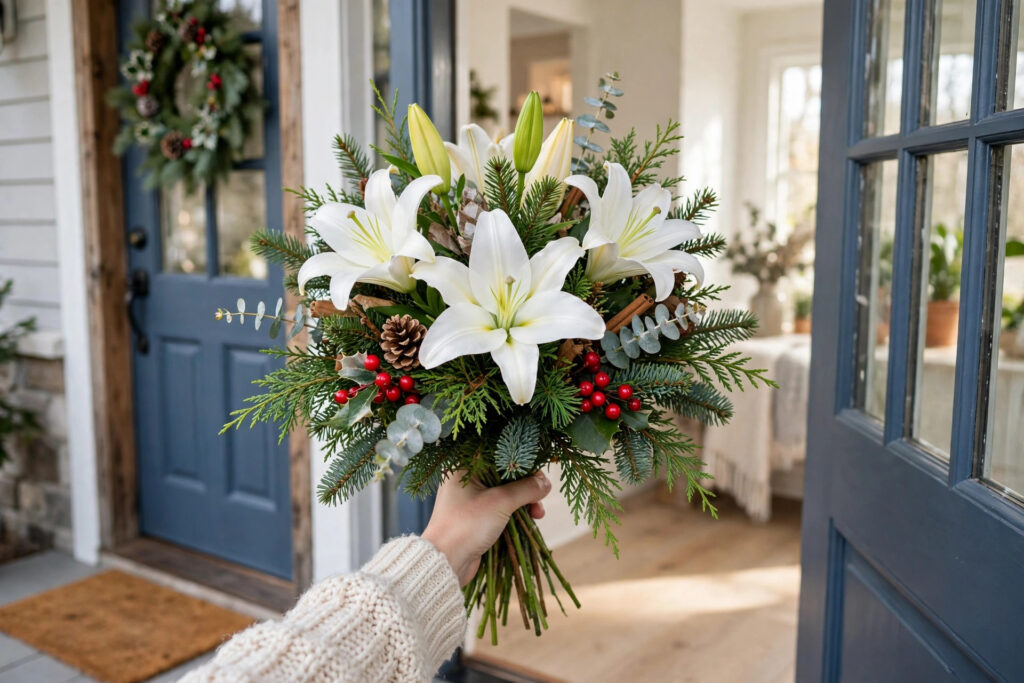
Let’s be blunt, because this is the part of the article that matters most: lilies in the Lilium and Hemerocallis groups — Easter lilies, tiger lilies, Asiatic lilies, Oriental lilies, daylilies, and their hybrids — are among the most dangerous plants a cat can encounter. The ASPCA lists them as toxic to cats, and the mechanism is kidney failure. Cats are uniquely sensitive; dogs and people don’t share this reaction, which is part of why the danger surprises people.
What makes lilies so treacherous is how little it takes and how many ways exposure happens. A cat doesn’t have to eat a whole flower. Chewing a leaf, biting a petal, licking lily pollen off her fur after brushing against the arrangement, or drinking the water from the vase can all deliver enough of the toxin. Pollen is the sneakiest route — it dusts onto the coat silently while your cat walks past the table, and she ingests it later, grooming on the couch, while you think the plant is safely out of reach.
And here is the rule to memorize: a cat that ate lily but seems fine is still an emergency. Kidney damage from lilies develops over hours to days. Early signs — vomiting, drooling, loss of appetite, lethargy — can look mild, then fade, then return as the kidneys fail. Treatment with IV fluids works best when it starts early, ideally within the first several hours and before kidney values climb. Waiting to “see how she does” spends the exact window in which vets can change the outcome. If there’s any chance your cat contacted a true lily, call your veterinarian or the ASPCA Animal Poison Control line right away — don’t watch and wait. (Note: “lily” in a name isn’t the test. Peace lilies and calla lilies are different plants with different, milder toxins — mouth pain and drooling rather than kidney failure. The kidney-failure group is the true lilies and daylilies above. When in doubt, treat it as the bad kind and call.)
The Overstated One: Poinsettia
Poinsettias have been scaring pet owners for a century, and the reputation is wildly out of proportion to the plant. The ASPCA classifies poinsettia as toxic to cats, but the effect is mild: the plant’s milky white sap irritates the mouth and stomach. A cat that chews a poinsettia leaf may drool, lick her lips, and occasionally vomit. That’s the typical picture — an unpleasant afternoon, not a fatal poisoning.
How did a mild irritant become a legend? The story traces back to an unsubstantiated report from 1919, and it stuck because it makes a tidy headline. Meanwhile the genuinely dangerous flower gets a fraction of the attention. Keep poinsettias out of chewing reach if you like — nobody wants a drooling cat on Christmas morning — but if your cat takes a bite, the move is to offer water, watch for stomach upset, and call your vet if vomiting won’t settle. It is not a rush-to-the-emergency-clinic event the way a lily is.
The Middle Tier: Holly, Mistletoe, and Amaryllis
Between the lily and the poinsettia sits a group that deserves genuine respect without panic.
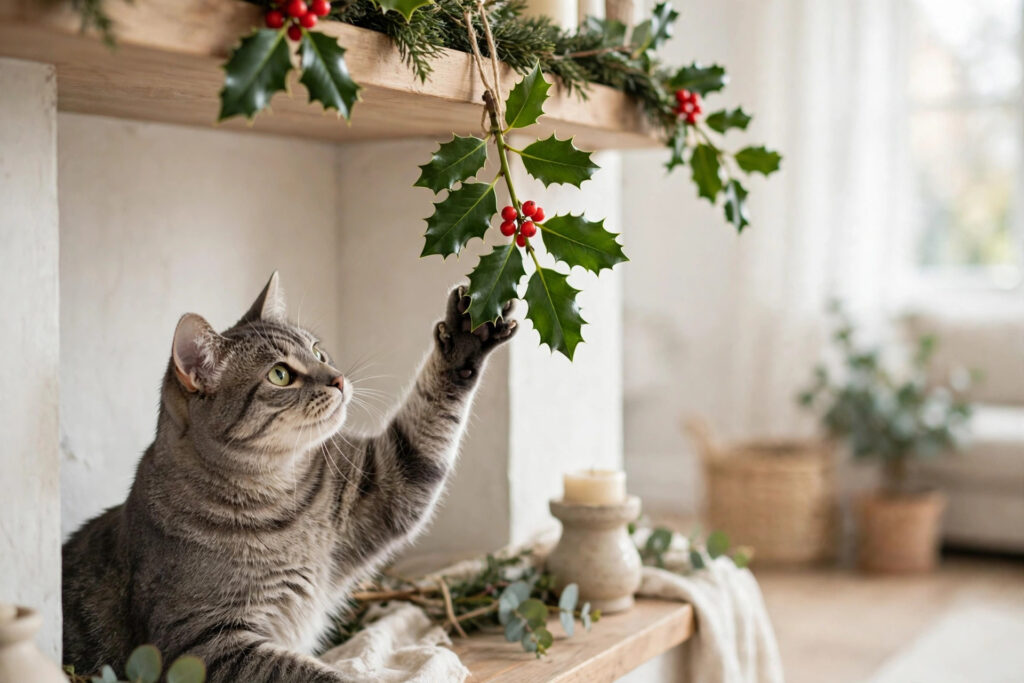
Holly. The leaves and berries contain compounds that irritate the digestive tract, and the spiky leaves add mechanical insult — cats that chew holly often drool, shake their heads, and smack their lips, then vomit or develop diarrhea. Unpleasant and worth preventing; rarely life-threatening.
Mistletoe. American mistletoe, the kissing kind, typically causes gastrointestinal upset in small amounts, but larger ingestions can produce more serious signs, including cardiovascular and neurological effects. European mistletoe is considered more dangerous. A sprig hung high over a doorway is mostly a risk when it dries, drops berries, and lands where a cat can get it — sweep up fallen berries and retire brittle sprigs.
Amaryllis. Those big holiday trumpet blooms come from bulbs containing lycorine and related compounds. Chewing the plant — especially the bulb — can cause vomiting, diarrhea, abdominal pain, drooling, tremors, and drops in blood pressure. Amaryllis is often sold as a bare bulb in a gift box, which means it sits at cat height on counters for weeks before it ever flowers. Store the bulb out of reach until it’s potted and placed somewhere your cat can’t dig.
For all three, the response pattern is the same: move the plant away, note what and roughly how much your cat ate, and call your vet or poison control for guidance rather than guessing. The Cornell Feline Health Center and the ASPCA list together cover most “can my cat eat this” questions you’ll ever have.
The Danger You Didn’t Buy: Lilies Inside Mixed Bouquets
Here’s how lily poisonings often happen in careful homes: somebody else brings the flowers. Holiday bouquets from florists and grocery stores are built for looks, and Asiatic and Oriental lilies are florist staples — big, fragrant, festive. They arrive tucked among roses, carnations, and greenery, wrapped in paper, and get set on your counter “just for now.” Your cat investigates within the hour.
So make inspection a house rule from Thanksgiving to New Year’s. Every arrangement that comes through the door gets a 30-second scan before it’s placed anywhere. Spot a lily — long trumpet or star-shaped blooms, prominent pollen-covered anthers — and the bouquet lives somewhere the cat truly cannot go: a closed room, the office, or re-gifted to a pet-free friend with a cheerful explanation. Don’t try to “just pull the lilies out” and keep the rest on the table; pollen sheds during handling and can dust the remaining flowers and your hands. And tell your regular flower-senders the truth ahead of time: “We love flowers — just nothing with lilies, because of the cat.” People are happy to comply when they know.
The same vigilance applies to the plants you receive as gifts. A well-meaning coworker’s amaryllis kit or a neighbor’s mixed planter deserves the same 30-second check against the ASPCA list before it finds a windowsill.
Safe Swaps That Still Look Like the Holidays
Giving up lilies doesn’t mean giving up a decorated house. Plenty of classic holiday plants are listed as non-toxic to cats by the ASPCA:
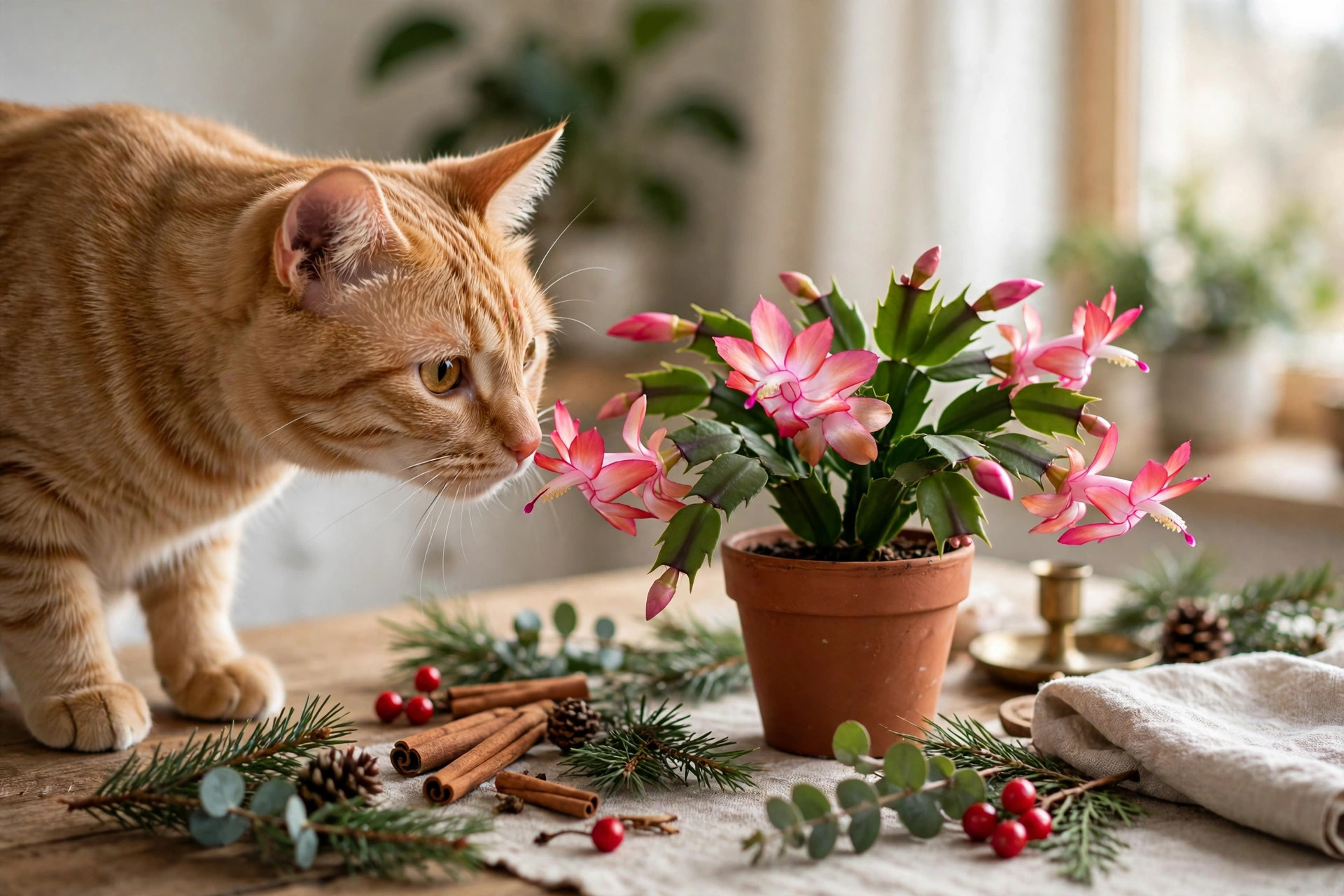
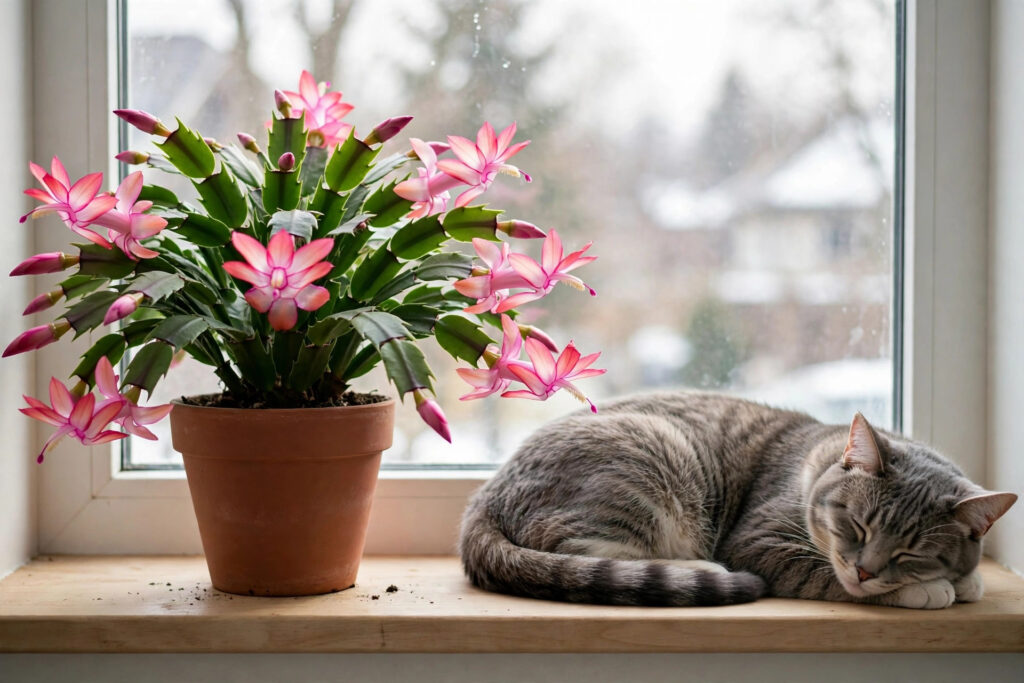
- Christmas cactus: A genuine holiday bloomer with pink or red flowers, non-toxic to cats, and nearly indestructible. This is the swap that doesn’t feel like a compromise.
- Rosemary topiary: Shaped like a tiny Christmas tree, smells wonderful, doubles as a kitchen herb, and is a far safer tabletop tree than most alternatives.
- Boston fern and parlor palm: Lush greenery for mantels and side tables without the toxic profile.
- Quality artificial arrangements: Good silk lilies look startlingly real these days, carry zero pollen, and come back out of the storage box every year. For a cat household, this is the only safe way to have “lilies” at all.
Two cautions about the swaps. First, “non-toxic” doesn’t mean “edible” — any plant material can cause mild stomach upset if a cat eats enough of it, so discourage dedicated grazing. Second, the decorations around plants carry their own hazards: tinsel, ribbon, and ornament hooks are feline magnets with real obstruction risk, and a determined cat can knock a potted plant — safe or not — off a mantel. Decorate with the cat’s athletic abilities in mind.
If Your Cat Eats a Holiday Plant
Move fast and keep it simple. Remove the cat from the plant and the plant from the cat. Check the mouth for stuck material and rinse gently with water if there’s sap or drooling. Identify the plant — a photo of the plant and its label or store tag helps enormously. Then call your veterinarian or the ASPCA Animal Poison Control Center and describe what was eaten and when. Don’t induce vomiting unless a professional tells you to; with irritant saps and some toxins, vomiting makes things worse. And if the plant was any true lily or daylily, skip the deliberation entirely: that’s an immediate call and very likely an immediate trip in, whether or not your cat looks sick.
Frequently Asked Questions
Are poinsettias really poisonous to cats?
Technically yes, practically mild. Poinsettia sap irritates the mouth and stomach, causing drooling, lip-licking, and sometimes vomiting. Serious poisoning from poinsettia is not the realistic scenario — true lilies are the holiday plant that kills cats.
How much lily does a cat have to eat for it to be dangerous?
Very little. Chewing part of a leaf or petal, licking pollen off the fur, or drinking vase water can be enough to cause kidney failure in cats. Any known or suspected contact with a true lily or daylily warrants an immediate call to your vet or poison control — even if your cat seems completely fine.
Which lilies are the dangerous ones?
The kidney-failure risk comes from true lilies (Lilium species — Easter, tiger, Asiatic, Oriental, and hybrids) and daylilies (Hemerocallis). Peace lilies and calla lilies are different plants; they cause mouth irritation and drooling rather than kidney failure. If you can’t identify the lily, treat it as a true lily and call.
Is mistletoe dangerous for cats?
It sits in the middle tier. Small amounts of American mistletoe usually cause stomach upset; larger amounts can cause more serious cardiovascular and neurological signs, and European mistletoe is more toxic. Keep sprigs secure and sweep up dropped berries.
What holiday plants are safe around cats?
The ASPCA lists Christmas cactus, Boston fern, parlor palm, and rosemary among the non-toxic options. Quality artificial arrangements are the safest route of all for lily-style blooms. Always confirm a specific plant on the ASPCA’s toxic and non-toxic plant list before bringing it home.
A guest brought a bouquet with lilies. What should I do?
Thank them, then move the whole arrangement somewhere your cat cannot access — a closed room is best — or pass it along to a pet-free home. Don’t pick the lilies out over your counter and keep the rest; pollen sheds onto the other flowers and surfaces. Next time, a friendly heads-up (“no lilies because of the cat”) prevents the repeat.
The Short Version
The holiday plant hierarchy for cat owners is short: lilies and daylilies are emergencies at any dose and any symptom level — including no symptoms. Poinsettias are a mild stomachache wearing a scary costume. Holly, mistletoe, and amaryllis deserve respect and a phone call, not panic. Inspect every bouquet that crosses your threshold, swap in a Christmas cactus or a good silk arrangement, and your holidays stay festive for everyone — including the cat asleep under the tree.