Here’s a label problem with real teeth. Xylitol — the sweetener that can kill a dog in small amounts — increasingly shows up on ingredient lists under friendlier names, most often “birch sugar.” Nothing about the substance changed. It is the same chemical, with the same effect on dogs, wearing a name that sounds like it came from a health-food store. Meanwhile, searches for “no xylitol” products have climbed roughly 24-fold year over year, as owners who know the danger try to check labels before sharing food — and run straight into the alias problem.
If you take one thing from this page, take this: a product that says “birch sugar” is not a safer, more natural alternative to xylitol. It is xylitol. Below are every name it hides behind, the products it turns up in (including a few that surprise people), how fast it works once a dog eats it, and a pre-holiday audit you can do in fifteen minutes.
Key Takeaways
- Birch sugar is xylitol. Same substance, same danger to dogs. The aliases to memorize: xylitol, birch sugar, wood sugar, E967, and the umbrella term “sugar alcohols.”
- It hides in everyday products: sugar-free gum and mints, some peanut butters, toothpaste, “skinny” desserts, and sugar-free holiday baking.
- It works fast: signs can start within 10–60 minutes — vomiting, weakness, collapse — and higher doses threaten the liver.
- Speed beats everything: call your vet or poison control immediately and bring the packaging with you.
- The holiday risk is guests: gum and mints ride in purses and coat pockets, exactly at dog nose height when coats land on your couch.
The Alias List: Every Name Xylitol Hides Behind
Food labeling rules let manufacturers list this sweetener under several names, and marketing departments prefer the ones that don’t sound like a chemistry exam. Learn to spot all of them:
- Xylitol — the name most owners know. If you see it, the product is off-limits to dogs, full stop.
- Birch sugar — the fastest-growing alias, common on “naturally sweetened” products. It sounds wholesome because it’s meant to. It is xylitol.
- Wood sugar — an older name for the same compound, still in use on some imported and specialty products.
- E967 — the European food-additive code for xylitol. It appears on imported foods and on labels that list additives by number.
- “Sugar alcohols” — the broader category xylitol belongs to, sometimes listed as a group in nutrition panels. Not every sugar alcohol is equally dangerous — xylitol is the standout threat to dogs — but if a product is sweetened with sugar alcohols and doesn’t specify which ones, treat it as suspect and check the ingredient list properly before it goes anywhere near your dog.
The FDA’s warning to dog owners about xylitol makes the same point from the regulator’s side: the agency has been cautioning owners for years because cases keep coming from products people didn’t realize contained it. The gap between “I know xylitol is dangerous” and “I recognized it on this label” is exactly where dogs get poisoned. Close the gap by scanning for all five names, not just the famous one.
Why It’s So Dangerous for Dogs (and Not for You)
In people, xylitol is a mild, useful sweetener. In dogs, the body misreads it completely. A dog’s pancreas responds to xylitol as if a huge load of sugar has arrived and releases a surge of insulin. Real sugar doesn’t follow, so the dog’s blood sugar crashes — sometimes within minutes. That crash drives the early signs: vomiting, weakness, wobbliness, collapse, and potentially seizures.
At higher doses, a second and worse problem develops: liver damage, up to acute liver failure, which can emerge over the following day or two even in a dog who seemed to recover from the initial crash. That’s why vets take even “he seems okay now” xylitol cases seriously, and why the dose and the product matter so much — a stick of gum and a cup of granulated birch sugar used in baking are wildly different exposures. This is also a dog-specific emergency: cats appear far less sensitive to xylitol, but for dogs there is no safe amount worth gambling on. Treat any ingestion as a call-the-vet event.
Where It Hides: The Product Tour
Sugar-free gum and mints
The classic source, and still the most common. Many sugar-free gums are heavily sweetened with xylitol, and a dog who raids a purse can eat a pack’s worth in a minute. Breath mints and sugar-free candies belong in the same category — small, sweet, and stored exactly where dogs forage.
Peanut butter — some brands, not all
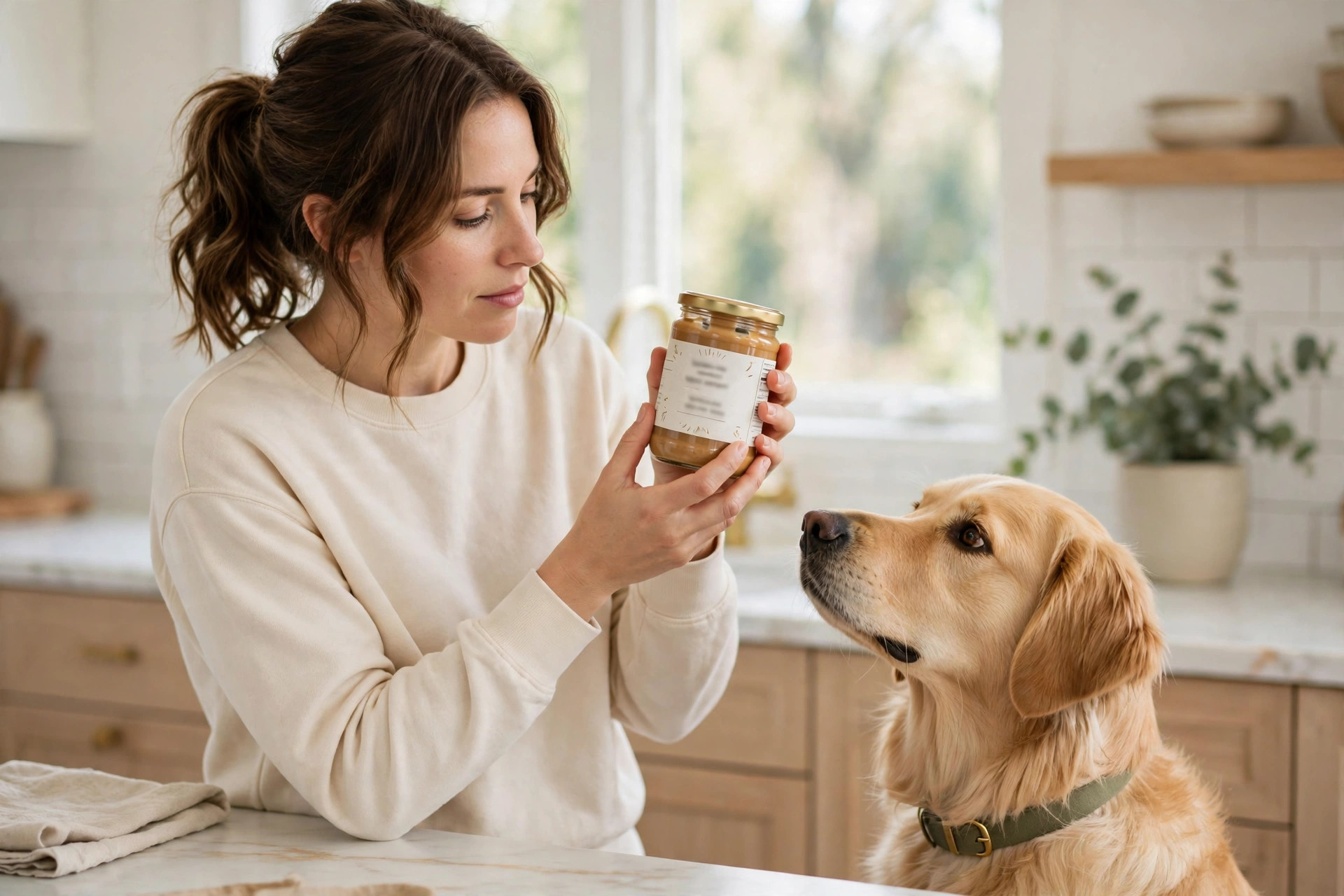
This one catches careful owners, because peanut butter is the universal dog-treat vehicle: smeared in toys, used to hide pills, baked into homemade biscuits. Most major peanut butters contain no xylitol. But some specialty, low-sugar, or “protein+” brands have used it — which is why the label check matters every time you switch brands. Read the ingredient list on the jar you actually own, looking for all the aliases, before it goes into a Kong. Thirty seconds, once per new jar.
Toothpaste and mouthwash
Human toothpaste frequently contains xylitol, and it’s flavored to be pleasant — which is why dogs lick it. Never brush a dog’s teeth with human toothpaste; use a dog toothpaste. And store yours like medicine, not like a countertop decoration a tall dog can reach.
“Skinny” desserts and sugar-free baking
Reduced-sugar ice creams, puddings, gelatin desserts, and diet baked goods are prime territory. The bigger hazard is bulk birch sugar itself, sold by the bag for home baking: it’s concentrated xylitol, stored in a pantry, measured in cups. A dog who tears into a bag — or eats the finished sugar-free holiday cookies — can get a massive dose. If you bake with it, the bag lives behind a closed door, and the finished goods are never, ever dog treats, no matter how sad the eyes get.
The supporting cast
Jams and syrups marketed as sugar-free, chewable vitamins and supplements, some medications and melatonin products, and drink mixes can also contain it. The pattern to internalize: anything marketed as sugar-free, low-sugar, keto, or diabetic-friendly deserves an ingredient scan before a dog gets near it.
The Clock: How Fast Xylitol Works
Xylitol is absorbed quickly, and signs can begin within 10 to 60 minutes of ingestion. The early picture is the blood-sugar crash: vomiting (often the first sign), then weakness, lethargy, stumbling or wobbliness, and in serious cases collapse and seizures. Liver injury runs on a slower clock — it can develop over the next 24 to 72 hours at higher doses, sometimes in dogs whose early signs looked mild.
Two practical consequences. First, there is no “wait and see how he does” window with this toxin; by the time you’re seeing signs, the process is underway. Call your veterinarian or the ASPCA Animal Poison Control Center as soon as you know or suspect ingestion — ideally within minutes, while they can still do the most good. Second, don’t induce vomiting unless a vet or poison control specifically tells you to; a dog whose blood sugar is crashing can aspirate, and the professionals will want to direct what happens next.
And bring the packaging. The vet’s first questions will be what product, how much is missing, and when. The package tells them the xylitol concentration, which drives the treatment plan. A chewed wrapper in your hand is worth ten minutes of guessing on the phone. If you find your dog mid-raid, take a quick photo of the product and the remaining amount before you leave — then go.
The Pre-Holiday Pantry Audit
Holiday season stacks every risk factor at once: more baking, more candy, more guests carrying gum and mints in purses and coat pockets that get draped over your chairs and couch. Fifteen minutes of auditing now beats an emergency visit later.
- The baking shelf: Any birch sugar, xylitol, or sugar-free sweetener bags move to a high shelf or a closed cabinet — not the counter, not a low pantry shelf at nose height.
- The peanut butter check: Read the jar’s ingredient list once, today. If any alias appears, that jar is humans-only and labeled as such.
- Gum and mint sweep: Your own purse, gym bag, and coat pockets — find the gum and mints, and establish the house rule now: bags and coats go on hooks or behind a closed door, never on the couch or the floor.
- The guest plan: When visitors arrive, give purses and coats a designated closed room or high hook. Guests won’t know your dog counter-surfs handbags; a ten-second “let me hang that up for you” solves it without a lecture.
- Toothpaste and bathroom items: Guest bathroom counters get the same treatment — toothpaste tubes and mouthwash up high or in a cabinet.
- Finished baking: Sugar-free cookies and cakes cool and store out of reach, and nobody feeds the dog from the dessert table “just a taste.”
Frequently Asked Questions
Is birch sugar the same thing as xylitol?
Yes — identical substance, different label name. Birch sugar, wood sugar, E967, and xylitol are all the same sweetener, and all of them are dangerous to dogs. A “naturally sweetened with birch sugar” label offers your dog zero protection.
How much xylitol is dangerous for a dog?
There is no amount worth treating as safe at home. Toxicity depends on the dog’s size and the product’s concentration, which varies enormously — a few pieces of gum versus a bag of baking sweetener are different emergencies. Any known or suspected ingestion earns an immediate call to your vet or poison control, who can calculate the actual dose from the product and your dog’s weight.
My dog ate sugar-free gum an hour ago and seems fine. Should I still call?
Yes, right now. Signs usually start within 10–60 minutes, but “seems fine” doesn’t clear a dog — and liver effects at higher doses develop over days. Poison control or your vet can tell you whether the amount eaten needs monitoring at home or treatment at the clinic. That calculation is their job, not yours.
Is peanut butter safe for dogs?
Most is — the major brands generally contain no xylitol. But some specialty and low-sugar brands have used it, so the rule is simple: read the ingredient list on every new jar, scanning for xylitol, birch sugar, wood sugar, and E967. Clean label, and peanut butter goes back to being the world’s most useful dog treat.
What about other sugar alcohols, like erythritol or sorbitol?
Xylitol is the dangerous outlier for dogs. Other sugar alcohols don’t trigger the same insulin surge, though large amounts can cause stomach upset. The caution is about labeling: when a panel just says “sugar alcohols” without naming them, you can’t tell what’s inside — check the ingredient list for the specific names before sharing.
The Bottom Line
The sweetener didn’t change; the label did. Xylitol now answers to birch sugar, wood sugar, and E967, and it still hides in gum, mints, some peanut butters, toothpaste, and the sugar-free baking that floods kitchens every holiday season. Memorize the aliases, scan the ingredient list on anything sugar-free before your dog gets near it, audit the purses and coat pockets before guests arrive, and treat any ingestion as a minutes-matter phone call — packaging in hand. That’s the whole defense, and it works.