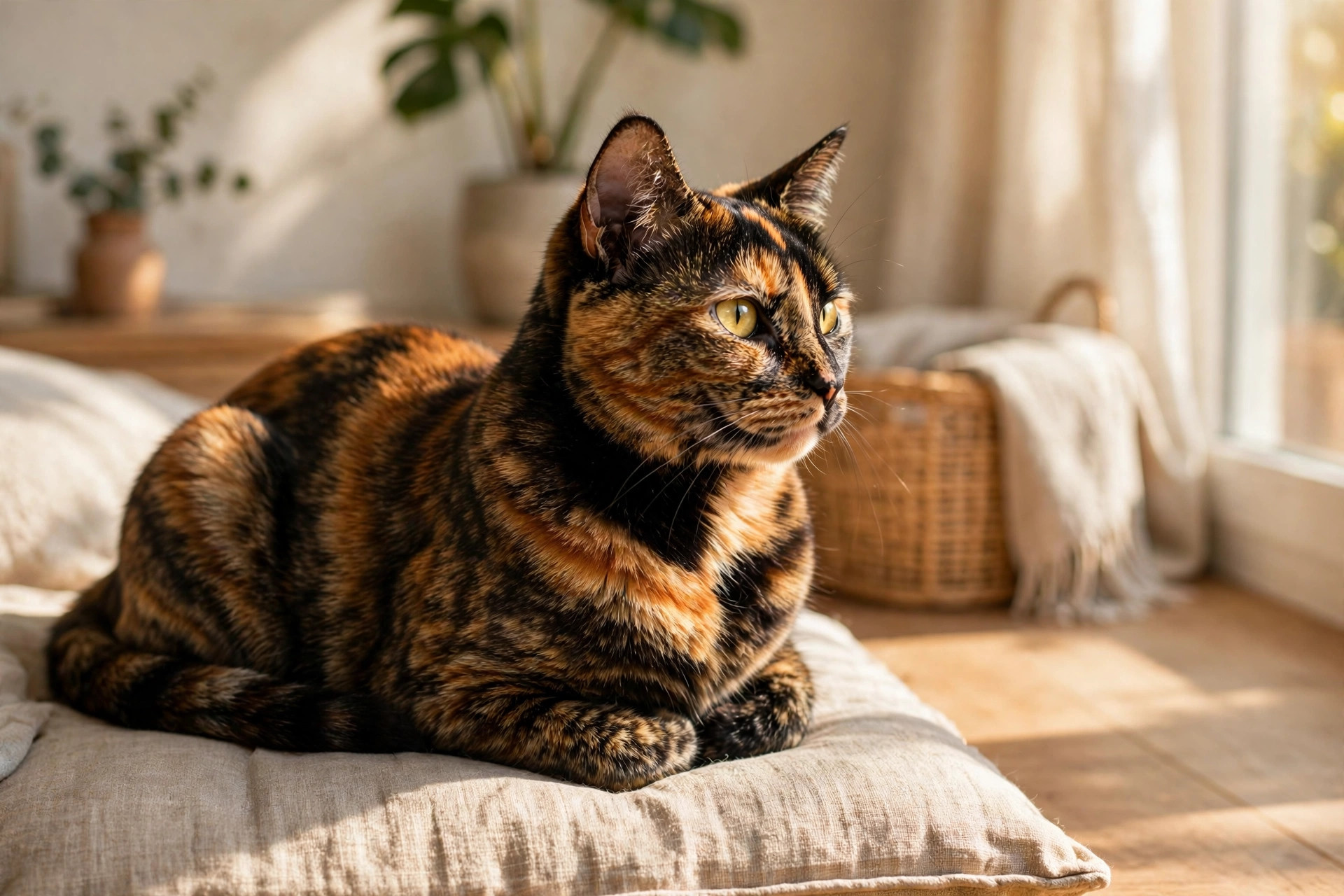
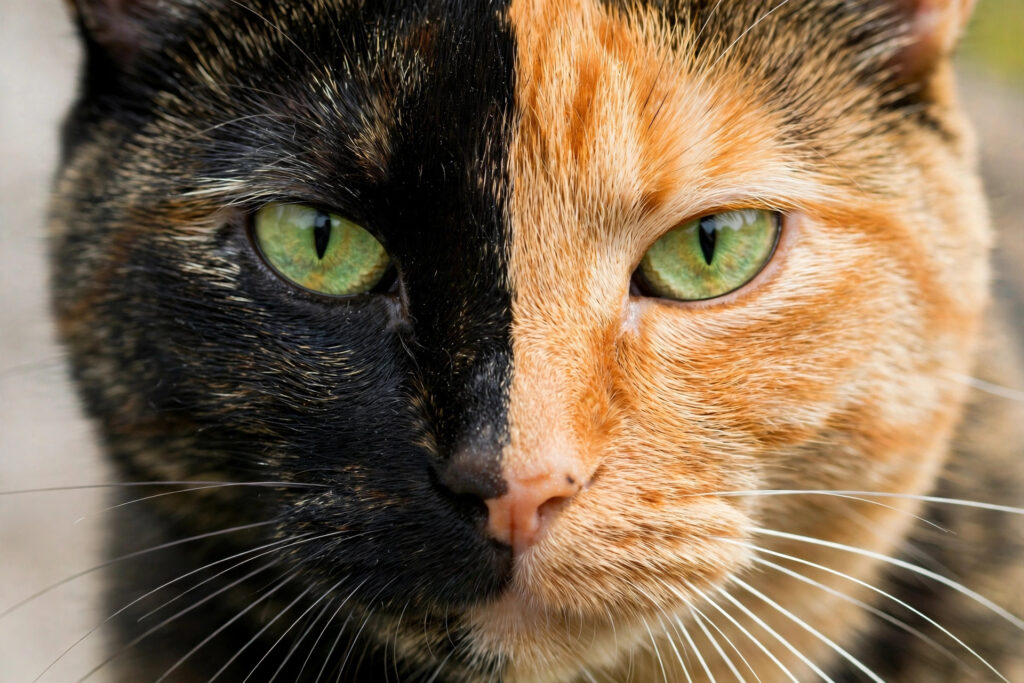
There’s a cat at nearly every shelter who looks like she was painted by two different artists who never met: half her face black, half orange, a coat shuffled like a deck of cards. That’s a tortoiseshell — “tortie” to the people who love them, and a lot of people do. Tortoiseshell cats pull in about 201,000 searches a month in the pet category, up 14% year over year, which makes them one of the steadiest fascinations in the cat world. Ask a tortie owner about their cat and you’ll hear two things, guaranteed: the coat is a one-off masterpiece, and the personality is… a lot. There’s even a word for it — “tortitude.”
Both claims deserve a closer look. The coat really is a genetics story worth telling, one that explains why nearly every tortie you’ve ever met was female and why no two patterns repeat. The personality claim is trickier. Below: how the patchwork happens, why male torties are rare genetic accidents, what behavior research actually shows about tortitude (and what it doesn’t), and a quiet injustice at the end — torties are often the cats shelters can’t move, despite the fan club waiting online.
Key Takeaways
- The coat is written on the X chromosome: The genes for orange and black fur sit on the X, and females — with two X chromosomes — can carry both.
- Random X-inactivation makes the pattern: Early in development, each cell silences one X at random; patches of fur grow from cells that kept one color or the other.
- Almost all torties are female: Male tortoiseshells are rare and usually XXY (Klinefelter syndrome), which typically makes them sterile.
- Tortitude is mostly anecdote: One survey found owners reporting more attitude in torties, but controlled evidence is thin — personality varies by individual, not by coat.
- Torties get overlooked in shelters: Despite their online following, patchwork cats often wait longer for adoption than solid-colored cats.
First, What Counts as a Tortoiseshell?
Tortoiseshell is a coat pattern, not a breed. Any breed — and especially the mixed-breed domestic shorthairs who fill most shelters — can wear it. The classic tortie coat mixes black (or its dilute version, gray-blue) with orange (or its dilute, cream) in a mottled, brindled patchwork with little to no white. When a tortie pattern includes distinct patches plus noticeable white, most people call it a calico; genetically they’re close cousins, with an added white-spotting gene changing the layout. There’s also the “torbie” — a tortie whose patches carry tabby striping. Same genetics, extra stripes.
Because it’s a pattern rather than a breed, torties come in every size, coat length, and temperament a cat can have. What unites them is one elegant quirk of chromosomes.
The Genetics: Two X Chromosomes, Two Colors, One Coin Flip Per Cell
Here’s the plain-English version of a genuinely beautiful mechanism. In cats, the gene that decides between orange fur and non-orange (black-based) fur lives on the X chromosome. A female cat has two X chromosomes — one from her mother, one from her father. If one X carries the orange version of the gene and the other X carries the black version, she has both colors in her genetic toolkit.
But a cell can’t run both X chromosomes at full volume. Very early in embryonic development, every cell in a female mammal permanently switches off one of its two X chromosomes — a process called X-chromosome inactivation — and the choice is essentially a coin flip, cell by cell. Cells descended from a cell that kept the orange X active grow into orange fur. Cells descended from a cell that kept the black X active grow into black fur. The kitten is born wearing a map of those millions of coin flips: a patchwork coat that is, quite literally, a mosaic of two genetic readouts.
Three consequences follow. First, the pattern is random — no breeder can order a specific layout, and even a cloned tortie would come out with a different pattern, because the coin flips happen fresh each time. Second, torties are walking proof of a process happening in every female mammal, including you if you’re female — your cells made the same choices; cats just wear theirs visibly. Third, it explains the sex skew completely, which brings us to the males.
Why Almost All Torties Are Female — and the Rare Exception
A male cat has one X and one Y chromosome. One X means one version of the color gene: orange or black, not both. A normal male cat physically cannot be a tortoiseshell, any more than he can carry two different eye-color genes on a chromosome he only has one of.
And yet male torties exist — rarely. The usual explanation is Klinefelter syndrome: the male is born with an extra X chromosome, making him XXY instead of XY. With two X chromosomes, the same inactivation coin flips occur, and if his two X’s carry different color versions, out comes a tortoiseshell coat on a male cat. That extra chromosome typically renders him sterile, and XXY males can have other developmental differences. Estimates usually put male torties at roughly one in a few thousand tortoiseshell cats — rare enough that shelter staff remember the ones they meet. (Even rarer exceptions exist, like chimeras formed from two fused embryos, but XXY is the standard story.)
So the old shelter wisdom is basically right: if it’s a tortie, it’s almost certainly a girl. And if it’s a male tortie, he’s a genetic rarity — just don’t expect him to father kittens.
‘Tortitude’: What the Evidence Actually Shows
Now for the personality legend. “Tortitude” — the supposed tortoiseshell attitude: feisty, sassy, strong-willed, a cat who runs the house and lets you live in it. Owner surveys give the idea some surface support. A frequently cited study out of the UC Davis School of Veterinary Medicine surveyed cat owners about coat color and behavior and found that owners of tortoiseshell, calico, and other multi-colored female cats reported more frequent displays of aggression-related behaviors — hissing, swatting, chasing — during everyday interactions than owners of some other coat colors reported.
Read that carefully, though, because the honest version matters. That study measured owner reports, not observed behavior. Owners who’ve heard the tortitude legend for years may notice and report exactly the sass they expect — expectation shapes memory, especially for behavior as ordinary as a cat objecting to being picked up. The study was a starting point, not a verdict, and the broader scientific picture is thin: there is no established genetic mechanism linking the orange/black color genes to temperament, and no controlled behavioral research demonstrating that torties, as a group, behave measurably differently from other cats raised the same way. Coat color genes can occasionally travel with other traits, so researchers don’t laugh the question out of the room — but “not proven” is where the evidence honestly sits.
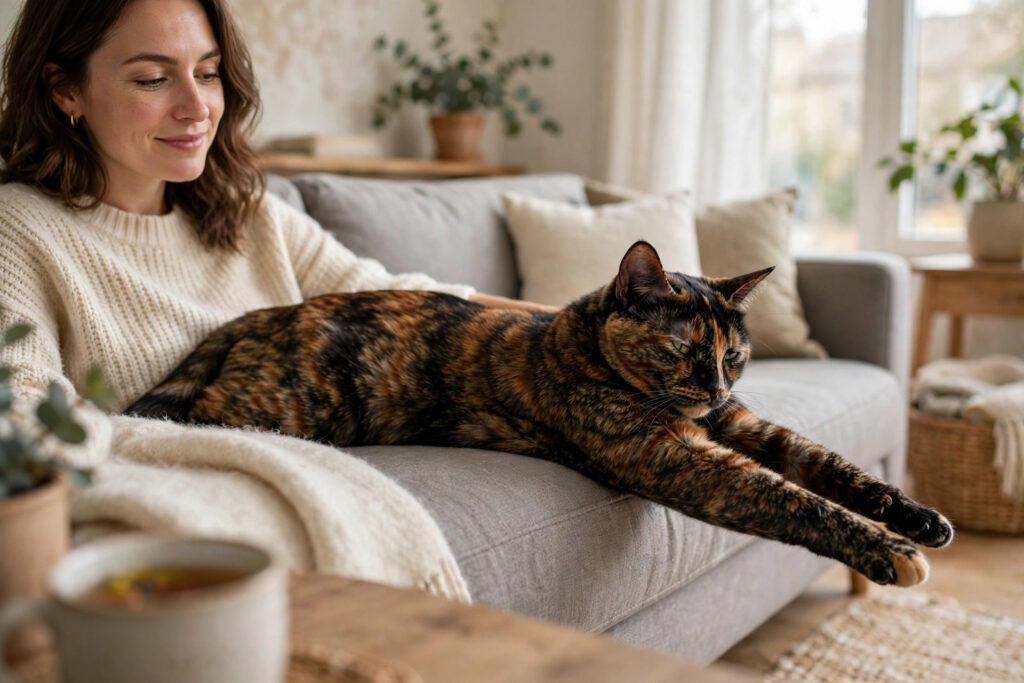
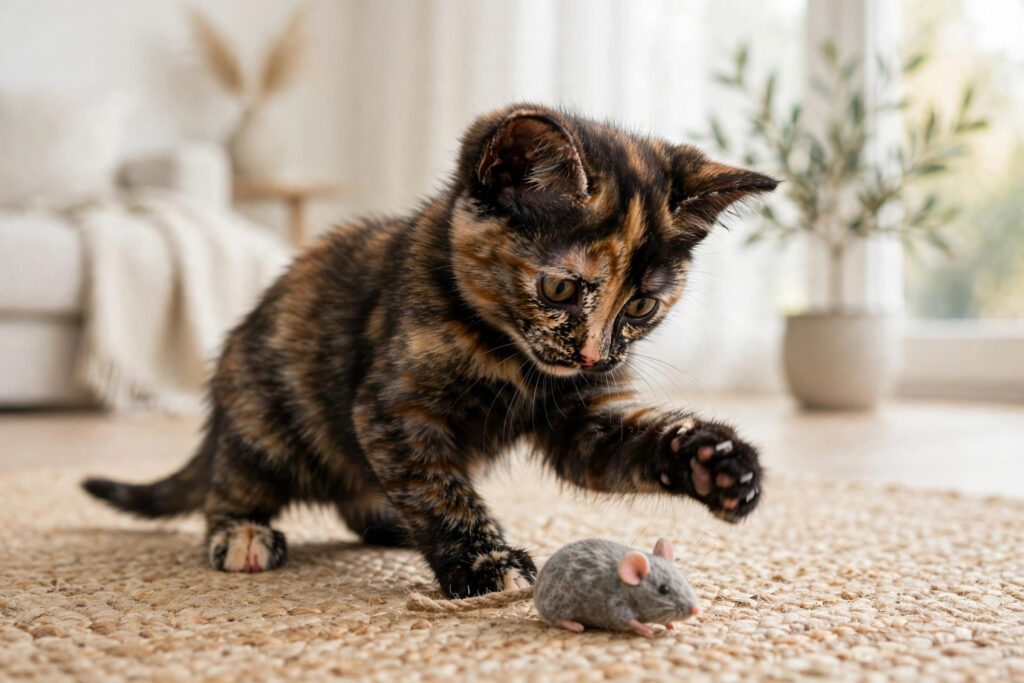
What is solidly true is that individual variation dwarfs any coat effect. Shelter workers who’ve handled thousands of cats will tell you they’ve met marshmallow torties who wanted nothing but laps, and holy-terror solid-black cats. Early socialization, life experience, health, and plain feline individuality shape a cat’s temperament far more than her paint job. If you adopt a tortie expecting a diva, you may get one — or you may get a cat who sleeps on your feet and cries when you leave the room. Either way, it won’t be the chromosomes talking. It’ll be the cat.
The Shelter Problem Nobody Expects
You’d think a coat with a 201,000-searches-a-month fan base would fly out of shelters. Often the opposite happens. Torties can be slower to adopt than their solid-colored kennel mates — the mottled coat reads as “busy” or less striking in a small cage photo, the tortitude myth scares off first-time adopters who believe it, and the plain fact that nearly all torties are female adults in a market that prefers kittens works against them too.
It’s a strange mismatch: people search for torties constantly, write odes to them online, and then walk past them at the shelter. If the genetics story in this article hooked you, the practical takeaway is simple — the cat with the most interesting biology in the building may also be the one who’s been waiting the longest. Ask to meet her out of the cage. Patchwork cats photograph poorly and charm in person.
Caring for a Tortie (Spoiler: Like Any Cat)
There’s no tortie-specific care protocol, because tortoiseshell is a color, not a condition. The XXY males are the exception — a male tortie is worth a vet conversation about his development and a firm expectation that he’s sterile. For the overwhelming majority, standard care applies: the ASPCA’s general cat care guidance covers the fundamentals, and the Cornell Feline Health Center is a dependable reference when health questions come up. Brush the coat, mind the weight, keep up with vet visits — the patchwork takes care of itself.
Frequently Asked Questions
Are tortoiseshell cats a breed?
No. Tortoiseshell is a coat pattern that can appear in many breeds and, most commonly, in mixed-breed domestic cats. There is no tortoiseshell breed standard, registry, or pedigree — just the pattern created by X-chromosome genetics.
Can a male cat be a tortoiseshell?
Rarely, yes. Male torties usually have an extra X chromosome (XXY, or Klinefelter syndrome), which gives them the two X chromosomes the pattern requires. They make up a tiny fraction of tortoiseshell cats and are typically sterile.
What’s the difference between a tortoiseshell and a calico?
Both patterns come from the same orange/black genetics. Tortoiseshells have little to no white fur, with the colors mottled together. Calicos have larger, distinct color patches plus significant white, thanks to an additional white-spotting gene. Dilute versions swap black for gray and orange for cream.
Is tortitude real?
It’s real as a reputation, unproven as biology. An owner-survey study found tortie and calico owners reporting more feisty behavior, but that’s perception data, not controlled behavioral evidence, and no mechanism links coat color genes to temperament. Individual personality varies far more than coat-based averages ever could.
Do tortoiseshell cats have health problems because of their coat?
No — the coat itself carries no health penalty for the typical (female) tortie. The exception is the rare XXY male, whose extra chromosome can come with developmental issues worth discussing with a vet. Otherwise, a tortie’s health outlook is the same as any cat of her breed mix and lifestyle.
Why are tortoiseshell cats so popular online?
The numbers back the impression — roughly 201,000 searches a month, up 14% year over year. The appeal is easy to understand: every coat is unique, the genetics story is genuinely fascinating, and the tortitude legend gives owners a shared mythology. The irony is that shelter torties still often wait longer for homes than plainer cats.
The Short Version
A tortoiseshell cat is a genetics lesson you can pet: two X chromosomes, a billion coin flips, and a coat no other cat on Earth shares. The females are the rule, the males are chromosomal rarities, and the famous attitude is a story owners tell — charming, possibly even a little self-fulfilling, but not something science has signed off on. Judge the cat, not the coat. And if there’s a patchwork cat waiting at your local shelter, she’s been judged by her coat long enough.