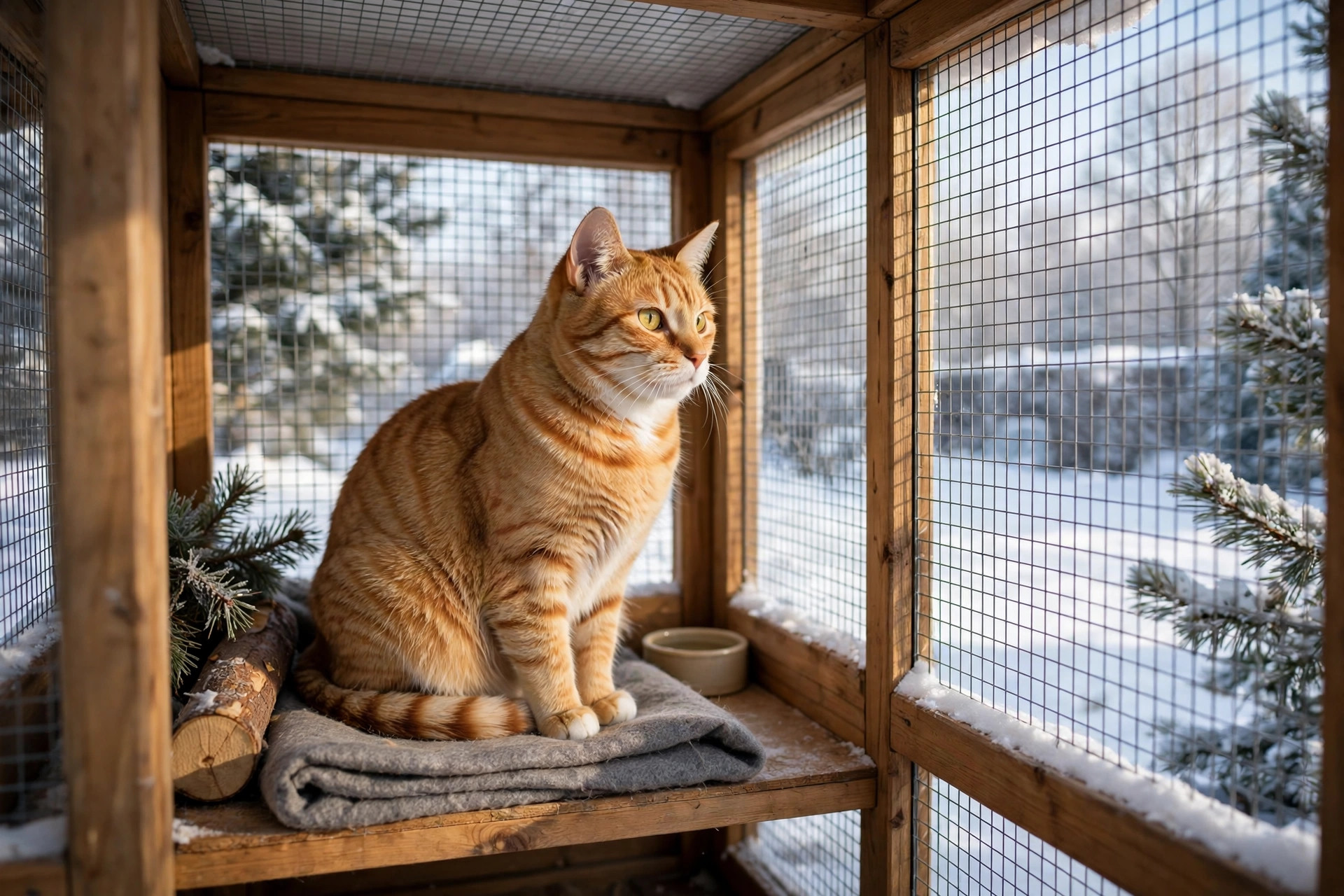
The catio might be the fastest-growing idea in cat care right now. Searches for “catio” run around 74,000 a month and are up roughly 357% year over year — a lot of cat owners are building, buying, or eyeing an outdoor enclosure. Then December arrives. The wind picks up, the water dish freezes by morning, the sun sets before dinner, and the catio door stays shut until spring. It doesn’t have to. A catio that’s built or adjusted with winter in mind can stay open most of the season, and for an indoor cat, even short winter outings break up the longest, dullest stretch of the year.
Winterizing a catio isn’t about heating the outdoors — cats handle cool air far better than most owners assume, as long as they’re dry, out of the wind, and free to come back inside. It’s about fixing the four things winter actually breaks: wind exposure, wet bedding, frozen water, and daylight. Handle those, add sensible time limits on the coldest days, and the enclosure you built in June keeps earning its keep in January.
Key Takeaways
- Wind is the enemy, not cold: Clear windbreak panels on the exposed sides make a catio usable on days that would otherwise drive your cat straight back indoors.
- Dry beats warm: An insulated shelter box with dry bedding inside the catio matters more than any heater — damp bedding chills a cat fast.
- Water freezes; plan for it: Use a heated bowl or swap fresh water often so your cat always has something to drink outside.
- Short sessions still count: A sunny midday half-hour is plenty in deep winter. Below freezing, supervise and keep sessions brief.
- Small spaces work too: An apartment window-box catio winterizes the same way as a yard build, just faster.
Start With the Wind
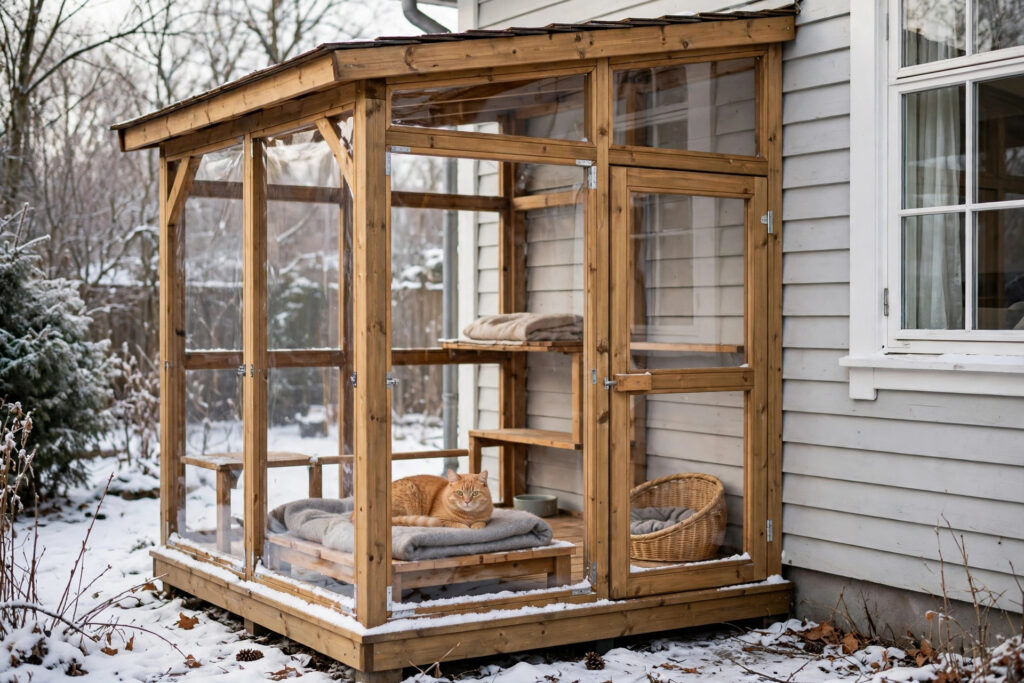
A cat in a dry, still 30°F catio is comfortable. The same cat in a 40°F catio with wind cutting through the mesh is not — moving air strips the warmth from a cat’s coat the same way it does from your face. So the first winterizing job is blocking the wind on the sides that face your prevailing weather. Clear polycarbonate panels are the popular choice because they stop the wind without stealing the view or the sun, and they can come off again in spring. Corrugated clear roofing panels cut to size work the same way for less money. Leave at least one section open or vented — a sealed box traps moisture, and you want airflow without a draft at cat level.
While you’re at it, look up. A catio with a solid or covered roof stays usable in rain and light snow; a mesh-only roof lets everything in and soaks every surface. Even a sloped clear panel over the top turns a fair-weather enclosure into a three-season one.
The Shelter Box: Small, Dry, and Off the Ground
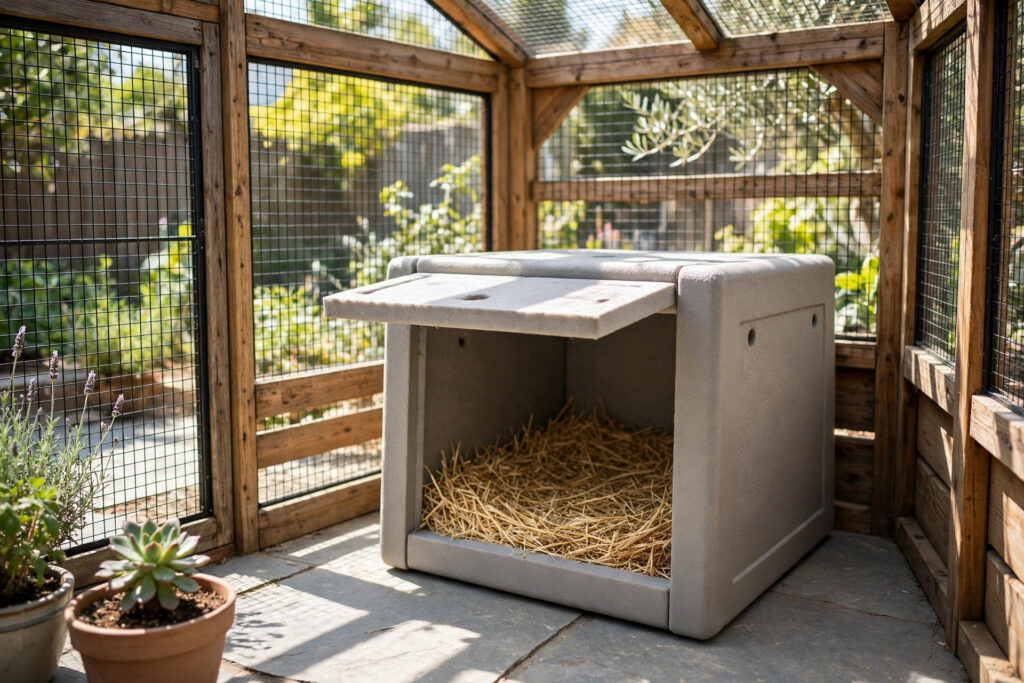
Every winter catio needs a retreat — a small insulated box your cat can curl into when the air bites. Small is the point: a cat’s body heat warms a snug space, not a cavern. A sturdy wooden or heavy plastic shelter with a single cat-sized entrance, raised a few inches off the cold ground, does the job. Line it with bedding that stays dry and can be swapped out fast. Straw is the classic outdoor choice because it resists moisture and holds air pockets; washable fleece pads work if you check them often and rotate in dry spares. What you don’t want is a towel or blanket that gets damp on day one and stays a cold, wet mat for the rest of the month. Check bedding after every rain or snow — if it feels damp, it comes out.
Position the shelter in the sunniest corner the catio has. On a clear winter day, a patch of sun inside an enclosure can feel a full season warmer than the shaded side, and cats are ruthless about finding it. If your catio has a spot that catches midday light, that’s where the shelter and a good perch belong.
Water, Food, and the Freezing Problem
Water is the daily chore of a winter catio. A shallow dish can skin over with ice in a few hours, and cats won’t work for their water — they’ll just go thirsty until they come in. Two fixes work. A heated outdoor pet bowl keeps water liquid around the clock and is the set-and-forget option if you have an outdoor outlet. Without power, use a deeper, wider bowl (it freezes slower), place it in the sun, and swap in fresh water morning and afternoon. Rubber bowls make ice removal painless — flex, pop, refill.
Food is simpler: skip it outside in winter unless your cat spends long stretches out. Wet food freezes into a brick, dry food draws raccoons and other wildlife you’d rather not teach your address to, and most cats are happier eating indoors anyway. Treats for a training session are fine. Meals stay in the kitchen.
Don’t Forget the Floor and the Perches
Wind and bedding get the attention, but winter also changes the surfaces your cat walks and lands on. A smooth catio floor can turn slick with frost or a skim of ice, and an older cat who slips on a landing may decide the whole enclosure isn’t worth it anymore. Outdoor rugs, rubber mats, or textured decking in the main traffic areas give claws something to grip. Wooden perches and shelves hold up fine in the cold, but check them after freeze-thaw cycles for splinters and wobbling mounts — winter works fasteners loose in a way summer never does. If snow collects where your cat walks, sweep it off rather than letting it melt and refreeze into a skating rink. And give the whole structure a once-over for snow load: a roof panel that shrugged off August rain can sag under a foot of wet snow, and it’s far easier to brace it in November than to rebuild it in February.
How Long Is Too Long Out There?
There’s no single number, because a dry, sunny, windless 28°F afternoon differs from a damp, gusty 35°F one. Use your cat as the gauge and keep these ground rules:
- Above freezing: Most healthy adult cats can enjoy the catio for hours with shelter, sun, and open access back inside.
- Below freezing: Short, supervised sessions — 20 to 40 minutes — with the door to the house open or a cat flap unlocked so they can bail the moment they’re done.
- Severe cold, storms, or wind chill warnings: Catio closed. No enrichment is worth frostbitten ear tips.
- Kittens, seniors, hairless and short-coated cats, and any cat who’s been ill: Cut every session down, or skip winter outings entirely and talk to your vet if you’re unsure.
The non-negotiable rule: your cat must always be able to get back inside on their own, or you must be there to let them in. A cat locked out in dropping temperatures is an emergency, not an outing. If your setup relies on you opening the door, set a timer — every time.
The Small-Space Version: Window-Box Catios
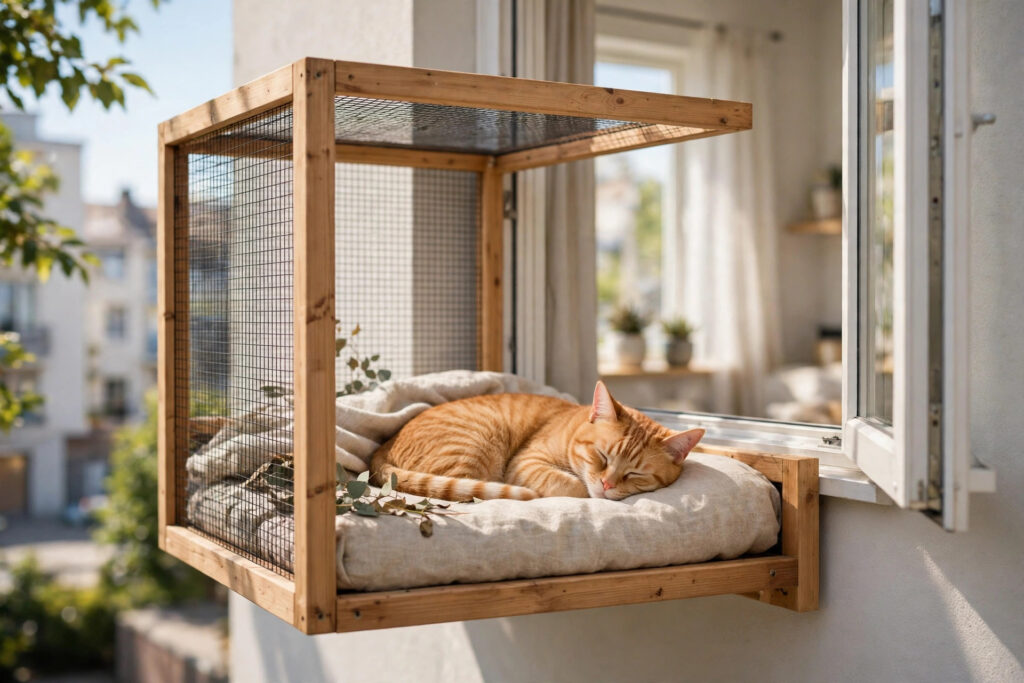
Apartment cats aren’t left out of this trend. A window-box catio — a framed, mesh enclosure mounted outside a window, giving the cat a perch with fresh air and a view — winterizes with the same logic in miniature. Add a windbreak panel on the exposed face, a covered top so snow doesn’t pile in, and an insulated pad or small fleece-lined hideaway inside. Sessions get shorter by design, since a window box has less room for a proper shelter, so think of it as a fresh-air lounge for sunny midday breaks rather than an all-day space. Check your building rules and mount everything solidly — a window unit has to hold a cat’s full weight plus a snow load, and “probably fine” isn’t a mounting standard.
One More Reason Catios Matter Right Now
The catio boom isn’t only about bored indoor cats. In areas that have seen local bird-flu die-offs among wild birds, letting a cat roam free carries a real risk: cats who hunt or scavenge can come into contact with infected birds, and avian influenza in cats is a serious, sometimes fatal illness. A catio threads the needle. Your cat gets the sights, smells, wind, and sun they crave — the full outdoor broadcast — without touching a single wild bird or anything a wild bird left behind. For owners in affected areas, that safe-outdoor compromise has turned the catio from a nice extra into the responsible default, and it’s part of why interest keeps climbing even as the weather turns.
A Weekend Winterizing Checklist
- Fit clear windbreak panels on the wind-facing sides; leave a vented section.
- Add or check a solid roof panel so rain and snow stay out.
- Install the shelter box off the ground in the sunniest corner; stock dry bedding plus spares.
- Set up heated water or commit to twice-daily swaps.
- Confirm your cat can get back inside at all times, or set timers for supervised sessions.
- Walk the mesh and frame for winter damage — ice and storms find weak fasteners.
None of this is a big build. Most owners can winterize in a Saturday with panels, a shelter box, and a bedding swap. The payoff is a cat who still gets fresh air and a changing view in the months when indoor life gets stale — and an enclosure that works twelve months a year instead of seven.
Frequently Asked Questions
How cold is too cold for a cat to use a catio?
Healthy adult cats tolerate cool weather well when they’re dry, sheltered from wind, and free to go back inside. Below freezing, keep sessions short and supervised. In severe cold or storms, close the catio. Kittens, seniors, hairless breeds, and cats with health issues should skip the coldest days entirely.
Do I need a heater in my catio?
Usually not. Wind protection, a dry insulated shelter, and access back indoors handle most winter days. If you add any heat source, use only products made for outdoor pet use, keep them outside chewing reach, and never run space heaters or heat lamps in an enclosure — the fire risk outweighs the benefit.
How do I keep my cat’s water from freezing in the catio?
A heated outdoor pet bowl is the easiest fix if you have power outside. Without one, use a deep rubber bowl in a sunny spot and swap in fresh water twice a day — the rubber flexes so ice pops right out.
Can I build a catio if I rent an apartment?
Often, yes, with a window-box style enclosure — but check your lease and building rules first, and mount it to a standard that holds your cat’s weight plus snow. Renters should favor designs that clamp or install without permanent changes to the building.
Why are catios getting so popular?
Search interest in catios is up about 357% year over year, driven by owners who want their indoor cats to have outdoor stimulation without free-roaming risks — traffic, predators, and diseases spread through contact with wildlife, including bird flu in areas with wild-bird die-offs.
The Bottom Line
A catio doesn’t have to be a summer-only luxury. Block the wind, keep a dry shelter and liquid water inside, respect the coldest days, and your cat keeps their outdoor time all winter. The trend is booming for a reason — and with one weekend of winterizing, your cat doesn’t have to wait for spring to enjoy it.