By 6 p.m. in January, it’s been dark for an hour, the morning walk feels like it happened last week, and your dog is standing in the middle of the living room staring at you. Then the pacing starts. Then a toy gets dropped in your lap. Then the barking — not at anything, just at the evening in general. Winter doesn’t just shorten walks. It deletes the whole second shift of sniffing, wandering, and burning off energy that summer evenings used to provide.
Enrichment fills that gap, and dog owners are clearly figuring this out: searches for enrichment toys have surged, with the Woof Pupsicle up 71% year over year and lick mats up 40%. But a single toy, handed over every night, goes stale fast. What works is a rotation — a different kind of challenge each evening, so the novelty (and the effort) stays in it. Here’s a five-day rotation built from gear most owners already own, plus the safety rules and fillings that make it work.
Key Takeaways
- Rotate five different enrichment types across the week — sniffing, licking, problem-solving, chewing, and a sniffy walk — instead of repeating one toy nightly.
- The rotation: snuffle mat → frozen lick mat → puzzle feeder → frozen filled chew → decompression sniff walk.
- Lick mats and snuffle mats are not chew toys. Supervise every session and put them away when they’re empty.
- Easy DIY frozen fillings: plain canned pumpkin, plain xylitol-free yogurt, and mashed banana — frozen for a few hours so they last.
- Use the rotation for guests and fireworks too. A dog deep in a frozen puzzle is a dog not rehearsing door chaos.
- Pacing, destructive chewing, and demand barking after dark are boredom signals this rotation is built to drain.
Why One Toy Stops Working
Enrichment works because it makes a dog use his nose and brain, not just his jaws. Sniffing through a snuffle mat, working a frozen layer off a lick mat, figuring out a sliding puzzle — each one asks for a different skill, and each one tires a dog out in a different way than physical play does. Twenty minutes of hard sniffing can settle a dog more completely than twenty minutes of hallway fetch, because the fetch winds many dogs up while the sniffing winds them down.
The catch is predictability. Hand a smart dog the same puzzle every night and by night four he’s solved it in ninety seconds and is back to staring at you. Rotating across five different activities keeps each one feeling fresh, because by the time the snuffle mat comes back around, it’s been four days. That’s the whole logic of the rotation below: variety on a schedule, so you never have to think about what’s tonight’s thing.
The 5-Day Rotation
Day 1: Snuffle Mat — the Nose Workout
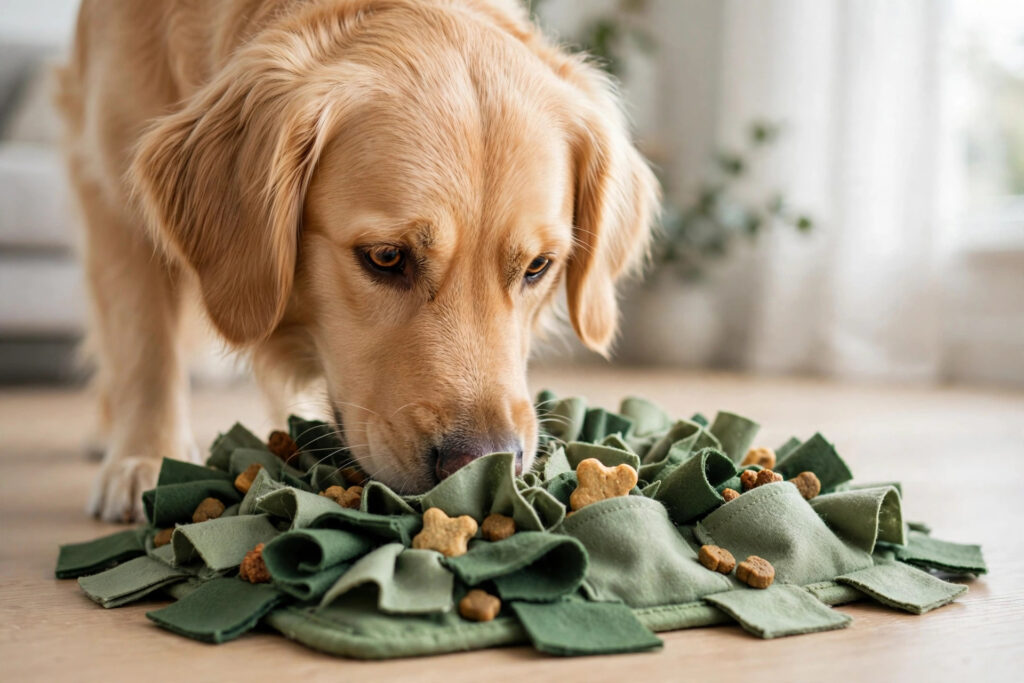
Scatter part of your dog’s dinner, or a handful of small treats, deep into the folds of a snuffle mat and let him hunt. Sniffing is the most naturally calming thing a dog does, which makes this the right pick for the first evening and for any night when the household is already wound up. Start easy — treats near the surface — for a dog who’s never used one, and bury them deeper over the week. Most dogs take 10 to 15 minutes on a well-loaded mat, and come away noticeably more relaxed than they went in.
Day 2: Frozen Lick Mat — the Slow-Down
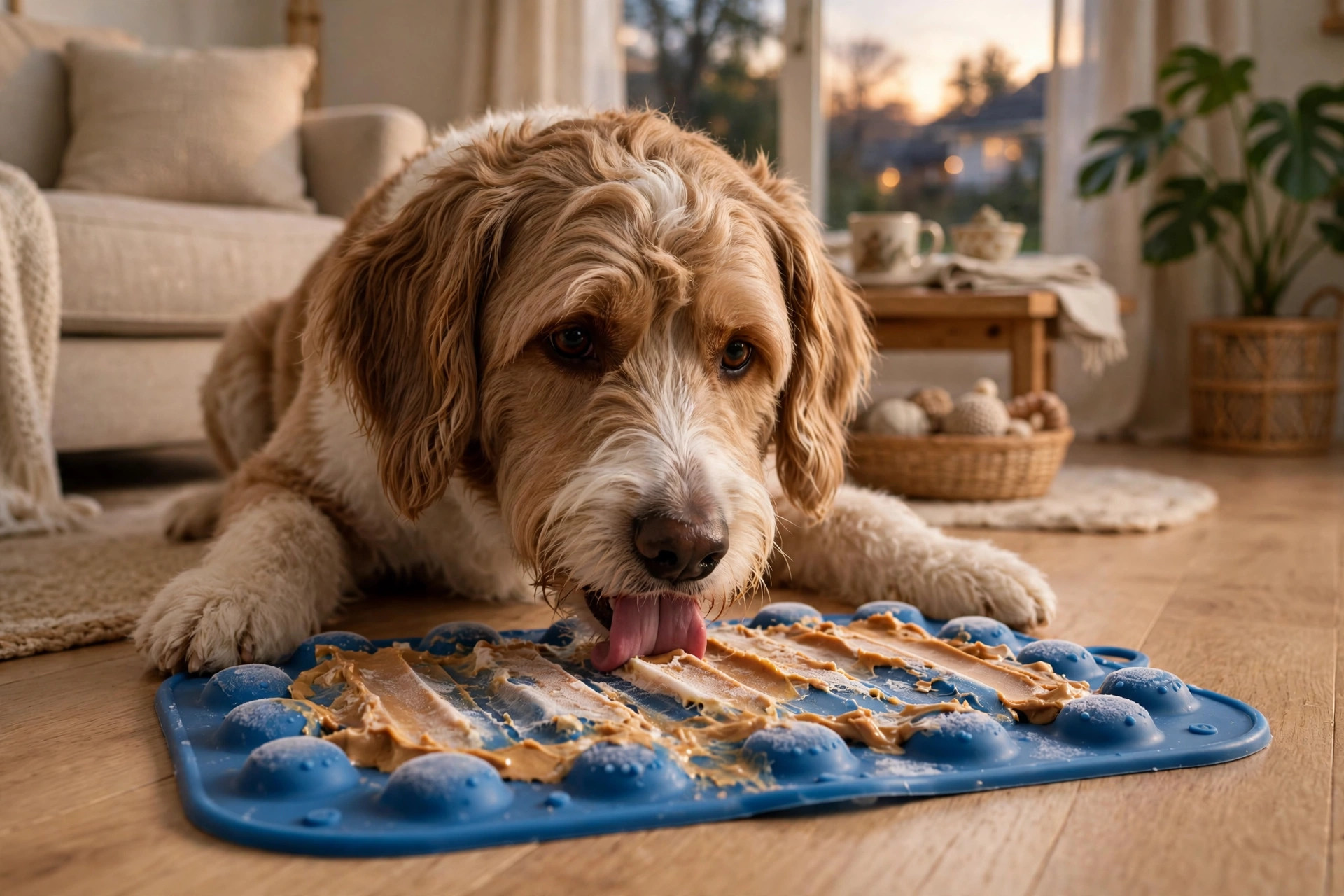
Spread a thin layer of filling on a lick mat, freeze it flat for at least three to four hours, and serve. Freezing is the difference between a two-minute snack and a twenty-minute session: a room-temperature smear is gone in moments, while a frozen one has to be worked at, lick by lick. Repetitive licking is a self-soothing behavior for many dogs, so this is the rotation’s best tool for evenings with visitors, delivery traffic, or anything else that usually sets your dog off. Our guide to the best lick mats for dogs covers mat styles and suction-cup options if you’re shopping for one.
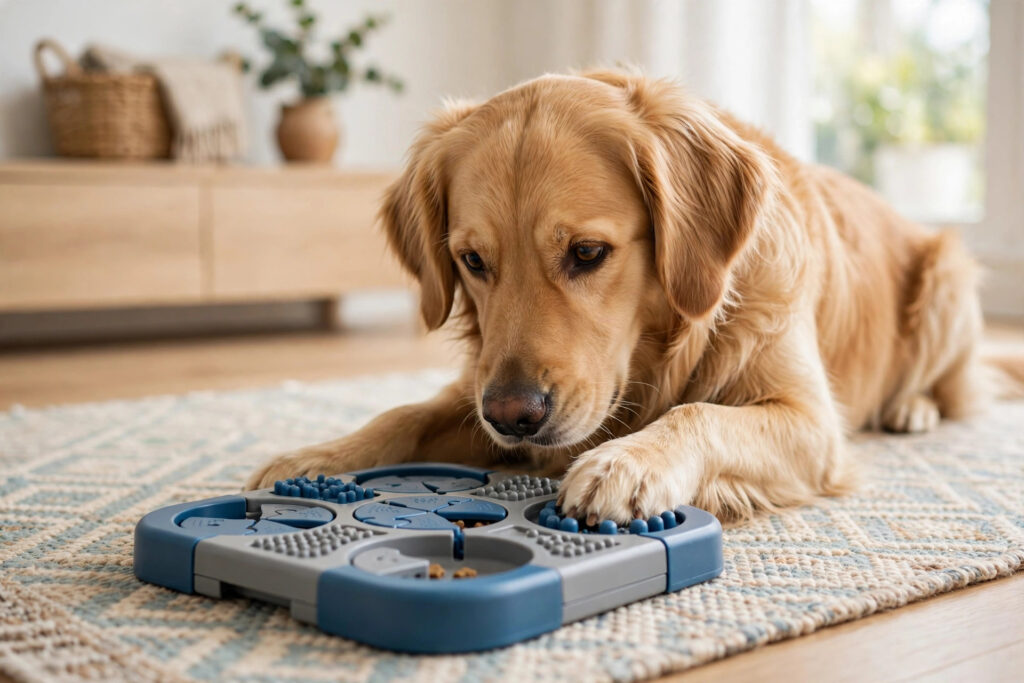
Day 3: Puzzle Feeder — the Brain Day
Serve dinner in a puzzle feeder instead of a bowl. Sliding compartments, flip lids, rolling treat balls — the style matters less than the difficulty being right at the edge of your dog’s ability. Too easy and it’s a bowl with extra steps; too hard and a frustrated dog will try to solve it with his teeth or by flipping the whole thing over. If your dog is new to puzzles, help him find the first couple of compartments. Once he understands the game, let him work.
Day 4: Frozen Filled Chew — the Long Session
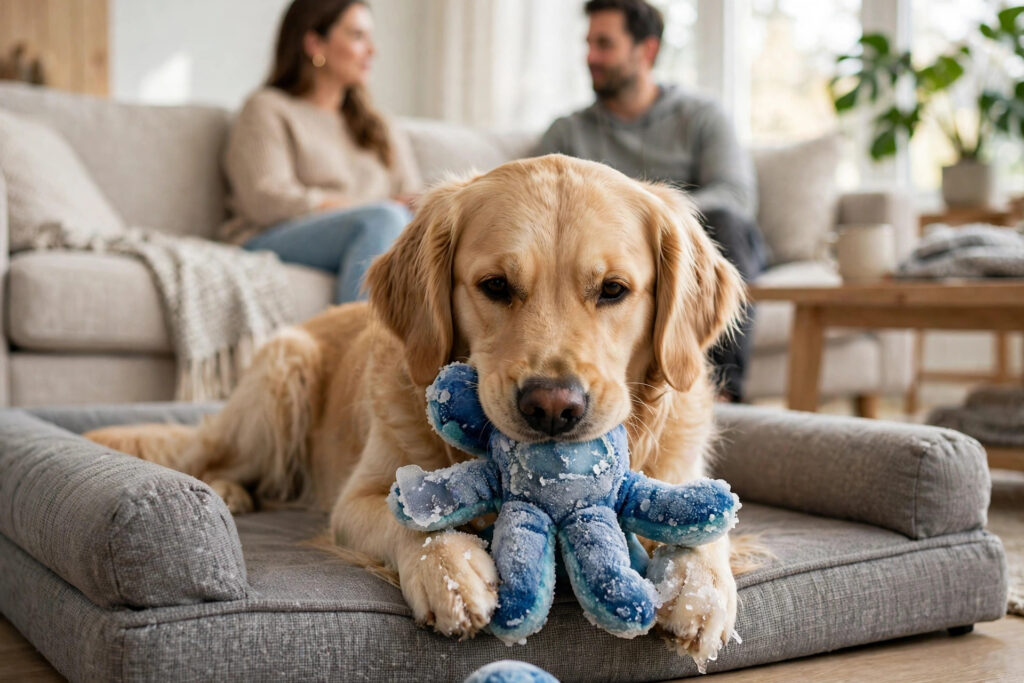
A hollow chew toy or a refillable treat ball, stuffed with filling and frozen solid, is the longest-lasting item in the rotation — this is the one for the evening you have guests coming, a work call, or fireworks in the distance. Freeze it in the morning so it’s ready by evening. Because this one involves chewing as well as licking, match the toy’s toughness to your dog, and read the safety section below before you make it a habit.
Day 5: The Sniffy Walk — the Reset
The fifth slot isn’t a toy at all. Take the longest, slowest walk of the week and let your dog lead with his nose: a grassy route, a quiet park edge, anywhere he can stop and investigate every interesting smell for as long as he wants. Trainers call these decompression walks, and they’re the closest thing to what a dog would choose for himself. In bad weather, a shortened version still counts — even fifteen unhurried minutes of sniffing beats a brisk march around the block where every stop gets a leash tug.
Then the cycle repeats. If you want a two-day weekend break, repeat your dog’s two favorites — the rotation is a rhythm, not a rule.
 >
Simple DIY Fillings (From Your Kitchen, Not the Pet Store)
You don’t need special pastes or sprays. Three fillings cover lick mats and frozen chews all winter:
- Plain canned pumpkin — make sure it’s plain pumpkin, not pumpkin pie filling, which comes loaded with sugar and spices. Spreads thin, freezes firm, and most dogs love it.
- Plain yogurt — unsweetened, unflavored, and above all xylitol-free. Xylitol (sometimes listed as birch sugar) is extremely toxic to dogs and shows up in some “light” and flavored yogurts. Read the label every time, even for a brand you’ve bought before. The ASPCA Animal Poison Control lists xylitol among the household items that poison dogs, and it’s worth a label check rather than a memory check.
- Mashed banana — one ripe banana mashes into enough filling for a mat and a chew toy. Sweet, so use it as the accent layer rather than the whole menu.
Mix and match in layers — banana over pumpkin freezes into something that takes real work — and keep portions honest. Enrichment food is still food: cut back the regular dinner a little on heavy filling days, especially for dogs watching their weight.
The Safety Rules That Aren’t Optional
Everything in this rotation is a food-delivery device, not a chew toy, and the distinction matters. A determined dog who finishes a lick mat and keeps going can tear off and swallow pieces of the mat itself. Snuffle mats can lose fabric strips to a dog who decides digging beats sniffing. Puzzle feeders have small doors and sliders that aren’t built for jaws.
So: supervise every session, the way you’d supervise any new toy. When the food is gone, the session is over — pick the item up, wash it, and store it out of reach. That habit does double duty: it keeps your dog safe, and it keeps the toys special. A lick mat that lives on the floor all day is furniture; a lick mat that appears on Tuesday evening is an event. Inspect mats and puzzles weekly for tears, cracks, and loosening parts, and retire anything that’s coming apart. Our roundup of snuffle mats for dogs notes which styles hold up best to enthusiastic diggers if yours is destroying them faster than expected.
Not Just for Boredom: Guests, Fireworks, and Storms
Once the rotation is a habit, it becomes a tool you can aim. Guests arriving at 7? That’s a frozen filled chew night — swap Day 4 into the slot and your dog spends the doorbell moment working in his spot instead of launching at the door. Fireworks forecast, a thunderstorm rolling in, the neighbor’s renovation crew? Frozen lick mat, served before the noise starts, in the quietest room in the house.
The trick is timing. Enrichment works as a distraction when it starts before your dog is already over threshold. A dog who is already barking and spinning won’t settle into a puzzle — get the frozen item out at the first rumble or the first doorbell, not the tenth.
 <
The Boredom Signs This Rotation Is Built to Fix
How do you know the dark evenings are getting to your dog? The classic pattern:
- Pacing — room to room, no destination, worse after dark.
- Destructive chewing — shoes, remotes, baseboards: things that smell like you or sit at dog height, chewed when the evening gets long.
- Demand barking — barking at you, at nothing, at the house settling, escalating when it gets a reaction.
- Restlessness at bedtime — a dog who can’t settle even though the day looked normal on paper.
Run the rotation for two weeks and watch those specific behaviors. If the pacing and demand barking fade on enrichment evenings, you’ve found your answer — and your dose. If nothing changes, or the behavior is intense and new, that’s worth a vet conversation, since pain and anxiety can look a lot like boredom from across the room. The American Kennel Club’s enrichment guidance makes a similar point: mental exercise is a real need, and dogs who get it are measurably easier to live with.
FAQ
How long should an enrichment session last?
Most dogs get 10 to 25 minutes from a well-prepared item — a frozen lick mat or stuffed chew at the long end, a beginner snuffle mat at the short end. The session ends when the food does. If your dog consistently finishes in five minutes, freeze fillings harder, bury treats deeper, or move up a puzzle difficulty.
Can I do enrichment every single day?
Yes — the rotation is designed for daily use, and most dogs thrive on the predictability of an evening activity. Just count the filling calories as part of the day’s food, and keep supervising. If you need a night off, a sniffy walk covers the slot with zero prep.
Is a lick mat safe to leave with my dog while I’m out?
No. Lick mats, snuffle mats, and puzzle feeders are supervised activities. A dog who finishes the food may chew and swallow pieces of the mat or toy itself. Serve them while you’re home, and store them out of reach between sessions.
What can I put on a lick mat besides peanut butter?
Plain canned pumpkin, plain xylitol-free yogurt, and mashed banana all spread and freeze well. You can also use a thin smear of your dog’s own wet food. Whatever you choose, check the label for xylitol (birch sugar) — it’s the one common sweetener that’s genuinely dangerous to dogs.
My dog ignores puzzles and just gets frustrated. What now?
The puzzle is too hard. Drop back a level: leave compartments half-open, put high-value treats in the first sections, and let him watch you load it. A dog who “doesn’t like puzzles” usually had one bad first experience with a puzzle set above his level. Snuffle mats are the gentlest starting point for frustrated dogs.
Will enrichment replace the evening walk?
It replaces the energy and sniffing the walk provided, which on a dangerous-weather night is exactly what you need. But it’s a substitute for the worst nights, not a new default — dogs still need real outdoor time on every day the weather allows. Think of the rotation as covering the gap winter creates, with the Day 5 sniffy walk built in as a reminder.
Two Weeks From Now
The best part of a rotation is how little willpower it takes once it’s running. Freeze tomorrow’s lick mat while tonight’s snuffle mat is being sniffed. By the second week, your dog will start watching the freezer the way he used to watch the front door at dusk — and that restless, pacing, bark-at-the-evening energy will have somewhere better to go.