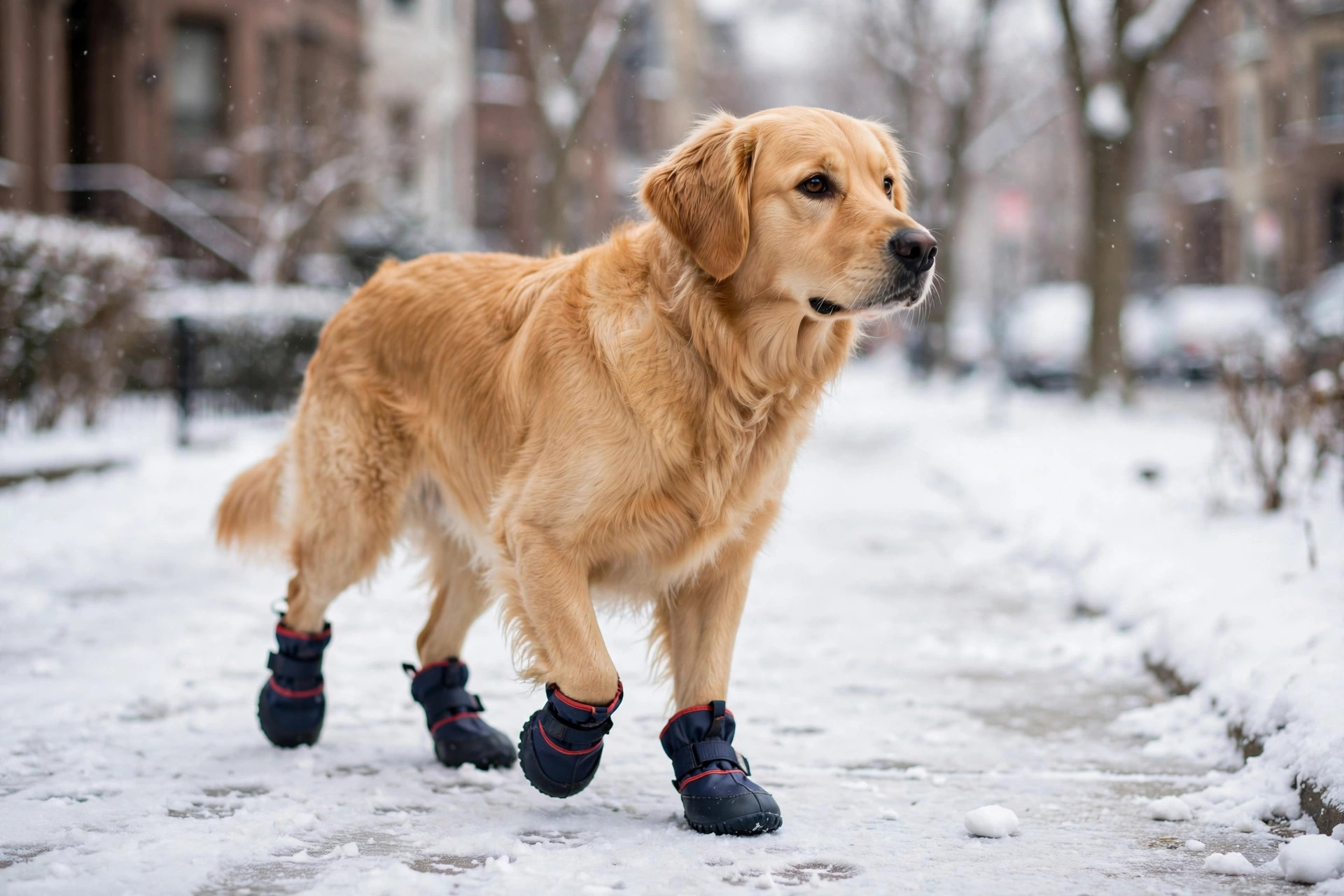
The first real snow of the year tells you everything. Your dog steps off the porch, hits the salted sidewalk, and starts doing that odd little dance — lifting one paw, then another, then looking at you like you personally salted the entire street. Winter walking is hard on paws in three ways at once: cold surfaces, sharp ice and crust, and the chemical melts spread everywhere to deal with both.
The pet aisle responds to this with a wall of products, and most dogs don’t need most of them. What your dog needs depends on where you walk, how long you’re out, and what shape his pads are in right now. Here’s how to sort balm from boots from the bag of melt by your own front door — and the one free habit that matters more than any of them.
Key Takeaways
- “Pet-safe” on an ice melt bag is unregulated marketing language. Flip the bag over and read the active ingredient instead.
- Calcium chloride is the harshest common melt ingredient on paws and stomachs. Sodium chloride (rock salt) is rough too; magnesium chloride and calcium magnesium acetate are gentler choices for your own walkway.
- A damp-cloth paw wipe after every winter walk removes salt and chemicals before your dog licks them off — and it costs nothing.
- Lightly salted short walks: paw balm is usually enough. Heavily salted streets, cracked pads, or long snow play: that’s boot territory.
- Trim the fur between the pads to stop ice balls, and check pads after every walk for cracks, redness, and limping clues.
Start With the Sidewalk, Not the Store
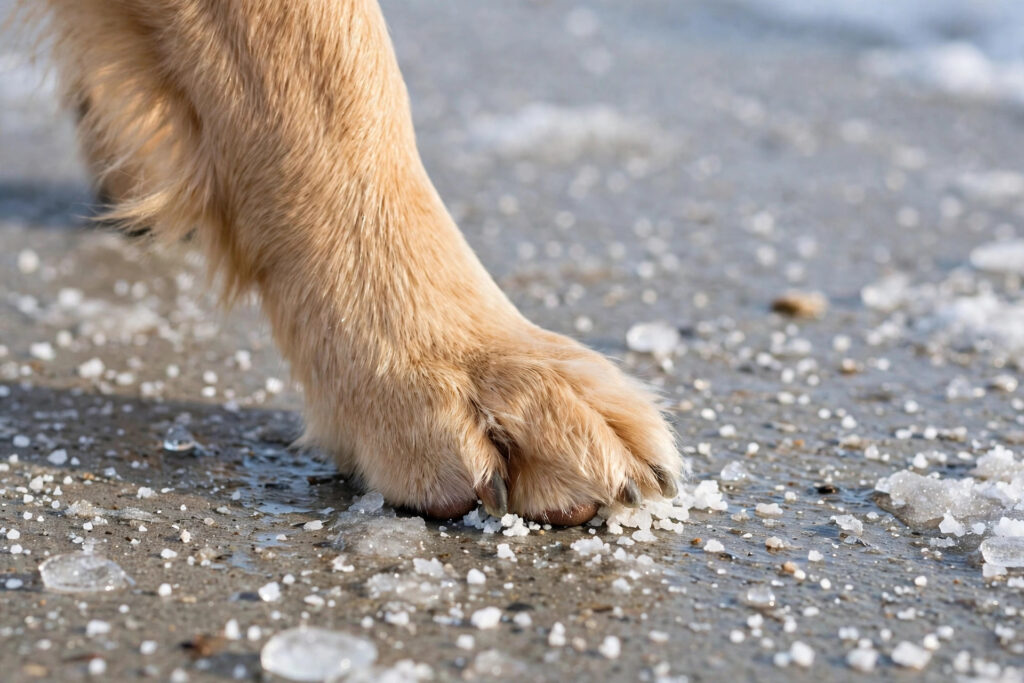
Paw trouble in winter rarely starts with cold alone. Healthy pads handle cold pavement and snow pretty well for the length of a normal walk. The bigger problem is what gets spread on that pavement. Ice melt crystals have sharp edges, they dry and irritate the skin between the toes, and they sit on the paw until your dog licks them off back home — which turns a skin problem into a stomach problem.
The ASPCA’s cold weather safety guidance makes the same point from the vet side: wipe or wash your dog’s paws, legs, and belly after winter walks to remove ice melt, salt, and antifreeze residue, because dogs will otherwise ingest those chemicals while grooming. The AVMA’s cold weather safety page adds the cold itself — check paws frequently for signs of cold-weather injury during walks, especially in wind and deep cold.
So the real question isn’t “balm or boots?” in the abstract. It’s “what is my dog actually walking on, and for how long?” Answer that, and the gear sorts itself out.
The Ice Melt Label Problem: Read the Ingredient, Not the Front of the Bag
Here’s the part most winter paw guides skip. There is no regulated standard behind the words “pet-safe” or “pet-friendly” on a bag of ice melt. No agency tests the claim, and no definition says how gentle a product has to be to earn it. A bag can carry a paw print logo and still be mostly plain rock salt.
What actually tells you something is the ingredient list on the back. The common melt ingredients, from harshest to gentlest on paws:
- Calcium chloride — the strongest and fastest-acting common melt, and the hardest on dogs. It generates heat as it dissolves, can irritate or even burn paw skin on contact, and it’s the one most likely to cause real stomach upset if your dog licks a lot of it off his feet.
- Sodium chloride (rock salt) — cheap and everywhere, which is why it’s the default on city sidewalks and roads. Drying and irritating to pads, and a stomach irritant when licked. This is what your dog is walking through whether you choose it or not.
- Magnesium chloride — generally considered gentler on skin and less irritating if ingested in small amounts. A reasonable middle choice for your own steps and driveway.
- Calcium magnesium acetate (CMA) — one of the gentlest options and easier on concrete and plants too, though slower and usually pricier per bag.
- Urea-based melts — marketed as lawn-friendly and mild, but urea can still upset a dog’s stomach in quantity, so “gentler” still doesn’t mean “fine to eat.”
Two honest caveats. First, gentler doesn’t mean edible — every melt on this list should still get wiped off paws. Second, you don’t control what your city, your landlord, or your neighbors spread. You only control your own walkway and what happens at your front door afterward. Which brings us to the habit that beats every product in this article.
The Paw Wipe: The Best Winter Product Is a Damp Cloth
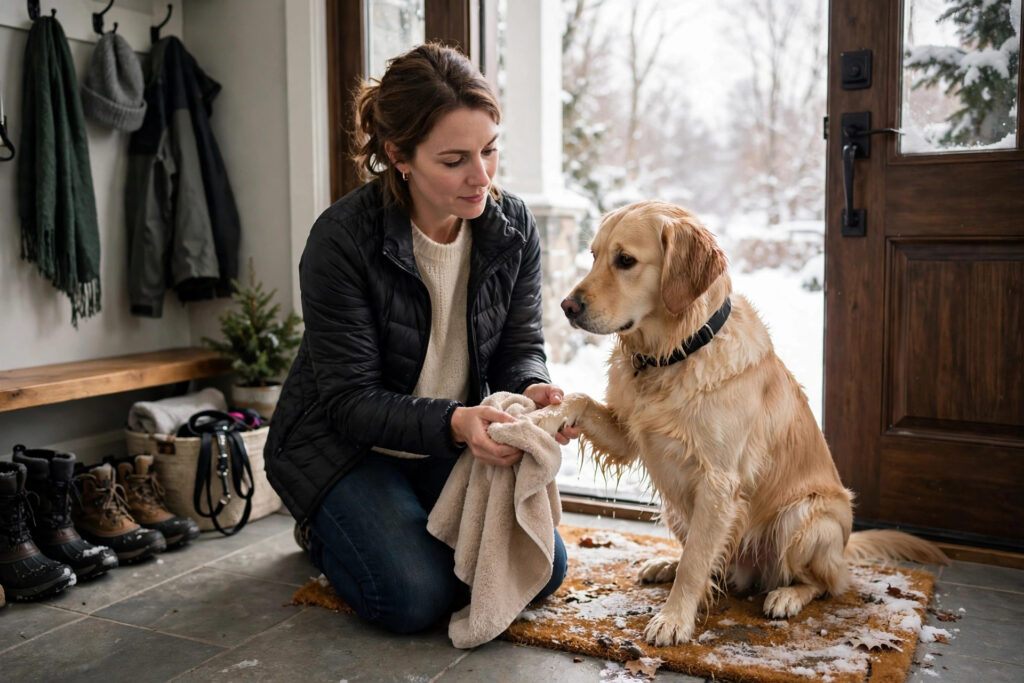
Keep a small towel and a bowl of lukewarm water by the door all winter. After every walk — every single one, not just the slushy ones — wipe each paw, get between the toes, and run the cloth over the legs and belly if your dog is low to the ground. It takes about a minute.
That one minute removes the salt crystals that would otherwise sit on the skin for hours, and it removes the chemicals before the post-walk groom turns them into a snack. It also doubles as your daily paw inspection, which is how you catch a small crack or a red, irritated spot while it’s still a two-day problem instead of a vet visit. If your dog tracks through a heavily treated area — a parking lot, a downtown block that looks white with salt — a rinse in shallow lukewarm water beats a wipe. Dry the paws well afterward, including between the toes, since trapped moisture in winter-dry skin makes irritation worse, not better.
Paw Balm: What It Does, and When It’s Enough
Paw balm is a wax-based barrier. You rub it into the pads before a walk, and it does two jobs: it keeps melt chemicals and salt from sitting directly on the skin, and it moisturizes pads that winter air and indoor heating are drying out. Some owners also use it after walks on already-dry pads, the way you’d use hand cream.
Balm is enough when the walk is short and the route is lightly treated: a leashed loop around a residential block, a quick out-and-back on plowed sidewalks, a yard break. If your dog’s pads are currently healthy — no cracks, no redness, no licking at them in the evening — balm plus the door-side wipe handles most ordinary winter walks for most dogs.
Where balm stops being enough: it wears off. A long walk grinds it away, deep snow and slush wash it off, and it does nothing at all against sharp ice edges or the cold of a long stand on frozen ground. It also can’t protect skin that’s already cracked — at that point you’re putting a barrier over an open irritation and then walking it through salt anyway.
Boots: When They’re the Right Call
Boots are the only option that fully separates the paw from the street. Reach for them when any of these sound like your winter:
- Heavily salted routes. Downtown sidewalks, apartment complexes, and anywhere the pavement stays white with melt residue all season.
- Already-damaged pads. Cracks, splits, redness between the toes, or a dog who comes home and immediately starts licking his feet.
- Long snow play. Hikes, deep-snow romps, and any outing where ice balls form between the toes and pads stay cold for a long stretch.
- Sensitive dogs. Small dogs, seniors, and dogs with thin pad skin or a history of winter paw flare-ups.
Getting Boots to Actually Work
Most “my dog hates boots” stories are really “we put boots on a dog for the first time at the front door in January” stories. Dogs need practice, indoors, before the boots matter. Put one or two boots on in the living room, let your dog walk around for a few minutes with treats raining down, and take them off while it’s still going well. Repeat over a few days until all four boots are boring. Then do a short outdoor test on an easy surface before you commit to a full winter route.
Fit matters as much as training. A boot that’s too loose rotates and comes off in the first snowbank; too tight and it rubs. Measure the paw’s width while your dog is standing on it — weight-bearing paws spread wider than you’d guess from picking one up. Between outings, check that straps haven’t frayed and soles haven’t worn smooth, because a worn-smooth boot on ice is worse than a bare paw.
The Detail Almost Everyone Misses: Fur Between the Pads
If your dog has medium or long fur, look at the underside of his paws. The tufts of fur growing between the pads are ice-ball magnets: snow packs into them, freezes into hard little marbles, and then every step pulls and hurts. Dogs stop mid-walk to chew at their feet, and owners blame the cold when it’s actually the ice packed between the toes.
Keep that fur trimmed flush with the pads through the winter — blunt-tipped scissors or a quiet trimmer, done carefully, or ask your groomer to add it to every winter appointment. It takes two minutes, it prevents the most common mid-walk paw complaint there is, and it also gives you a clear view of the pad surface when you do your post-walk checks.
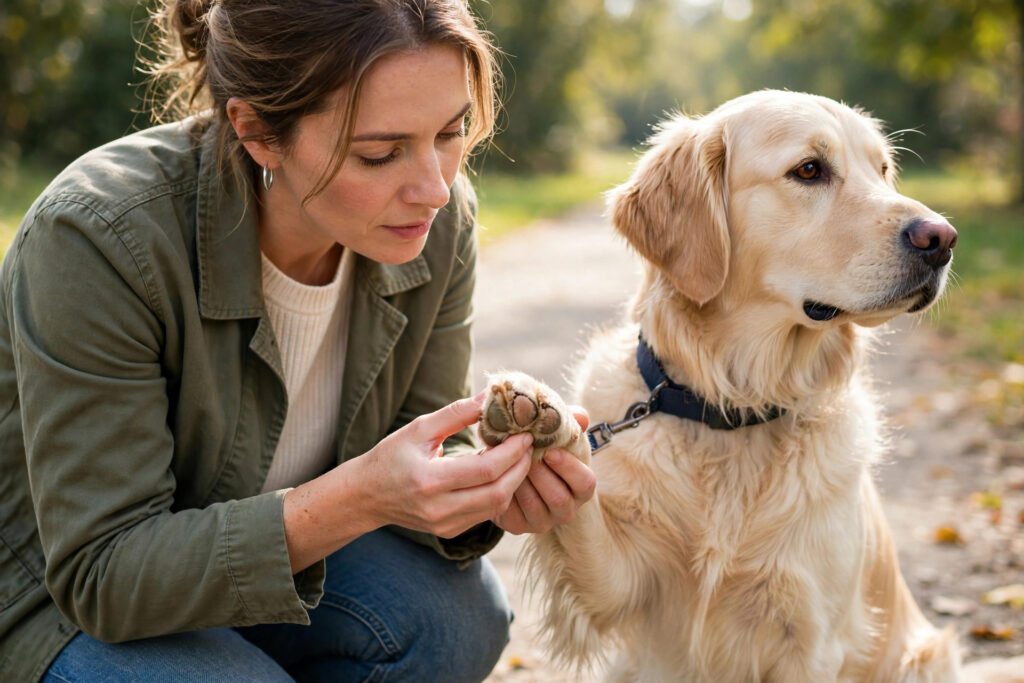
Your After-Walk Pad Check (30 Seconds)
Build this into the wipe routine and you’ll catch nearly every winter paw problem early:
- Look: cracks, splits, redness between the toes, anything stuck between pads.
- Feel: pads that feel rough and dry need balm after walks; a pad that’s warm, swollen, or tender needs watching.
- Watch the dog: licking or chewing at one paw in the evening, limping that wasn’t there on the walk, or reluctance to go out the next morning are all information.
Small dry cracks usually respond to a few days of balm, shorter walks, and boots on salted routes. Bleeding cracks, a limp that lasts past a day, swelling, or a dog who won’t bear weight belong to your vet, not to another product.
So, Which Do You Actually Need?
Just the wipe: yard breaks and very short outings on untreated ground. Balm + wipe: normal neighborhood walks on lightly salted sidewalks, pads in good shape. Boots + wipe: heavy salt, long outings, deep snow, or pads that are already sore. For your own walkway: a magnesium chloride or CMA-based melt, read off the ingredient list — not the paw print on the front of the bag.
FAQ
Is “pet-safe” ice melt actually safe for dogs to walk on?
It’s a marketing claim, not a regulated one, so treat it as a hint rather than a guarantee. Check the active ingredient on the back of the bag. Even the gentlest melts should be wiped off paws after a walk, because no ice melt is meant to be licked off and eaten.
Which ice melt ingredient is worst for dogs?
Calcium chloride is the harshest common one: it heats up as it dissolves, irritates paw skin the most, and is the most likely to upset a dog’s stomach when licked off. Rock salt (sodium chloride) is a step down but still drying and irritating — and it’s the one spread on most public sidewalks.
My dog refuses to walk in boots. What else can I do?
First, retry the slow indoor introduction — most refusals are about surprise, not the boots themselves. If boots are truly a no, lean on the other layers: balm before walks, shorter routes on the least-salted streets you can find, and a thorough wipe or rinse the second you’re home.
How do I stop ice balls forming between my dog’s toes?
Trim the fur between the pads flush with the pad surface, and apply balm before snow walks — it makes snow less likely to pack and stick. For long snow play, boots are the complete fix. If ice balls do form mid-walk, warm them out with your hand rather than pulling, which tears at the fur and skin.
When is a cracked paw pad a vet problem?
See your vet if a crack bleeds, looks deep, or keeps reopening; if there’s swelling or heat in the paw; if your dog limps for more than a day; or if he starts refusing walks. Shallow dry cracks with a dog walking comfortably usually improve with balm, boots on salted routes, and a few easier days.
The Short Version
Winter paw care is mostly route awareness plus one good habit. Read melt bags by their ingredients, pick balm or boots based on how salted and how long your walks really are, keep the between-pad fur trimmed — and wipe the paws at the door, every time. Do that, and the wall of winter products shrinks down to the one or two things your dog genuinely needs.