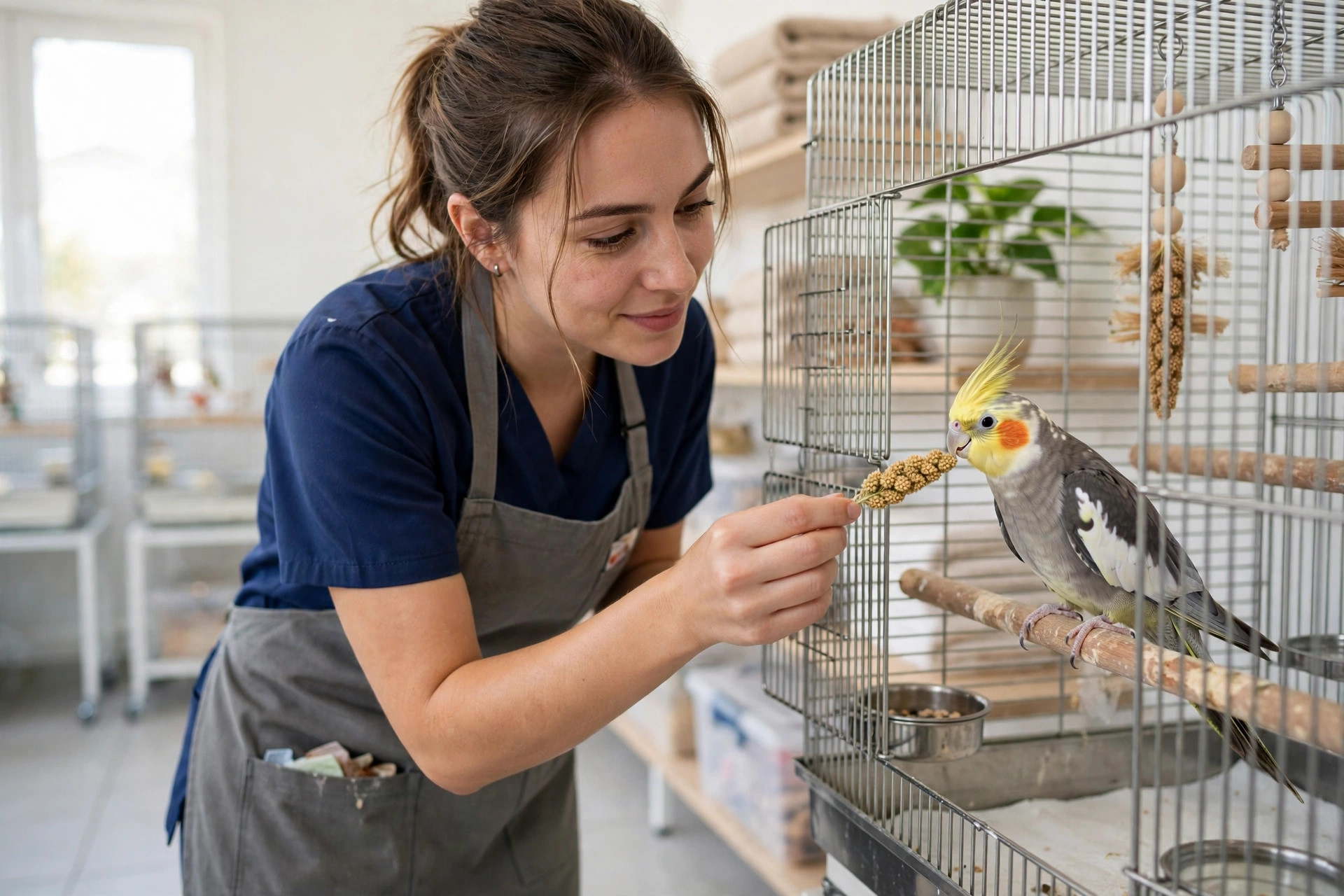
The neighbor offers before you even finish asking. Of course she’ll look after the bird — how hard can it be? Feed it, top up the water, done. For a cat, maybe. For a bird, that plan fails in ways that aren’t obvious until you’re three states away reading a text that starts with “don’t panic, but.” Birds are social, routine-bound animals with fast metabolisms and strong opinions. Good holiday care for a parrot or budgie is a real arrangement, not a favor with a food scoop. Here’s how to set it up properly — whether you choose a boarding facility, a professional sitter, or that willing neighbor, properly briefed.
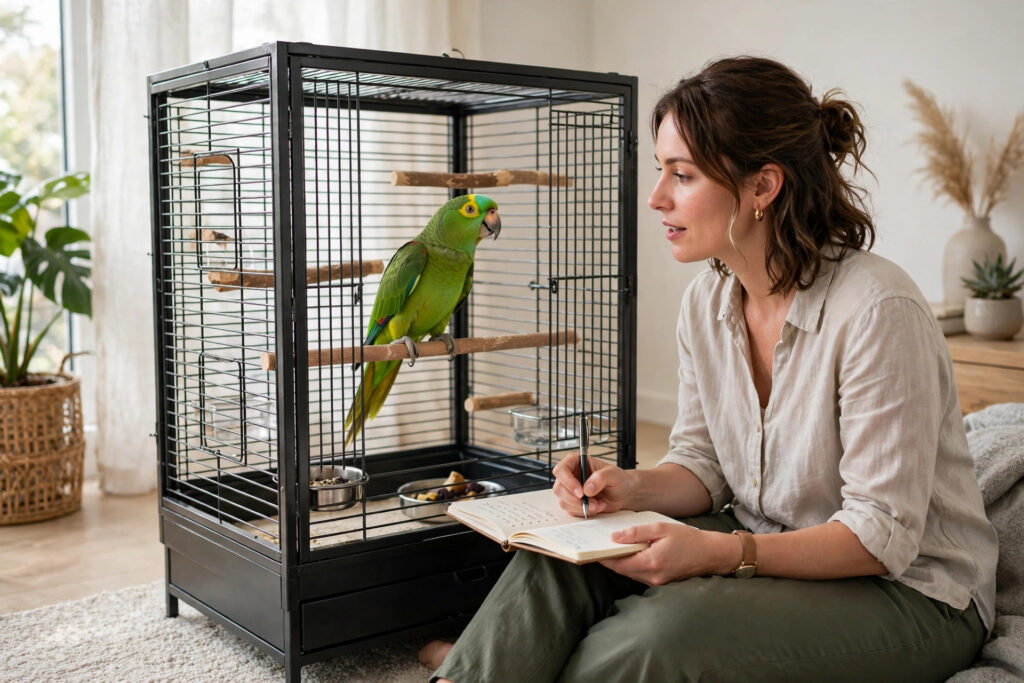
Key Takeaways
- A feeder alone is not care: Birds need daily human contact, fresh food and water, cage cleaning, and social time — an automatic feeder covers none of that.
- Avian experience is the first question: Ask any boarder or sitter about real bird experience, not general pet experience.
- House rules save birds: Confirm a strict no-Teflon and no-scented-candle rule wherever your bird stays.
- Disease exposure is real: Ask boarders what other birds will be nearby, what quarantine practice looks like, and whether vet records are required.
- Leave the familiar: The bird’s own food, sleep cover, favorite foraging toys, and a written routine — including lights-out time — travel with the bird.
- Cameras are fine; all-night lights are not: Check-ins shouldn’t wreck the bird’s sleep schedule.
Why a Feeder Alone Isn’t Enough
Let’s retire the most common holiday plan for birds: fill a big feeder, hang an extra water bottle, and go. It fails on four counts. First, food: birds husk seed and drop hulls back into the cup, so a “full” feeder can be a cup of empty shells over starving seed. Fresh food — pellets, vegetables, the bird’s normal diet — needs to be served and the old removed daily, because yesterday’s chop is today’s bacteria farm. Second, water: cups get fouled with food and droppings within a day. Third, the cage itself: paper needs changing, and a week of droppings under a small bird is a hygiene problem, not a cosmetic one.
Fourth, and biggest: birds are flock animals. A parrot alone in a silent house for a week isn’t “resting” — it’s isolated, and isolation is one of the most reliable triggers for screaming, appetite loss, and the first pulled feathers of a plucking habit. Lafeber Pet Birds, written and reviewed by avian veterinarians, treats daily social interaction as a basic care requirement for pet birds, on the same level as food and water. A feeder doesn’t talk back. Your bird needs someone who does — every single day you’re gone.
Boarding vs. Sitter: Which Fits Your Bird?
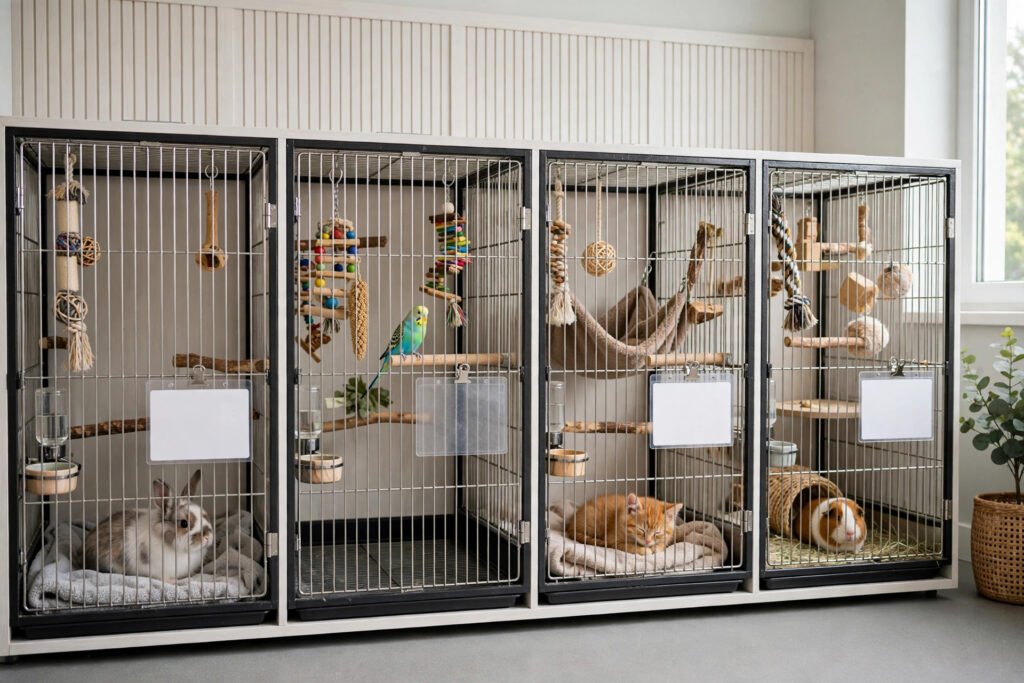
Boarding — at an avian vet’s office, a bird specialty shop, or a dedicated facility — puts your bird around people who handle birds daily, with an avian vet close by or on call. It’s the stronger choice for birds on medication, birds with health histories, and large parrots whose beaks make casual sitters nervous. The trade-offs are a strange environment and proximity to other birds, which is why the quarantine questions below matter so much.
An in-home sitter keeps everything familiar: the bird’s own cage, its own room, its own light and noise patterns. A sitter who visits once or twice daily — or better, stays over — is often the least stressful option for shy, elderly, or easily rattled birds. The trade-off is that the sitter may be one person with no backup, so ask what happens if they get sick mid-week.
The briefed friend or neighbor can work for short trips and easygoing birds, provided you treat it like the real arrangement it is: a trial visit first, written instructions, and the honest questions below. What doesn’t work is the unbriefed version — the wave toward the cage and “there’s seed in the cupboard.”
The Questions to Ask Any Boarder or Sitter
What is your actual experience with birds?
Not pets. Birds. Ask which species they’ve handled, whether they’ve cared for a bird your bird’s size, and whether they can read basic bird body language — a pinned eye and fanned tail mean something different from a happy stretch. A good boarder answers with specifics and stories. A vague “oh, I love animals” is a yellow flag, and for a large parrot, it’s a red one.
What are your house rules on Teflon and scented products?
The answer you need is a firm one: no nonstick cookware used around the bird, no scented candles, no air fresheners, no aerosol sprays. Fumes from overheated nonstick coatings are lethal to birds, and scented candles and plug-ins are respiratory hazards. A boarder who already knows this — and states it before you ask — is a boarder who knows birds. If your bird boards at a facility, ask where cages sit relative to any kitchen or cleaning supplies.
What other birds will be near mine, and what’s your quarantine practice?
This is the question casual arrangements skip and serious ones welcome. Boarding puts your bird in airspace with strangers’ birds, and several serious avian diseases spread through feather dust and dried droppings. Ask: Do you require vet records or recent health checks from boarders? Are new or sick birds separated? How are cages and dishes cleaned between birds? A facility with a real quarantine routine will describe it proudly. One that looks puzzled is telling you something.
Which avian vet would you use in an emergency — and will you call mine?
Get the name of the avian vet they’d take your bird to, confirm that vet sees birds (not just “exotics”), and leave your own vet’s number with written authorization for emergency care and a payment plan for it. Birds hide illness and crash fast; the middle of your vacation is the wrong time for anyone to be Googling “bird vet near me.” The ASPCA’s pet care resources are a useful baseline for general emergency planning, but for birds, the answer has to be an avian vet specifically.
What does a normal day look like?
Ask about out-of-cage time or, at minimum, social time at the cage; lights-out and wake-up times; feeding routine; and how much human contact is built into the day. You’re comparing their normal day against your bird’s normal day. The closer the match, the calmer the bird.
What to Leave With Your Bird
Whether your bird boards across town or stays home with a sitter, pack the same kit.
- Its familiar food — the exact pellets and seed mix it eats now, in a sealed container, with portions written down. A holiday is not the time for a diet change, and a bird that refuses unfamiliar food can lose dangerous weight in days.
- Its sleep cover — the actual cover from home, smelling like home, so bedtime looks and feels the same.
- Favorite foraging toys — two or three known favorites, plus one new shredder for mid-week. Familiar toys are comfort objects; pack them like you’d pack a kid’s stuffed animal. Our roundup of DIY foraging toys has cheap options you can make fresh for the sitter to deploy.
- A written routine — lights-out time, wake time, feeding times and amounts, favorite foods, the words and whistles your bird knows, its quirks (afraid of hats, loses its mind at the vacuum), and what normal droppings and behavior look like for this bird. Include your vet’s number, the emergency vet’s number, and yours.
- A week’s buffer of everything — food, paper, and any medication, plus a few extra days. Flights get cancelled; so do drives home.
Do a Trial Run Before the Real Trip
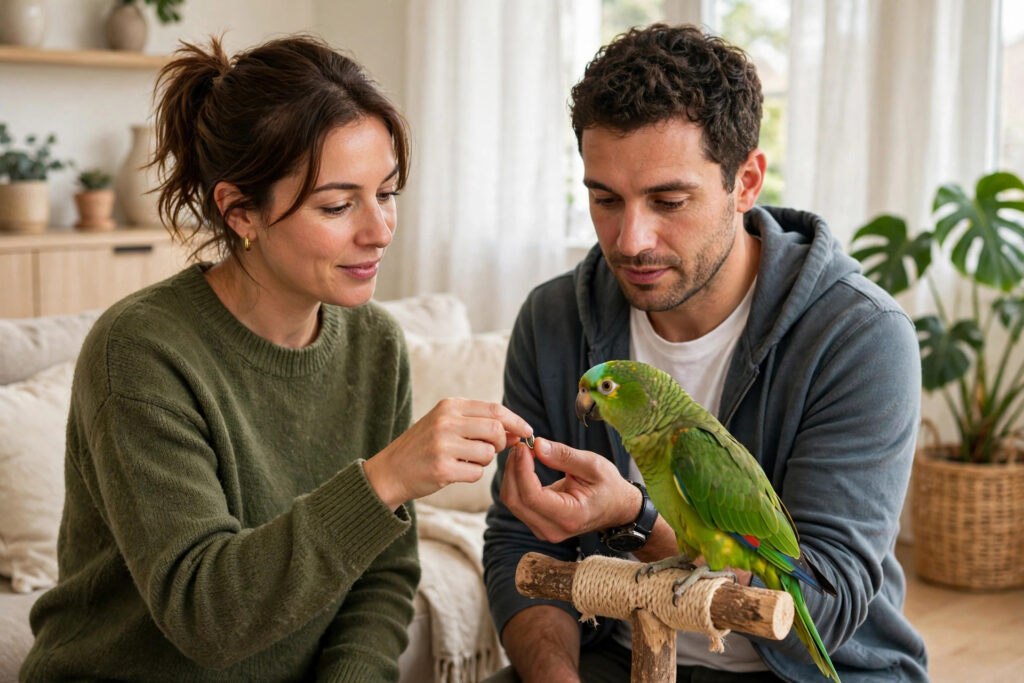
Whatever arrangement you choose, rehearse it. A sitter should visit while you’re home at least once — meet the bird, watch you handle it, practice the feeding routine, and learn where everything lives. If your bird boards at a facility, a short trial stay of one night before a long trip tells you how the bird eats, sleeps, and behaves there, and it tells the staff who your bird is before the stakes are real. Trial runs feel like overkill right up until the first time one catches a problem — a bird who won’t eat away from home, a sitter who’s quietly terrified of the beak — while there’s still time to fix it.
Cameras, Check-Ins, and the Sleep Rule
A pet camera is a genuinely good idea. Watching your cockatiel demolish a foraging toy from a hotel room is one of modern pet ownership’s pure pleasures, and two-way talk lets some birds hear your voice — though test that before the trip, since a few birds find a disembodied owner more upsetting than comforting. Schedule check-in messages with your sitter at set times, and ask for one photo a day. That’s the healthy version.
The unhealthy version is the camera setup that keeps a light on so you can peek at 1 a.m. Birds need a solid block of darkness — most species do best with ten to twelve hours of sleep in a dark, quiet cage — and a light burning all night for the camera’s benefit quietly wrecks that schedule. A sleep-deprived bird is a cranky, hormonal, sometimes bitey bird, and it may come home with habits you then have to undo. If you want night visibility, use the camera’s infrared night view and leave the lights off. Check the bird all you like. Just let it sleep in the dark like it does when you’re home.
Frequently Asked Questions
How long can I leave my bird with a sitter?
With daily visits or live-in care from someone competent, a week or two is fine for most healthy birds. Longer absences call for boarding with real avian staff or a highly experienced sitter, more check-ins, and a mid-stay vet contact plan. The bird’s health and temperament matter more than a fixed number of days.
How much does bird boarding cost?
Rates vary widely by region and by what’s included — a vet clinic’s medical boarding, a bird shop’s boarding room, and a sitter’s daily visit are three different products. Get the rate in writing, ask what it covers (food, out-of-cage time, medication), and budget for the option with real avian experience rather than the cheapest line on the list.
Should my bird board in its own cage or the facility’s?
Its own cage, if the facility allows it — familiar bars, perches, and toys lower stress measurably. If the facility uses its own sanitized cages (a legitimate disease-control choice), bring your bird’s favorite perch, toys, and sleep cover to furnish it with familiar things.
What if my bird needs medication while I’m away?
Say so up front, and lean toward vet-clinic boarding or a sitter with proven bird-handling skills — giving oral medication to a parrot is a two-handed skill, not a line in a note. Leave medication with doses written plainly, demonstrate the technique before you go, and make sure your vet knows who may call with questions.
Can a friend just come by once a day for a budgie?
For a short trip, a well-briefed friend visiting daily — fresh food and water, paper change, a real conversation and some out-of-cage or at-cage social time — can be adequate for a healthy budgie. The briefing is the difference: written routine, the no-Teflon rule if the bird leaves your home, vet numbers, and a trial visit first. What a budgie can’t do is a week alone with a full feeder.
The Bottom Line
Choose the arrangement that keeps three things constant for your bird: competent human company every day, the food and routine it already knows, and a full night’s sleep in the dark. Ask the experience, house-rule, quarantine, and emergency-vet questions before you book anyone, pack the familiar food, cover, and toys, and write the routine down like the sitter has never met your bird — because the routine is the care. Do that, and you can enjoy your holiday while your bird enjoys something close to an ordinary week.