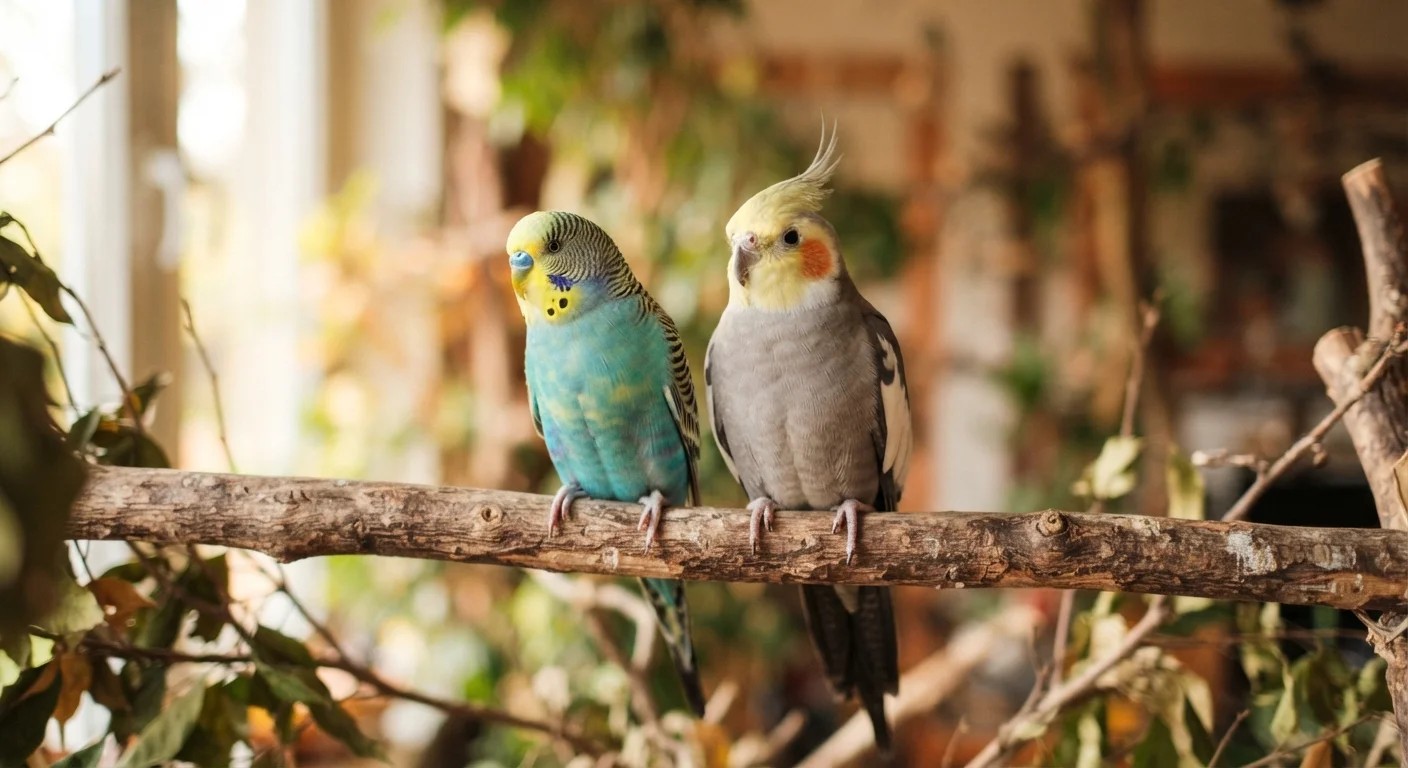
You’re stuck on the same two names everyone lands on: budgie or cockatiel. Both are small Australian parrots and both can be wonderful. But they don’t sound the same, live the same, or ask the same things from you.
Short version: for most beginners, a budgie is the easier first step — smaller, cheaper to set up, less dusty, and its chatter usually stays at a volume apartment walls can handle. A cockatiel is the better pick if you want a calmer bird that hangs out with you — on your hand, whistling from the doorway, leaning in for a head scratch — and you have the space, time, and dust tolerance for it.
Neither is a “starter pet” you park in a corner. Both are social, smart parrots that get bored and lonely when life gets dull. Choose the bird whose noise, mess, and routine you’d still enjoy three years from now.
Key Takeaways
- Budgies are smaller, busier, and usually quieter overall — a safer fit for apartments and tight spaces.
- Cockatiels are generally calmer and more hands-on, but dustier, with a bigger cage and bigger attention needs.
- Budgies tend to have the edge for talking; cockatiels shine at whistling tunes.
- Both can live well over a decade with good care, and cockatiels often live longer.
- The purchase price is the small part; cages, food, and avian vet care are the real cost.
- Pick based on your home, schedule, and noise tolerance — not on hope that a bird will talk.
Budgie vs. Cockatiel at a Glance
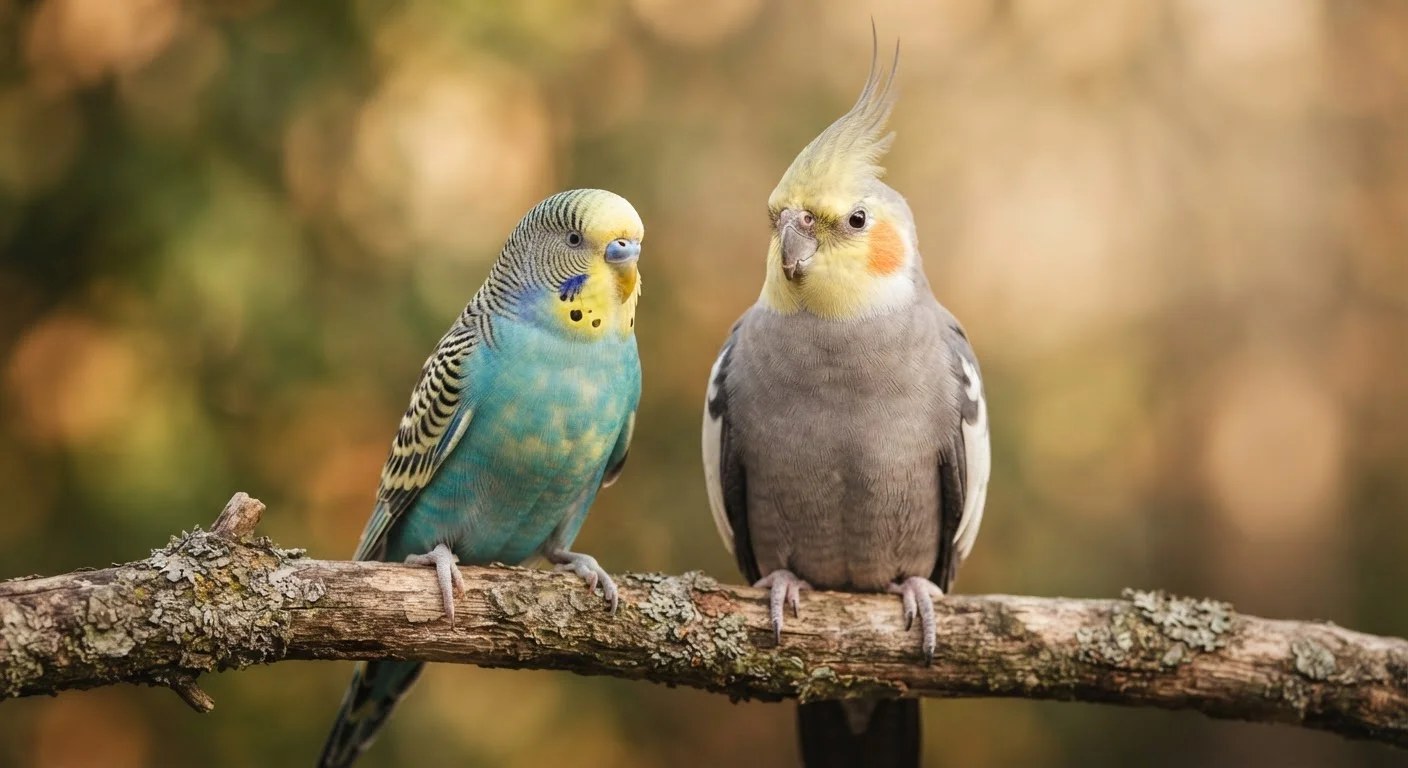
Numbers won’t decide for you, but they clear away fuzzy thinking. Where a figure varies by bird or where you live, it’s worded that way on purpose — be wary of guides promising an exact lifespan or price.
| Feature | Budgie | Cockatiel |
|---|---|---|
| Size | About 7 inches long, head to tail | About 12–13 inches long, much of it tail |
| Lifespan | Often around 10–12 years with good care, sometimes longer; many live shorter lives when care is poor | Commonly into the late teens or beyond with good care, some into their twenties |
| Noise | Frequent cheerful chattering, usually at lower volume | Longer quiet stretches, then whistles and contact calls that carry further |
| Talking / whistling | One of the better small-parrot talkers; small, fast voice | Better known for whistling tunes; some learn a few words |
| Handling | Can be hand-tamed, but many stay a bit flighty and prefer activity to sitting still | Often more willing to sit with you and enjoy gentle head scratches |
| Dust and mess | Seed hulls and small droppings; relatively little feather dust | Noticeable powdery feather dust, plus larger droppings |
| Cage | Wide cage, bar spacing about 1/2 inch or less; wider beats taller | Substantially larger cage, bar spacing roughly 1/2 to 5/8 inch |
| Cost | Usually lower purchase and setup cost, because everything is smaller | Usually higher purchase price; larger cage and bigger toys cost more over time |
| Daily time needs | Daily interaction and out-of-cage time; a pair needs less direct company but the same care | Daily interaction and out-of-cage time, often with more direct one-on-one time expected |
| Best for | Smaller homes, lower budgets, people who love watching an active bird | People who want a steadier companion and have room for it |
More comparisons are in our Bird Species Guides.
Personality: Busy Friend vs. Steady Companion
A budgie’s day has very little sitting still in it. They hop, flutter, chatter to their toys, shred something, argue cheerfully with their reflection, then do it all again. Watching a budgie — or better, a bonded pair — is genuinely entertaining without you being part of the show every minute. Many will step up, fly over to check what you’re eating, and learn tricks in short sessions, but most would rather keep moving than settle on your shoulder for twenty minutes.
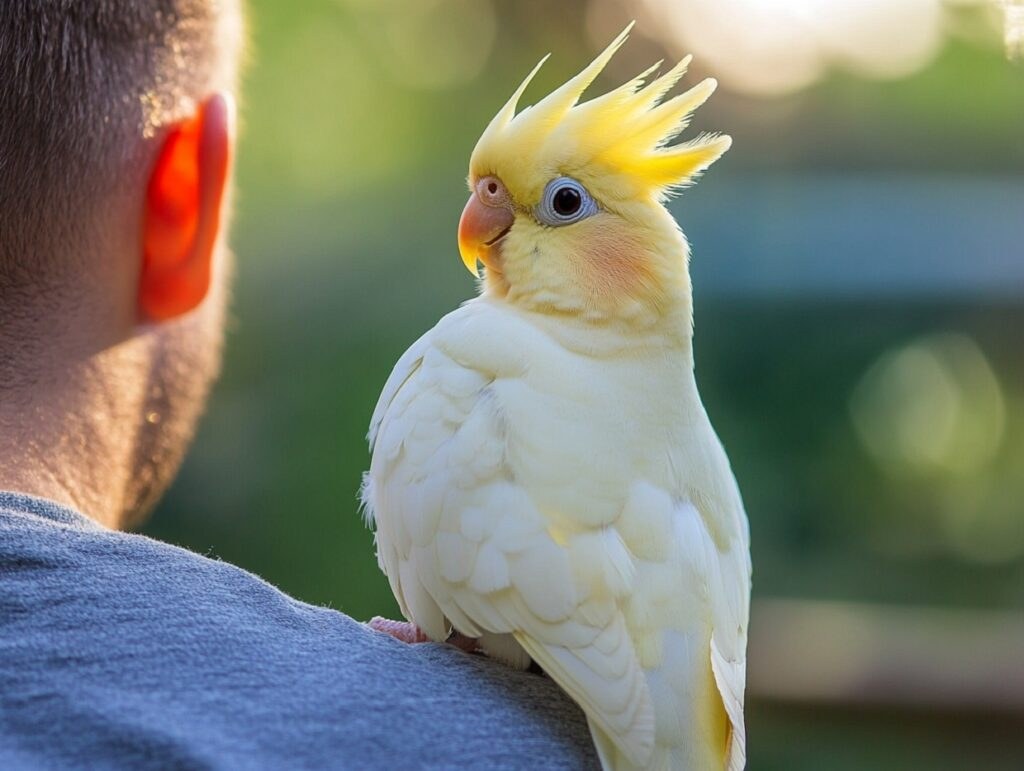
Cockatiels run slower. They tend to pick a favorite person, follow the action from a perch, and ask — sometimes loudly — to be included. Their crest does a lot of talking: up tall when something’s interesting, relaxed when content, flattened when annoyed. Beginners often find that easier to read than a budgie’s faster signals. Lafeber’s cockatiel profile describes them as social birds that thrive on interaction, whether that’s gentle petting, being talked to, or simply sharing the room — which matches what most owners report.
How a bird was raised matters as much as species. A well-socialized bird from a responsible breeder, or an adopted bird with a known history, usually settles in faster. If you can, spend time with actual birds before deciding.
Noise, Talking, and Whistling
Separate how much a bird vocalizes from how far the sound travels.
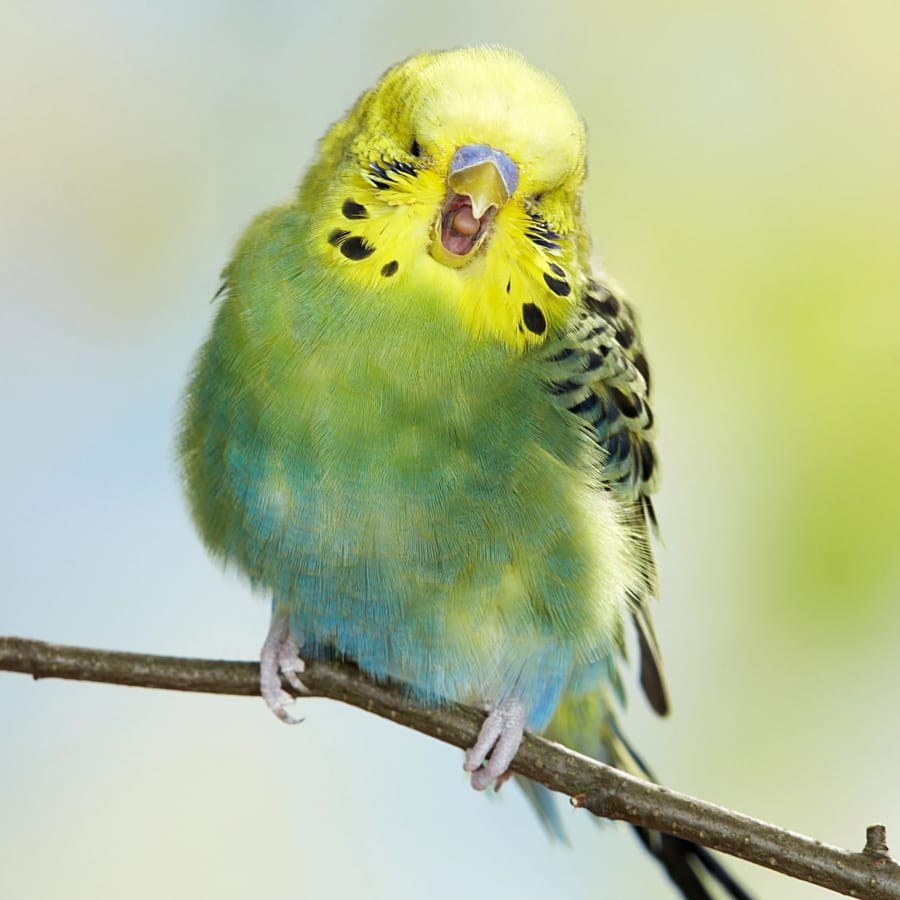
Budgies vocalize a lot — a near-constant stream of warbling during active hours, like a tiny radio in the next room. Most owners find it cheerful; some find it relentless. The saving grace is volume: it usually doesn’t punch through walls.
Cockatiels are quieter for longer stretches, then let loose. A contact call — “I’m here, where are you?” — is a clear, carrying whistle built to reach flockmates across open country, and it reaches your neighbors just fine. A male performing a learned tune at sunrise is charming at noon; at 6 a.m. on a Sunday, less so.
What about talking?
If talking is your main dream, the budgie is the stronger bet, especially a male. Lafeber’s budgie profile notes that budgies can rival larger parrots for talking ability and build surprisingly large vocabularies — though the voice is small and quick, almost like a sped-up recording, so you may not realize at first that your bird is saying words. Cockatiels lean the other way: whistling is their party trick, and many learn whole tunes, the microwave beep, and your ringtone. Some pick up a few words in a softer voice.
In both species, males tend to be more vocal, individuals vary enormously, and no honest seller guarantees a talking bird. Buy the bird you’d enjoy if it never said a syllable.
Apartment Living: Where This Decision Is Often Made
If you rent, this section may matter most. Budgies are usually the safer apartment bird — not because they’re quiet, they aren’t, but because their sound tends to stay inside your unit, and their cage fits on a stand without rearranging your furniture.
Cockatiels can work in apartments, but think through three extras: contact calls that carry, a cage footprint that claims a real chunk of a small living room, and feather dust. Cockatiels produce powder down, a fine white dust that settles on shelves and electronics and means more wiping and vacuuming — and a harder think if anyone at home has asthma or allergies. Budgies produce far less, though no bird is truly dust-free.
Thin walls, a night-shift sleeper next door, or a twitchy landlord? A budgie lowers your risk. Or wait until your housing fits the bird you actually want, instead of rehoming a healthy cockatiel for doing normal cockatiel things.
Handling, Kids, and First-Time Owners
Handling
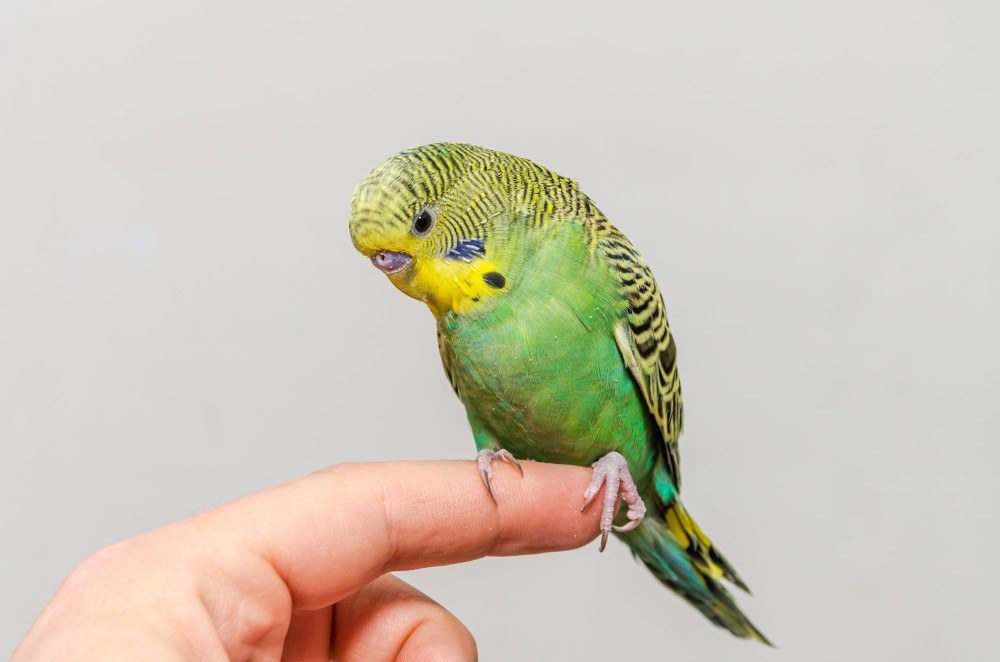
Both species can be hand-tamed, and patience matters more than species. Short, daily, food-rewarded sessions beat one long weekend marathon. The difference shows up after taming: cockatiels are more likely to stay handled — sitting on your hand, accepting a head scratch, dozing near you. Budgies treat you more as a fun landing pad between adventures. “Bird on my shoulder while I read” is a cockatiel picture; “bird zooming around the play stand” is a budgie.
Kids
Either species can work in a family if an adult is the real caregiver and handling is supervised. Cockatiels are often steadier around children: bigger, less fragile in the hand, and easier for a kid to read from that crest. Budgies are small and quick, can be nippy when grabbed, and can be injured by an enthusiastic squeeze. Neither bird should be a child’s sole responsibility, bought to “teach responsibility” and neglected when the novelty fades.
First-time owners
Both birds forgive beginner mistakes better than a large parrot, but the budgie forgives a little more. Its tasks are smaller, its cage is cheaper to get right first time, and a pair can keep each other company if your schedule turns out busier than expected. The cockatiel asks you to get more right at once — space, dust, social time, and more years to plan around. Plenty of first-timers do it beautifully; just go in with eyes open.
Space and Cage Needs
Forget the tiny “starter kit” cages. A cage is where your bird sleeps, eats, and spends every hour you’re out. Buy the largest that fits your space and budget, prioritizing width over height — birds fly across, not up like helicopters.
For a budgie, look for a wide cage with bar spacing of about 1/2 inch or less and enough horizontal room to flutter between perches; a pair needs more width. For a cockatiel, scale everything up: a larger cage, bar spacing around 1/2 to 5/8 inch, and room to turn, stretch both wings, and move that long tail without damaging feathers. Measure your spot first — then read our guide to what size cage does a cockatiel need.
Either way, budget beyond the cage: natural perches, toys your bird may destroy, dishes washed daily, a play stand, and a travel carrier for vet visits.
A Day in the Life
A day with a budgie
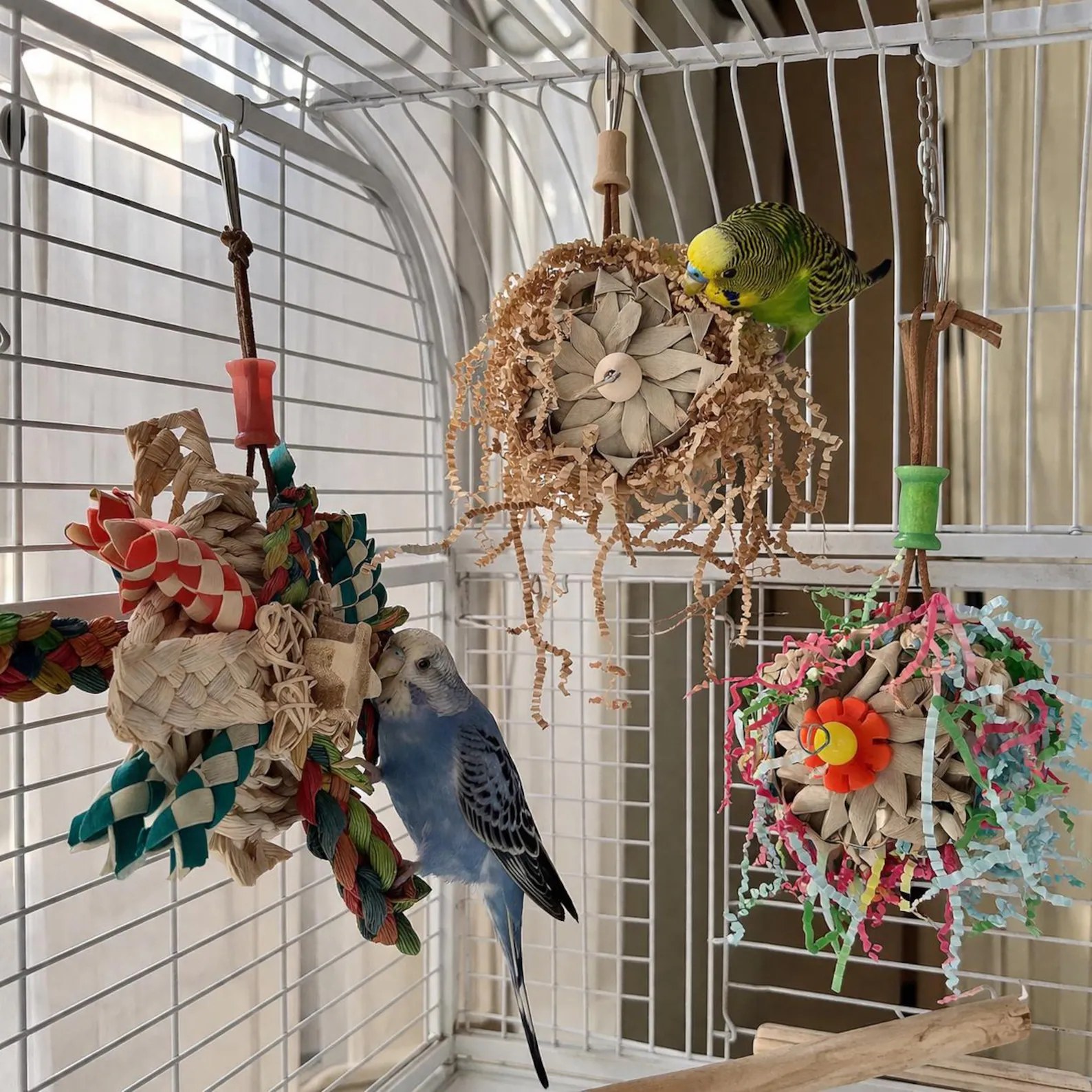
Your alarm goes off, and so does the budgie. Uncover the cage and you get instant chatter while you swap in fresh water and the day’s food — pellets, chopped vegetables, and a measured amount of seed, not a bottomless bowl. Mornings are busy: laps of the bird-proofed room, a bath, a five-minute training session paid in millet. Midday, a pair entertains itself with shredding toys. Evening brings another out-of-cage stretch, then lights down for roughly ten to twelve hours of sleep.
A day with a cockatiel
The cockatiel’s morning starts with a contact call, just to confirm the flock — that’s you — survived the night. Breakfast is the same routine at a bigger scale. Then comes the social block this species runs on: out of the cage, whistling practice, a head scratch, maybe a gentle misting, which helps keep dust down. You’ll wipe a fine white film off nearby surfaces more often than expected. Evening brings another vocal patch around dusk before the bird settles for the night. Skip the social block a few days running and you’ll hear about it.
Diet and Everyday Care
The routine is the same shape for both: fresh water daily, a pellet-based diet with vegetables every day and seed as a smaller part of the meal, dishes washed, liner changed, toys rotated. PetMD’s parakeet care sheet makes the point vets repeat constantly: an all-seed diet is one of the most common, most preventable problems in small pet birds.
Both species need an avian vet — ideally found before you need one urgently. Birds hide sickness well, so a bird that’s fluffed up, unusually quiet, or off its food isn’t a “wait a week” situation; call promptly. Fumes from overheated nonstick cookware, scented candles, and aerosols can be dangerous to birds. This is general information, not veterinary advice.
Cost: The Bird Is the Cheap Part
Budgies usually cost less to buy — sometimes strikingly less — and everything after is smaller and cheaper too. Cockatiels cost more up front and keep costing a bit more: bigger cage, more food, larger toys. Exact prices vary widely by region and breeder, so treat any precise figure online with suspicion.
The expense beginners underestimate most is veterinary care, especially emergencies, which cost the same order of magnitude whether the patient weighs one ounce or three. Set aside a vet fund, and price a proper cage before you price the bird, so no bird starts life in a cage you plan to replace “later.” Later has a way of not arriving.
Common Mistakes to Avoid
- Buying the tiny cage. The most common beginner mistake. Measure, buy wide, skip the “starter” cage.
- Feeding only seed. It’s what the bird begs for, but over time it’s a fast track to nutritional problems.
- Leaving a single bird alone all day. If your bird will spend long days solo, plan for a same-species companion — or reconsider your timing.
- Choosing for talking. Some budgies talk up a storm; some never do. If a silent bird would disappoint you, you’re not ready for either.
- Ignoring the dust question. With asthma or allergies at home, discuss a cockatiel’s powder down before the bird arrives, not after.
- Skipping the avian vet until an emergency. Find one early and do a wellness visit, so you have a baseline when it matters.
- Housing a budgie and a cockatiel together. Different sizes and strengths. Separate cages, always, even if they seem friendly when out together.
Watch: Budgie vs. Cockatiel Compared
Hear the difference before you commit:
So, Which One Fits Your Life?
Choose a budgie if:
- Space and budget are limited, but you still have daily time for interaction, training, and out-of-cage flight.
- You live in an apartment and need sound that stays closer to home.
- You’d enjoy an active, playful bird — or a lively pair — as much for watching as for handling.
- A small bird that might learn to talk delights you, and you’d be fine if it never did.
Choose a cockatiel if:
- You want a calmer bird that’s more likely to sit with you and enjoy gentle handling.
- You have room for a wide cage and you’re at peace with feather dust and a bigger cleaning routine.
- Whistling and companionship appeal to you more than talking.
- Your schedule allows longer daily social time, with someone home much of the day.
Still torn? Picture your actual life — walls, work hours, tolerance for dust — and each bird inside it for the next ten to twenty years. One picture usually feels right in a way no table can argue with.
Frequently Asked Questions
Which is better for a beginner, a budgie or a cockatiel?
For most beginners, the budgie is the gentler learning curve: smaller cage, smaller costs, less dust, and a pair can keep each other company. A cockatiel is still beginner-friendly, but it’s the bigger commitment.
Which is better for a child?
Either can work if an adult is the true caregiver and handling is supervised. Cockatiels are often steadier and easier for children to read; budgies are smaller, quicker, and more easily injured.
Can I keep a budgie and a cockatiel in the same cage?
No. They differ in size, strength, and needs, and housing them together risks injury for the smaller bird. They can live in the same home in separate cages, with supervised out-of-cage time only if they get along.
Is one bird or two better for a beginner?
One bird usually bonds more closely with you but needs much more of your time. Two of the same species give each other companionship, but cost more and may tame more slowly. Decide based on how many hours a day the bird would otherwise be alone.
Which bird is quieter for an apartment?
The budgie, usually — not because it vocalizes less, but because its chatter is lower in volume and carries less through walls. A cockatiel’s calls are clearer and louder. In a well-insulated apartment a cockatiel can still work; in a thin-walled one, the budgie is the safer neighbor.