

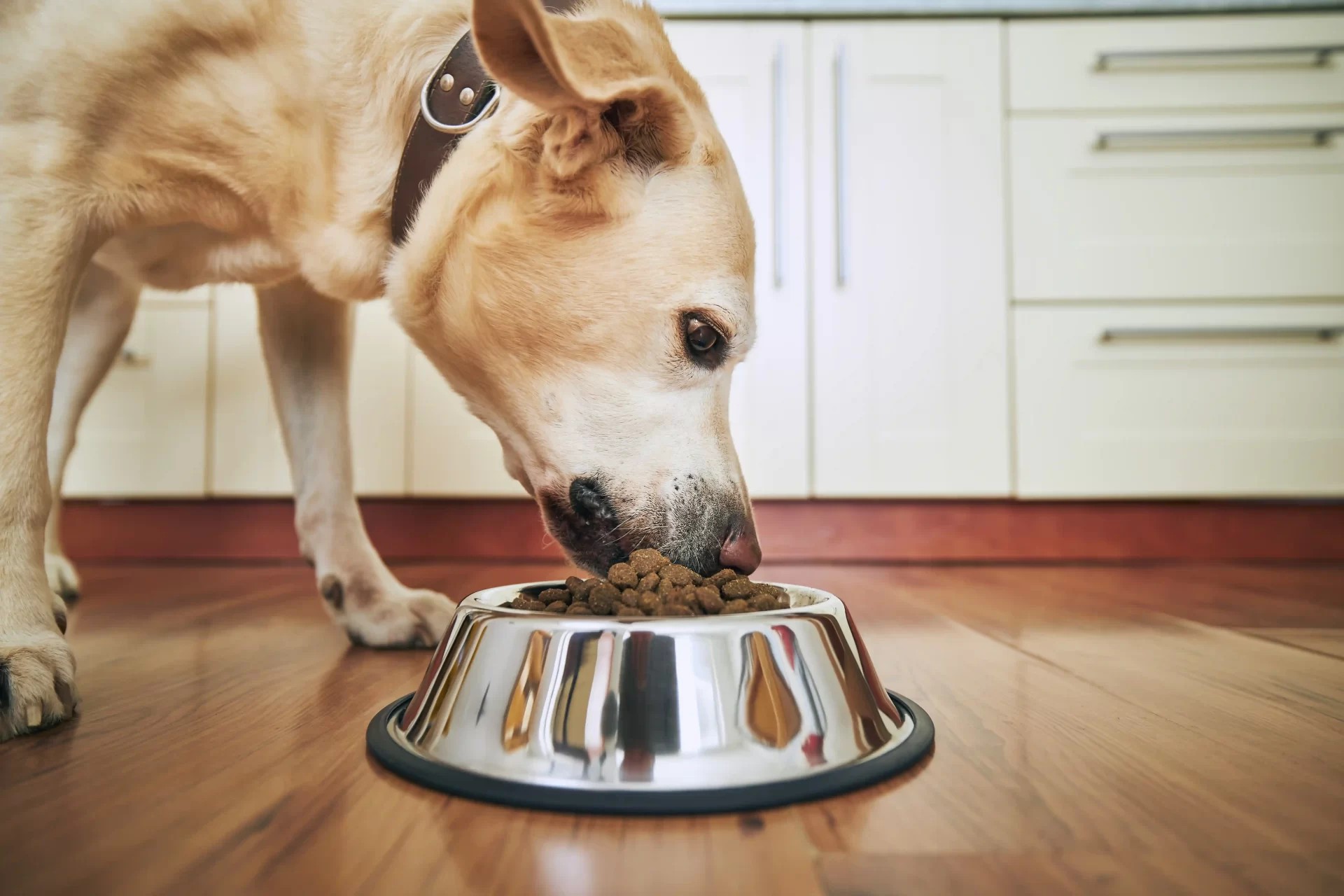
There’s no single cup amount that fits every dog — if there were, this would be a very short article. But you can get close in about two minutes. Start with your dog’s weight and life stage, use the chart below as a starting range for a typical dry food, split the day’s total into two meals for most adults, and then adjust in small steps based on your dog’s body condition over the next two to three weeks. That process — measure, watch, nudge — matters far more than any exact number printed on a bag.
Feeding too much is embarrassingly easy. Treats, chews, table scraps, the toddler’s dropped crackers, and a heaped scoop instead of a level one all add up, and extra weight quietly strains joints, breathing, and long-term health. Feeding too little is less common, but it can leave puppies short of what they need to grow. This guide gives you a practical way to find your dog’s right amount — and keep it right as age and waistlines change.
Key Takeaways
- Start with weight and life stage, then let body condition be the judge: you should feel ribs easily under a thin layer of fat and see a waist from above.
- Calories, not cups, are the real unit — foods range widely in calories per cup, so always check the number printed on your bag.
- Most adult dogs do best on two measured meals a day, with treats kept to about 10 percent of daily calories.
- Adjust by roughly 10 percent at a time and wait two to three weeks before judging. Small, steady tweaks beat big swings.
Start With the Three Things That Decide Portions
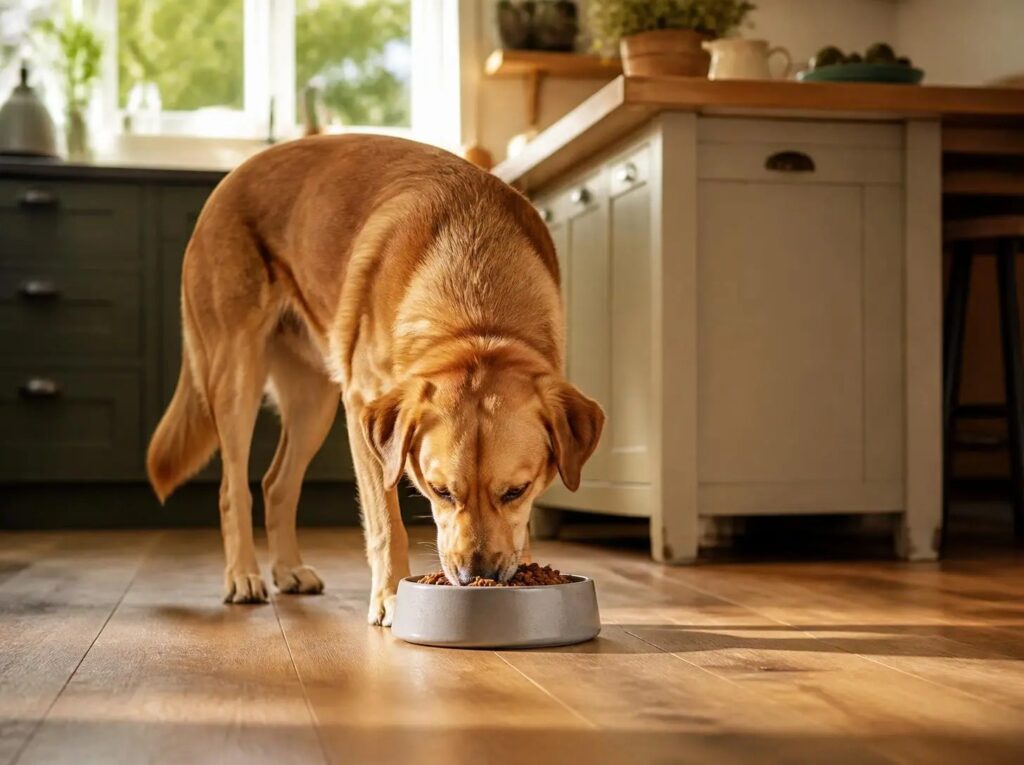
1. Weight and body condition
Weight is your starting point, but body condition is your reality check. Here’s the hands-on test vets use: run your fingers along your dog’s ribs with light pressure. You should feel each rib easily under a thin layer of fat, the way you feel the bones on the back of your hand. Look down from above and you should see a waist behind the ribs. Look from the side and you should see the belly tuck up toward the hind legs. If you have to press hard to find ribs, your dog likely needs a little less. If ribs, hips, and spine are sharp and obvious, talk to your veterinarian and increase food gradually — unless there’s a medical reason behind the weight loss, which is exactly why the vet comes first.
This hands-on approach isn’t folk wisdom; it’s how veterinary nutrition actually works. The PetMD guide to feeding your dog the right amount makes the same point: start with the chart on your food’s packaging, then fine-tune using body condition scoring and your vet’s advice, because an individual dog’s real needs can differ a lot from the average. Two dogs can weigh exactly the same and honestly need different amounts. The ribs don’t lie, even when the chart is a little off.
2. Age and life stage
Puppies need more food per pound and more meals per day, because they’re building bone, muscle, and brain all at once. Adults need steady maintenance — enough to hold a healthy weight, no more. Seniors often move less and need fewer calories, though some older dogs go the other way and struggle to keep weight on. Pregnant and nursing dogs are in a different league entirely, with much higher needs, and they should be on a feeding plan your veterinarian has weighed in on.
3. Activity and neuter status
A dog who hikes, swims, and trains daily burns dramatically more than a dog whose exercise is two gentle walks and a supervisory role at the window. Spayed and neutered dogs also tend to need slightly fewer calories than intact dogs — a change plenty of owners miss, because the bowl stays the same while the metabolism quietly shifts after surgery. And be honest about activity. A big Saturday hike doesn’t turn a mostly indoor dog into an athlete for the rest of the week, any more than one salad turns the rest of us into marathoners.
The American Kennel Club’s guide to how much to feed your dog adds a factor most people never consider: environment. Dogs who spend a lot of time outside in serious cold burn extra calories just staying warm — sometimes a lot extra. If your dog’s lifestyle or season changes, their portion probably should too.
A Simple Feeding Chart by Weight
The ranges below assume a typical dry food with roughly 350 to 400 calories per cup, fed to a moderately active adult dog. Your food’s calories per cup are printed on the bag — look for “kcal/cup” in the calorie content statement — and they can vary a lot between brands and formulas. Use the chart to start, not to finish.
| Dog’s Weight | Approx. Daily Calories | Approx. Dry Food Per Day | Meals Per Day |
|---|---|---|---|
| 5 lb (2.3 kg) | 200 kcal | 1/2 cup | 2 |
| 10 lb (4.5 kg) | 300 kcal | 3/4 to 1 cup | 2 |
| 20 lb (9 kg) | 500 kcal | 1 1/3 to 1 1/2 cups | 2 |
| 30 lb (13.6 kg) | 650 kcal | 1 3/4 to 2 cups | 2 |
| 50 lb (22.7 kg) | 900 kcal | 2 1/3 to 2 2/3 cups | 2 |
| 70 lb (31.8 kg) | 1,150 kcal | 3 to 3 1/3 cups | 2 |
| 90 lb (40.8 kg) | 1,400 kcal | 3 2/3 to 4 cups | 2 |
Let’s run a real example, because this is where people get tripped up. Say you have a 30-pound dog and the chart says roughly 650 calories a day. If your bag says 325 kcal per cup, that’s exactly 2 cups a day — one cup per meal, nice and tidy. But switch to a richer food at 450 kcal per cup and the same 2 cups suddenly delivers 900 calories, nearly 40 percent too much. Same scoop, same routine, slow weight gain that seems to come out of nowhere. It didn’t come out of nowhere. It came out of the bag change. Whenever you switch foods, redo this two-minute math.
Feeding wet food, a mix of wet and dry, or a fresh-style diet? Don’t convert by cups. Compare calories. A can of wet food and a cup of kibble are rarely equal, and topping kibble with a generous helping of wet food without trimming the kibble is one of the most common — and most invisible — reasons dogs gain weight. You’ll find more on choosing and combining foods in our dog food and treats guides.
How Much to Feed by Age
Puppies
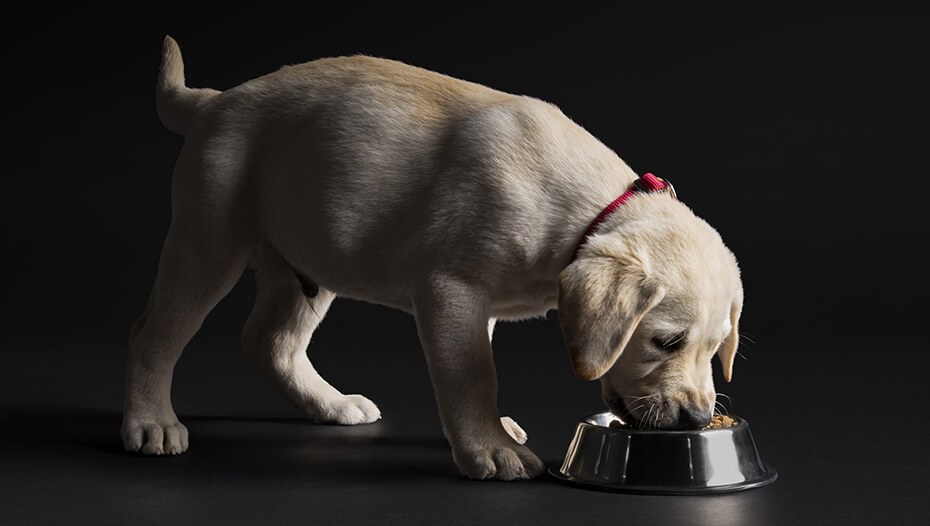
Young puppies usually eat three to four small meals a day, dropping to two meals as they approach adulthood. Small, frequent meals suit small stomachs and fast growth. Large-breed puppies need special care, though: growing too fast can stress developing joints and bones, so use a large-breed puppy food if your veterinarian recommends one, and resist the urge to feed more just because your puppy acts ravenous. Puppies almost always act ravenous. It’s their whole personality for the first year. Judge by growth, body condition, and your vet’s weigh-ins — not by the drama at the bowl.
Adult dogs
Most adults do best on two meals, morning and evening. One meal a day works for some dogs, but two meals make portion control easier, avoid long stretches on an empty stomach (which makes some dogs vomit bile — a miserable 5 a.m. surprise), and slot neatly into training and walk routines. Keep meal times roughly consistent. Dogs are spectacularly good clocks, and yours will remind you anyway.
Senior dogs
Review portions every few months for a senior dog, because needs drift. If activity drops, trim the food by about 10 percent and recheck weight in a few weeks. But if your senior is losing muscle or weight without trying, don’t just add treats and hope. Book a veterinary check. Dental pain, kidney issues, thyroid problems, and other treatable conditions often sit behind that change, and catching them early matters far more than any portion tweak. And if sore joints are part of your senior’s picture, the right rest matters too — see our comparison of orthopedic vs. regular dog beds for what actually helps.
How to Adjust Portions Without Guessing
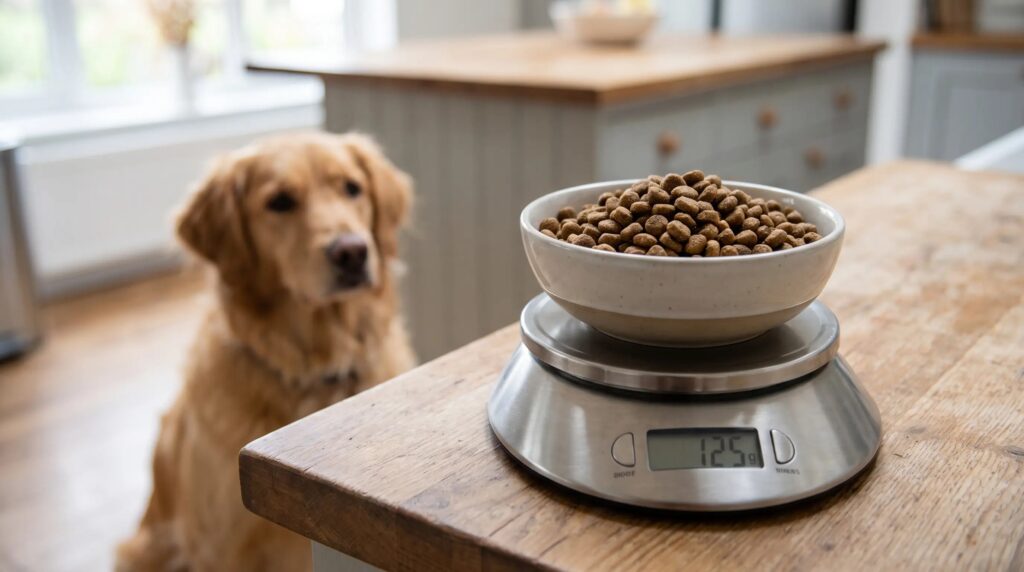
- Weigh the food, or use the same level cup every time. A cheap kitchen scale is the single most accurate upgrade you can make — it kills the heaped-cup problem in seconds. Studies of owners measuring by eye have found errors big enough to explain a lot of “mystery” weight gain.
- Change by small steps. Adjust the daily total by about 10 percent at a time, then wait two to three weeks before you judge. Weight moves slowly; daily opinions about it shouldn’t.
- Weigh your dog regularly. Monthly for adults, more often for puppies and dogs on a weight-loss plan. Small-dog owners can weigh themselves holding the dog, then subtract. Write the numbers down — memory is optimistic, paper isn’t.
- Count treats in the total. Keep treats to no more than about 10 percent of daily calories, and trim meal food slightly on heavy training days. For a 10-pound dog, one big dental chew can be a third of the day’s budget.
- Feed the dog in front of you. In multi-dog homes, feed separately so you know who ate what, the slow eater isn’t robbed, and the fast eater isn’t quietly eating two dinners.
Pro tip: pre-portion the day’s food into a container each morning, treats included. When the container’s empty, that’s it for the day. It sounds almost too simple, but it ends the “did someone already feed him?” problem — and the double breakfast that so many clever dogs have engineered at least once.
Common Feeding Mistakes to Avoid
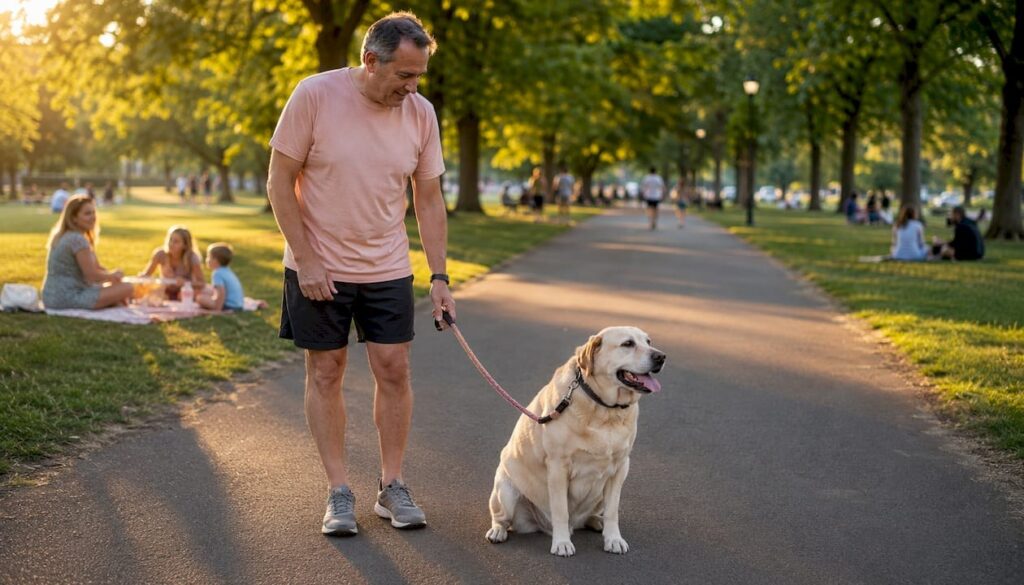
Following the bag blindly. Bag charts are broad ranges, often calculated for active, intact dogs, and they’re designed not to underfeed anyone — which means they overfeed a lot of couch-loving, neutered pets. Treat the bag as a first draft, not a verdict.
Free-feeding. Leaving food down all day makes portions impossible to track and appetite changes impossible to spot — and a lost appetite is often the very first sign of illness. Scheduled meals give you information, not just calories.
The mystery scoop. A coffee mug, a yogurt tub, a “cup” that’s actually 16 ounces. If you don’t know what your scoop holds, you don’t know what you’re feeding. Measure your scoop once against a real measuring cup. Owners are routinely surprised.
Feeding the dog you wish you had. Portioning for the dog’s ideal weight is right; portioning for the active lifestyle you plan to start next month is not. Feed the dog in front of you today, and adjust when life actually changes.
Forgetting the extras. Chews, dental sticks, the bite of your sandwich, the cheese tax your dog collects every time the fridge opens. None of these feel like “feeding,” and all of them count. This is where most well-intentioned feeding plans quietly fall apart.
Unsafe human foods. A few bites here and there can be a huge share of a small dog’s day, and some human foods are genuinely dangerous for dogs — chocolate, grapes and raisins, onions, and anything sweetened with xylitol (also listed as birch sugar). When in doubt, skip it and use a dog treat instead.
Why Extra Weight Matters More Than You Think
It’s tempting to shrug at a pound or two. Don’t. According to VCA Animal Hospitals’ guide to obesity in dogs, dogs count as overweight at just 10 to 20 percent above their ideal weight, and obesity is a chronic inflammatory condition linked to diabetes, orthopedic problems, and a shorter life. Five extra pounds on a 20-pound dog is like 25 on a person — nobody would shrug at that. The good news is that the same small, steady adjustments described above are exactly how safe weight loss works: a measured portion, a specific meal frequency, patience, and rechecks. No crash diets, ever — sudden severe restriction can cause nutrient deficiencies and, especially in small dogs, real harm.
When to Ask Your Veterinarian
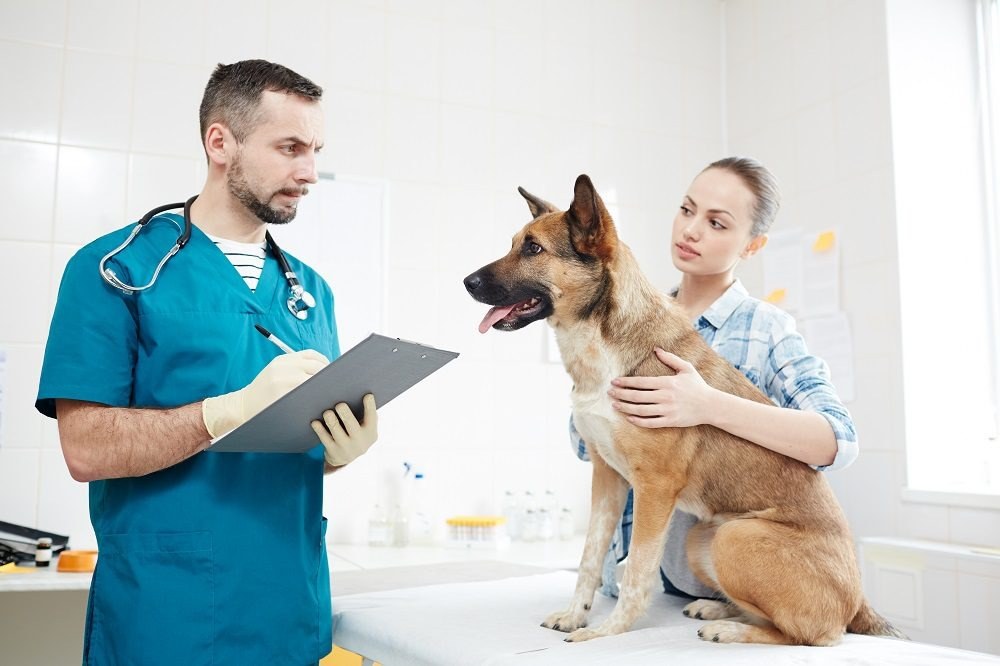
Ask for help if your dog gains or loses weight despite careful portions, is constantly ravenous, has ongoing digestive problems, is a growing large-breed puppy, or has a condition like diabetes, kidney disease, or a food allergy. A veterinarian can calculate a calorie target for your exact dog, check for medical causes of weight change, and recommend a therapeutic diet if one’s needed. Bring the food bag — or a photo of its calorie statement — to the visit. It speeds everything up, and your vet will quietly love you for it.
The Bottom Line
Use weight and age to pick a starting range, feed measured meals twice a day, count the treats like they count (because they do), and let your dog’s ribs and waist tell you whether to nudge the amount up or down. Give each change a few weeks to prove itself. If you stay consistent for a month, you’ll know your dog’s right amount better than any generic chart ever could — and you’ll spot it fast when that amount needs to change.
FAQ
Should I feed my dog once or twice a day?
Twice a day suits most adult dogs. It makes portion control easier, keeps routines predictable, and helps you notice appetite changes early. Puppies need more frequent meals, and some dogs with medical conditions do better on a schedule their veterinarian sets.
How do I know if I am feeding my dog enough?
Check body condition, not just the bowl. You should feel ribs easily without pressing hard, see a waist from above and a tuck from the side, and see steady energy and a healthy coat. Gradual weight loss, a visible spine and hips, or frantic scavenging are all signs to review portions — and, if they persist, your dog’s health.
Do treats really need to count toward daily food?
Yes, really. Treats, chews, and dental sticks contain real calories, and for a small dog, one large chew can equal a meal. Keep treats modest, use part of the daily kibble ration for training when you can, and trim meals slightly on heavy treat days.
My dog always acts hungry. Am I underfeeding?
Probably not — many dogs are opportunistic eaters who would happily accept a second dinner every single day, and some breeds are famously food-obsessed. Judge by weight trend and body condition over a few weeks, not by the performance at the bowl. If your dog is at a healthy weight and still seems desperately hungry all the time, mention it to your vet, since a few medical conditions can drive appetite.
How fast should an overweight dog lose weight?
Slowly and steadily — think gradual change over months, not weeks, with regular weigh-ins to confirm you’re on track. Your veterinarian can set a safe target rate and calorie goal for your dog’s size. If the scale isn’t moving after a month of honest measuring, go back to the vet rather than cutting food harder on your own.
Sources
- How Much Should I Feed My Dog? — American Kennel Club
- How Much Food Should I Feed My Dog? — PetMD
- Obesity in Dogs — VCA Animal Hospitals
Disclaimer: This article is for general information only and is not veterinary advice. Calorie needs vary by individual dog and health condition. Ask your veterinarian for a feeding plan if your dog is underweight, overweight, growing, pregnant, or managing an illness.


Pingback: Orthopedic Dog Bed vs. Regular Dog Bed: Which Does Your Dog Really Need? - Paw Chirp