This guide contains affiliate links. As an Amazon Associate, PawChirp earns from qualifying purchases — at no extra cost to you. Read our full disclosure.
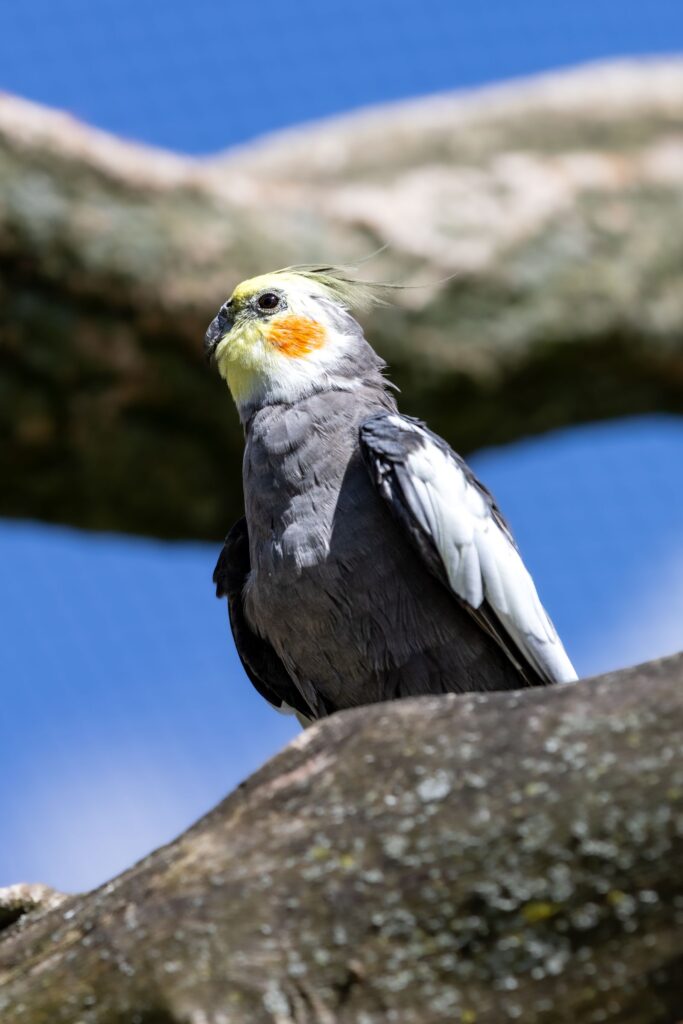
Most bird toys on the shelf are built for beaks that can crack a walnut. A cockatiel’s beak can’t — and honestly, it doesn’t want to. Cockatiels are gentle, methodical shredders. Give one a hard pine block sized for an Amazon parrot and it will ignore it for a week, then go chew the cage-paper corner instead. Give it something soft that yields — yucca, balsa, sola, woven palm — and you’ll hear quiet, contented crunching within the hour.
That preference isn’t just taste. Chewing and foraging are how small parrots occupy their brains, and the enrichment guidance from Lafeber’s pet bird resources frames toys and varied cage furnishings as basic welfare, not decoration — a bored cockatiel is the one that screams, plucks, or goes flat and silent on its perch. The trick is matching the toy to the beak: soft materials, cockatiel scale, and hardware that won’t hurt the bird when the fun starts. Every pick below is checked against the safety notes in our research, and if a toy needs supervision, we say so plainly.
Key Takeaways
- Wesco Bird Kabob Mini — the classic gentle shredder: soft yucca a cockatiel can actually tear apart.
- Super Bird Creations SB680 Balsa Stack — the simplest first shredder for a shy or young bird.
- Bonka Sola Atta Balls — the softest option here, for elderly, timid, or beak-sensitive birds.
- Prevue Woodland Harvest — the preening and activity pick, and the one that needs regular fray checks.
- Planet Pleasures Bamboo Foraging Foot Toy — the only pick with a treat-hiding compartment.
- Soft beats hard, cockatiel-sized beats parrot-sized, and frayed fibre toys are supervised-only.
Quick Picks: The 5 Cockatiel Toys at a Glance
| Product | Best For | Material | Format |
|---|---|---|---|
| Wesco Pet Bird Kabob Mini | Best all-round shredder | Dried yucca on a sisal hanger | Hanging chew toy |
| Super Bird Creations SB680 Balsa Stack | Best first shredder | Stacked balsa wood | Hanging chew toy |
| Bonka Bird Toys Sola Atta Balls (3-Pack) | Softest pick for timid birds | Natural sola plant stem | Foot toys |
| Prevue Pet Products Woodland Harvest | Best for preening and activity | Bamboo, seagrass, grass, hardwood | Hanging activity toy |
| Planet Pleasures Bamboo Foraging Foot Toy | Best simple foraging toy | Bamboo, coconut, palm leaf, sisal | Foot toy with treat compartment |
How We Chose
We researched these picks the way we research everything on PawChirp — by reading manufacturer specifications, retailer listings, and owner feedback. Our full method is on our How We Choose Products page. Three filters did most of the work. First, beak match: every pick uses materials that yield under a cockatiel’s beak, and we excluded foam and rubber toys, which avian care sources warn can cause crop impaction if swallowed. Second, honest safety notes: each toy’s caveats — fraying fibres, connector types, bell hardware — are kept in the reviews. Third, size honesty: where a toy line comes in several sizes, we recommend the size that suits a cockatiel.
1. Wesco Pet Bird Kabob Mini — Best All-Round Shredder
Who it’s for: Almost any cockatiel, especially one that ignores harder toys. If you buy one toy from this page, this is the safest bet.
The Bird Kabob is the toy experienced cockatiel keepers recommend first, and the reason is texture. The chewable body is dried yucca — a soft, pithy plant wood that feels a bit like balsa — strung on a sisal hanger. A cockatiel beak sinks into it and tears off satisfying strips. The Mini is the right scale (the line runs larger, so don’t grab the Original by mistake), and Wesco notes the toy is veterinarian-recommended for birds with feather-picking problems, since it redirects that urge. Owners rate it about 4.7 out of 5 across roughly 180 reviews on Petco.
Now the honest part. This is a consumable, not a fixture: an enthusiastic cockatiel can reduce a Kabob to a nub in days — treat it like food in your budget, not furniture. Yucca shreds into long-grain fibres, so inspect it daily, trim loose fibres and frayed sisal threads, and take it out once the core is exposed or soiled. Loose threads can wrap toes, and no shreddable toy is risk-free unsupervised — supervise the first sessions, and swap the hanger fitting for a stainless quick link if yours arrives with a split ring.
Pros
- Soft yucca yields under a gentle beak — satisfaction hard woods can’t give a cockatiel
- Manufacturer-recommended for redirecting feather-picking onto a toy
- Simple single-material design — no bell, no dyed parts
Cons
- Destroyed fast by design — days, not months, for a keen shredder
- Long yucca fibres and the sisal hanger need daily checks and trimming
2. Super Bird Creations SB680 Balsa Stack — Best First Shredder
Who it’s for: Shy, young, or newly rehomed cockatiels that back away from big, busy toys.
The Balsa Stack is about as un-intimidating as a toy gets: a short stack of balsa pieces, about 6.5 by 2 inches, in Super Bird Creations’ small-bird size. Balsa is one of the softest chew woods there is, so even a tentative beak makes visible progress on the first try — and that early win matters. A bird that learns chewing feels good graduates to varied toys; a bird given an oversized hardwood fortress learns to ignore toys.
Keep expectations honest. Balsa this soft disappears quickly, and a plain stack offers zero foraging challenge — it’s a gateway toy, best paired with the foraging pick below. When you unbox it, check the connector: you want a stainless-steel pear link or quick link — if a split ring or clip is fitted instead, replace it, since those catch toes and beak tips. As pieces are chewed down, remove small fragments and exposed sharp stringing ends. If the variant you receive includes a small bell, check the clapper is fixed — and take the bell off if in doubt, since cheap jingle bells with thin slits can trap a beak tip.
Pros
- Ultra-soft balsa gives shy birds an easy first shredding success
- Correct cockatiel scale from a small-bird specialist maker
- No hard pine, oversized blocks, foam, or rubber
Cons
- Very short-lived with a keen shredder
- No foraging element — it’s chewing only
3. Bonka Bird Toys Sola Atta Balls — Softest Pick for Timid Birds
Who it’s for: Elderly, beak-sensitive, timid, or very young cockatiels that won’t tackle wood at all.
Sola is the gentlest shredding material in this guide. The balls are made from the stem of the sola plant — a soft, spongy, air-dried natural material a cockatiel can crush with no effort. Each ball is about 2 inches across; three per pack. They’re foot toys, so there’s no hanger: your bird picks one up, holds it, tosses it, and shreds it with beak and feet. Offer one on a flat perch or play stand, drop one into a foraging tray, or thread one onto a stainless skewer.
One clarification, because owners ask: sola is not styrofoam, even though it looks similar. It’s a natural plant stem, made to be chewed — birds should shred it and drop the pieces rather than eat quantities of it, so supervise and clear debris. The trade-off for that softness is speed: a committed shredder can finish a ball in one session, and the light fragments get everywhere. Take a ball away once it’s soiled, and check each new ball for any musty smell or discolouration — anything that smells off goes in the bin, not the cage. No rope, bell, or connector here — the lowest hardware-risk toy on the page.
Pros
- Softest material here — manageable for elderly or beak-sensitive birds
- No hardware at all: no rope, bell, or connector risks
- Versatile foot-toy format for perches, trays, and skewers
Cons
- Can be destroyed in one session by a keen shredder
- Natural material needs a smell-and-mould check on arrival
4. Prevue Pet Products Woodland Harvest — Best for Preening and Activity
Who it’s for: Cockatiels that fuss over their feathers or need something to climb on and work at rather than simply chew.
The Woodland Harvest (model 62549, about 5.75 by 8 inches) is the activity toy of this set. It’s handmade on stainless-steel wire with a stainless quick-link attachment — the safest connector type here — and combines bamboo, seagrass rope, natural grass and straw, and hardwood beads. Prevue’s Preen & Pacify line is designed for exactly the behaviour in its name: giving a bird fibres to pull, preen, and untangle so those urges land on a toy instead of on feathers.
This is also the pick that comes with homework. The hardwood elements are the hardest material in this guide, and some gentle cockatiels will ignore them and strip only the grass and bamboo — once the fibres are gone, its useful life is mostly over. The seagrass rope and grass fibres will fray as your bird works them. Inspect weekly, trim loose strands short, and remove the toy if fibres form loops or long strings that could wrap a toe or be swallowed. A frayed rope or fibre toy is a supervised-only toy, full stop. Check the beads stay firmly strung and keep the quick link screwed fully shut.
Pros
- Woven grass, bamboo, and seagrass give preening birds fibres to work instead of feathers
- Stainless-steel wire and quick-link — the best hardware here
- Climbable, multi-texture activity toy, not just a chew
Cons
- Seagrass rope frays — needs weekly inspection, trimming, and supervised use once worn
- Hardwood parts are too hard for some gentle beaks and may be ignored
5. Planet Pleasures Bamboo Foraging Foot Toy — Best Simple Foraging Pick
Who it’s for: Cockatiels ready to work for a treat — and owners who want foraging without large-parrot puzzle hardware.
Foraging turns toy time into thinking time, and this little foot toy is the gentlest on-ramp. It’s hand-woven from bamboo, coconut, palm leaf, and sisal, with a small inner cage you can tuck a few seeds or a pinch of millet into. Your cockatiel holds it, turns it over, and worries at the weave to get at what’s inside — on a flat perch or play stand.
Set the difficulty honestly: the compartment suits a few seeds, not a serious puzzle for a very food-motivated bird. And like all foot toys, it can be dropped and ignored by birds that prefer hanging toys — if yours is a hanger-only bird, thread it onto a stainless pear link. The sisal needs the usual fibre discipline: check for fraying before each use, trim anything loose, and supervise. As the palm weave comes apart, remove long strands and small fragments, and keep only natural or food-grade-coloured pieces.
Pros
- The only pick here with a purpose-built treat compartment
- Natural woven palm, bamboo, and coconut — gentle on a small beak
- No bell and no hanging connector in normal use
Cons
- Small compartment — a starter forage, not a real puzzle
- Foot toys get dropped and ignored by hanger-preferring birds
Buying Guide: Choosing Cockatiel Toys That Suit a Gentle Beak
Size for the bird, not the shelf
Cockatiels weigh around 90 grams, and toy sizing should follow the bird, not the marketing photo. If a toy is marketed for Amazons, greys, or macaws, it’s too big and too hard. Look for “small bird” lines and pieces your bird can grip and tear — hand-sized or smaller for hanging toys, around 2 inches for foot toys. A toy a cockatiel can’t dent isn’t enrichment; it’s furniture.
Soft materials first
Prioritise materials that yield: yucca, balsa, sola, cork, woven palm, and seagrass. Hard pine and thick acrylic belong to stronger beaks. Avoid foam and rubber toys entirely — swallowed pieces can impact the crop — and treat cotton-rope toys with suspicion once they fray.
The 60-second safety check
Before any toy goes in the cage, check the connector (stainless quick links and pear links good; split rings and clips get replaced), check any bell (clapper fixed and not pry-able, no thin jingle-bell slits — when in doubt, remove the bell), and check for loose threads, sharp wire ends, or small parts that could come free. Repeat the thread check weekly for anything fibrous. Our guide to setting up a cockatiel cage covers where toys should hang so they don’t crowd perches or food bowls.
Introducing a toy to a shy bird
Many cockatiels are neophobic — a new object is a threat until proven otherwise. Don’t hang a new toy over a nervous bird’s favourite perch. Set it outside the cage, in view, for a day or two, then place it low in the cage, away from food and the main perch. Let the bird approach on its own schedule; the first nibble might take a week. Tucking a familiar treat against a new foraging toy speeds things up.
Rotate, don’t accumulate
Two or three toys in the cage, swapped weekly, beat eight toys gathering dust. Rotation keeps old toys feeling new and gives you a moment to inspect each one for wear. For the full routine, see our guide on how often to rotate bird toys. And while you’re furnishing the cage: Lafeber’s guidance is to offer perches in varied natural textures and diameters rather than identical smooth dowels, because varied footholds promote foot health.
Frequently Asked Questions
What materials are safest for cockatiel toys?
Soft, natural, and shreddable: yucca, balsa, sola, woven palm leaf, seagrass, and cork. These yield under a gentle beak and break into fibres rather than sharp shards. Avoid foam and rubber (crop-impaction risk if swallowed), and treat frayed rope as supervised-only.
How many toys should a cockatiel have in its cage?
Two or three at a time — typically one shredder, one activity or preening toy, and one foraging option. More than that crowds the cage. Keep spares in a drawer and rotate weekly, inspecting each toy on the way in.
Are bells safe for cockatiels?
They can be, with checks. Choose bells whose clapper is fixed and can’t be pried out, and avoid cheap jingle bells with thin slits that can trap a small beak’s tip. If you can’t confirm what a bell is made of, remove it and keep the rest of the toy.
Why does my cockatiel ignore new toys?
Usually fear, not pickiness. Introduce toys outside the cage first, in plain view, then move them low in the cage away from the main perch and food. Pairing a new toy with a favourite treat helps. Give it a week or more before deciding the toy is a dud.
How fast will a cockatiel destroy these toys?
Quickly — and that’s the point. Sola balls may last one session, a yucca kabob a few days to a couple of weeks, balsa somewhere in between. Shreddables are consumables, like food. If a soft toy lasts months untouched, it’s probably too hard, too big, or hung where your bird doesn’t feel safe.
The Bottom Line
Cockatiels don’t need tougher toys; they need softer ones. Start with the Wesco Bird Kabob Mini for shredding satisfaction, add the Planet Pleasures Bamboo Foraging Foot Toy when your bird is ready to work for treats, and keep Bonka Sola Atta Balls for shy or elderly birds. Check fibres weekly, swap split rings for quick links, supervise anything frayed — and your cockatiel gets the enrichment its gentle beak was built for.