This guide contains affiliate links. As an Amazon Associate, PawChirp earns from qualifying purchases — at no extra cost to you. Read our full disclosure.
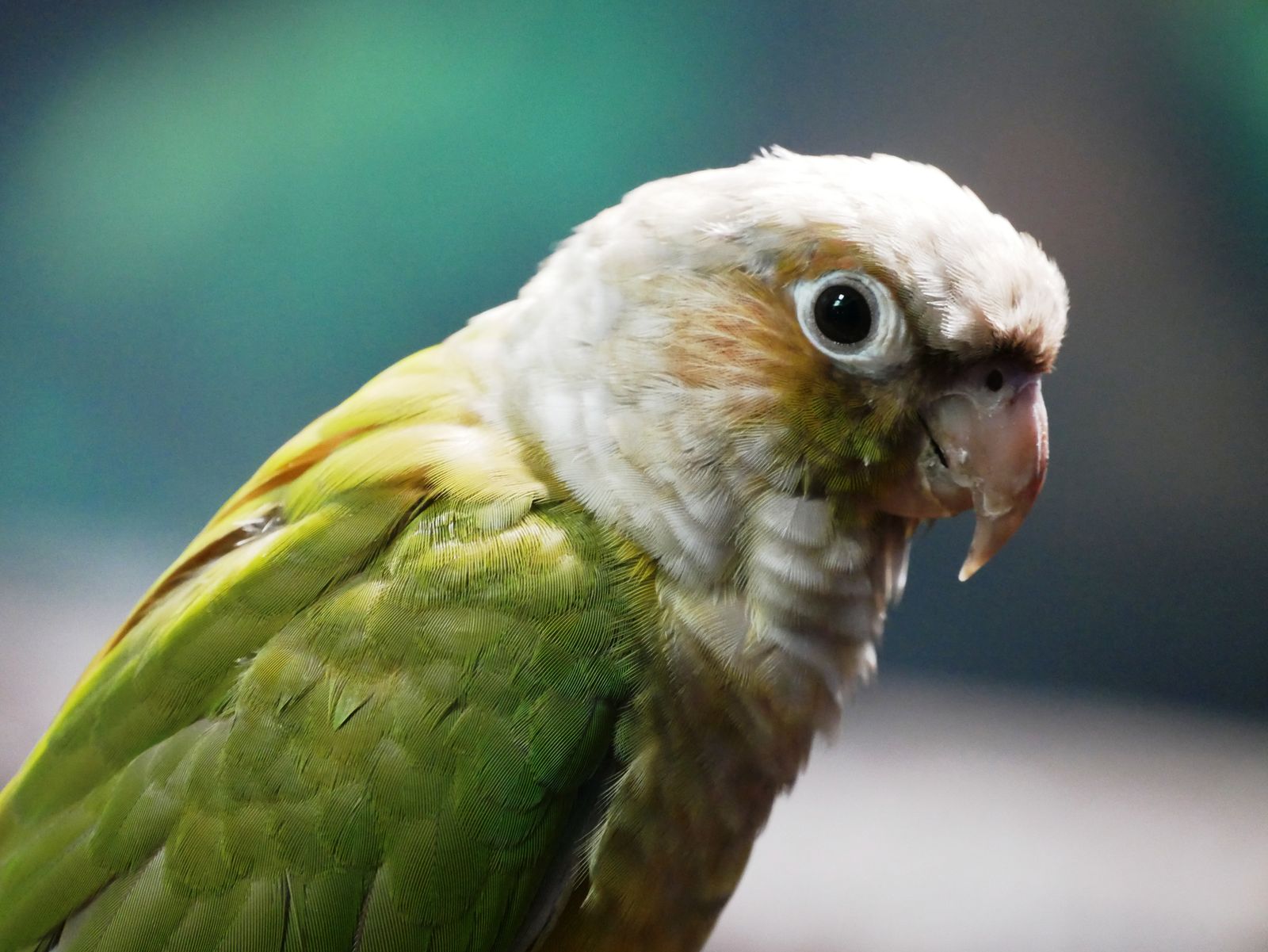
On paper, a conure and a cockatiel look like close cousins: small parrots that bond hard with their people. In a real living room, though, they are very different roommates. Lafeber describes the cockatiel’s sound repertoire as “chirps and whistles,” while its conure fact sheet warns that conures are “capable of loud, sometimes ear-piercing, vocalizations.” Volume is where most conure vs cockatiel decisions are really made — but it isn’t the only difference. Below we compare noise, cuddliness, care, lifespan, space, and dust — then the cages and foods that suit each side. “Conure” covers dozens of species; this comparison uses the green-cheeked conure, the most common pet conure, and flags where the sun conure differs — usually on noise.
Key Takeaways
- Noise is the headline difference. Cockatiels chirp and whistle; green-cheeks are the quietest conures but still squawk; sun conures are famously loud.
- Both birds are affectionate. The conure is the more physical, clownish cuddler and the more demanding of your time; the cockatiel is cuddly but calmer.
- The commitment is similar. Cockatiels average roughly 15–25 years and green-cheeks 20+ years (PetMD). Neither is a short-term pet.
- Conures need more cage. The Merck Veterinary Manual’s conure minimum (36 × 24 × 48 in) dwarfs its cockatiel minimum (20 × 20 × 30 in), and conure beaks chew through weak bars and latches.
- Cockatiels make dust. Their powder-down dander coats nearby surfaces; conures produce none. Allergy households, take note.
- Never house the two together. Lafeber warns a green-cheek’s powerful beak can seriously injure a cockatiel — separate cages, no physical contact.
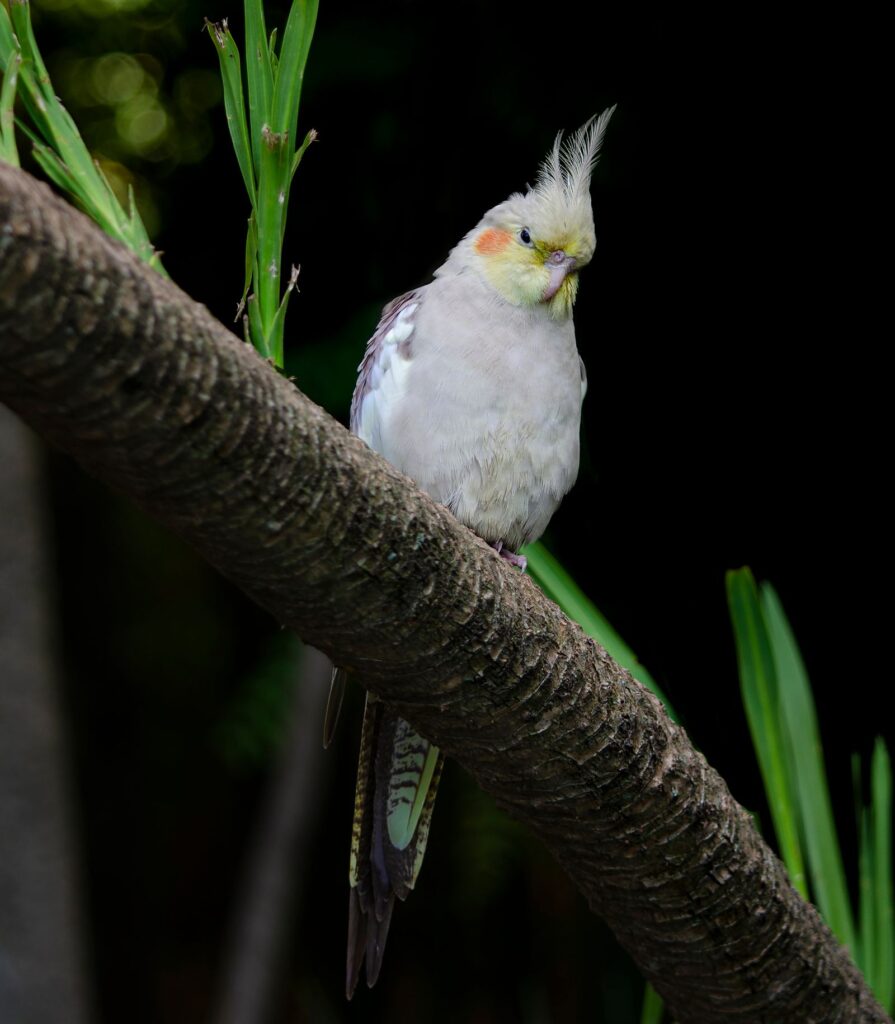
Conure vs Cockatiel at a Glance
| Cockatiel | Green-Cheek Conure | |
|---|---|---|
| Size | ~12.5 in long (much of it tail), ~90 g | ~10 in long, ~70 g |
| Lifespan | ~15–25 years in captivity (PetMD) | 20+ years (PetMD) |
| Noise | Chirps and whistles; the quieter side | Quiet for a conure, but squawks; sun conures extremely loud |
| Talking | Better whistler than talker; males learn tunes and some words | A few words at most, in a gravelly, quiet voice |
| Temperament | Cuddly, bold, generally calm | Outgoing, comical, more physical and demanding |
| Minimum cage (Merck) | 20 × 20 × 30 in; spacing up to 1/2 in | 36 × 24 × 48 in; spacing up to 3/4 in |
| Diet base | Pellets 60–80% of diet (PetMD/VCA) | Pellets 60–70% of diet (PetMD) |
| Dust | Powder-down dander — a real allergy consideration | No powder down |
Noise: The Difference You’ll Hear Every Day
Let’s say it plainly: conures are louder than cockatiels. Lafeber splits the conure family by genus — the smaller Pyrrhura conures, including the green-cheek, are “said to be less noisy” than the Aratinga conures — but even the quiet end squawks and lets out contact calls that carry. PetMD puts it honestly: green-cheeks “are known to be quieter than their other conure cousins, but they still squawk, chatter, and chirp.” The sun conure is the extreme case: WebMD’s profile calls it “a very noisy bird” whose call is “a grating, shrill screech” audible from a remarkable distance. In an apartment, a sun conure isn’t a calculated risk — it’s a noise complaint with feathers.
A cockatiel’s soundtrack differs in kind, not just degree: whistles, chirps, and flock calls, with males often learning whole tunes. It can be insistent at sunrise, but at a volume most apartments can live with. If noise is your top concern, this round isn’t close.
Temperament and Cuddliness
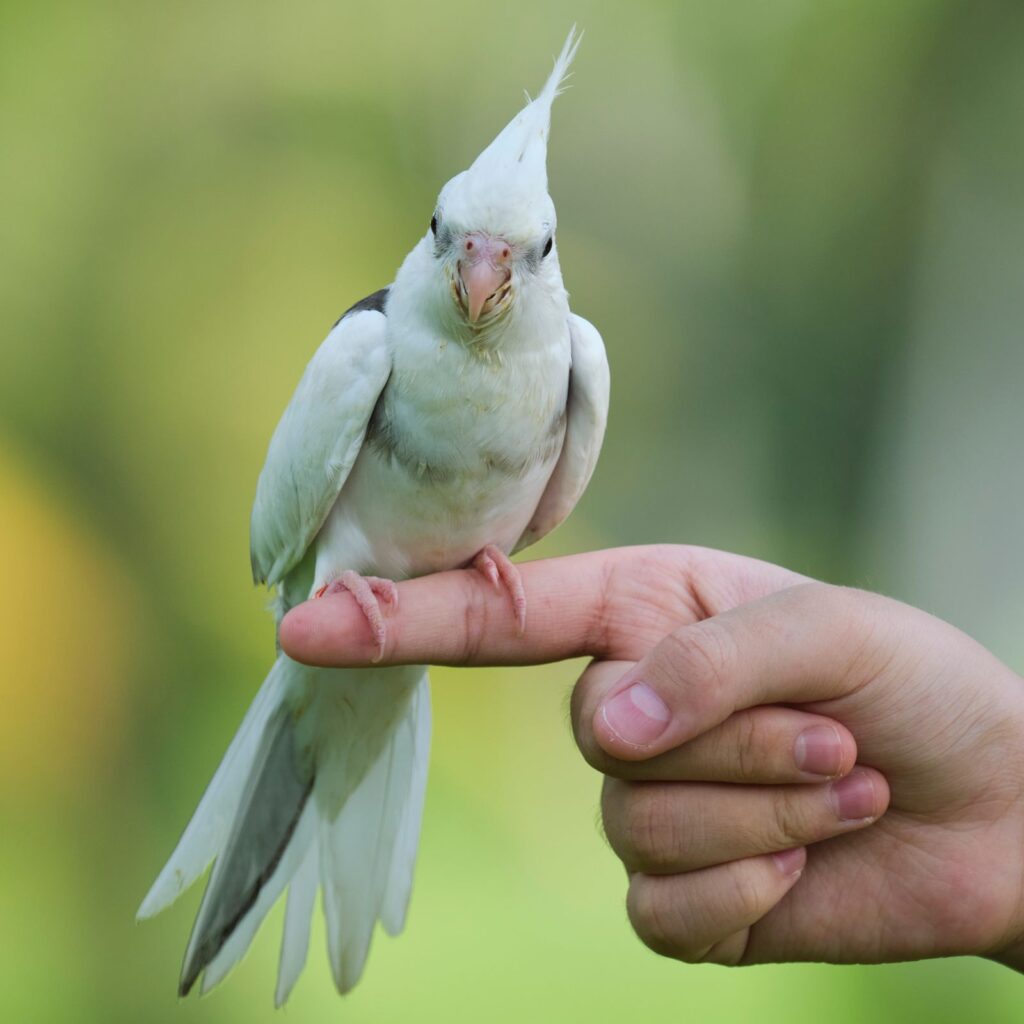
Both birds want to be with you — the difference is in how. Lafeber describes cockatiels as birds that “can be both cuddly and bold,” curious and occasionally feisty, and PetMD notes they “can live happily alone and don’t require cage-mates, as long as they get daily attention from their humans.” A cockatiel will solicit head scratches and sit with you, then return to its perch to supervise the room.
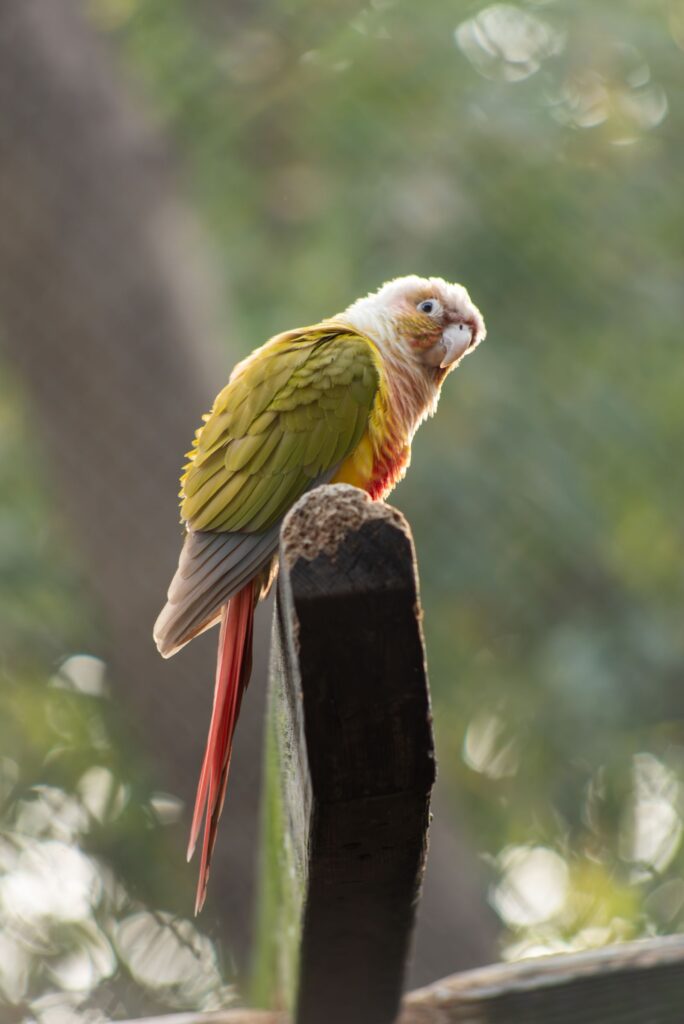
A green-cheek conure is more hands-on in every sense. Lafeber calls them “outgoing and comical,” birds that “love their play,” — a clownish, physical bird that burrows into clothing and wrestles with toys. That’s delightful, and more demanding. PetMD’s guidance that conures “should be socialized daily” is a real commitment, and an under-stimulated conure gets nippy and loud about it.
Talking and Whistling
Neither bird is a talking-parrot pick, and it’s better to know that now. The cockatiel is the stronger mimic, but its gift is whistling, not speech: PetMD notes cockatiels can learn words and phrases with training — males learn better than females — yet whistled songs are its real strength. A green-cheek may pick up a few words in a gravelly voice that’s more charming than clear. If you want a talker, neither is the honest answer; if you want a whistler, that’s the cockatiel.
Care Level and Daily Time
Day to day, the routines look alike: fresh food and water, an hour or more out of the cage (PetMD’s cockatiel minimum; conures need as much), rotating toys, and 10–12 hours of quiet darkness. The conure edges ahead on effort: its beak destroys toys and perches faster, its social needs make skipped days obvious, and its cage is bigger to clean. The cockatiel’s extra chore is dust, covered below. First-time owners generally find the cockatiel the gentler learning curve.
Size, Space, and Cage Needs
The cockatiel is longer (about 12.5 inches, much of it tail) but lighter on furniture. The Merck Veterinary Manual’s minimum cage for a cockatiel is 20 × 20 × 30 inches with bar spacing no wider than 1/2 inch; PetMD suggests at least 24 × 24 × 30 inches. For conures, Merck’s minimum jumps to 36 × 24 × 48 inches with spacing up to 3/4 inch — a genuinely large cage. PetMD’s single green-cheek minimum (24 × 24 × 30 inches) is smaller — the authorities disagree; buy toward the Merck end when space allows, and keep a small green-cheek at the 5/8-inch end of the spacing range. Our conure cage guide, cockatiel cage guide, and explainer on what size cage a cockatiel needs work through the numbers.
Lifespan: A Similar Commitment
There’s no “shorter option” here: cockatiels average roughly 15–25 years (oldest reported: 36), green-cheeks 20+ years, sun conures about 15–30 years (PetMD/WebMD). Either bird will likely outlive your current car and phone — which is why the noise and care differences above matter.
Dust and Mess
Cockatiels are powder-down birds: they produce a fine, talc-like dander that coats the cage area, nearby surfaces, and the air. It’s normal for the bird, but a problem for households with asthma or allergies — and it means more dusting. Conures don’t produce powder down; their mess is the ordinary kind — seed, shredded toys, flung fruit. Both birds are messy; only the cockatiel is dusty.
Diet: Same Rule, Different Bags
The feeding rule is identical on both sides: pellets are the base, fresh produce the supporting act, and seed a component — never the whole diet. PetMD puts cockatiel pellets at 60–70% of the diet (VCA goes higher, around 75–80%); green-cheeks land at 60–70% pellets with treats capped near 10%. LafeberVet’s warning applies to both: an all-seed diet is deficient in protein, vitamins, and minerals. The picks below follow that rule.
How We Chose
The species facts come from veterinary sources — Lafeber, PetMD, VCA Hospitals, and the Merck Veterinary Manual — and where they disagree, we say so. The products were researched from manufacturer specs and owner feedback: a cage and food anchor per species, screened against this article’s spacing and diet rules. We don’t claim hands-on testing we haven’t done; our full method is on our How We Choose Products page. Two transparency notes: the conure cage below also appears in our conure cage guide under a different listing, and one cockatiel food has no verifiable Amazon listing — both flagged in their sections.
Cockatiel Cage Pick: Yaheetech YT-2105 69-Inch Extra Large Bird Cage
For the cockatiel side. Most oversized budget cages fail cockatiels on bar spacing. This one doesn’t: the YT-2105’s bars are spaced 0.4 inch apart, safely under Merck’s 1/2-inch cockatiel maximum, and the cage body runs 30.3 × 18.1 × 51.2 inches (69 inches overall on its rolling stand), with tiers, ladders, perches, and feeders included. Owners rate it approximately 4.7 out of 5. Don’t confuse it with Yaheetech’s other “69-inch” cage, the 611013 playtop below — different cage, different spacing, different bird.
Pros
- True 0.4-inch bar spacing — cockatiel-safe
- 30.3-inch width gives genuine side-to-side flight room
- Rolling stand with shelf; perches and feeders included
Cons
- Tiered, ladder-linked layout chops up flight space; a single-level flight cage gives cleaner flight lines
- Only 18.1 inches deep — narrower than a dedicated flight cage
Cockatiel Food Pick: Higgins Sunburst Gourmet Blend Cockatiel
For the cockatiel side. A fortified gourmet blend built specifically for cockatiels: millet, safflower, sunflower, and canary seed mixed with papaya, cantaloupe seed, coconut, shelled nuts, and flaked carrots, plus probiotics — 13.5% protein and 15% minimum fat on the label. That variety gets a picky seed-eater foraging instead of picking out three sunflower seeds and stopping. Chewy’s listing rates it approximately 4.7 out of 5 from 543 reviews. One honest disclosure: we could not verify an Amazon listing for this exact food, so there’s no buying link here — you’ll find it at the usual pet retailers.
Pros
- The most cockatiel-specific variety blend in its class, fortified rather than plain seed
- Unusual inclusions (cantaloupe seed, nuts, dried produce) drive foraging interest
- Strong owner ratings on the exact product
Cons
- Still a seed blend, not a pellet base — portion it alongside pellets
- Sold in 3-lb and 25-lb bags with nothing in between
- No Amazon link from us until a listing can be verified
Conure Cage Pick: Yaheetech 611013 69-Inch Playtop Cage
For the conure side. A wrought-iron playtop cage — about 24 × 22 inches of footprint, 69 inches overall with stand and playtop — with five stainless-steel feeders and perches included. Owners rate it approximately 4.4 out of 5 across more than 4,300 reviews. Now the honest part, twice over. First, bar spacing: published sources for this model disagree, variously stating 0.6, 0.7, and 0.75 inches. All three sit inside the conure spacing envelope, but we couldn’t settle the figure from published specs — so check the live listing and measure before trusting it for a small green-cheek — and never for a cockatiel, since all three figures exceed its 1/2-inch maximum. Second, this model also appears in our conure cage guide under a different listing.
Pros
- Playtop gives a social, physical bird an out-of-cage station of its own
- Wrought-iron build with a full feeder and perch kit included
- Deep owner-review pool
Cons
- Bar spacing is inconsistently published (0.6–0.75 in) — verify before buying for a green-cheek
- Interior meets PetMD’s small-conure minimum class but falls short of Merck’s; best for a green-cheek with daily out-of-cage time, not a sun conure
Conure Food Pick: Kaytee Fiesta Conure Food, 4.5 lb
For the conure side. A conure-specific gourmet blend — safflower, millet, canary grass seed, sunflower, wheat, cracked corn, and oat groats with pineapple, carrot, and coconut, fortified with omega-3s, antioxidants, and pre- and probiotics. The appeal is texture: lots of shapes and sizes for a bird that eats with its feet. We found no owner rating for this exact bag that we’d trust enough to print, so we won’t invent one.
Pros
- Conure-specific formula with the widest shape and texture variety here
- Fortified, with omega-3s and pre/probiotics
- Works well as the foraging component next to a pellet base
Cons
- Seed-heavy, with dried-fruit sugars and artificial colors — not a complete daily diet on its own
Conure Food Pick: Kaytee Forti-Diet Pro Health Egg-Cite! Conure & Lovebird, 3 lb
For the conure side. The differentiator is in the name: this seed-and-grain blend folds in dried whole egg crumbles, pushing protein to 15.5% minimum, with omega-3s and pre/probiotics. Egg food earns its keep during breeding and molting, when protein demand spikes — a purposeful second bag, not a duplicate of the Fiesta above. Chewy owners rate it approximately 4.7 out of 5 from 443 reviews, though some long-time buyers note the formula has changed over the years.
Pros
- Real egg protein aimed at breeding and molting support
- Conure-specific feeding rate published (1/8–1/4 cup per day)
- Strong, deep owner ratings on the exact product
Cons
- Sunflower-led ingredient list makes it calorie-dense for a sedentary bird
- Still a blend, not a pellet — the pellet base rule applies
The Verdict: Which Bird Fits Your Life?
Choose the cockatiel if you live in an apartment, work from home, have noise-sensitive neighbors, or are keeping your first bird. You get a cuddly, whistling companion with calmer energy and a gentler learning curve — in exchange for dust.
Choose the green-cheek conure if you have a house (or very tolerant neighbors), daily time for a bird, and a soft spot for a clownish, physical, slightly chaotic companion — in exchange for more noise, more chewing, and a much bigger cage.
Choose the sun conure only if noise genuinely doesn’t matter — detached house, no shared walls, a household that finds a shrill contact call charming at 7 a.m. For everyone else, it’s the one pick here we’d actively steer you away from.
Whichever you choose: one bird, one cage. The two can live in the same home, but per Lafeber they should never share a cage or interact physically — the conure’s beak is too powerful for a cockatiel.
Frequently Asked Questions
Which is quieter, a conure or a cockatiel?
The cockatiel, clearly. Cockatiels chirp and whistle; even the green-cheek — the quietest common conure — squawks, and a sun conure can be heard from far outside the house. For apartments, the cockatiel is the safer choice; the green-cheek is the only conure we’d consider.
Which bird is better for a beginner?
The cockatiel, for most people. It’s calmer, quieter, needs a smaller cage, and forgives an inconsistent schedule. A green-cheek can work for a beginner with a genuinely bird-proof routine, but it’s the higher-maintenance of the two.
Can a conure and a cockatiel live together?
Not in the same cage, and they shouldn’t interact physically at all. Lafeber warns that a green-cheek’s beak is far more powerful than a cockatiel’s and can seriously injure or kill one. Separate cages, separate out-of-cage times.
Which bird talks better?
Neither is a true talker. The cockatiel is the better mimic — especially males — but its talent is whistling tunes, not speech. A green-cheek may learn a few words in a gravelly little voice. If speech is your priority, look at larger parrots — and their bigger commitment.
Which bird lives longer?
Effectively a tie: cockatiels roughly 15–25 years, green-cheeks 20+ years, sun conures about 15–30 years (PetMD/WebMD). Plan on two decades or more.
The Bottom Line
Conure vs cockatiel comes down to the life you actually live. The cockatiel is the quieter, calmer, dustier bird — the apartment-friendly companion that whistles along with your day. The green-cheek conure is the louder, busier, more demanding bird — a tiny clown that wants to be part of everything and needs the cage, time, and tolerance to match. Both will be with you for twenty years or more, both need pellets and daily attention, and both are wonderful — for different households. Pick the one whose worst trait you can happily live with.