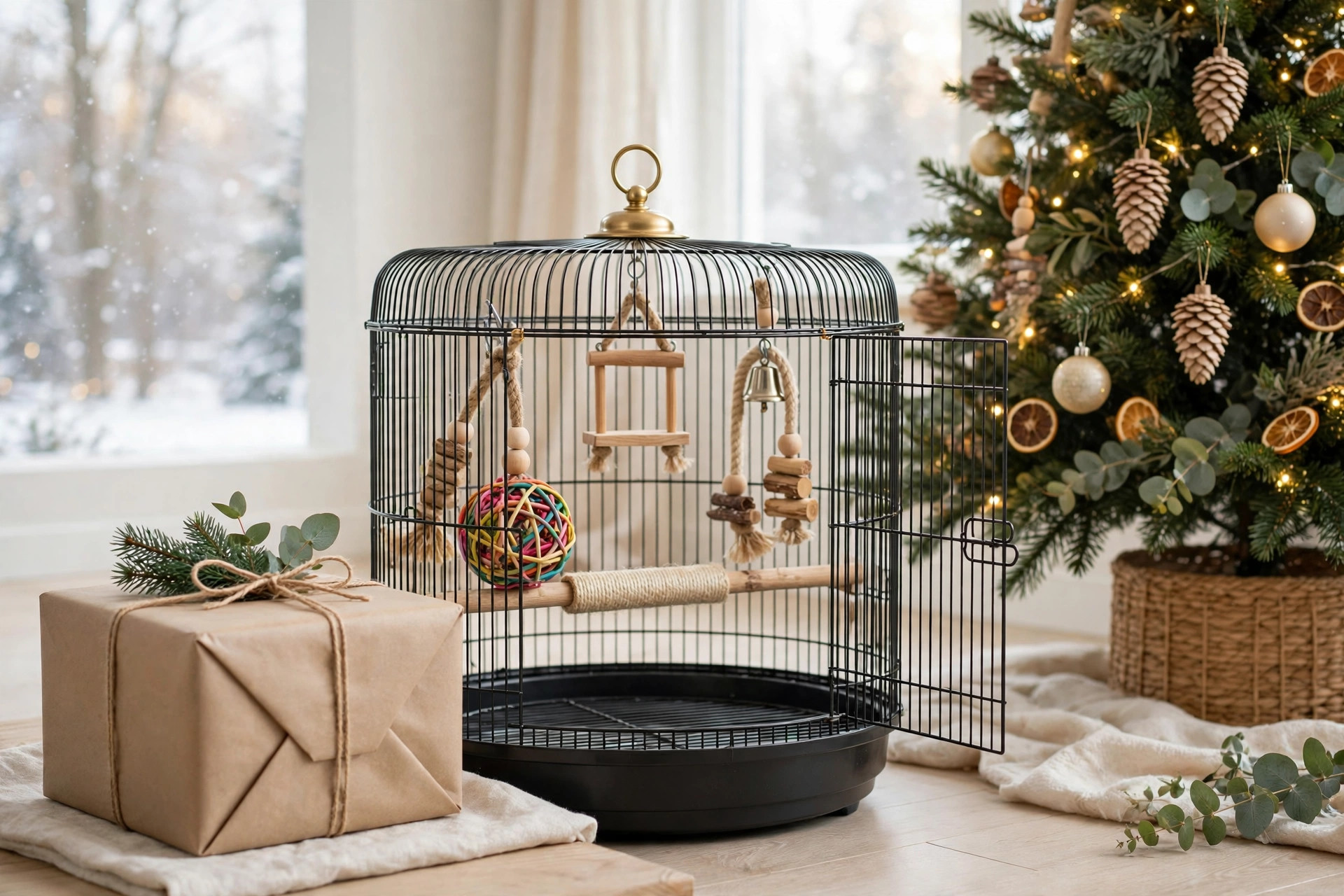
The scene writes itself: Christmas morning, a ribbon on a cage, a beautiful parrot blinking in the tree lights, and a loved one gasping with joy. It’s a lovely picture. It’s also, according to the avian vets and rescue workers who meet these birds later, one of the most reliable ways to start a parrot’s life badly. Not because the giver doesn’t care — the opposite, usually — but because a parrot is not a gift-sized commitment, and Christmas week is the single hardest week of the year to land in a new home. The fix isn’t to abandon the idea. It’s to gift everything around the bird, and let the bird itself arrive the right way: chosen, prepared for, and in January.
Every rescue has a version of the same story. The holiday bird is adored for a month, tolerated for six, and surrendered within a couple of years — when the screaming meets the work schedule, when the biting starts, when the novelty ends and the forty-year reality doesn’t. You can write a completely different story for the person you love. Here’s how.
Key Takeaways
- A parrot is a 20–60+ year commitment depending on species — closer to giving someone a toddler’s lifespan than a toy’s.
- Parrots need hours of daily attention, make real noise, and need avian vets, who are scarcer and pricier than regular vets.
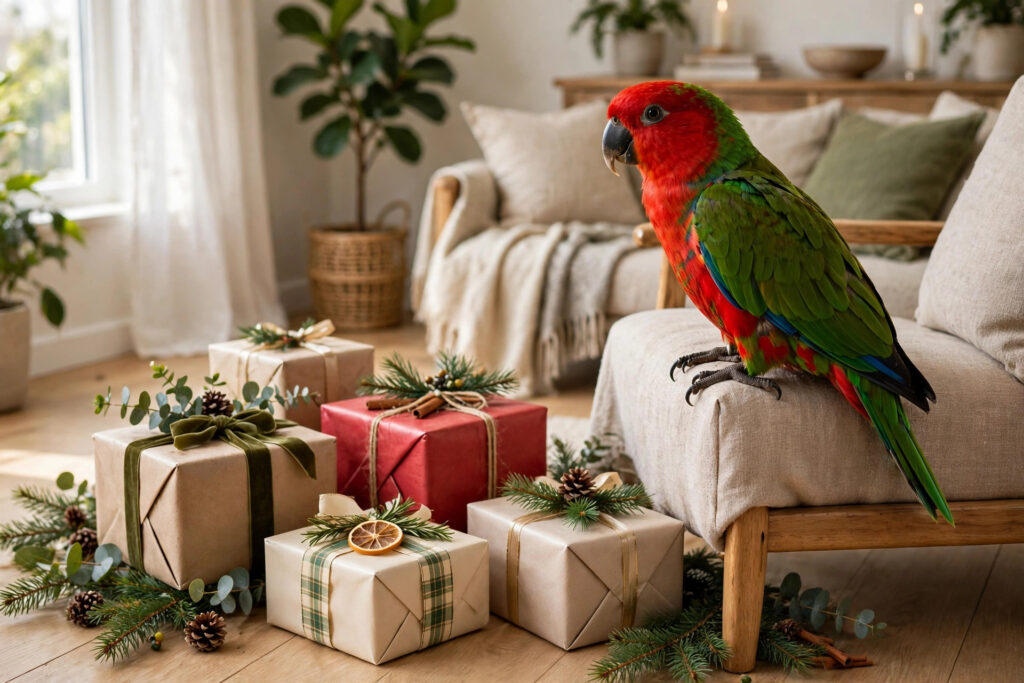
- A surprise bird lands in the noisiest, most chaotic week of the year — guests, open doors, and holiday kitchen fumes included.
- Gift instead: the cage and setup, quality toys, an avian-vet fund, a rescue sponsorship, or a “choose your bird together in January” voucher.
- If a bird has already arrived, give it a quiet retreat, its familiar food, an early vet check — and no handling parade.
First, the Honest Math on Parrots
Lifespan. A budgie may live into its teens. A cockatiel can reach its twenties. Conures, Amazons, African greys, and macaws run from roughly three decades to sixty years and beyond. A parrot given to a teenager may need a line in that person’s will. Any gift that can outlive the recipient’s current apartment, job, relationship, and possibly the recipient’s own middle age deserves more than a surprise reveal.
Time. Parrots are flock animals with a social appetite to match. Plan on hours of daily interaction and out-of-cage time — not as enrichment, as a baseline need. A parrot left alone and bored doesn’t wait quietly; it screams, and a neglected bird may start damaging its own feathers. Lafeber’s guide to parrots as pets is blunt that larger parrots want a great deal of attention and daily interaction, and that choosing one means matching the bird to the life you actually live.
Noise. A parrot’s contact call evolved to reach flockmates across a forest canopy. In an apartment, it reaches the neighbors. Some species are louder than others, but there is no silent parrot, and dawn and dusk choruses are not trainable flaws — they’re the animal working as designed.
Care and cost. Parrots need avian veterinarians — specialists who may be an hour away and charge accordingly — plus a large cage, a steady rotation of destroyable toys, and a proper diet. The AVMA’s pet care resources make the same point for every species: choosing a pet well means researching its needs, lifespan, and care costs before it comes home, not after. None of this makes parrots bad pets. It makes them pets that must be chosen on purpose, by the person who will live with them.
Why Christmas Week Is the Worst Arrival Week
Even a planned, wanted bird deserves a soft landing — and December 25th is the opposite of one. Picture the new bird’s first week: strangers arriving daily, doors opening to the cold, a kitchen running full tilt with all the fumes that come with holiday cooking, music and movies until late, a tree full of chewable decorations, and a household too busy and too excited to give a frightened animal the quiet it needs. New birds often barely eat for the first days. They watch. They startle. They need dim corners and predictable people.
Now add the surprise element. The recipient didn’t prepare the room, didn’t choose the species, didn’t budget for the vet, and may be leaving for a trip in three days. Rescue organizations see the downstream of this every year: birds rehomed when the season ends, because the gift was a moment and the bird is a lifetime. If your loved one truly wants a parrot, that want will survive until January — and January is when good parrot stories actually start.
Gift the Cage, Not the Bird: Five Presents That Get It Right
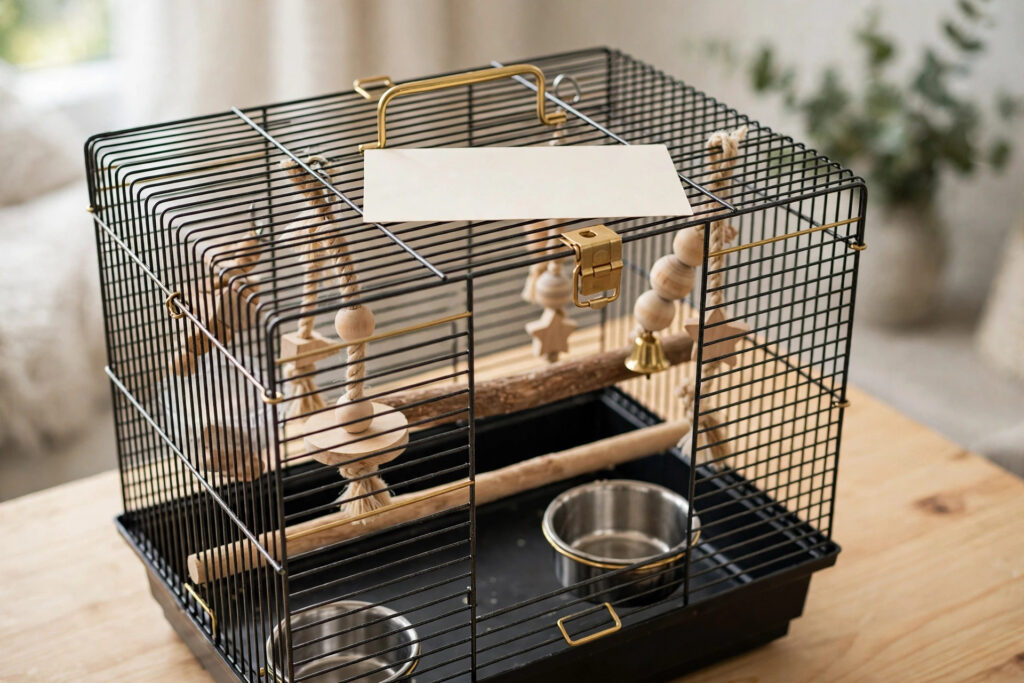
1. The cage and full setup. A quality cage, perches, dishes, and a play stand are the expensive, unglamorous foundation every new bird needs — and wrapping them carries the same Christmas-morning wow with none of the welfare risk. Bonus: buying the cage first forces the best conversation in parrot keeping, which is what size bird this home is really set up for.
2. Quality toys and foraging gear. Shreddable toys, foraging puzzles, and a starter rotation of things to destroy. Every parrot, whatever species arrives in January, will need exactly this. It’s a gift the future bird genuinely benefits from.
3. An avian-vet fund. A card with money set aside for the first wellness exam and supplies. It sounds practical because it is — and it quietly teaches the real lesson, that this pet comes with a specialist and a budget, from day one.
4. A rescue sponsorship. Many parrot rescues let you sponsor a specific bird’s care. For a bird lover, a Christmas spent helping a real parrot — with photos and updates — is a meaningful gift, and visiting the rescue often becomes the first step toward adopting the right bird later.
5. The January voucher. The best one. A handmade card: “Good for one parrot — chosen together, in January.” Then the gift becomes a shared project: research species together, visit rescues and reputable breeders, meet individual birds, and let the recipient pick the animal they’ll spend decades with. Birds choose people, too — ask anyone who’s watched a grey step up for one visitor and ignore three others. Our guide to the best first pet birds for beginners is a good place to start that research.
Choosing Together in January: What “Right” Looks Like
January bird shopping done well is unhurried. Start with lifestyle, not looks: How many hours a day is someone home? Who’s on the other side of the apartment wall? Is there an avian vet within reach? Then match species to answers — a pair of budgies or a cockatiel for a first bird in a smaller home; a conure for someone who wants clown energy and can handle the volume; the big commitment species, greys, Amazons, cockatoos, and macaws, for experienced keepers with decades to give. Meet individual birds more than once. Ask the rescue or breeder hard questions and let them ask you harder ones — good sources screen, and that’s a feature. When the right bird comes home to a prepared cage, a stocked toy box, and a vet appointment already booked, that’s the Christmas-morning feeling, earned a month late and built to last.
If a Bird Has Already Arrived
Maybe you’re reading this with a parrot already in the living room — given, or received, with love. Skip the guilt; switch to damage control, which works well when it starts immediately:
- Quiet retreat space. Put the cage in a calm corner, one side against a wall, away from the tree, the kitchen, and the party traffic. Let the bird watch the household from a distance before joining it.
- Keep its familiar food. Ask whoever had the bird what it eats and serve exactly that, even if it’s not the diet you’ll eventually aim for. New home, new people, new food, all at once, is how birds stop eating. Diet changes come later, gradually.
- Book the avian vet check now. A new-bird wellness exam in the first couple of weeks establishes a baseline, catches problems early, and gets you a vet relationship before you need one at midnight.
- No handling parade. Every guest will want to hold the bird. The answer, for the first days, is no — for the guests’ fingers as much as the bird’s stress. Let the bird settle, learn one or two people, and choose interaction at its own pace.
- Protect sleep and doors. Ten to twelve hours of dark, quiet sleep in the middle of the loudest week of the year, and a household rule that the front door is never opened while the bird is out.
Frequently Asked Questions
Is it ever okay to give a parrot as a gift?
Yes — when it isn’t a surprise. If the recipient has researched parrots, chosen the species, prepared the home, and is expecting the bird, a planned adoption timed for a calm week is a wonderful gift. What vets and rescues object to is the surprise live animal: a decades-long commitment handed over with a bow, to a person who never got to decide.
What if my kid has been begging for a parrot all year?
Then January is your friend. Gift the cage, the toys, and the voucher at Christmas, and let your child help research species and meet birds at a rescue. Kids who take part in choosing tend to stay invested long after the holiday glow fades — and you’ll learn, honestly, whether the daily care is something your household can sustain before a bird depends on it.
Which parrot species make the best first birds?
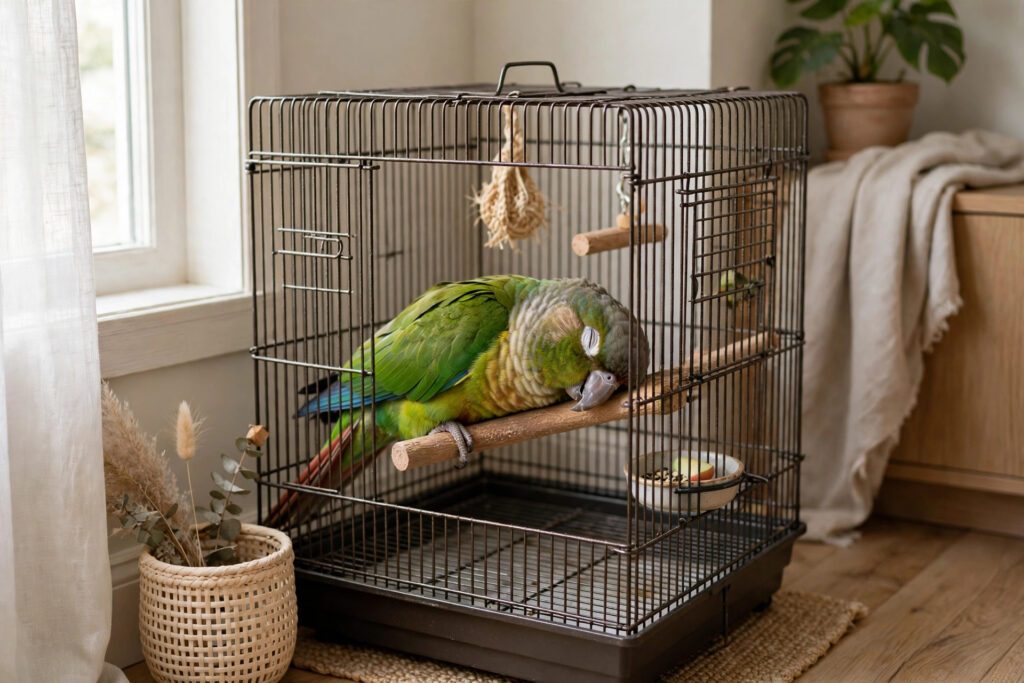
Budgies, cockatiels, and green-cheeked conures are the species most often recommended to first-time keepers: smaller, more forgiving of beginner mistakes, and (by parrot standards) more moderate in noise and lifespan — though even these are 10–25 year commitments. The largest species belong with experienced keepers. Whatever you choose, an adopted bird from a rescue is worth meeting first; rescues know their birds’ personalities and match them to homes.
How much does a parrot actually cost to keep?
Beyond the bird itself: a properly sized cage, perches and toys you’ll replace as they’re destroyed, quality food, and avian vet care — a wellness exam to start, and a fund for emergencies, since avian specialists cost more than general vets and may be farther away. It’s a real, ongoing budget line for decades. That’s precisely why the vet-fund gift and the January planning matter more than the bird-under-the-tree moment.
A relative already bought my family a parrot. What do we do first?
Start with the arrival checklist: quiet cage placement, the exact food the bird is used to, water, sleep, and no guest handling for the first days. Book an avian vet wellness exam within the first couple of weeks. Then begin the research you would have done beforehand — species needs, diet, socialization — and be honest as a family about whether you can meet them. If you truly can’t, contact a parrot rescue early; a planned rehome beats a crisis surrender, every time.
The Bottom Line
A parrot under the tree is a photograph. A parrot chosen in January — by the person who’ll feed it, clean up after it, and listen to it for the next forty years — is a companion. Gift the cage, the toys, the vet fund, or the voucher, and you’ll give your loved one the same joy with none of the January regret. The bird waiting at the rescue doesn’t care what date it is. It cares that the person who comes for it is ready. Be ready.